
Darshan timings at Kukke Subramanya
| Season | Opens | Darshan | Closes | Status |
|---|---|---|---|---|
| Regular day (morning session) | Approx 5:00 AM | Suprabhata and morning sevas through Maha Pooja around 1:00 PM (approx) | Afternoon break after Maha Pooja (approx 2:00 PM) | Open |
| Regular day (evening session) | Reopens approx 3:00-4:00 PM | Evening darshan and sevas up to Ratri (night) Pooja | Approx 8:00-8:30 PM | Open |
| Champa Shashti / festival days | Extended pre-dawn opening | Continuous darshan with long queues; utsava processions | Late night | Open |
Read the full Timings & Darshan Hours →
How to reach Kukke Subramanya Temple
Kukke Subramanya sits in the Western Ghats foothills of Dakshina Kannada, roughly 105 km from Mangalore by road. The classic approach is via the Sakleshpur ghat line, one of India's most scenic railway stretches, though the station drops you a short auto ride short of the temple town.
| Mode | Point | Distance | Notes |
|---|---|---|---|
| Train | Subramanya Road railway station (SBHR) | Approx 10-12 km | On the Mangaluru-Bengaluru line through the Sakleshpur ghats; autos and buses run the last stretch to the temple. Distance from station to temple is approx and worth confirming. |
| Air | Mangalore International Airport, Bajpe | Approx 105-115 km | Nearest airport; hire a cab or take a bus toward Subramanya. Bengaluru airport is far longer by road. |
| Road (from Mangalore) | Mangalore city | Approx 105 km | Regular KSRTC and private buses; roughly 3 hours by car depending on ghat traffic. |
| Road (from Bengaluru) | Bengaluru | Approx 280 km (approx) | Overnight buses run direct; typically a long 6-7 hour journey via Hassan or Sakleshpur. |
Puja & aarti schedule
- Temple opens; Suprabhata and early morning sevas begin (approx)Approx 5:00 AM
- Ashlesha Bali on Ashlesha nakshatra days; Sarpa Samskara for pre-booked devoteesMorning
- Maha Pooja (main midday worship), after which the sanctum closes for the afternoonApprox 1:00 PM
- Temple reopens for evening darshan and sevasApprox 3:00-4:00 PM
- Ratri (night) Pooja before the temple closesApprox 7:45-8:00 PM
Read the full Aarti & Puja Schedule →
Dress code & temple rules
Traditional attire expected: men in dhoti/mundu, women in saree, half-saree or salwar-kameez; avoid shorts, sleeveless tops and Western casuals inside the temple.
For many sevas and the sanctum darshan men are asked to remove the shirt/upper cloth, in keeping with coastal Karnataka temple custom.
Devotees traditionally take a bath in the Kumaradhara river (or temple bathing area) before entering for darshan.
Leather items, mobile phones and cameras are typically restricted inside the inner temple; footwear is left outside.
Sarpa Samskara and other major sevas require prior booking and often a fasting or preparatory routine; check the seva rules when you book.
Read the full Dress Code & Temple Rules →
Best time to visit & festivals
The comfortable window is the post-monsoon cool season, roughly September to March, when the valley is green and the ghats are clear. Summers are hot and humid and the monsoon (June to September) brings heavy Western Ghats rain, beautiful but slippery. The temple's own festival calendar is the other axis for planning.
| Festival | When | Significance |
|---|---|---|
| Champa Shashti / Shashti (Subramanya Shashti) | Margashira month, approx November-December | The temple's biggest annual festival, marking Subramanya's victory; grand processions, brahmarathotsava and huge crowds. Peak |
| Nagara Panchami / Naga Panchami | Shravana month, approx July-August | Serpent-worship festival with special significance at this serpent shrine; heavy footfall of Sarpa Dosha devotees. |
| Kiru Shashti | Around Shashti season (approx November-December) | A subsidiary Shashti observance tied to the main festival cycle. |
Read the full Best Time to Visit & Festivals →
Nearby temples & tirths
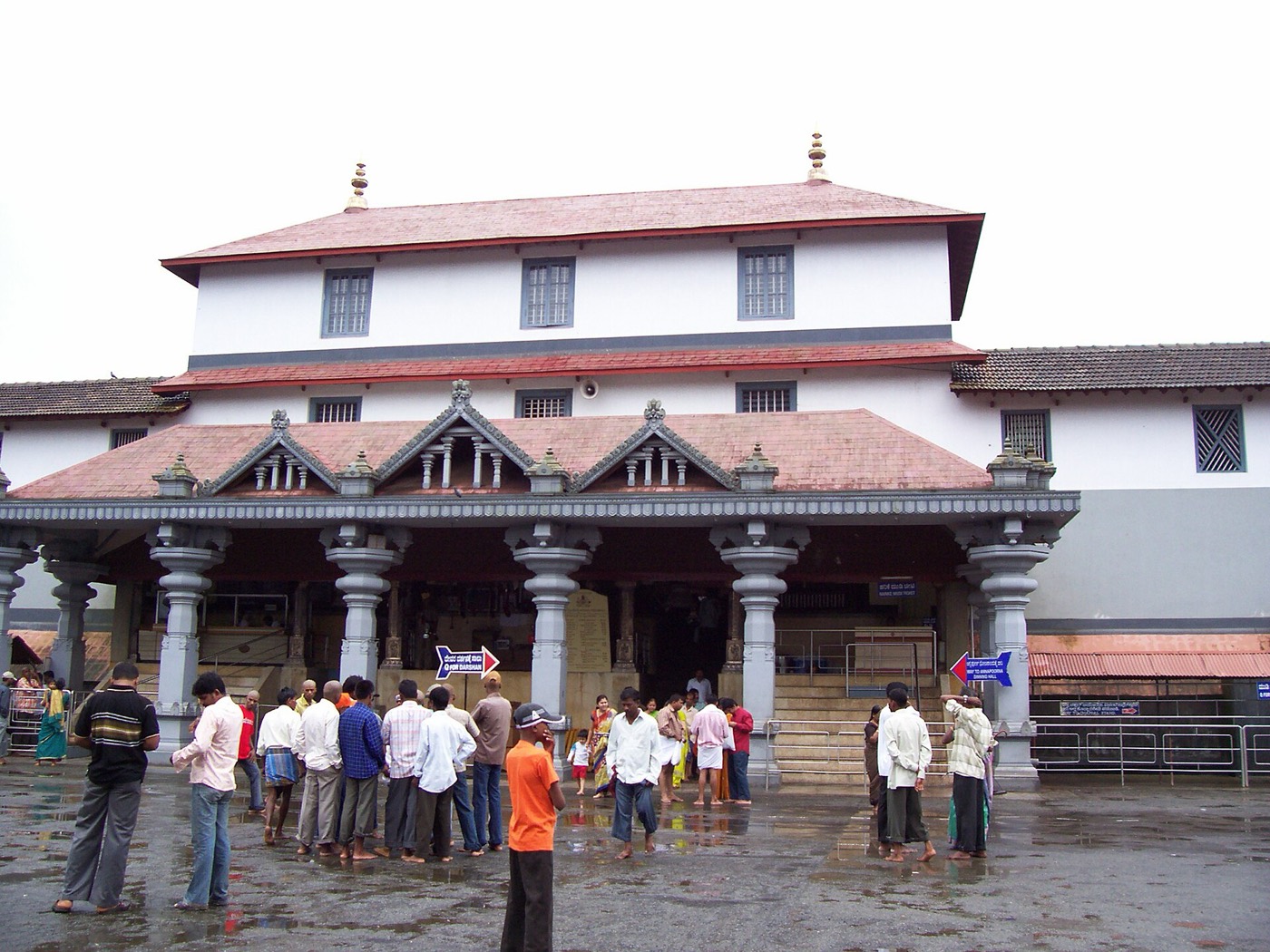
Dharmasthala Manjunatha
Famous Shiva-Manjunatha shrine run on Jain-administered dharma, with legendary free annadana; a natural pairing on the Dakshina Kannada temple circuit.
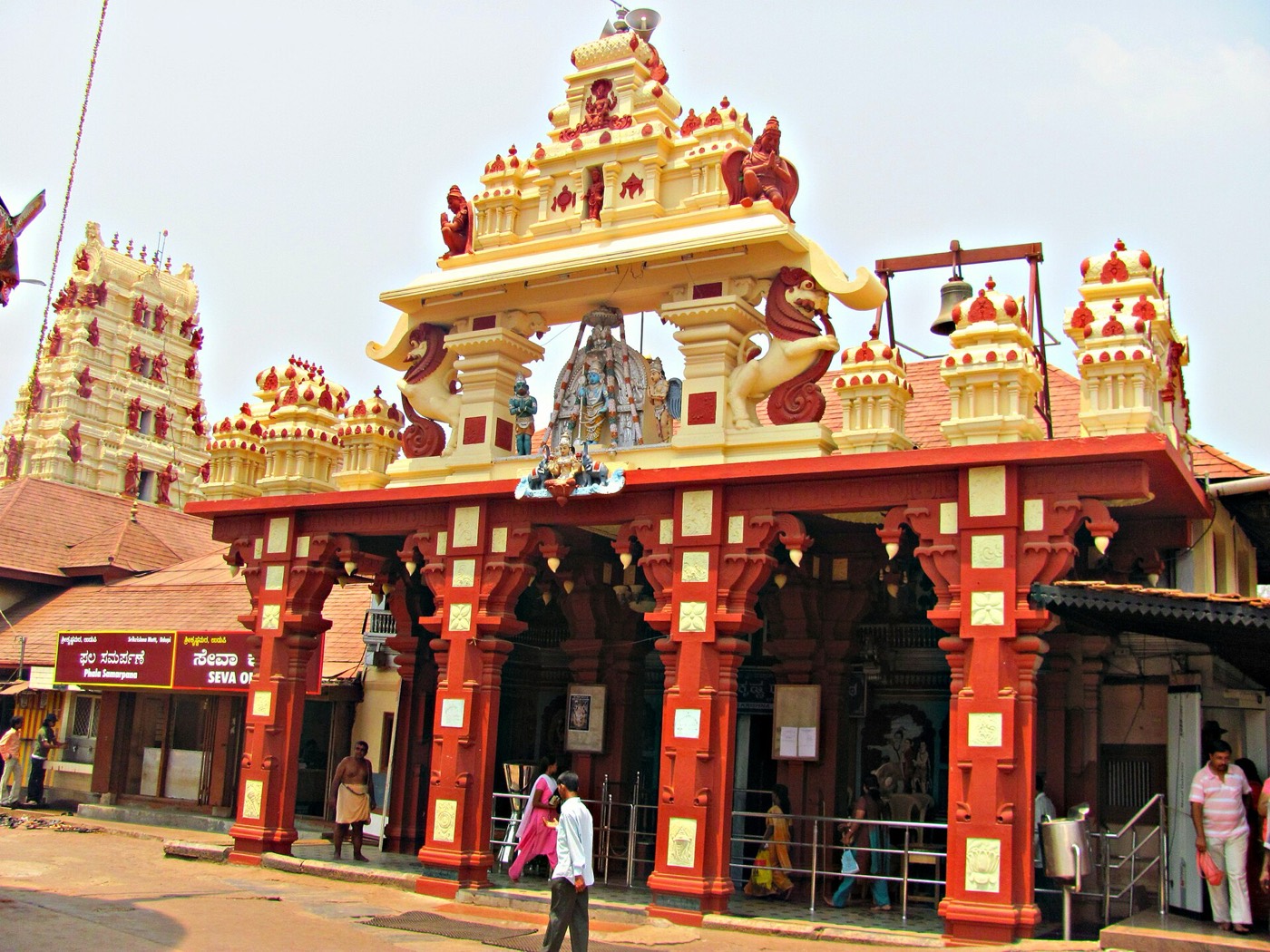
Udupi Sri Krishna Matha
Madhvacharya's celebrated Krishna temple where the deity is viewed through the silver Navagraha window (Kanakana Kindi).

Kollur Mookambika
Powerful Devi shrine in the Ghats, a classic add-on for pilgrims doing the coastal Karnataka temple loop.
Read the full Nearby Temples & Tirths →
Where to stay
Most pilgrims stay in the temple town itself. The temple administration runs its own guesthouses and choultries (rooms and dormitories) bookable through the official site kukke.org, which is the cheapest and most convenient option for early-morning sevas. Around the temple you will also find private lodges (from roughly Rs 2,000), small resorts and a large spread of homestays (from roughly Rs 765), reflecting the town's steady pilgrim traffic. Food options in Subramanya are fairly limited and vegetarian-leaning, centred on the temple annadana and small hotels, so many travellers plan meals around temple prasada or carry their own.
Frequently asked questions
Kukke Subramanya temple timings today
How to book Sarpa Samskara at Kukke Subramanya
Nearest railway station to Kukke Subramanya
Distance from Mangalore to Kukke Subramanya
Is Kukke Subramanya open during monsoon
Compiled from public sources including Wikipedia: Kukke Subramanya Temple · Wikipedia: Subramanya, Karnataka · Holidify: Kukke Subramanya travel and stay · Wikimedia Commons: Kukke Subramanya Swami photo. Timings and seasonal closures change; confirm with the temple trust before travelling.