The geography is simple. The Dwarkadhish temple stands at the far western tip of Saurashtra, where the Gomti creek meets the sea, and Dwarka town is a terminus on the Ahmedabad to Okha railway line. Somnath sits on the same coast beside Veraval, approx 230 km away by road. In between lie a Jyotirlinga, a clifftop goddess, and a long, quiet coastal road.
What makes this route more than a convenient pairing is the thread that runs through it. Dwarka is where Krishna ruled; Bhalka Tirth, approx 4 km inland from Somnath, is where the hunter Jara's arrow found his foot and the Mahabharata's long story closed. Travelling west to east means moving from the king's city to the place of his leaving, with Shiva's first Jyotirlinga standing on the shore beside the ending.
This guide gives you the distances, the darshan hours as the temples and government sources publish them, a workable three-day plan, and the festival windows. Where sources disagree, and on this route they sometimes do, we say so plainly rather than pick a tidy number.
Why this route carries so much weight
For Krishna devotees, the five-storey Jagat Mandir at Dwarka is one of the Char Dham and counted among the Sapta Puri. Its spire rises approx 78 m over 72 pillars, and the great triangular dhwaja on top is changed by hand several times every day, a ritual pilgrims plan whole visits around. At the far end of the route, the reclining Krishna at Bhalka rests under a peepal tree at the spot where tradition says he departed the mortal world.
For Shiva devotees, the route bookends two of the twelve Jyotirlingas. Nageshwar, a short drive from Dwarka, keeps its self-manifested linga in an underground sanctum on the plain remembered as the Darukavana of the Shiva Purana. Somnath, rebuilt and consecrated in 1951 after centuries of destruction and return, is honoured as the first Jyotirlinga of all. Few Indian routes let you complete a Krishna story and two Jyotirlinga darshans inside three days.
Start in Dwarka: the Dwarkadhish rhythm and Nageshwar
Dwarkadhish darshan runs 6:30 AM to 1:00 PM and again 5:00 PM to 9:30 PM, with the temple fully shut through the afternoon for the deity's seva cycle. Entry is free. The railway station is approx 2 km from the temple, a short auto ride into the old town core by the Gomti ghat. Mangla aarti opens the day at approx 6:30 AM, and the Sandhya aarti at approx 7:00 to 7:30 PM is the most attended moment of the evening. Phones, cameras and smart watches go into the deposit counters outside the sanctum, so allow time for that queue.
Nageshwar sits approx 16 to 18 km up NH 947, the road that continues to Okha and the Bet Dwarka jetty. The ritual highlight is the dawn Rudrabhishek from 6:00 to 8:00 AM, and because the underground sanctum is small, it is worth arriving by around 5:30 AM to take part. General darshan runs approx 6:00 AM to 9:00 PM, but sources disagree on a midday break: several list continuous darshan while others report a closure of roughly 12:30 to 5:00 PM. Plan Nageshwar for the morning or the evening and you sidestep the question entirely.
Many pilgrims fold Bet Dwarka, Gopi Talav and the Rukmini Temple into a half-day loop with Nageshwar, since they line the same road. This guide does not carry verified timings for those three, so budget the loop loosely and ask locally. For the night, Dwarka has a dense cluster of dharamshalas with rooms commonly running from about Rs. 200 to Rs. 2000, and budget hotels starting around 600 to 800 rupees.
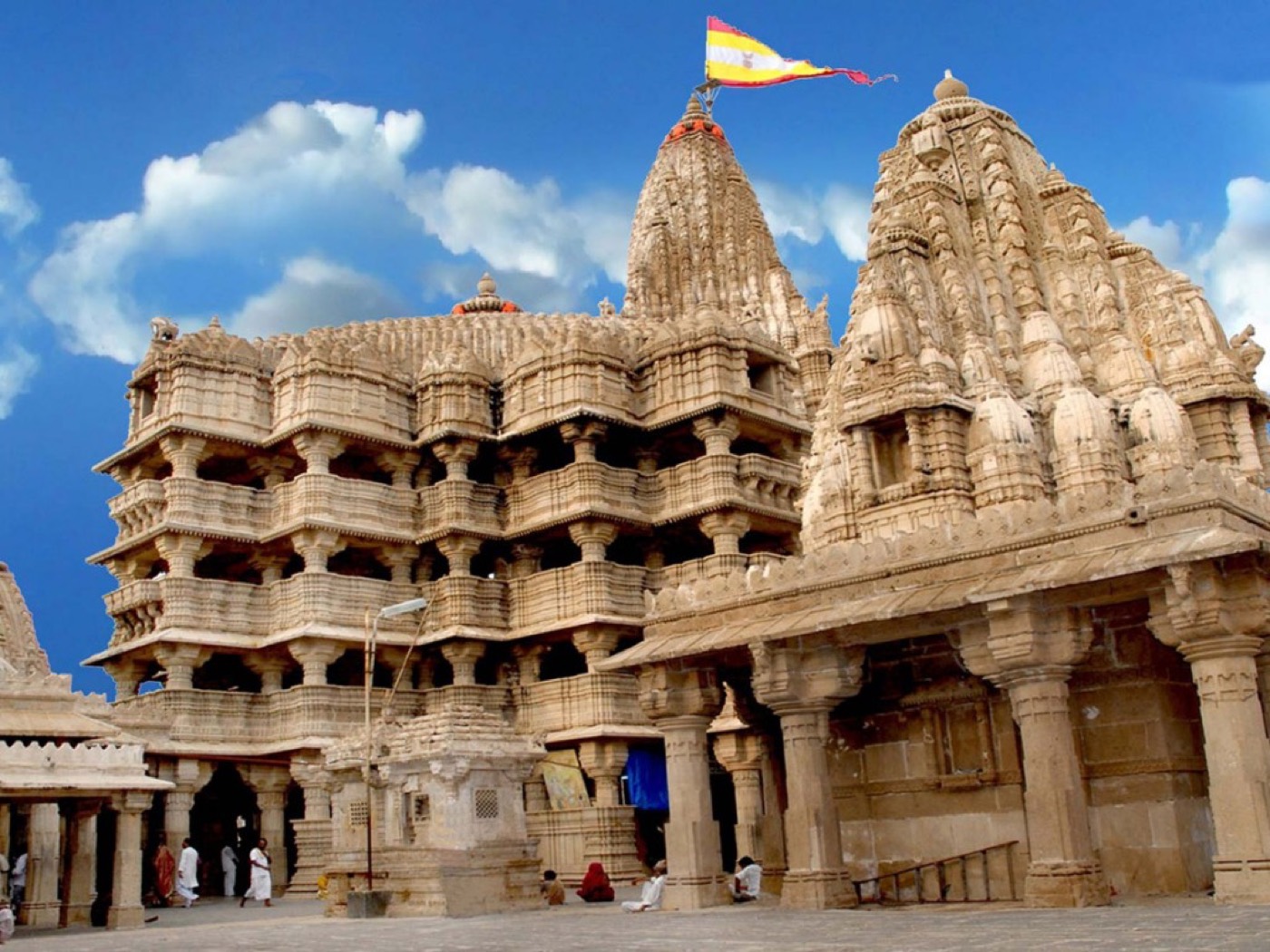
Dwarkadhish Temple (Jagat Mandir), Dwarka
Devbhumi Dwarka, Gujarat
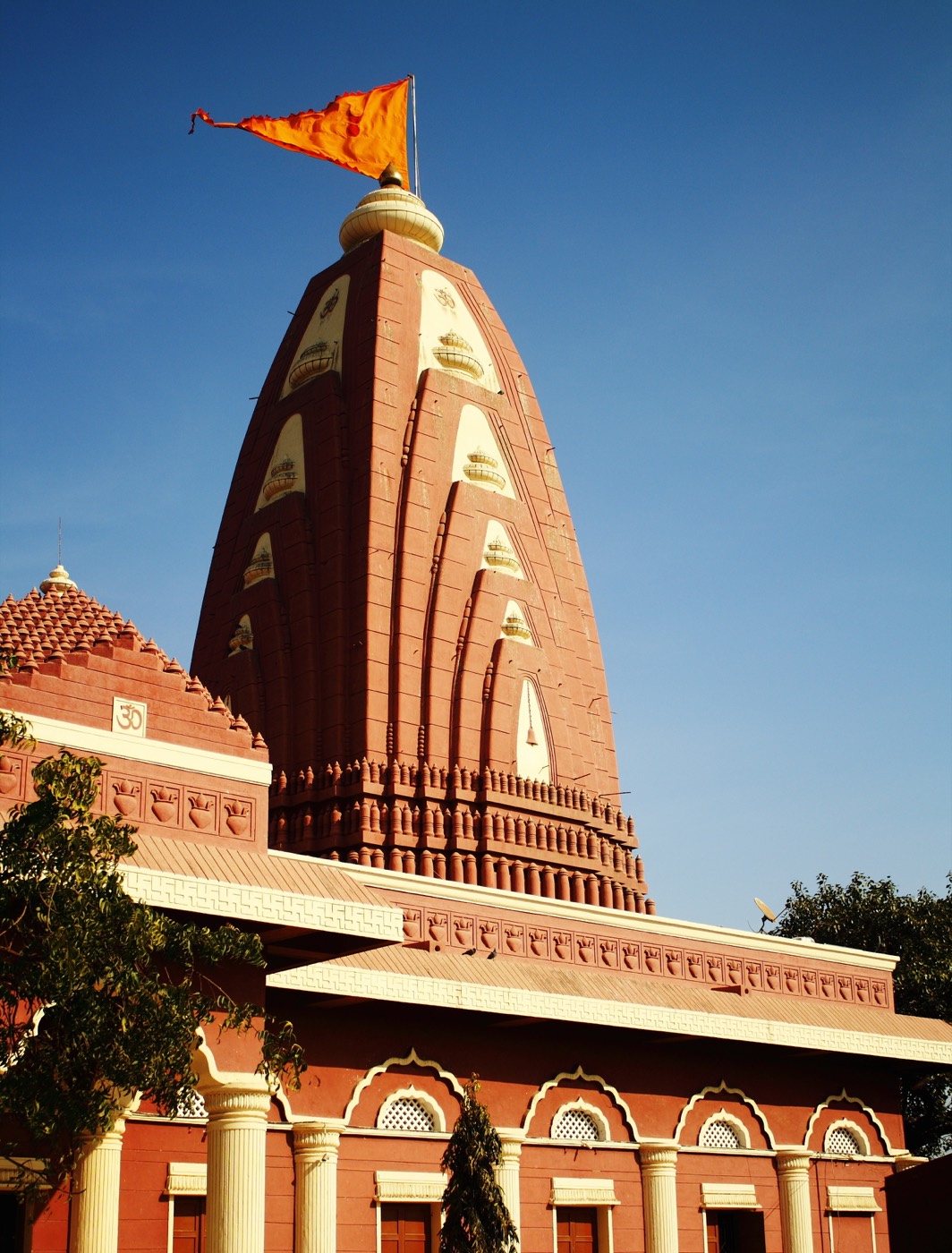
Nageshwar Jyotirlinga
Devbhumi Dwarka, Gujarat
The coastal run to Harsiddhi Mata at Miyani
Leaving Dwarka, the coastal belt runs southeast toward Porbandar. Approx 100 km from Dwarka, the Harsiddhi Mata temple stands on Koyla Dungar hill above the Arabian Sea, near the old port village of Miyani, itself approx 39 km north of Porbandar. Legend ties the goddess to Krishna and to King Vikramaditya of Ujjain, which makes her a fitting halt on a road strung between Krishna's capital and the place of his departure.
The working temple at the foot of the hill keeps darshan through the day, approx 6:00 AM to 7:00 PM, though published timings vary between sources and are worth confirming locally. The original shrine sits at the top of roughly 300 stone steps, open to climbers in daylight but without a regular priest, so buy offerings at the foot temple before you climb. Carry water and wear proper shoes; the steps can be hot and steep. From Miyani, Somnath is approx 130 km further southeast along the coast.
Somnath and Bhalka Tirth: where the story closes
Somnath keeps the most generous hours on the route, 6:00 AM to 10:00 PM every day of the year, with three aartis at 7:00 AM, 12:00 noon and 7:00 PM and a light and sound show from 8:00 to 9:00 PM that usually pauses during the monsoon. The show carries a nominal ticket whose exact price we have not verified. Electronics are strictly barred inside, phones included, and go into the cloakroom near the main gate. Somnath station is approx 0.5 km from the temple, and Veraval Junction, approx 7 km away, handles the long-distance trains.
Bhalka Tirth is approx 4 to 5 km away on the road to Veraval. It is a small shrine with a single continuous darshan window, approx 6:00 AM to 7:00 PM, and none of Somnath's aarti-hour regulation. Reported closing times range from roughly 6:30 PM to 9:00 PM depending on the source, so finish darshan before dusk rather than gamble on the later figure. There is no fixed published aarti timetable here; the customary morning, midday and evening pujas follow the shrine's own quiet rhythm.
For the night, the Shree Somnath Trust runs guesthouses beside the temple, including Sagar Darshan Atithi Gruh with sea views, Lilavati Atithi Bhavan and Maheshwari Atithi Bhavan, all bookable through the Trust. Veraval, approx 7 km away, widens the choice with private hotels and dharamshalas.
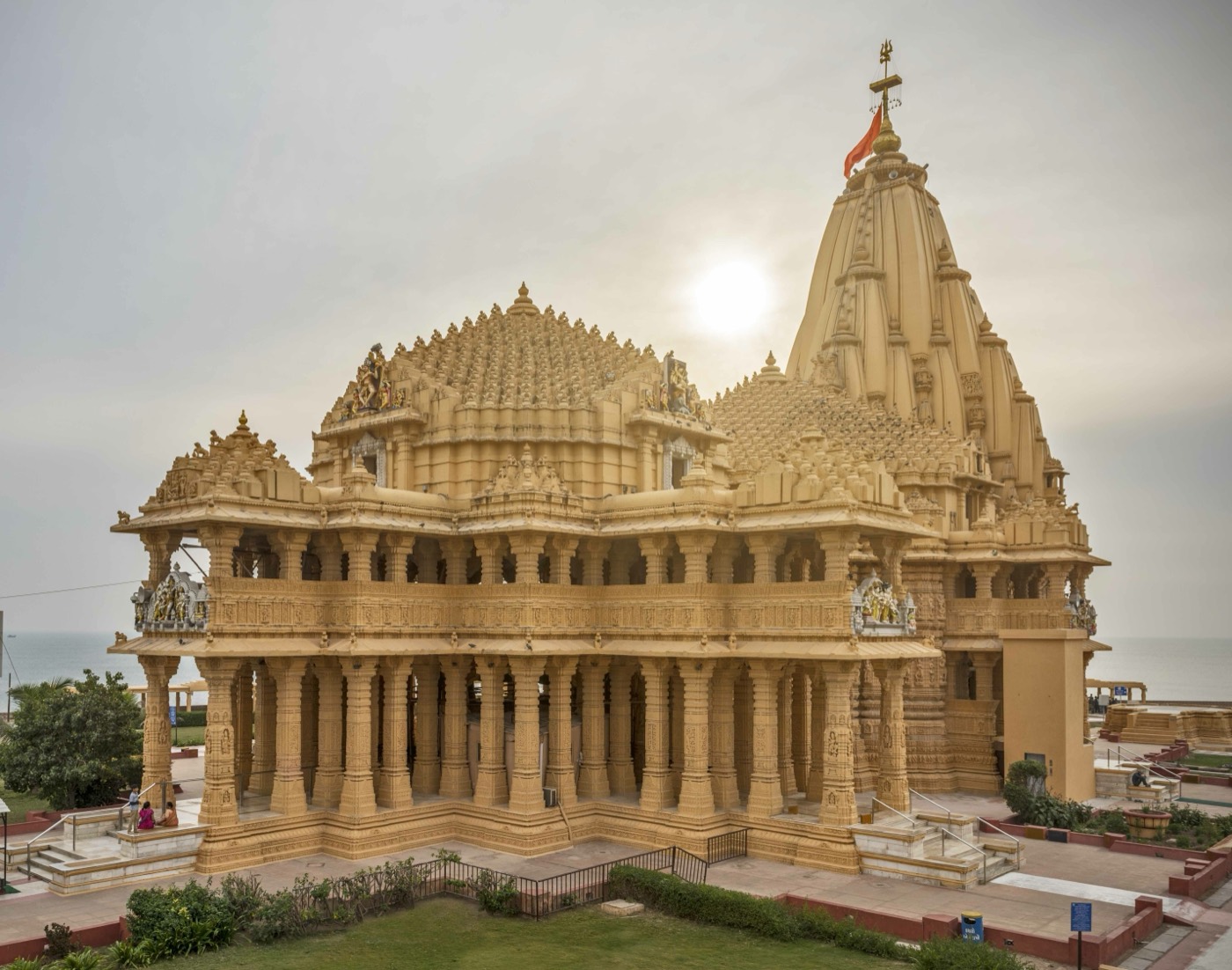
Somnath Temple
Gir Somnath, Gujarat
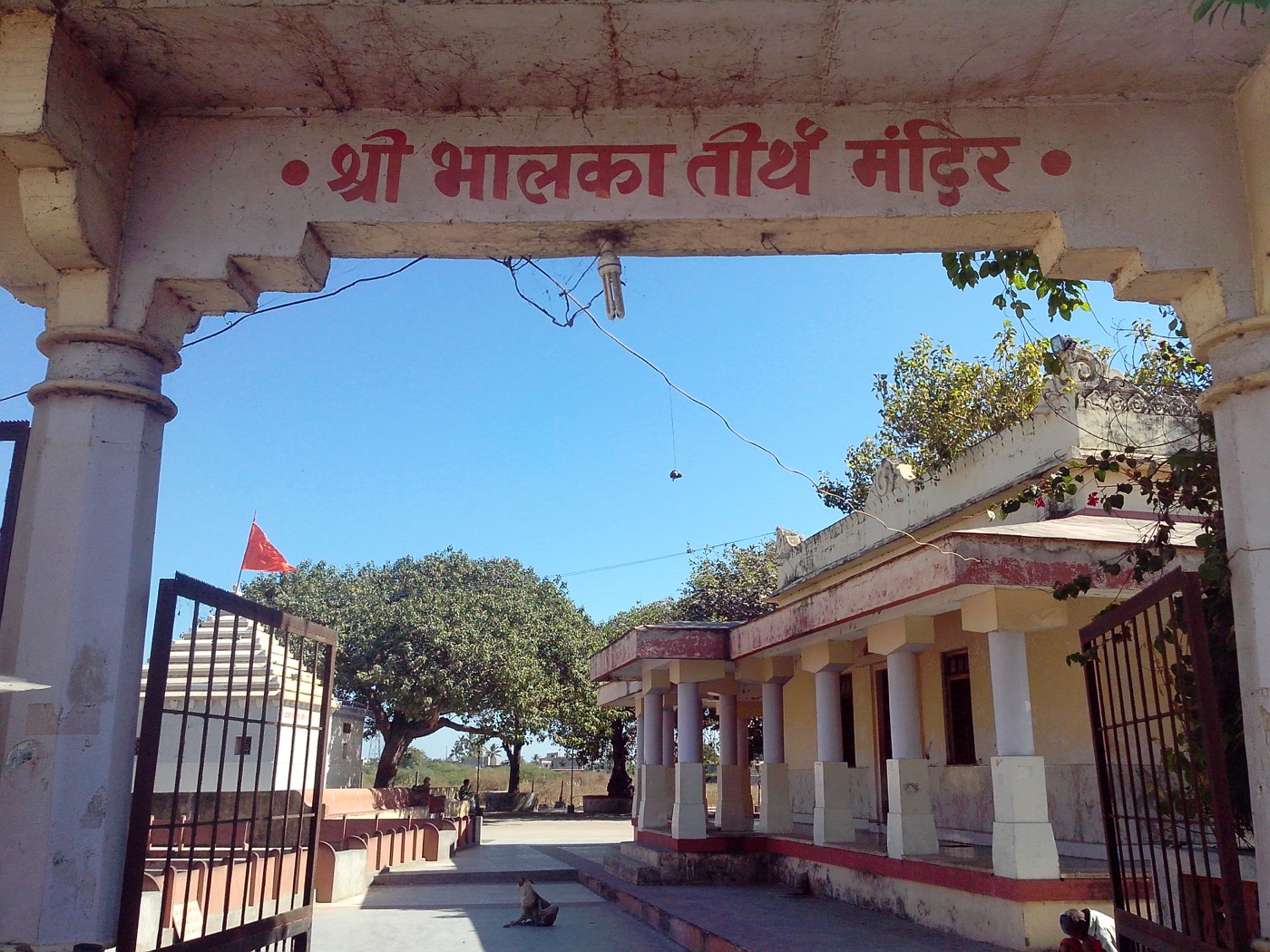
Bhalka Tirth
Gir Somnath, Gujarat
Route distances at a glance
Every figure below comes from the temples' own pages and district sources, and all of them are approximate road distances. Treat them as planning numbers rather than odometer promises, and note that the Nageshwar leg points north toward Okha, away from the Somnath direction, so it works best as a loop out of Dwarka rather than a stop on the through drive.
| Leg | Distance | Notes |
|---|---|---|
| Dwarka to Nageshwar Jyotirlinga | approx 16 to 18 km | On NH 947 toward Okha and the Bet Dwarka jetty; autos and taxis do the hop |
| Dwarka to Harsiddhi Mata, Miyani | approx 100 km | Coastal belt toward Porbandar; the shrine is approx 39 km north of Porbandar |
| Harsiddhi Mata, Miyani to Somnath | approx 130 km | Continue southeast along the coast |
| Dwarka to Somnath direct | approx 230 km | The full leg in one run if you skip the Miyani halt |
| Somnath to Bhalka Tirth | approx 4 to 5 km | On the Prabhas Patan to Veraval road |
| Somnath to Veraval Junction | approx 7 km | The main railhead for arrival and departure |
A workable three-day plan
Day one belongs to Dwarka. Take Mangla darshan at approx 6:30 AM and use the morning session, which runs to 1:00 PM. The temple then shuts from 1:00 to 5:00 PM, which is exactly the window for the Okha-road loop: Nageshwar, and Bet Dwarka beyond it if the jetty timing works, keeping Nageshwar's disputed midday break in mind. Be back for evening darshan from 5:00 PM and stay through the Sandhya aarti at approx 7:00 to 7:30 PM.
Day two is the long day. If you saved Nageshwar, start with the Rudrabhishek from 6:00 to 8:00 AM, then take the coastal road south. Break the approx 230 km run at Miyani, approx 100 km out, and climb the roughly 300 steps to Harsiddhi Mata's hilltop shrine while the day is still cool. Push on approx 130 km to Somnath in the afternoon, aiming to arrive before the 7:00 PM Sandhya aarti, and stay for the light and sound show at 8:00 PM if it is running.
Day three closes the story. Take the 7:00 AM morning aarti at Somnath, then ride approx 4 to 5 km to Bhalka Tirth while the shrine is quiet. Return for a last darshan if you wish, since the sanctum stays open all day. Depart from Veraval Junction, approx 7 km away, which carries trains toward Ahmedabad, Rajkot and Mumbai, or from the small Somnath halt approx 0.5 km from the temple.
Darshan hours compared
The route's one genuine scheduling trap is the afternoon. Dwarkadhish shuts completely from 1:00 to 5:00 PM, Nageshwar's midday status is disputed, and the two smaller shrines keep single daylight windows, while Somnath alone runs unbroken from morning to night. Build your afternoons around driving rather than darshan and the route flows without a wasted hour.
| Temple | Darshan hours | Midday status | Entry |
|---|---|---|---|
| Dwarkadhish, Dwarka | 6:30 AM to 1:00 PM, 5:00 PM to 9:30 PM | Closed 1:00 to 5:00 PM | Free |
| Nageshwar Jyotirlinga | approx 6:00 AM to 9:00 PM | Disputed; some sources report roughly 12:30 to 5:00 PM closed | Free; abhishek and pujas paid separately |
| Harsiddhi Mata, Miyani | approx 6:00 AM to 7:00 PM | A midday lull is common; verify locally | Free |
| Somnath | 6:00 AM to 10:00 PM | Open; darshan briefly regulated during each aarti | Free |
| Bhalka Tirth | approx 6:00 AM to 7:00 PM | Continuous, no midday shutter | Free |
Best season and festival windows
October to March is the season. Saurashtra's coastal heat eases, winter days at Somnath sit around 15C to 28C, and the climb at Miyani is comfortable. The monsoon months, roughly July to September, are humid with a rough sea, though every temple on the route stays open; peak summer from April to June is harsh going on the barefoot stone.
The big festivals here follow the lunar calendar, so their dates move every year, and the windows below are the honest way to plan. Expect the heaviest crowds at Janmashtami in Dwarka, when the temple stays open through the night for the midnight Abhishek, and at Mahashivratri, when the sanctums at Somnath and Nageshwar both run all night.
| Festival | Window | Where it peaks on this route |
|---|---|---|
| Krishna Janmashtami | August or September (Bhadrapada) | Dwarkadhish, all-night vigil with midnight Abhishek; also the biggest day at Bhalka Tirth |
| Mahashivratri | February or March | Somnath and Nageshwar, all-night darshan and a fair at Nageshwar |
| Shravan month | approx July to August | Nageshwar, heaviest on Shravan Mondays; steady pilgrim flow at Somnath |
| Kartik Purnima | November | Multi-day fair at Somnath; holy bathing period in the Prabhas Patan circuit |
| Sharad Navratri | September to October (Ashwin) | Harsiddhi Mata at Miyani, a nine-night mela on the hillside |
| Diwali and Annakut | October or November | Dwarkadhish, with the Annakut food-mountain offering |
What this route does not cover
Two famous names sit just off this road. Girnar, the great stepped hill above Junagadh, is approx 90 km from the Somnath belt and deserves its own trip rather than a hurried add-on. In the other direction, Koteshwar and Narayan Sarovar lie approx 250 km from Dwarka at the far western edge of Kutch, a remote extension for travellers with two spare days.
Within the route itself, this guide stops short of Bet Dwarka's island shrines, Gopi Talav, the Rukmini Temple and the Triveni Sangam at Prabhas Patan, because we do not hold verified timings or distances for them. They are real, they sit close to the road, and locals will point the way; we would rather leave them unnumbered than guess.
Frequently asked questions
How many days are enough for the Dwarka to Somnath yatra?
What is the distance between Dwarka and Somnath?
Is there a direct train from Dwarka to Somnath?
What is the best time to do the Dwarka Somnath yatra?
Can I cover Nageshwar Jyotirlinga and Bhalka Tirth on the same trip?
Should I start the yatra from Dwarka or from Somnath?
Compiled from our verified temple guides and public sources including Shree Somnath Trust official FAQ · Shree Dwarkadhish temple timings 2026 · Gujarat Tourism: Nageshwar Jyotirlinga, Devbhoomi Dwarka · Gir Somnath District (Govt of Gujarat) - Bhalka Tirtha · Trawell.in - Harsiddhi Mata Temple, Porbandar. Timings and festival dates shift with the lunar calendar; confirm before you travel.