Four shrines anchor this circuit: Yamunotri at the source of the Yamuna, Gangotri at the spiritual source of the Ganga, Kedarnath, the highest of the twelve Jyotirlingas, and Badrinath, Vishnu's seat above the Alaknanda. Together they form the Chota Char Dham of the Himalaya, and pilgrims have walked them in the same west-to-east order for generations.
The circuit is seasonal in the strictest sense. Every one of the four closes for winter, its deity carried down in procession to a village seat lower in the valley, and reopens around Akshaya Tritiya in late April or early May. Between the closing days around Diwali and that spring reopening there is no darshan at the high shrines at all. Whatever plan you make starts with that window.
This guide covers the order and why it holds, the road legs and their approximate distances, the two treks that no vehicle can replace, the registration the state requires, and Haridwar as the gateway town, where many yatris take a first blessing at Mansa Devi before heading into the hills. Exact opening and closing dates shift each year with the lunar calendar, so we give windows here, never a specific year's date.
Why the yatra runs west to east
The traditional sequence is Yamunotri first, then Gangotri, then Kedarnath, with Badrinath last. Geography explains most of it: the four sit in separate valleys spread from west to east across Garhwal, and following that line means you never have to double back across the range.
There is a devotional logic too. The yatra begins with the two river goddesses, Yamuna and Ganga, worshipped at their sources, and only then moves to Shiva at Kedarnath and Vishnu at Badrinath. The altitudes are serious throughout: Yamunotri sits at approx 3,235 m, Gangotri at approx 3,100 m, Kedarnath at approx 3,583 m and Badrinath at approx 3,133 m. All four are high enough that warm clothing matters even in June, and the thin air is hard on elderly pilgrims and anyone with heart or breathing conditions, so build in slow days rather than racing the circuit.
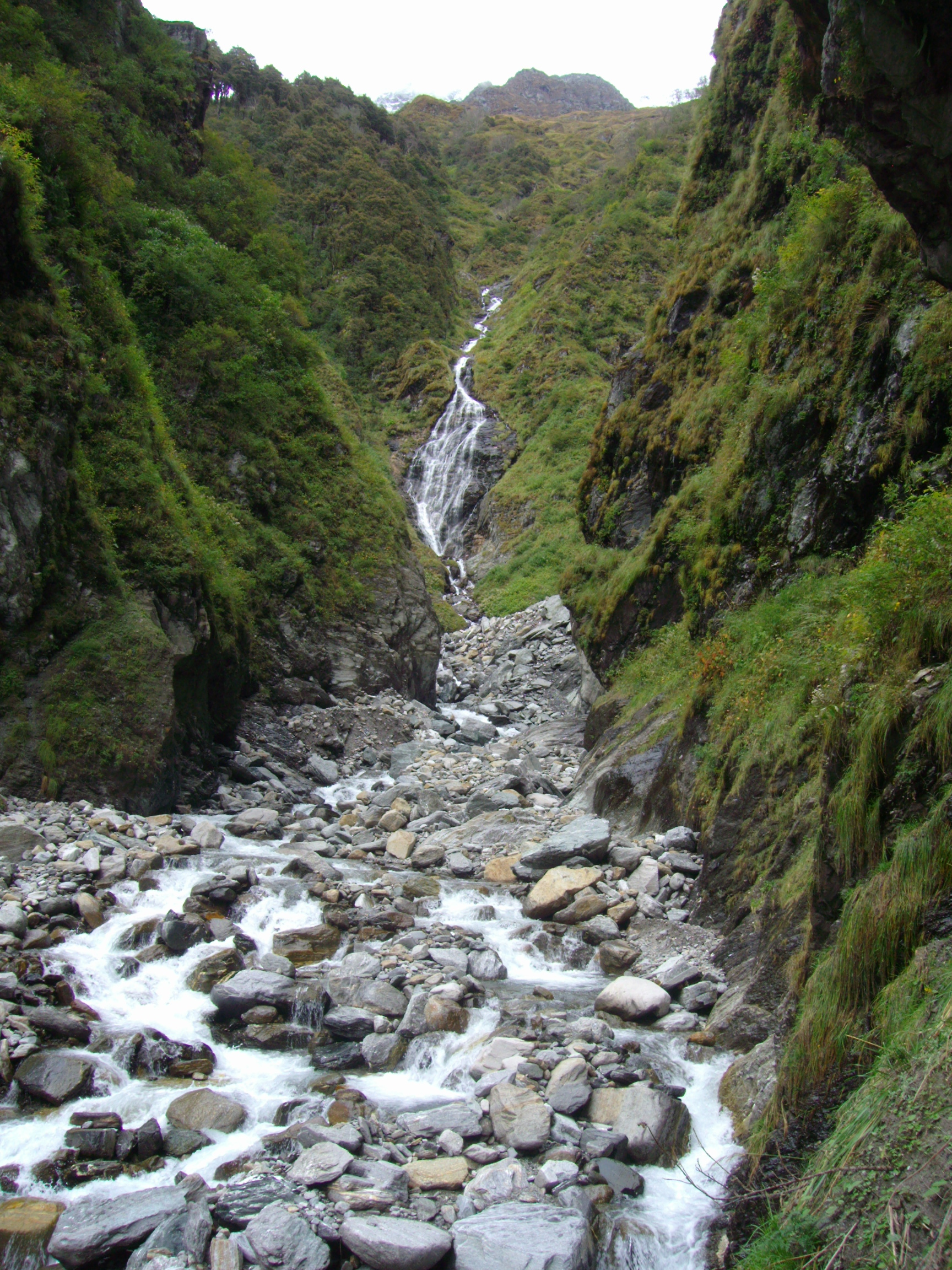
Yamunotri Temple
Uttarkashi, Uttarakhand
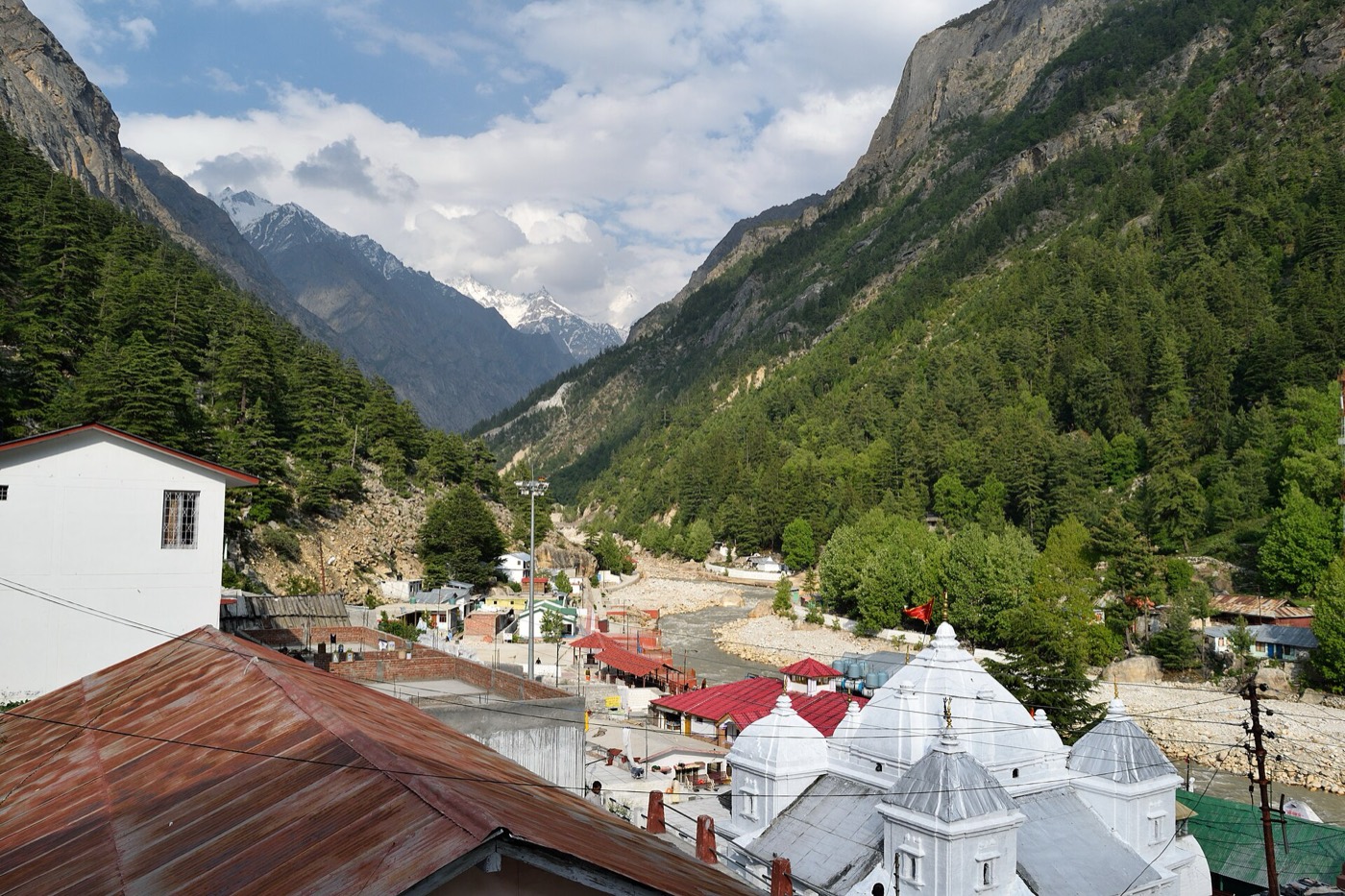
Gangotri Temple
Uttarkashi, Uttarakhand
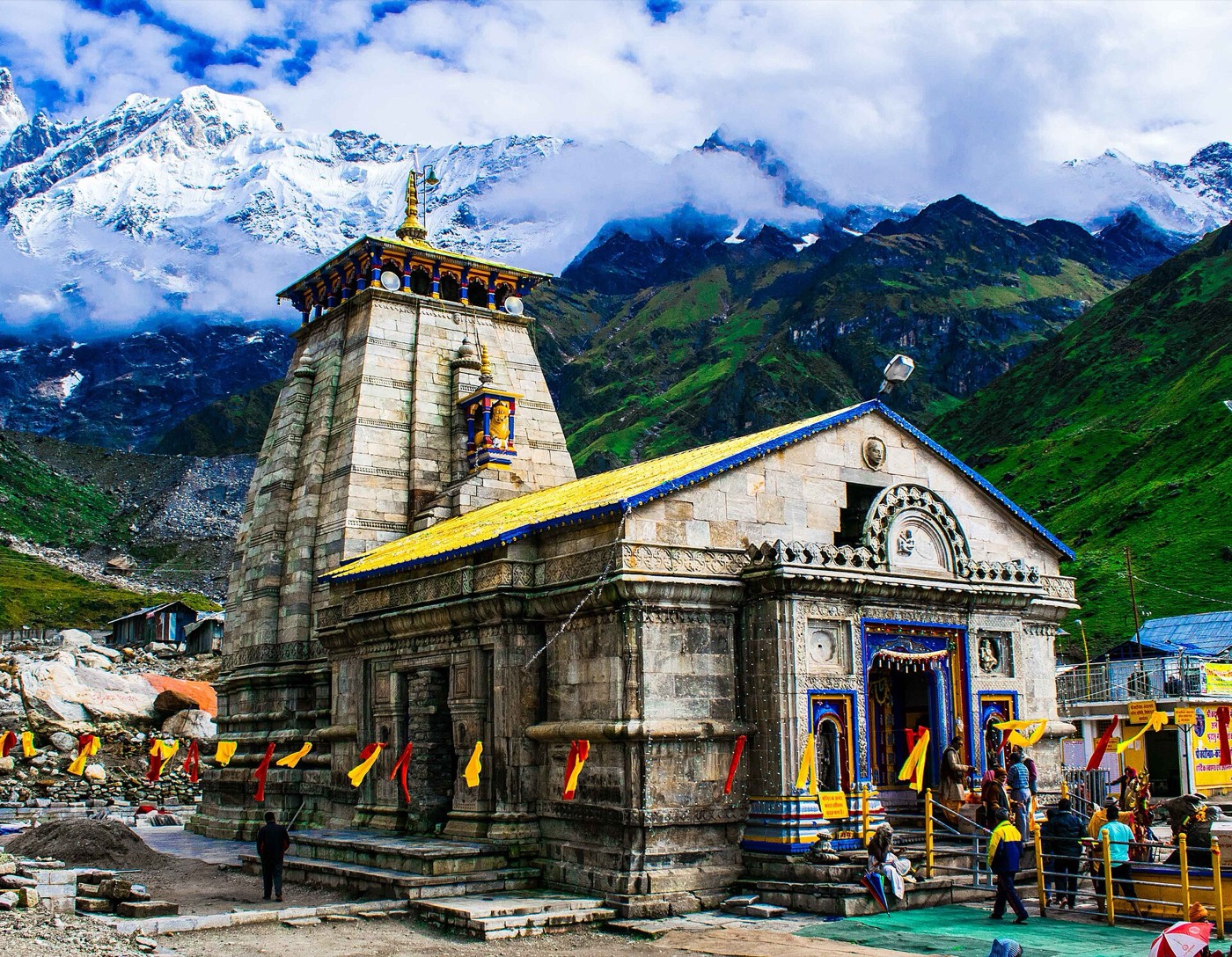
Kedarnath Temple
Rudraprayag, Uttarakhand
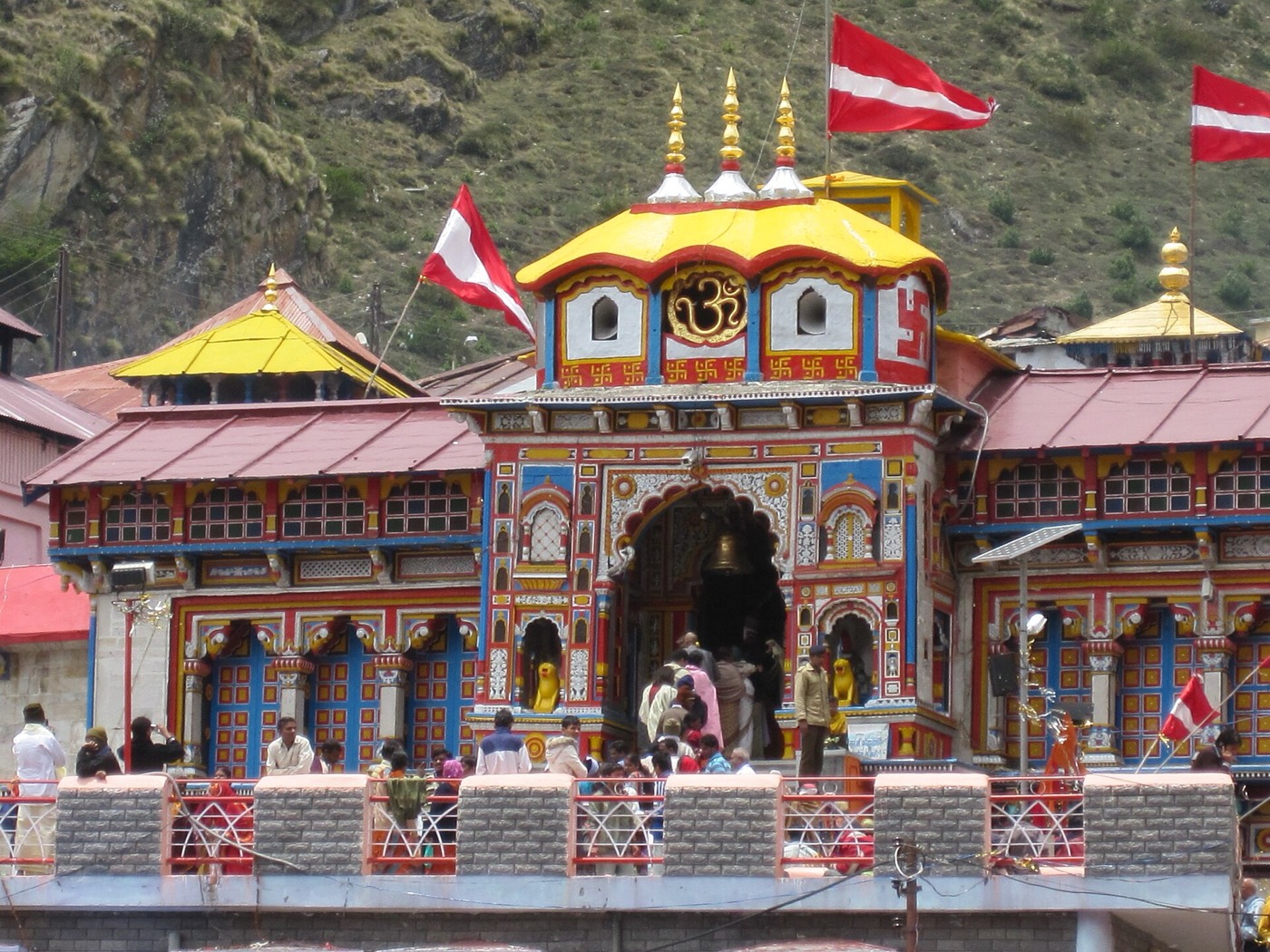
Badrinath Temple (Shri Badrinarayan Dham)
Chamoli, Uttarakhand
The season window: opening and closing
All four shrines open around Akshaya Tritiya, which falls in late April or early May, and close around Diwali and the days just after it in October or November. The exact dates are set fresh each year by the temple committees: Kedarnath's opening date is traditionally announced at Maha Shivratri in February, and Badrinath's closing date is declared on Vijayadashami. Do not lock non-refundable bookings to a guessed date; wait for the announcements.
Within the open season, the comfortable windows are May to June and September onward. July and August bring the monsoon, and these valleys take it badly: the Yamunotri path is landslide-prone, and road closures are common on the Badrinath highway between July and September. The weeks just after opening and the clear weeks of autumn are the calmest time to travel, though the opening days themselves draw the year's biggest crowds.
| Shrine | Opens around | Closes around | Winter seat |
|---|---|---|---|
| Yamunotri | Akshaya Tritiya (late Apr or early May) | Yama Dwitiya / Bhai Dooj, two days after Diwali (Oct or Nov) | Kharsali (Khushimath), near Janki Chatti |
| Gangotri | Akshaya Tritiya (late Apr or early May) | Diwali (Oct or Nov) | Mukhba (Mukhimath), near Harsil |
| Kedarnath | Late Apr or early May, date announced at Maha Shivratri | Around Bhai Dooj (Oct or Nov) | Ukhimath (Omkareshwar Temple) |
| Badrinath | Late Apr to early May | Mid-November, date announced on Vijayadashami | Narsingh Temple, Joshimath |
The road legs, stage by stage
Most yatris stage the circuit from Haridwar or Rishikesh, the last big towns before the hills. Rishikesh is the nearest convenient railhead for the whole circuit: approx 210 km from Yamunotri's road-head, approx 250 km from Gangotri, approx 216 km from Gaurikund below Kedarnath, and approx 295 km from Badrinath, which alone is a mountain drive of roughly 10 to 12 hours.
Jolly Grant airport near Dehradun is the air link for every leg: approx 198 to 210 km from the Yamunotri side, approx 230 km from Gangotri, approx 238 km from the Kedarnath road-head and approx 317 km from Badrinath. Between the shrines the legs are long, and every figure below is an approximate road distance that varies by route and diversions, so confirm conditions locally before each leg and avoid night driving.
| Leg | Approx road distance | Notes |
|---|---|---|
| Rishikesh to Janki Chatti (for Yamunotri) | Approx 210 km | Via Barkot; the final 6 km to the temple is on foot |
| Yamunotri side to Gangotri | Approx 220-230 km | Via Uttarkashi, the main staging town of the Bhagirathi valley |
| Gangotri to Kedarnath road-head | Approx 250 km | Park at Sonprayag; shared jeeps cover approx 5 km to Gaurikund, then the 16 km trek |
| Kedarnath to Badrinath | Approx 220 km | Via Rudraprayag, after trekking back down to Gaurikund |
The two treks: Yamunotri and Kedarnath
Gangotri and Badrinath are road-to-door shrines; the drive ends and the temple stands in front of you. Yamunotri and Kedarnath are not. Vehicles stop at Janki Chatti for Yamunotri, and the final approx 6 km is a steady uphill climb of about 2.5 to 3 hours, with the descent taking roughly 1.5 to 2 hours. Ponies, dolis and pithoos wait at the trek head at fixed rates, and most pilgrims go up and down in a single day, starting at dawn. At the top, the custom is to cook rice tied in muslin in the boiling Surya Kund spring and carry it back as prasad.
Kedarnath asks more. Private vehicles park at Sonprayag, shared jeeps cover the approx 5 km to Gaurikund, and from there the path climbs approx 16 km through Jungle Chatti, Bhimbali and Linchauli. Allow 6 to 8 hours on foot. Ponies, palkis and porters are available, and seasonal helicopter services fly from the Phata, Sersi and Guptkashi helipads, though they are weather-dependent and should never be the only plan. Sturdy waterproof trekking shoes and a raincoat belong in every bag; the weather on both paths turns fast.
| Shrine | Last motorable point | On foot | Help available |
|---|---|---|---|
| Yamunotri | Janki Chatti | Approx 6 km, 2.5-3 hrs up, 1.5-2 hrs down | Ponies, dolis, pithoos at fixed rates |
| Gangotri | Road reaches the temple town | No trek required | Long mountain drive; Uttarkashi approx 100 km below |
| Kedarnath | Gaurikund (park at Sonprayag, approx 5 km before) | Approx 16 km, 6-8 hrs | Ponies, palkis, porters; seasonal helicopters from Phata, Sersi, Guptkashi |
| Badrinath | Road reaches the temple | No trek required | Motorable to the door; Joshimath approx 45 km below |
Registration before you travel
Char Dham registration is mandatory, and it is free. Register on the state portal at registrationandtouristcare.uk.gov.in before you travel, carry the e-pass along with a photo ID, and expect it to be checked en route. Darshan itself is free at all four shrines; the pass is a crowd-management measure, not a ticket.
Sponsored pujas are a separate, paid matter. At Badrinath they are rate-carded and booked through the Badrinath-Kedarnath Temple Committee, with indicative rates such as approx INR 4,300 for the Maha Abhishek, and Kedarnath's special sevas such as Rudrabhishek run through the same committee. None of this is required for ordinary darshan.
Haridwar, the gateway, and Mansa Devi
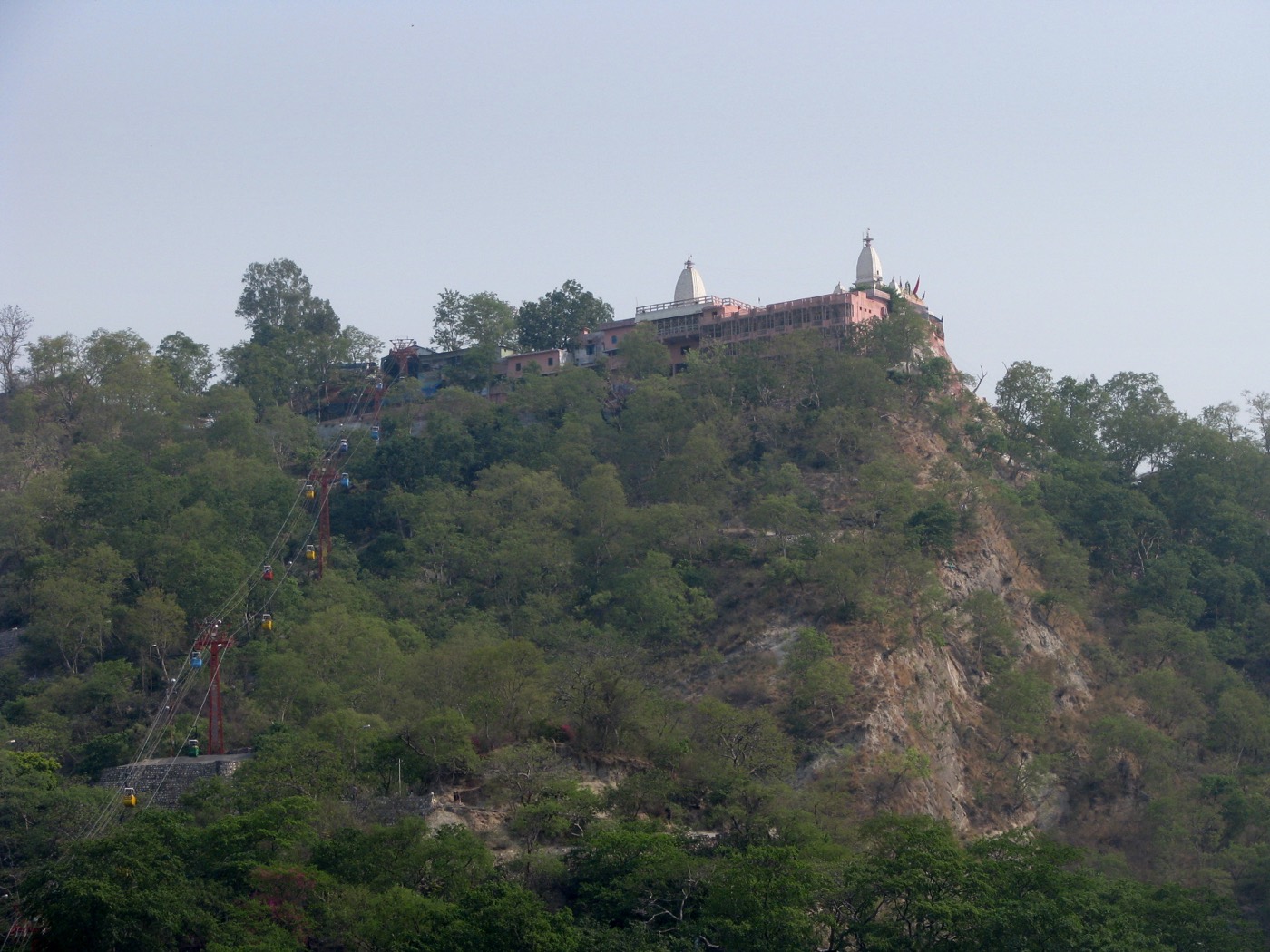
Haridwar is where the plains hand the yatra over to the hills. Haridwar Junction is the best-connected railhead in the region, Jolly Grant airport is approx 37 km away, and Rishikesh sits approx 25 km up the road. Many yatris spend their first evening here and begin with a darshan of Mansa Devi, the wish-granting goddess on Bilwa Parvat above Har Ki Pauri, approx 3 km from the station.
The Udan Khatola ropeway covers the approx 800 m to the hilltop in about five minutes, at approx Rs 163 one-way or Rs 240 return; the alternative is a roughly 3 km uphill walk. Note that the ropeway runs approx 5:00 AM to 6:00 PM, shorter than the temple's own hours, so a late-evening darshan usually means walking down. The custom is to tie a red mauli thread on the wish tree and return after the wish is granted to untie it, which gives a Char Dham journey a natural closing ritual on the way home. Her paired shrine, Chandi Devi, sits across the Ganga on Neel Parvat with its own ropeway; this site does not yet cover it in detail.
Planning around darshan hours
The four shrines keep different daily rhythms, and the midday closures are the detail that wrecks loose plans. Badrinath opens at 4:30 AM, closes from 1:00 PM to 4:00 PM for bhog and cleaning, then runs to 9:00 PM. Kedarnath opens around 4:00 AM, and physical touch of the lingam with ghee abhishek is allowed only before approx 3:00 PM; the temple reopens around 5:00 PM for evening darshan until approx 9:00 PM.
The goddess shrines run simpler days. Yamunotri holds darshan roughly 6:00 AM to 8:00 PM through the open season, and Gangotri opens with mangala aarti around 6:15 AM and closes around 9:30 PM, with a small riverside Ganga aarti near sunset that is worth planning an evening around. All of these times are approximate and shift with weather, ritual length and committee schedules, so treat them as planning anchors: arrive before late morning or aim for the evening window, and never bank on a midday darshan.
Where to sleep along the route
On the Yamunotri leg, sleep at Janki Chatti beside the trek head, at Barkot roughly 45 to 50 km away, or at Hanuman Chatti; GMVN rest houses and dharamshalas keep basic rooms, some at a few hundred rupees a night. On the Gangotri leg, the temple town itself has rest houses and ashrams, Harsil approx 25 km before it is the quiet deodar-forest option, and Uttarkashi, approx 100 km below, is the last town with reliable ATMs, so carry cash up from there.
At Kedarnath, the GMVN tented colony and lodges at the top hold pilgrims overnight, while Sonprayag, Gaurikund, Guptkashi, Phata and Sitapur offer beds lower down near the pony and helicopter points. At Badrinath, most people stay in the town within walking distance of the temple, with Joshimath approx 45 km down-valley as the fallback when festival crowds fill it. Book ahead for May, June and September everywhere on this route; the season is short and every pilgrim in the country is inside it.
Frequently asked questions
What is the correct order of the Char Dham yatra in Uttarakhand?
When does the Char Dham yatra start and end each year?
Is registration compulsory for the Char Dham yatra?
Can I do the Char Dham yatra without trekking?
Is the Chota Char Dham the same as the Char Dham of India?
Which Char Dham temple is the hardest to reach?
Compiled from our verified temple guides and public sources including Wikipedia: Chota Char Dham · Uttarakhand Tourism (official): Gangotri · euttaranchal.com - Kedarnath opening/closing dates 2026 · Euttaranchal: Badrinath opening/closing dates and how to reach · Wikipedia: Mansa Devi Temple, Haridwar. Timings and festival dates shift with the lunar calendar; confirm before you travel.