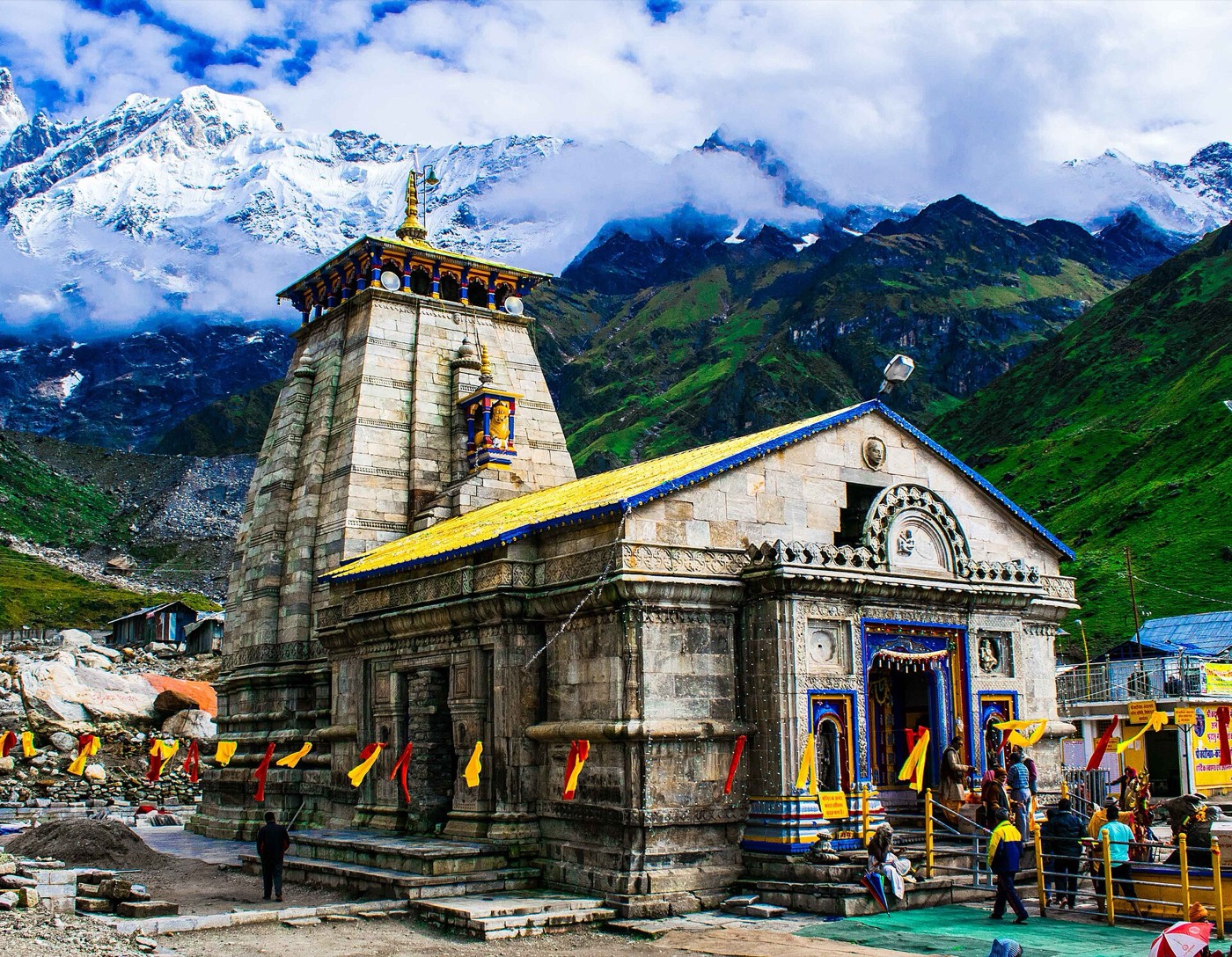
Closures come in layers. The grandest are seasonal: the four Himalayan dhams and Amarnath simply cannot operate through a Himalayan winter, so they open and close on the ritual calendar. Below them sit windowed temples like Sabarimala, open only in defined blocks through the year. Then come the calendar quirks: a Jain hill that closes for the monsoon, a shrine the sea swallows twice a day, a Delhi mandir that rests every Monday.
Finally there are the daily rhythms that catch travellers who did not read the timings page: firm midday closures at many of the great southern temples, and short ritual pauses nearly everywhere. This guide covers the first three layers in full and points you to each temple's own page for the daily detail.
One honesty rule before the tables: almost every date below is lunar. Opening and closing days move each year and are formally announced by the temple committees, so treat the windows as reliable and the specific dates as approximate until announced.
The big seasonal closures
Seven of our hundred temples close for a season or operate only in windows. These are the closures that decide entire itineraries.
| Temple | Open window | Closed | Where worship continues |
|---|---|---|---|
| Kedarnath | Late April or early May to around Bhai Dooj (Oct/Nov) | Approx Nov to Apr | Ukhimath (Omkareshwar Temple) |
| Badrinath | Late April or early May to around mid-November | Approx mid-Nov to late Apr | Narsingh Temple, Joshimath |
| Gangotri | Akshaya Tritiya to around Diwali | Approx Nov to Apr | Mukhba village |
| Yamunotri | Akshaya Tritiya to Yama Dwitiya (Bhai Dooj) | Nov to Apr | Kharsali (winter seat) |
| Amarnath | Yatra season, July to August | September to June | Cave snowbound; no darshan |
| Palitana (Shatrunjaya) | Roughly Kartik Purnima (Nov) to late June | Monsoon Chaturmas, late June to Kartik Purnima | Pilgrim climb suspended; base-town temples open |
| Sabarimala | Mandala and Makaravilakku seasons plus short monthly windows | Rest of the year | Sanctum shut, no daily darshan |
The Himalayan winter: where the deity goes when the doors shut
The four Uttarakhand dhams do not simply lock up; the worship moves. When Kedarnath's kapat shut for winter, the deity is worshipped at Ukhimath. Badrinath's worship shifts to the Narsingh Temple at Joshimath. Gangotri's goddess winters at Mukhba village and Yamunotri's at Kharsali. For pilgrims this is not a consolation prize but a genuine tradition: winter darshan at the valley seats is quiet, cold and much loved by those who know it exists.
The reopening around Akshaya Tritiya in late April or early May is itself a festival, with the deities carried up in procession and the season's first darshan drawing enormous crowds. Closing days around Diwali and Bhai Dooj are announced ahead on the ritual calendar, Badrinath's traditionally on Vijayadashami. Amarnath is the extreme case: a yatra season of weeks in July and August, mandatory registration, and eleven months of snowbound silence.
Sabarimala's window system, explained
Sabarimala is the temple most misunderstood by casual planners because it is not open daily at all. The great season is Mandala Pooja, from mid-November to late December, with darshan running 3:00 AM to 1:00 PM and 3:00 PM to 11:00 PM, flowing into the Makaravilakku season from late December to mid-January, when darshan runs late into the night on peak days.
Outside those seasons the temple opens only briefly: for the first five days of each Malayalam month and for specific festival days, with similar morning and evening windows. The rest of the year the sanctum is simply shut. Add the mandatory free virtual-Q booking in season and the traditional 41-day vratham many pilgrims observe, and Sabarimala becomes a pilgrimage you plan around the temple's calendar, never your own.

Chaturmas, monsoon and the closed hills
Jain tradition adds its own season. The pilgrim climb up Palitana's Shatrunjaya hill is suspended for the four monsoon months of Chaturmas, roughly late June until Kartik Purnima in November, when the reopening draws one of Gujarat's great pilgrim gatherings. The town's base temples stay open, but the summit tirth, the point of the journey, does not.
Monsoon closes other hills less formally. Girnar's stone stairway turns slippery and risky from mid-June to September, a caution rather than a closure, but one worth obeying. Bhimashankar carries a current restriction of its own: with the sabhamandap and stairs under repair, the darshan window is curtailed, so confirm before travelling. And in the Gir forest, Tulsishyam answers to a gate rule rather than a season: vehicles must clear the forest stretch before night.
Tides, Mondays and other closure quirks
The strangest closure in our hundred belongs to Stambheshwar Mahadev at Kavi Kamboi, where the Arabian Sea itself sets the timings: at high tide, twice daily, the shrine is submerged and there is simply no access until the water withdraws. Pilgrims plan the visit around the tide table the way others plan around aarti.
Akshardham in Delhi rests every Monday, closed all day, a fact that has ruined more weekend plans than any mountain pass; its exhibition ticket counter also shuts around 5:30 PM on open days. Kamakhya seals its sanctum each June for the Ambubachi Mela, approximately June 22 to 25, while a huge congregation gathers on the hill outside; the reopening is one of Assam's great religious days.
And everywhere, the midday break endures. Padmanabhaswamy closes from 12:00 noon to 5:00 PM, Prem Mandir from noon to 4:30 PM, Rameswaram absolutely from 1:00 to 3:00 PM. These are not closures in the seasonal sense, but they close more doors on more unprepared visitors than winter ever does; each temple's timings page carries its exact rhythm.
| Temple | Quirk | Detail |
|---|---|---|
| Stambheshwar Mahadev, Kavi Kamboi | Tidal, twice daily | Shrine submerged at high tide; no access until the sea withdraws |
| Akshardham, Delhi | Weekly | Closed all day every Monday; exhibitions ticketed, last entry approx 5:30 PM |
| Kamakhya, Guwahati | Annual, June | Sanctum closed approx June 22 to 25 for Ambubachi Mela |
| Tulsishyam (Gir forest) | Forest gate | Vehicles must clear the Gir forest stretch before night |
| Girnar | Monsoon caution | Steps slippery and risky, mid-June to September |
| Bhimashankar | Restoration | Darshan window curtailed during sabhamandap repairs; confirm before travel |
| Padmanabhaswamy | Daily | Closed 12:00 noon to 5:00 PM between morning and evening slots |
| Rameswaram | Daily | Absolute midday closure, 1:00 to 3:00 PM |
| Prem Mandir, Vrindavan | Daily | Closed noon to 4:30 PM; only the garden approach stays open |
When the calendar flips: closures become all-night openings
The same ritual calendar that closes temples also throws them open. On Mahashivratri, Lingaraja and Srikalahasti run round-the-clock darshan; in Shravan, Baidyanath's queue barely stops for the Kanwariyas; on Janmashtami, Dwarka stays open through the night for the midnight abhishek; on Vaikunta Ekadasi, Srirangam opens the Paramapada Vasal gate to its greatest crowds of the year. Chotila runs day and night through both Navratris.
The planning lesson cuts both ways: the extraordinary openings are also the extraordinary crowds. If your goal is the festival, go and embrace the queue. If your goal is quiet darshan, the same calendar tells you exactly which weeks to avoid.
Three rules for closure-proof planning
First, for any Himalayan or windowed temple, confirm the current year's opening and closing dates from the temple committee before booking anything non-refundable; every date is lunar and every year is different. Second, never schedule a long journey to arrive at midday: across India the early morning and evening are the safe darshan windows, and noon is when doors close. Third, check the one quirk that applies to your temple, the tide at Kavi Kamboi, the Monday at Akshardham, the forest gate at Tulsishyam, because quirks, not seasons, are what actually catch experienced travellers.
Frequently asked questions
Which Indian temples close for winter?
Is Sabarimala open all year?
Why is Palitana closed in the monsoon?
Which temple closes because of the tide?
Is Akshardham Delhi closed on Monday?
When is the Kamakhya temple sanctum closed?
Compiled from our verified temple guides and public sources including Rudraprayag District: Kedarnath Yatra · Euttaranchal: Badrinath opening and closing dates · Wikipedia: Chota Char Dham. Timings and festival dates shift with the lunar calendar; confirm before you travel.