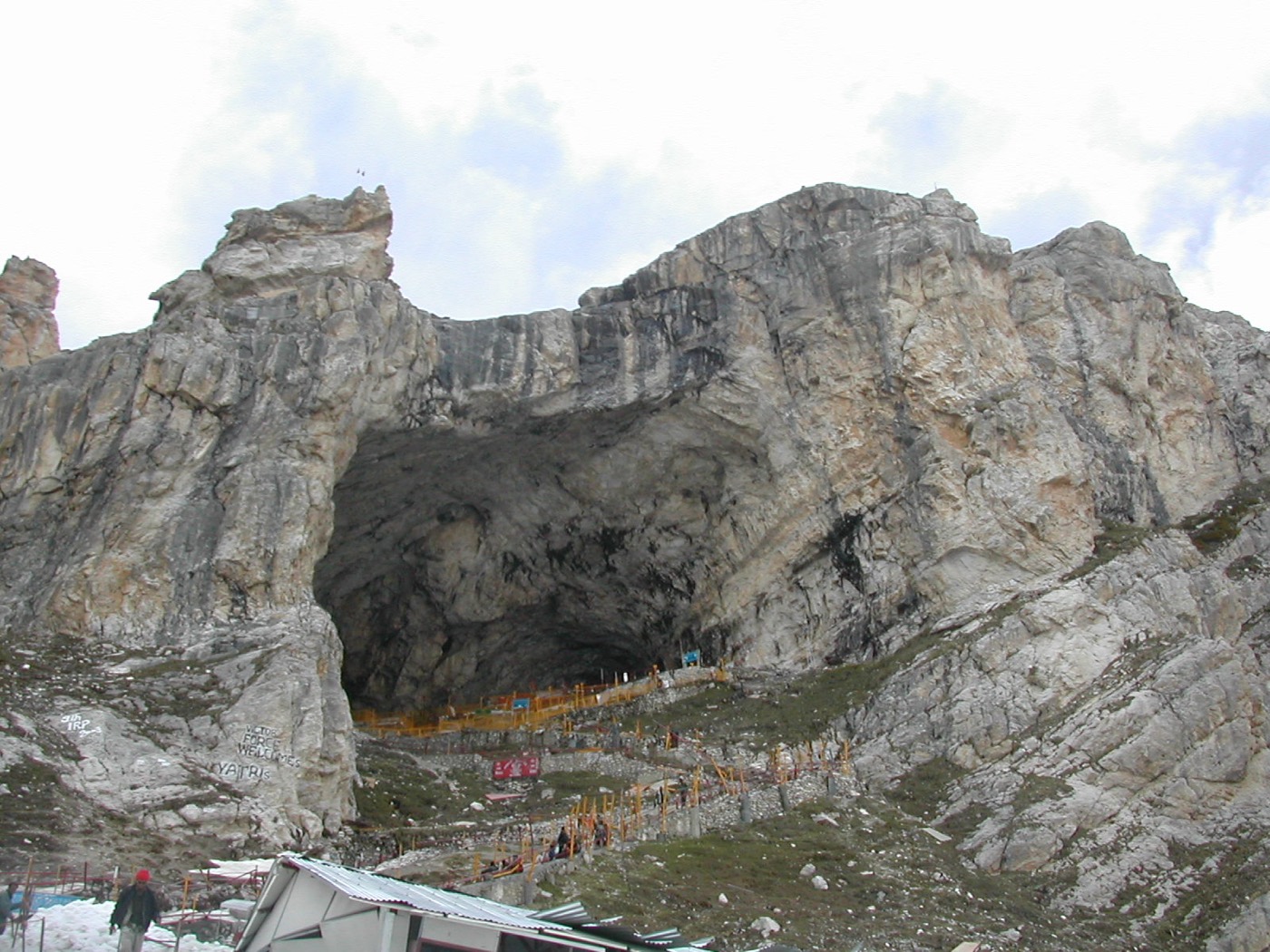
Darshan timings at Amarnath Cave
| Season | Opens | Darshan | Closes | Status |
|---|---|---|---|---|
| Yatra season (Jul to Aug) | Early morning after the first bhog/aarti (approx) | Daylight hours only; batches move through the cave through the day | Darshan wound up by late afternoon / dusk (approx) | Open |
| Rest of the year (Sep to Jun) | Closed | No darshan; cave is snowbound and inaccessible | Closed | Closed |
Read the full Timings & Darshan Hours →
How to reach Amarnath Cave (Shri Amarnathji)
You cannot reach the cave directly by any vehicle. Every pilgrim funnels to one of two base camps by road, then completes the last stretch on foot, pony, palki or (part way) helicopter. Plan the long-haul leg to Srinagar or Jammu first, then the road transfer, then the trek.
| Mode | Point | Distance | Notes |
|---|---|---|---|
| Air | Srinagar (Sheikh ul-Alam International Airport) | Approx 90 km to Pahalgam base, approx 100 km to Baltal base | Closest airport. Onward by taxi or shared cab to whichever base camp your route uses. |
| Train | Jammu Tawi railway station | Approx 178 km to Baltal by road (approx) | Long-established nearest major railhead with pan-India trains; long road transfer onward via the highway. Srinagar now also has rail links usable as an alternative. |
| Road (Baltal route) | Baltal base camp, near Sonamarg | Approx 95 km from Srinagar | The short, steep option: about 14 km one-way trek to the cave. Fit pilgrims do cave and return in one long day. Helicopter runs Baltal to Panjtarni. |
| Road (Pahalgam route) | Nunwan / Chandanwari base near Pahalgam | Approx 90 km from Srinagar to Pahalgam | The traditional, gentler, longer option: approx 46 to 48 km over 3 to 5 days via Chandanwari, Sheshnag and Panjtarni. Helicopter runs Pahalgam to Panjtarni. |
Puja & aarti schedule
- Morning bhog and aarti at the cave; darshan begins after it for the day's pilgrimsEarly morning (approx)
- Evening aarti at the holy cave before darshan winds up for the dayEvening / dusk (approx)
- Chhari Mubarak (the silver mace of Lord Shiva) reaches the cave for the ceremonial final puja that closes the yatraShravan Purnima (Raksha Bandhan)
Read the full Aarti & Puja Schedule →
Dress code & temple rules
Dress for a high-altitude trek, not a plains temple: heavy woollens, a windproof and waterproof jacket, thermals, gloves, a cap and sturdy non-slip trekking shoes. Temperatures near the cave can fall close to freezing even in July and August.
Carry a raincoat or poncho and a walking stick; the path has rain, sleet, slush and cold streams. A small torch and a filled water bottle are practical essentials.
Conservative, modest clothing is expected at the cave. Leather items are best avoided at the shrine itself.
Carry your SASB registration slip and the Compulsory Health Certificate at all times; both are checked at access-control gates.
Acclimatise, walk slow, and do not attempt the trek if you are unwell. Only pilgrims aged 13 to 70 are allowed, and women more than six weeks pregnant are not permitted.
Read the full Dress Code & Temple Rules →
Best time to visit & festivals
There is effectively only one time to come: the yatra window itself in the Hindu month of Shravan. Within that window, the ice lingam is generally fullest earlier in the season and around the full moon, and thins as summer warms. Booking your registration slot early and picking a mid-season, non-peak date balances a good lingam with lighter crowds.
| Festival | When | Significance |
|---|---|---|
| Shri Amarnath Yatra | Shravan, approx early July to late August (2026: 3 Jul to 28 Aug) | The pilgrimage itself. The only period the cave is open; lakhs of devotees trek in over roughly 50 to 60 days to see Baba Barfani. |
| Shravan Purnima / Raksha Bandhan | Full moon of Shravan (August) | The climax of the yatra. The ice lingam traditionally attains its greatest height, and the Chhari Mubarak reaches the cave for the final rites that formally close the pilgrimage. Peak |
| Chhari Mubarak procession | Days leading up to Shravan Purnima | The saffron-robed silver mace of Lord Shiva is carried from the Dashnami Akhara in Srinagar via Pahalgam, Chandanwari, Sheshnag and Panjtarni to the cave, one of the oldest rituals of the yatra. |
Read the full Best Time to Visit & Festivals →
Nearby temples & tirths
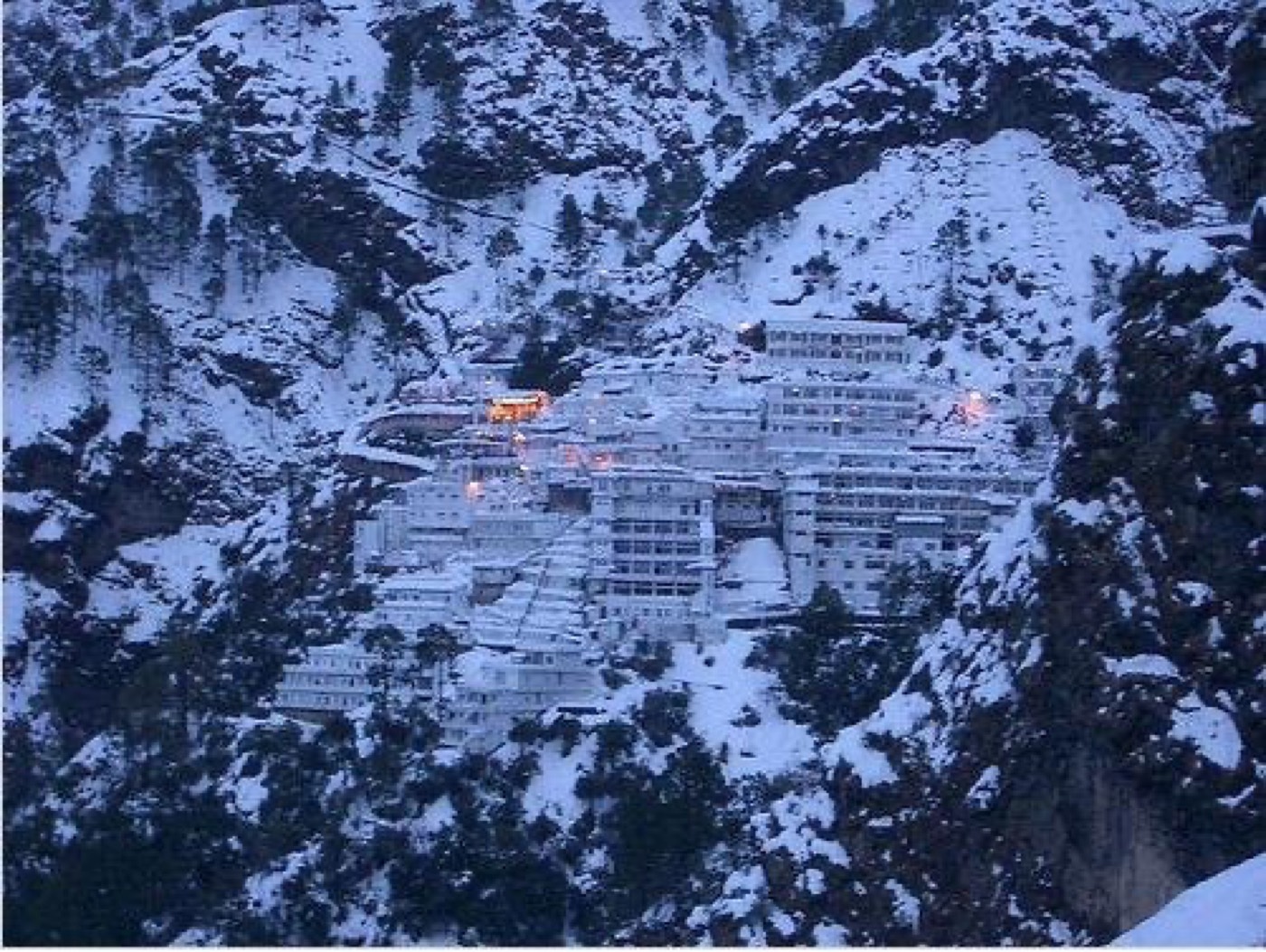
Vaishno Devi
The other great Jammu & Kashmir pilgrimage, a cave shrine of the Mother Goddess reached by a hill trek from Katra; many pilgrims pair the two.
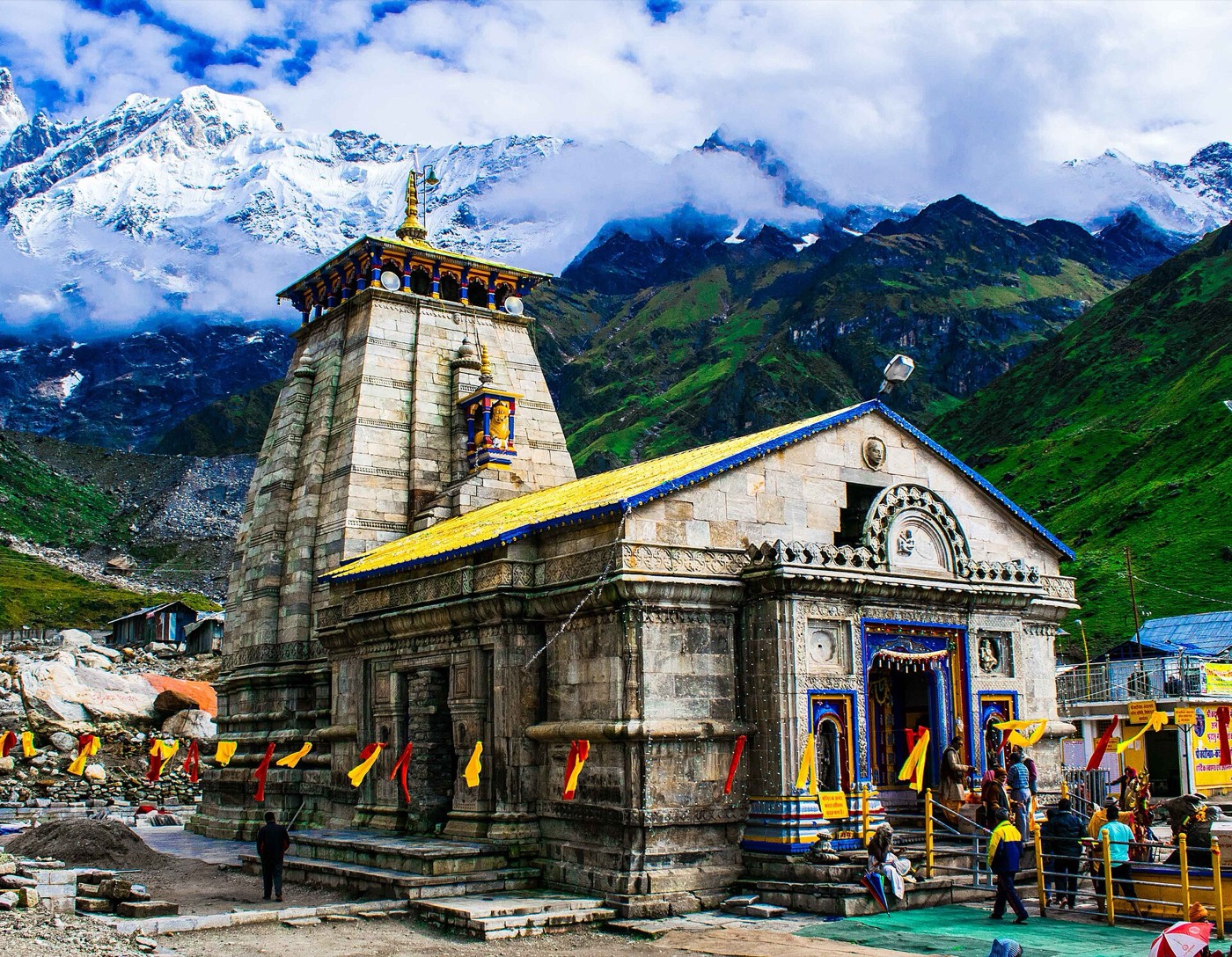
Kedarnath
The nearest kindred high-Himalayan Shiva jyotirlinga, also a seasonal snow-line shrine reached on foot, in neighbouring Uttarakhand.
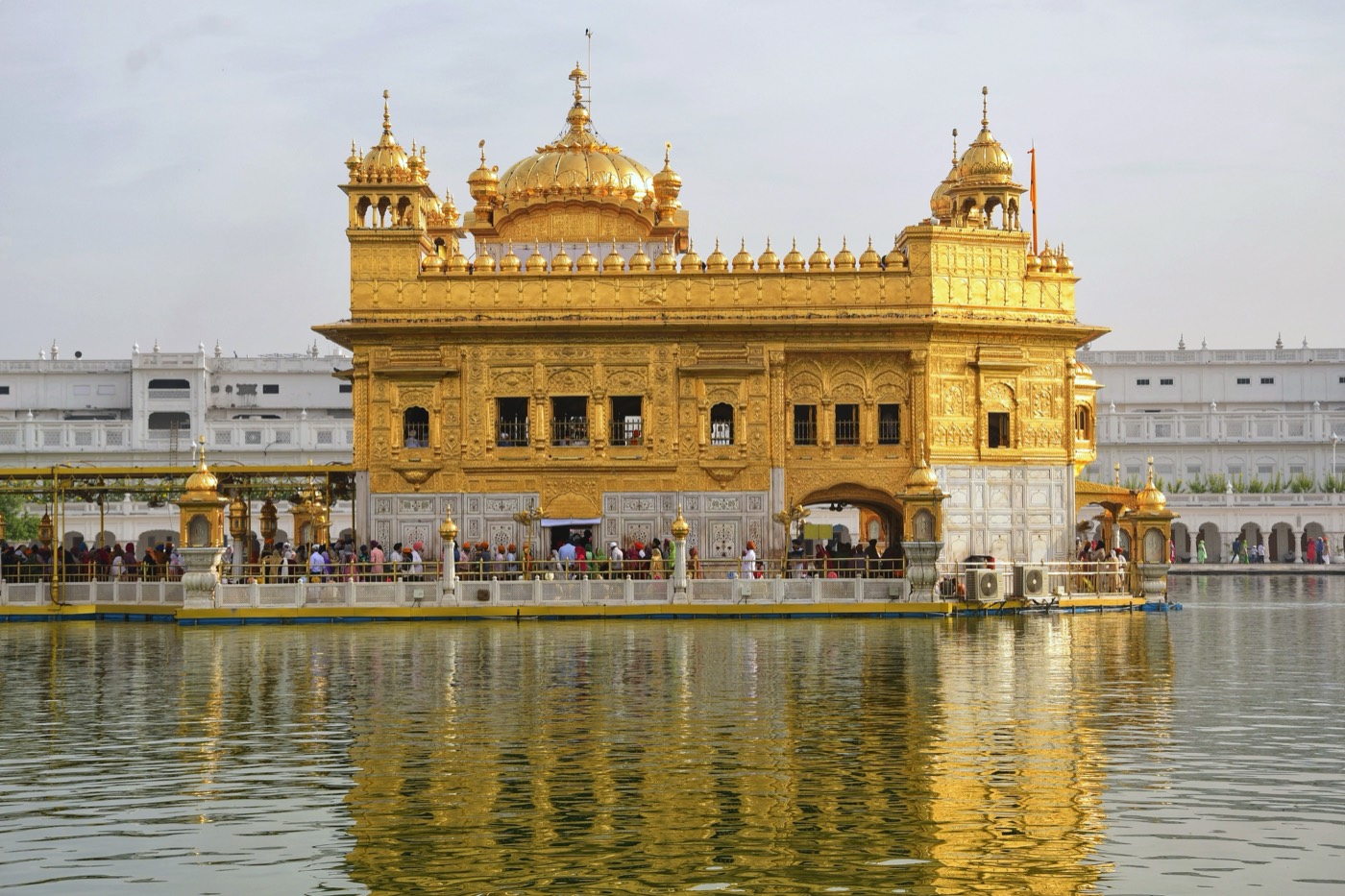
Golden Temple, Amritsar
The Sikh spiritual heart in Punjab, a common stop on the overland approach to Kashmir from the plains.
Read the full Nearby Temples & Tirths →
Where to stay
Almost nobody stays at the cave; you sleep on the route. The main overnight bases are Baltal (near Sonamarg) and Nunwan/Pahalgam, with intermediate halts at Chandanwari, Sheshnag and Panjtarni on the longer route. Historically these were tented camps and langar-run halts; for 2026 the SASB has been replacing tents at key base camps like Baltal and Nunwan with all-weather prefabricated fibre-and-iron units with attached washrooms, hot and cold water, pantries and medical support, plus 100-bed hospitals with ICU at Baltal and Chandanwari. Free langars run by socio-religious organisations feed pilgrims all along the track from the base camps up to the cave. For a softer trip, base yourself in Pahalgam or Srinagar (hotels and houseboats) and do the trek in stages. Book tent or camp accommodation and helicopter slots well in advance; on-mountain capacity is limited and weather-dependent.
Frequently asked questions
Amarnath cave darshan timings today
Is Amarnath open in winter / December?
Nearest railway station and airport to Amarnath cave
Which is easier, the Baltal or Pahalgam route to Amarnath?
How to register for Amarnath Yatra 2026?
Compiled from public sources including Shri Amarnathji Shrine Board (SASB) and yatra 2026 details via news / travel coverage · Amarnath Yatra 2026 dates, registration and routes (StayVista / SOTC guides) · How to reach Amarnath: rail, air and road distances · Amarnath cave, ice lingam and Chhari Mubarak significance (Maps of India / Kashmir Observer). Timings and seasonal closures change; confirm with the temple trust before travelling.