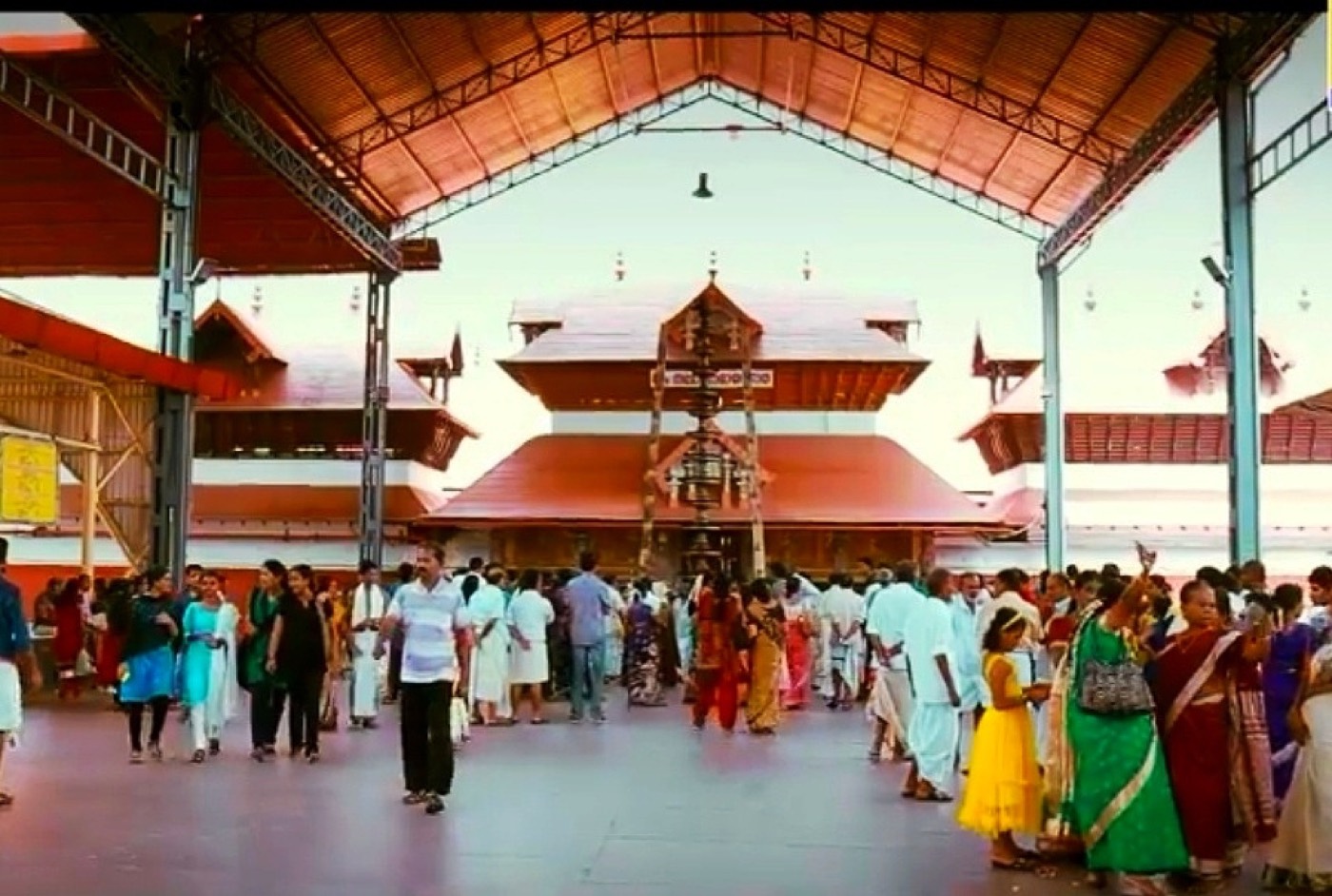
The baseline across India is simple and rarely enforced harshly: cover shoulders and knees, avoid shorts, mini skirts, sleeveless and revealing wear, and remove footwear before entering. Follow that and you will be welcome almost everywhere, from Somnath to Kalighat.
Above that baseline sit three tiers that catch travellers out. The traditional-dress tier, mostly in Kerala and Tamil Nadu, where a mundu or saree is expected and Western clothing is refused at the sanctum. The leather-free tier, standard at Jain tirths, where belts, wallets and watch straps must come off. And the electronics tier, where phones and cameras are banned entirely and deposited at cloakrooms.
Every rule below comes from our verified temple guides. When in doubt, dress traditionally: nobody has ever been turned away for wearing a saree or a kurta.
The general Indian baseline
At the overwhelming majority of temples the expectation is modest, respectful clothing rather than a specific garment. Dwarka states it plainly: no shorts, sleeveless tops, mini skirts or ripped and revealing wear. Bhimashankar, Pushkar's Brahma temple, Eklingji, Koteshwar, Dakshineswar and Kalighat all say versions of the same thing: cover shoulders and knees, skip the beachwear.
Footwear comes off everywhere, without exception, and is left at stands or cloakrooms outside. Beyond that, traditional Indian wear is always the safest choice, and at busy shrines it also marks you as a pilgrim rather than a tourist, which subtly changes how queues and priests treat you.
The strict tier: where Western clothing will not pass
A group of temples, concentrated in the south, enforces traditional dress at the sanctum and means it. Guruvayur is the benchmark: men and boys must remove all upper garments, no shirt, banian or T-shirt inside, with a mundu tied at the waist as the traditional wear. Padmanabhaswamy enforces strict traditional dress alongside its Hindus-only rule.
Gokarna Mahabaleshwar enforces the same for close darshan: men remove shirts and upper garments and wear a dhoti or mundu, bare-chested. Grishneshwar applies it in Maharashtra, where male devotees must remove shirt, vest and belt before entering the garbhagriha, strictly enforced. Jagannath Puri discourages jeans, shorts, skirts and overtly Western wear altogether.
Two more deserve flagging because the rule applies only to a specific privilege. At Kashi Vishwanath, sparsh darshan, touching the lingam, requires traditional dress: men in dhoti-kurta, women in saree; without it you may still be allowed the ordinary darshan. At Mahakaleshwar, the Bhasma Aarti carries the strictest code in our data: men in a dhoti, often bare-chested or with an upper cloth, women in a saree or full salwar.
| Temple | Men | Women or general |
|---|---|---|
| Guruvayur | All upper garments removed; mundu tied at the waist | Traditional wear expected; Hindus only |
| Padmanabhaswamy | Strict traditional dress enforced | Strict traditional dress; Hindus only |
| Gokarna Mahabaleshwar | Shirts and upper garments removed; dhoti or mundu, bare-chested | Traditional dress for close darshan |
| Grishneshwar | Shirt, vest and belt removed before the garbhagriha | Modest traditional attire |
| Jagannath Puri | Dhoti-kurta common; jeans and Western wear discouraged | Saree or salwar kameez; Western wear discouraged |
| Kashi Vishwanath (sparsh darshan) | Dhoti-kurta required for touch darshan | Saree required for touch darshan |
| Mahakaleshwar (Bhasma Aarti) | Dhoti, often bare-chested or with upper cloth | Saree or full salwar |
| Kanchipuram Kamakshi | Dhoti or pyjama with upper cloth, or formal trousers and shirt | Saree, half-saree or salwar |
| Kukke Subramanya | Dhoti or mundu | Saree, half-saree or salwar-kameez |
The leather rule at Jain tirths and beyond
At Jain temples, leather is not a matter of etiquette but of doctrine. Bhadreshwar states it exactly: remove all leather before entering the shrine, belts, wallets, purses, watch straps and bags, a strict Jain rule rather than mere custom. Dilwara bans leather belts, wallets, purses, bags, shoes and even camera straps. Mahudi applies the same standard.
The rule extends well beyond Jain sites in softer form. Dakor does not permit leather items including belts, wallets and bags inside the temple. Gangotri and Kedarnath both ask for footwear and leather items to be removed before entering. Ambaji, Bhalka, Bahucharaji, Maihar and Amarnath all record leather as best left outside.
The practical answer: on a temple trip, wear a fabric belt, carry a cloth or synthetic wallet, and switch a leather watch strap for metal or rubber. It removes an entire category of gate-side problems.
Phones, cameras and the electronics bans
The strictest modern rule is not about clothing at all. Akshardham Delhi bans photography completely inside, with mobile phones, cameras, smartwatches and all electronics left at a free cloakroom. Mahabodhi at Bodh Gaya requires phones, cameras and electronics to be deposited at free counters near the gate, with a paid camera pass for those who want photographs.
Sanctum-level bans are widespread: Govind Dev Ji, Kaal Bhairav, Khatu Shyam, Chintpurni and Jwala Ji all restrict photography and phones inside the inner sanctum, with Chintpurni and Jwala Ji asking that devices be deposited before approaching the pindi and the flames. Jagannath Puri prohibits mobile phones, cameras and all photography inside the temple entirely.
Assume, as a default, that photography inside any sanctum is forbidden unless you can see other people doing it openly and no sign says otherwise. Cloakroom queues are also slower than security queues, so carrying nothing is the fastest way through any famous temple.
Special cases worth knowing before you pack
Palitana requires a barefoot climb: footwear of every kind is left at Taleti before the approx 3,800 steps begin. Sabarimala specifies the colours, black, blue or saffron, and makes the irumudi kettu mandatory for climbing the eighteen holy steps. Rameswaram adds a logistical wrinkle: because most pilgrims bathe at Agni Theertham and the 22 wells before darshan, you must be in dry clothes to enter for the main lingam, so carry a full change and a towel.
Badrinath asks for modest and warm dress, with woollens essential year-round at approx 3,133 m, and traditional attire appreciated for those sponsoring a puja. The Golden Temple requires the head to be covered by everyone, with scarves available at the entrance. Where a temple has a signature ritual, dress for the ritual rather than the temple.

Palitana (Shatrunjaya) Jain Temples
Bhavnagar, Gujarat

Sabarimala Sree Dharmasastha Temple
Pathanamthitta, Kerala
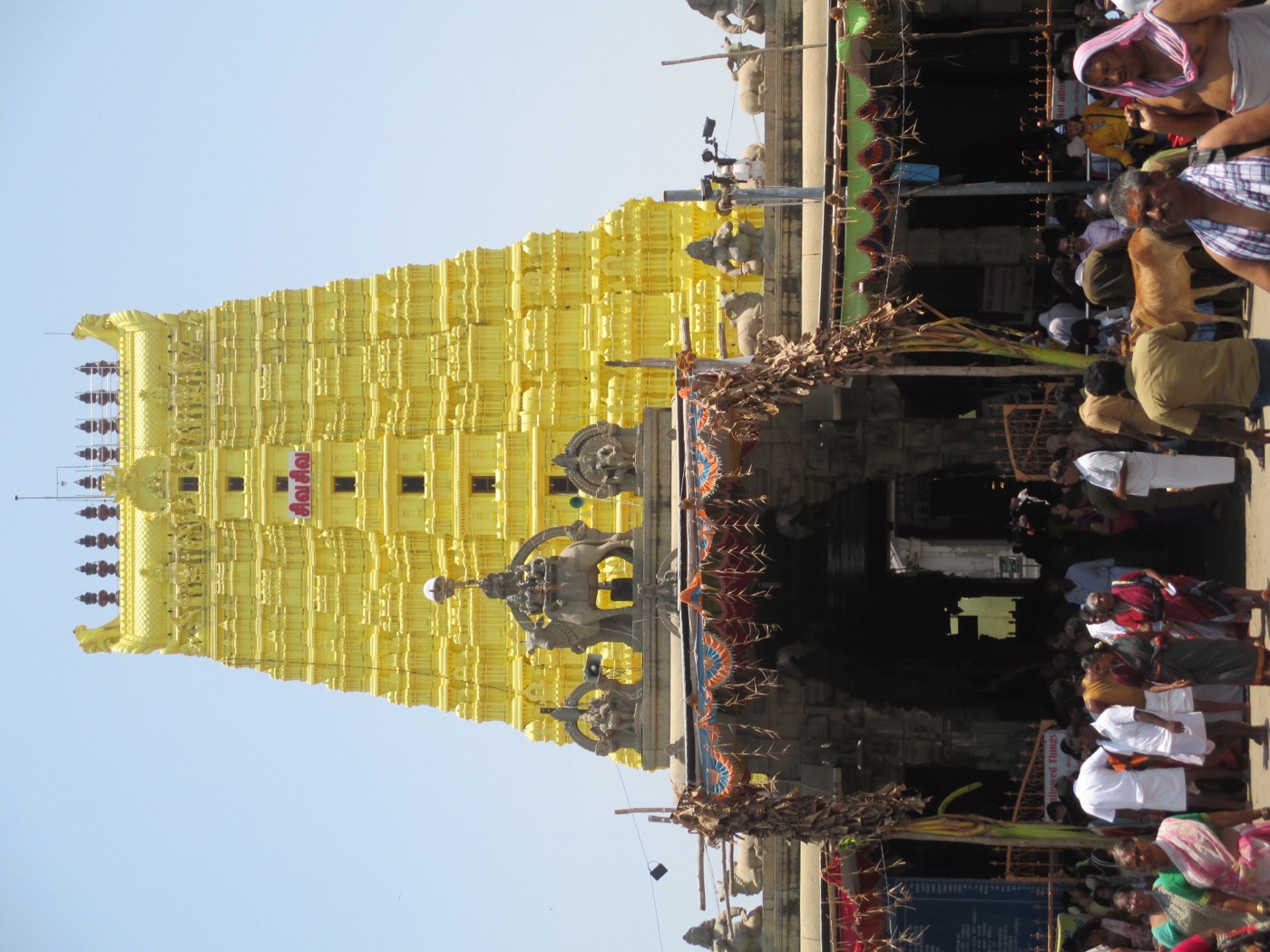
Ramanathaswamy Temple, Rameshwaram
Ramanathapuram, Tamil Nadu
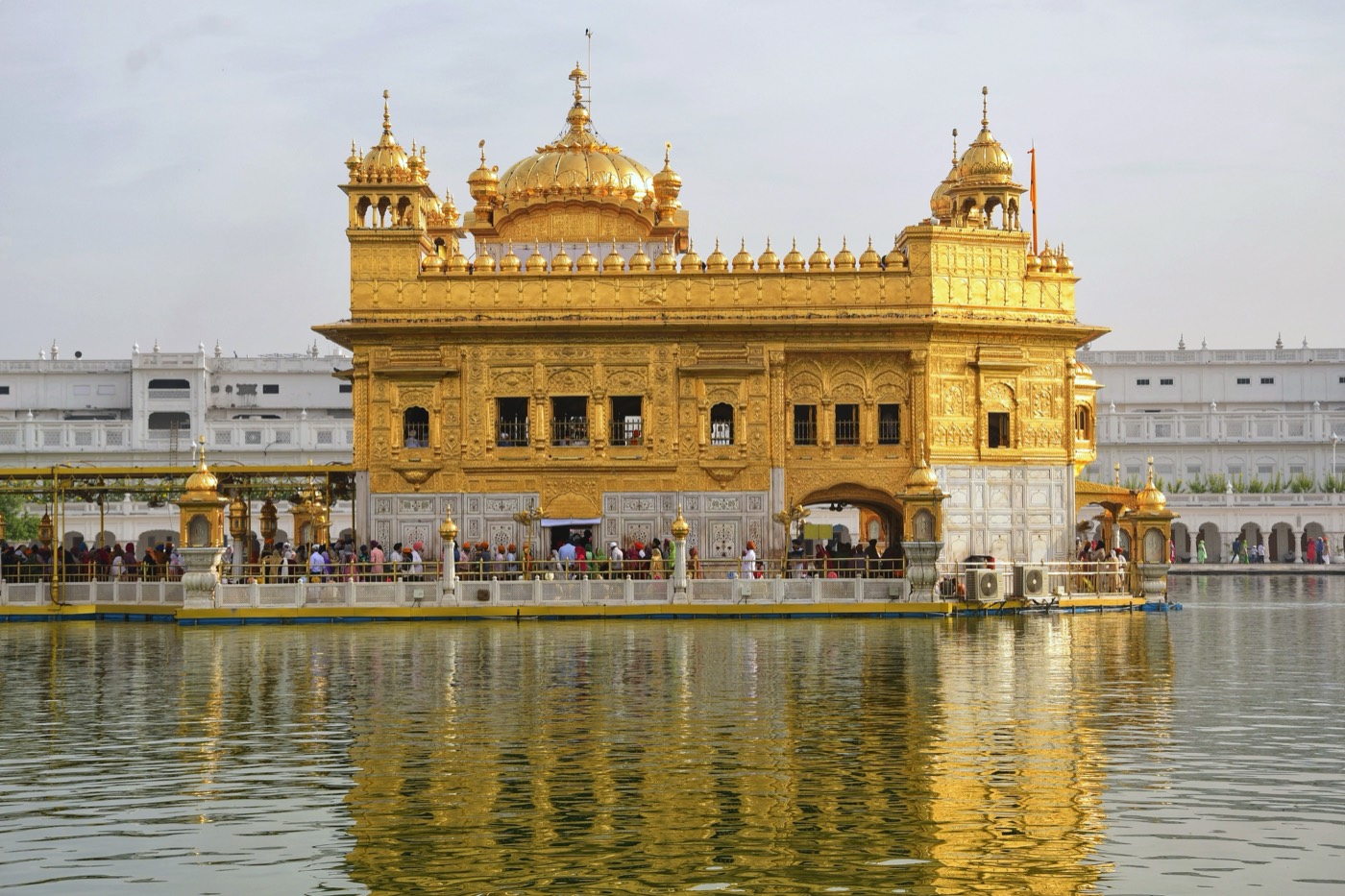
Golden Temple (Harmandir Sahib)
Amritsar, Punjab
What to actually pack for a temple trip
One outfit solves most of India: for women a saree or salwar kameez, for men a kurta with trousers or pyjama, plus a dhoti or mundu if the southern strict tier is on the itinerary, which can be bought outside almost any such temple for very little. Add a scarf or stole, useful for covering the head at Sikh shrines and shoulders anywhere.
Then the accessories that avoid trouble: a fabric belt, a non-leather wallet, slip-on footwear you can remove fifty times a day without thinking, and a small cloth bag rather than a leather one. Carry a change of dry clothes if a holy bath is on the route. Leave the electronics in the hotel where you can, because a phone you do not bring is a cloakroom queue you do not stand in.
Frequently asked questions
What is the dress code for Guruvayur temple?
Can you wear jeans to Indian temples?
Why is leather banned in Jain temples?
Are mobile phones allowed inside temples?
What should women wear to temples in India?
Is there a dress code for Kashi Vishwanath?
Compiled from our verified temple guides and public sources including Kerala Tourism: Padmanabhaswamy dress code FAQ · Tirtha Yatra: Puri Jagannath Temple dress code · Wikipedia: Guruvayur Temple · Shri Kashi Vishwanath Temple Trust: rituals. Timings and festival dates shift with the lunar calendar; confirm before you travel.