Start with the honest framing: these rules are not hostility, they are custody. Temples with faith-based entry rules are living ritual spaces whose custodians hold centuries-old conventions about who participates in the rites within. Visitors are not being graded as people; the sanctum is being kept as its keepers believe it must be kept. Arguing at the gate helps no one, and the viewing arrangements that exist at several sites are genuine, not consolation prizes.
The rules also vary far more than travellers assume. Jagannath Puri restricts its entire inner temple, Meenakshi welcomes everyone into its vast outer complex and restricts only the innermost sanctums, and the Golden Temple will feed you lunch regardless of what you believe. Knowing the gradient is the whole game.
Everything below comes from our verified temple guides. Where our data records no rule, we say nothing rather than guess; the temple's own page carries its full detail.
The Hindus-only temples
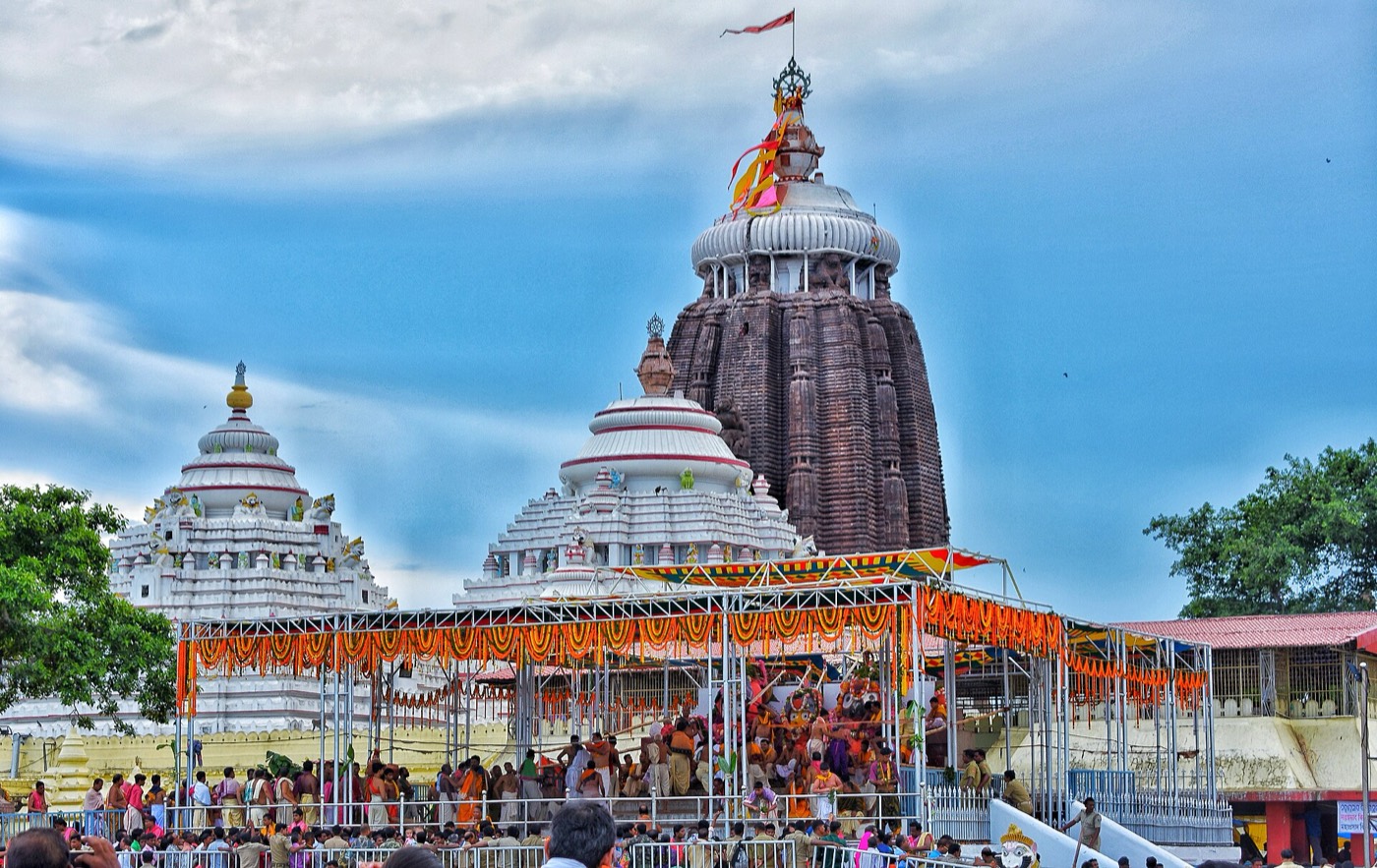
Five temples in our hundred carry a clear faith-based entry rule. At Jagannath Puri, entry to the inner temple is restricted to Hindus; foreign nationals and non-Hindus view the complex from the rooftop of the nearby Raghunandan Library. Guruvayur admits only Hindus past the entrance. Sree Padmanabhaswamy in Thiruvananthapuram is Hindus-only with strict traditional dress enforced even for those who enter.
In Bhubaneswar, entry inside the Lingaraja compound is restricted to Hindus, and non-Hindu visitors view the great tower from the raised platform built in Lord Curzon's time. And at Gujarat's Bhavnath Mahadev, the inner sanctum is traditionally reserved for Hindu worshippers, though the wider taleti area around it stays open to all.
| Temple | The rule | What a non-Hindu visitor can do |
|---|---|---|
| Jagannath Temple, Puri | Inner temple restricted to Hindus | View the complex from the Raghunandan Library rooftop nearby |
| Guruvayur, Kerala | Only Hindus allowed inside; non-Hindus not permitted past the entrance | Experience the temple's exterior and the town's pilgrimage life |
| Sree Padmanabhaswamy | Hindus only; strict traditional dress enforced | View the gopuram and precinct from outside |
| Lingaraja, Bhubaneswar | Compound entry restricted to Hindus | View from the raised Curzon-era platform beside the compound |
| Bhavnath Mahadev, Junagadh | Inner sanctum reserved for Hindu worshippers | The wider taleti area and its pilgrim life remain open |
Where only the sanctum is restricted
A second group welcomes everyone into the complex and draws the line at the innermost chamber. At Meenakshi in Madurai, non-Hindus are generally welcome in the outer complex, among the thousand-pillared halls and painted corridors, but may be restricted from the innermost sanctums. At Srirangam, the largest temple complex in our guides, non-Hindus are welcomed into most of the enormous enclosure and are traditionally not permitted into the innermost sanctum; a marked point shows where visitors stop.
Tirupati takes a third approach: non-Hindu visitors are asked to sign a declaration of faith in Lord Venkateswara before entering the sanctum area. It is a formality with real meaning, a statement that you come as a devotee rather than a spectator, and signing it insincerely serves nobody. High in the Himalaya, our Kedarnath guide records the opposite pole: no bar on foreign or non-Hindu visitors at the sanctum, with the only request being to follow the priests' instructions on where non-ritual visitors may stand.
Where everyone is welcome, emphatically
The Golden Temple at Amritsar is the world's great counter-example: free for all, no ticket, no VIP queue, and a langar that feeds every visitor regardless of faith, the whole institution built on radical openness. Akshardham in Delhi was designed for visitors of every background, with its exhibitions ticketed and its mandir free. Mahabodhi at Bodh Gaya, the seat of the Buddha's enlightenment, receives pilgrims and travellers from every nation on earth.
Bengal's great Kali temples, Kalighat and Dakshineswar, have long received visitors of all backgrounds, part of the Ramakrishna tradition's wide embrace. And the overwhelming majority of the hundred temples we cover carry no faith-based entry rule at all: the ordinary experience of a respectful non-Hindu visitor at most Indian temples is a warm welcome.
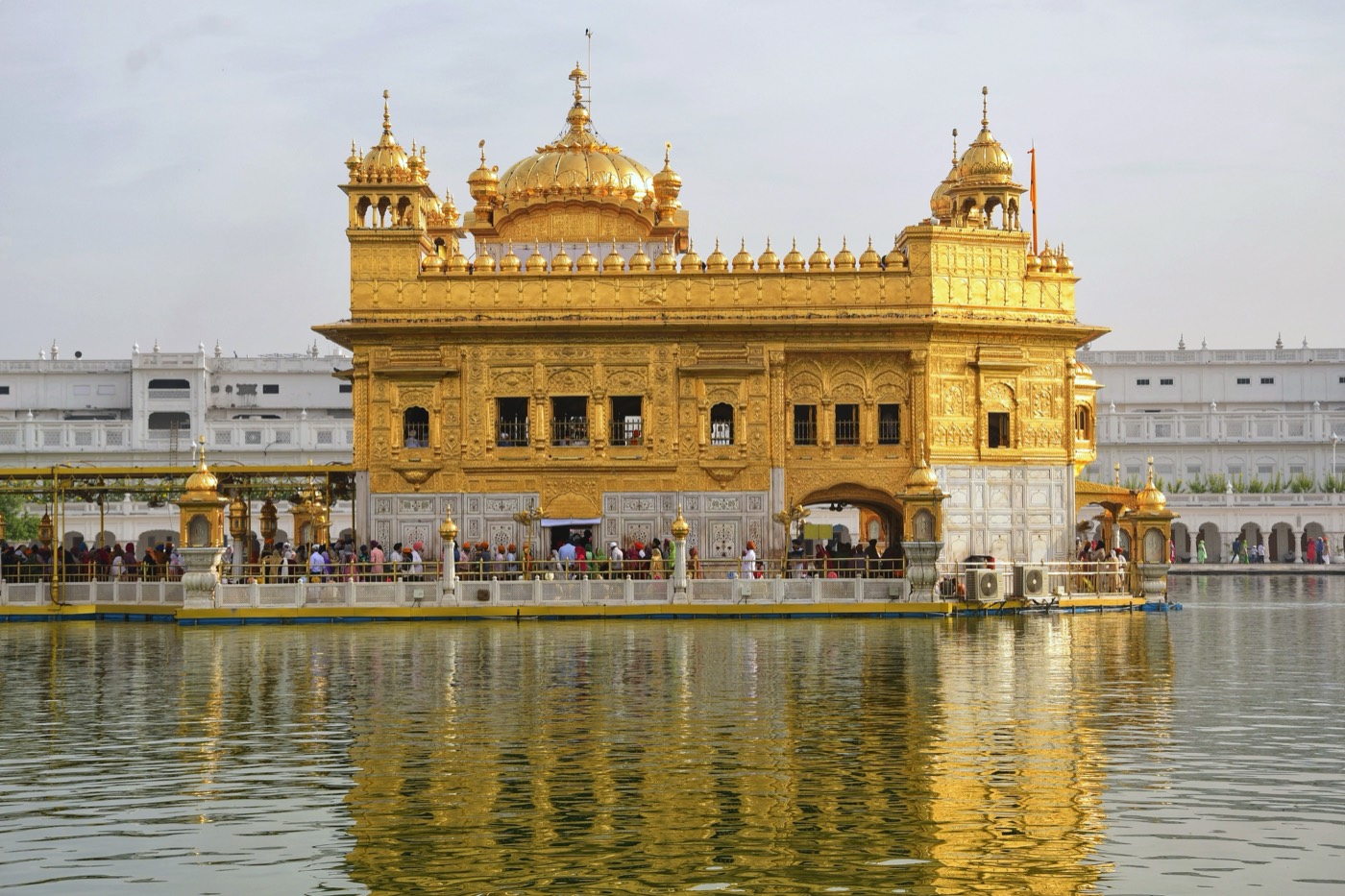
Golden Temple (Harmandir Sahib)
Amritsar, Punjab
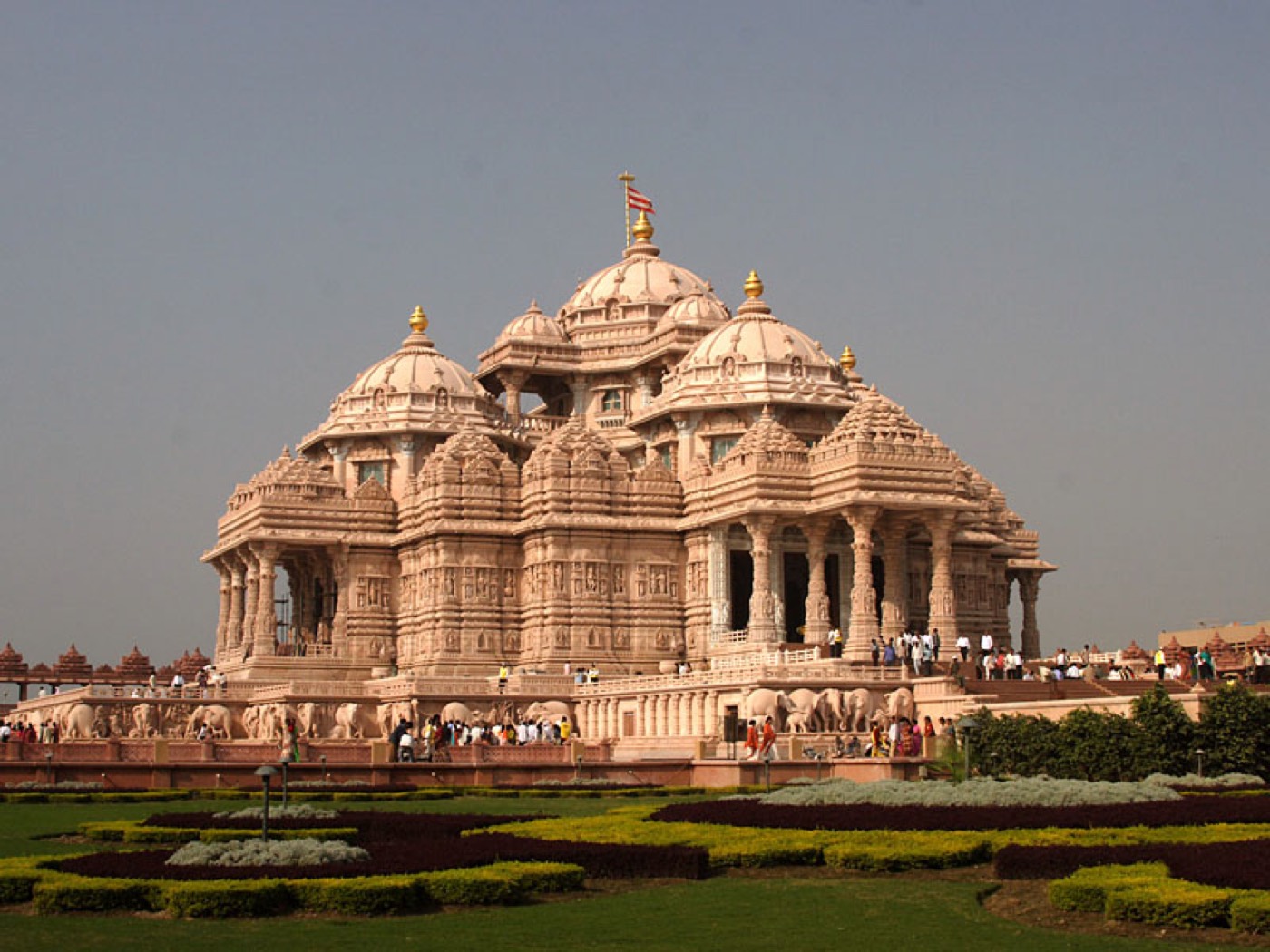
Swaminarayan Akshardham, Delhi
East Delhi (Noida Mor, Pandav Nagar), Delhi
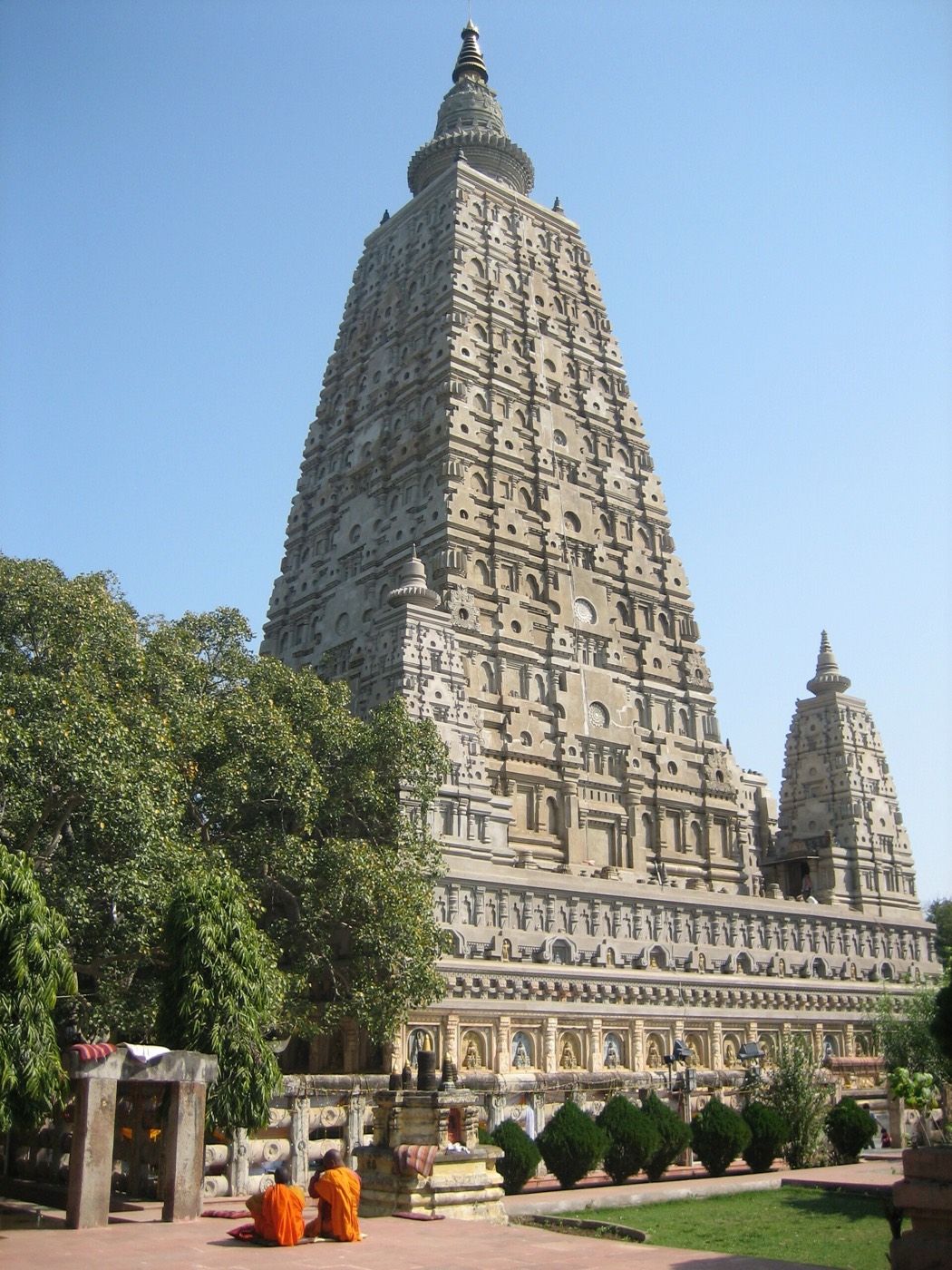
Mahabodhi Temple, Bodh Gaya
Gaya, Bihar
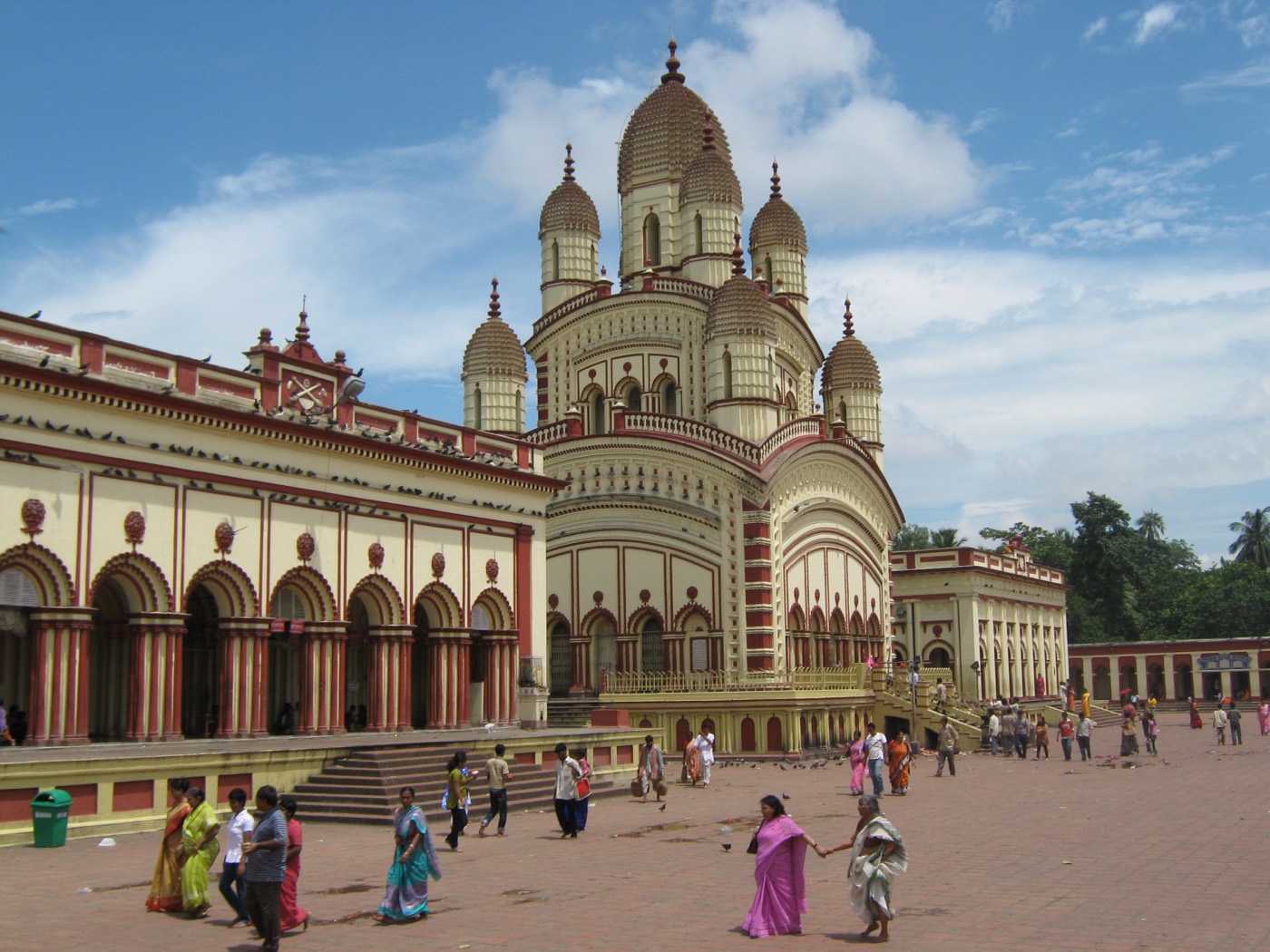
Dakshineswar Kali Temple
North 24 Parganas, West Bengal
The viewing arrangements, honestly rated
Where entry is restricted, the alternatives vary in quality. Puri's Raghunandan Library rooftop gives a genuine elevated view of the temple's great tower and courtyard rhythm, and the surrounding Grand Road, with its constant pilgrim theatre, is an experience in itself; during Rath Yatra, when the deities ride out on their chariots through the streets, the distinction between insider and outsider briefly dissolves, since the festival happens outside the walls. Lingaraja's platform view is more distant but takes in one of India's finest temple towers.
At the sanctum-only temples the arrangement is better still: at Srirangam and Madurai a non-Hindu visitor can spend half a day inside the complex among the architecture, markets and ritual life, missing only the final chamber. Ask at each temple's information counter rather than relying on gatekeepers' shouted instructions; the official line is usually calmer and more generous than the crowd's version of it.
Etiquette for the restricted temples
Do not attempt to pass. It disrespects the custodians, risks a public scene, and in the age of the camera it ends badly for everyone. Dress conservatively even for exterior viewing, remove footwear where locals do, and keep photography to where it is plainly permitted; several restricted temples also prohibit cameras and phones near their precincts.
If the rule disappoints you, let the disappointment sharpen the rest of the plan: every one of these restricted sites sits beside open wonders. Puri pairs with the fully open Konark Sun Temple, Thiruvananthapuram with Kerala's public temple arts, Bhubaneswar with a whole city of visitable shrines. India has more open doors than any traveller has days.
A note for mixed families and groups, who feel these rules most sharply: split the visit rather than skipping it. At Puri or Guruvayur, the members who can enter take their darshan while the others explore the town, and everyone shares the story over lunch. Indian pilgrimage towns are built for exactly this rhythm, with their bazaars, ghats and eateries wrapped around the temple, and nobody who spends an hour in one comes away with nothing.
Frequently asked questions
Can non-Hindus enter the Jagannath Temple in Puri?
Can foreigners visit Guruvayur temple?
Which famous Indian temples welcome everyone?
What is the declaration form at Tirupati?
Can non-Hindus see the Lingaraja temple in Bhubaneswar?
Is Meenakshi temple open to non-Hindus?
Compiled from our verified temple guides and public sources including Puri District Administration: Shree Jagannath Temple · Wikipedia: Guruvayur Temple · Wikipedia: Lingaraja temple · Golden Temple: daily routine and timings. Timings and festival dates shift with the lunar calendar; confirm before you travel.