The confusion is understandable. In everyday speech, especially in north India, people say Char Dham Yatra and mean the Himalayan circuit, because that is the one most families undertake as a single trip. Tour operators lean the same way. But in the older, pan-Indian sense, the Char Dham are the four cardinal seats: Badrinath in the north, Jagannath Puri in the east, Rameswaram in the south and Dwarka in the west.
The Himalayan four are a different kind of journey altogether: Yamunotri, Gangotri, Kedarnath and Badrinath, all high in Uttarakhand, all open for only around six months a year, and two of them reached only on foot. Because they cluster in one state, the whole circuit fits into a single road trip, which is exactly why it dominates the phrase in common use.
We cover all seven temples in depth on this site. What follows is the comparison that rarely gets written down: which four belong to which circuit, when each is open, how the two journeys differ in body and spirit, and which to attempt first.
The two circuits at a glance
The simplest way to hold the difference in your head: the all-India Char Dham is a map of the whole country, one shrine per direction, usually visited across several separate trips in a lifetime. The Chota Char Dham is a single mountain circuit, traditionally walked or driven west to east in one journey of ten days or so.
| All-India Char Dham | Chota Char Dham (Uttarakhand) | |
|---|---|---|
| The four sites | Badrinath, Puri, Rameswaram, Dwarka | Yamunotri, Gangotri, Kedarnath, Badrinath |
| Geography | Four corners of India: north, east, south, west | One Himalayan state, shrines at approx 3,100 to 3,583 m |
| Deities | Vishnu at Badrinath and Puri and Dwarka; Shiva at Rameswaram | Goddesses Yamuna and Ganga, Shiva at Kedarnath, Vishnu at Badrinath |
| Season | Puri, Rameswaram and Dwarka open year round; Badrinath approx 6 months | All four open around late April or early May, closed by mid-November |
| Physical demand | Ordinary temple visits, long journeys between them | Two real treks: approx 6 km to Yamunotri, approx 16 km to Kedarnath |
| Typically done as | Separate trips over years | One road circuit, west to east |
The all-India Char Dham: four corners of the country
Tradition credits Adi Shankara with binding the four cardinal shrines into one spiritual geography. Badrinath holds the north, high above the Alaknanda in Uttarakhand. Puri holds the east, where Jagannath rides his towering chariots each year in the Rath Yatra, in the June to July window. Rameswaram holds the south, on an island reached across the Pamban bridge, and is doubly sacred as one of the twelve Jyotirlingas. Dwarka holds the west, Krishna's own capital on the Arabian Sea.
Three of the four are lowland temples open through the year, each with its own daily rhythm. Puri runs an elaborate ritual day from about 5:00 AM to around 11:00 PM, with closures at each offering. Rameswaram keeps two strict windows, 5:00 AM to 1:00 PM and 3:00 PM to 9:00 PM, with a firm midday break. Dwarka opens roughly 6:30 AM to 1:00 PM and again 5:00 PM to 9:30 PM. Only Badrinath is seasonal, closing from around mid-November to late April, when worship shifts down to Joshimath.
Because the four sit thousands of kilometres apart, almost nobody does them as one continuous journey. The sensible pattern is to pair each with its region: Puri with the Odisha triangle, Rameswaram with a Tamil Nadu circuit, Dwarka with the Saurashtra coast, and Badrinath with the Himalayan yatra.
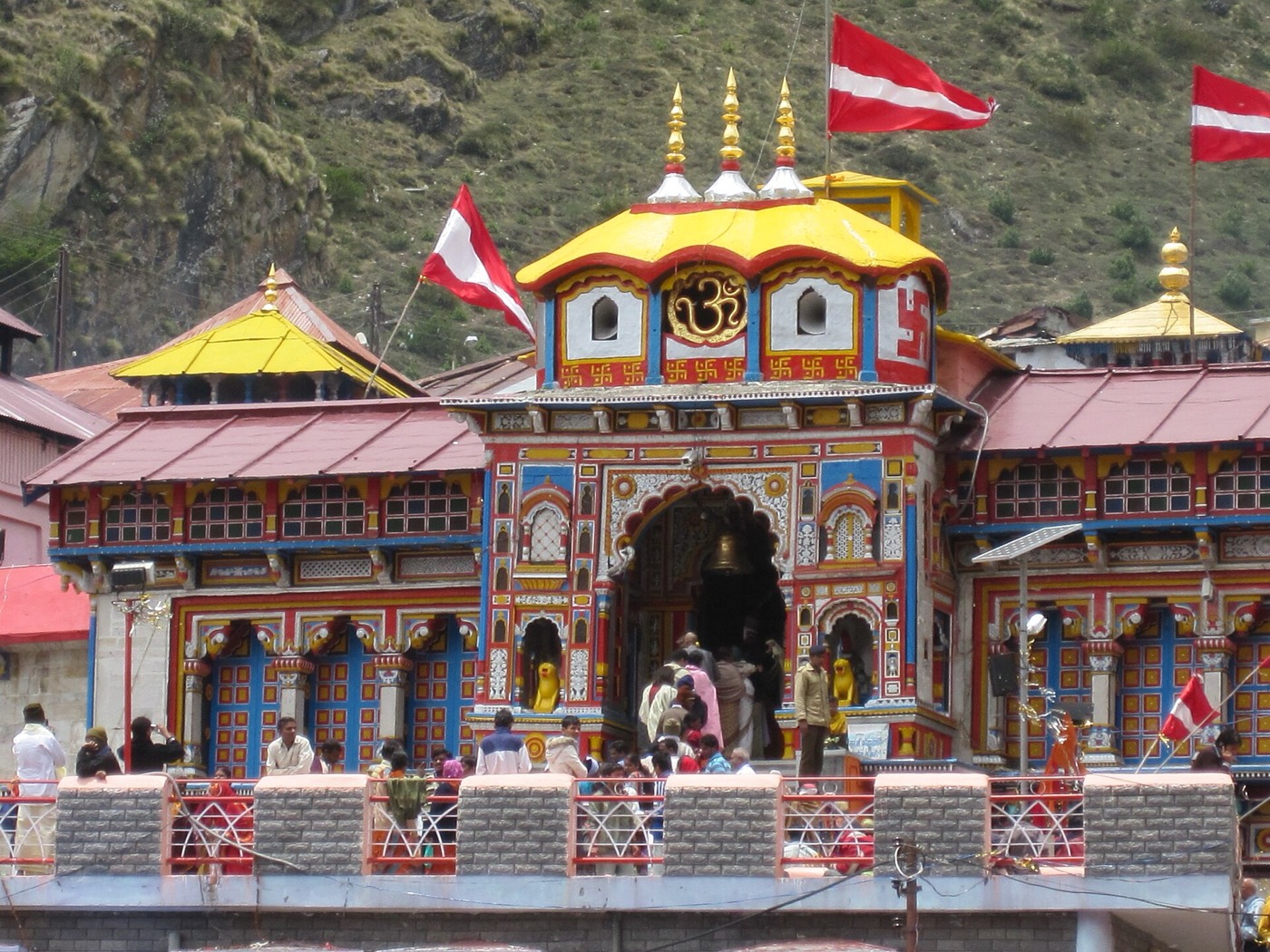
Badrinath Temple (Shri Badrinarayan Dham)
Chamoli, Uttarakhand
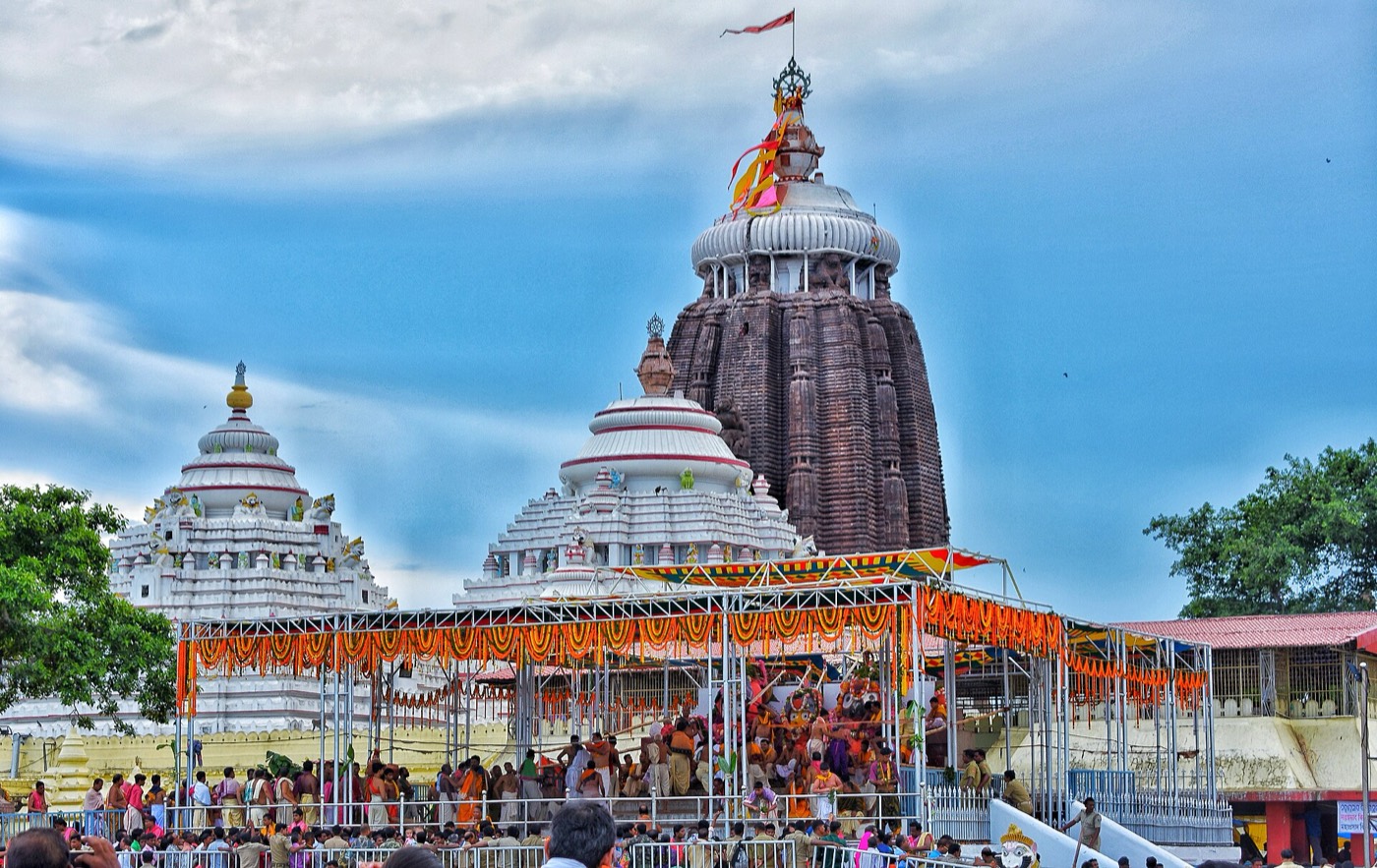
Jagannath Temple, Puri
Puri, Odisha
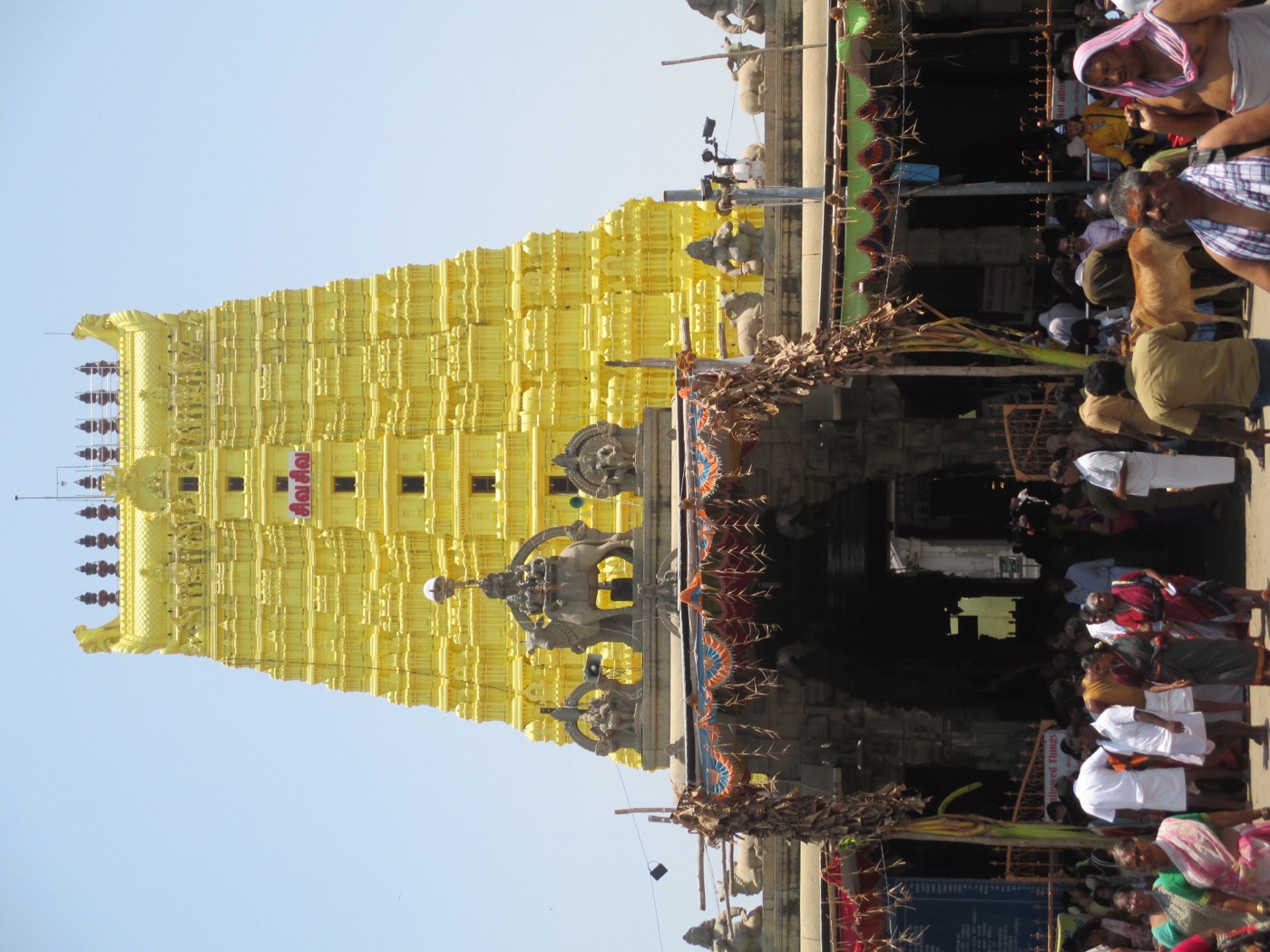
Ramanathaswamy Temple, Rameshwaram
Ramanathapuram, Tamil Nadu
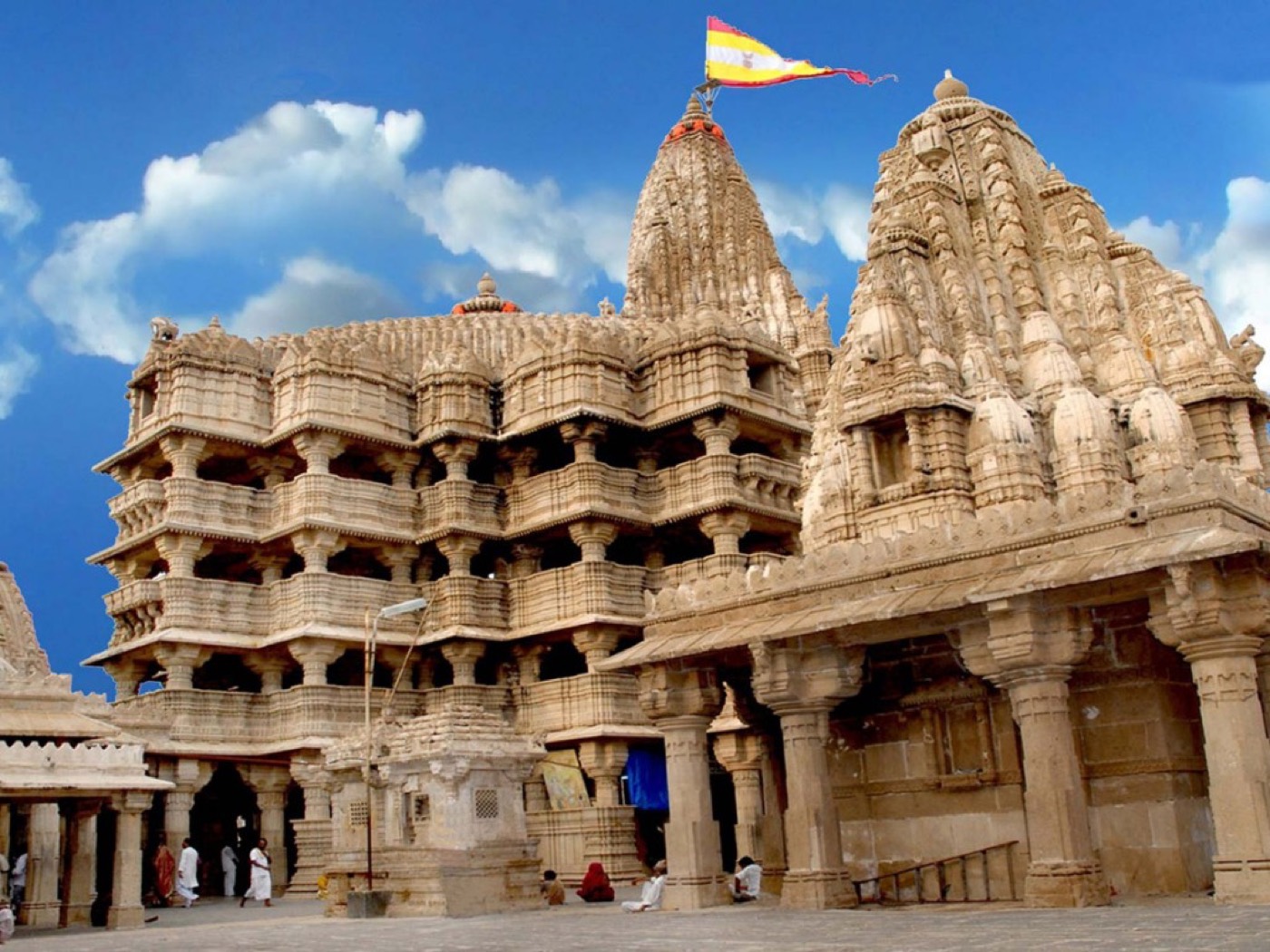
Dwarkadhish Temple (Jagat Mandir), Dwarka
Devbhumi Dwarka, Gujarat
The Chota Char Dham: Uttarakhand's high circuit
The Himalayan four are visited in a fixed traditional order, west to east: Yamunotri first, then Gangotri, Kedarnath, and Badrinath last. Yamunotri honours the goddess Yamuna at the river's source region and is reached by a trek of approx 6 km from Janki Chatti. Gangotri, the spiritual source of the Ganga, is a drive-up shrine at approx 3,100 m. Kedarnath, the highest of the twelve Jyotirlingas at approx 3,583 m, demands the circuit's hardest leg, a trek of approx 16 km from Gaurikund. Badrinath closes the circuit by road.
All four live inside the same season. The doors open around Akshaya Tritiya in late April or early May and close around Diwali and Bhai Dooj in October or November, after which each deity moves to a winter seat in the valley: Kharsali for Yamuna, Mukhba for Ganga, Ukhimath for Kedarnath's lord, Joshimath for Badrinath's. Uttarakhand also requires yatra registration before you travel, and Badrinath's own e-pass is free but mandatory.
Haridwar and Rishikesh are the classic gateways. From Rishikesh the road-heads sit a full mountain day away in every direction: approx 210 km toward Yamunotri, approx 250 km to Gangotri, approx 216 km to Gaurikund below Kedarnath, and approx 295 km to Badrinath, that last drive alone taking roughly 10 to 12 hours.
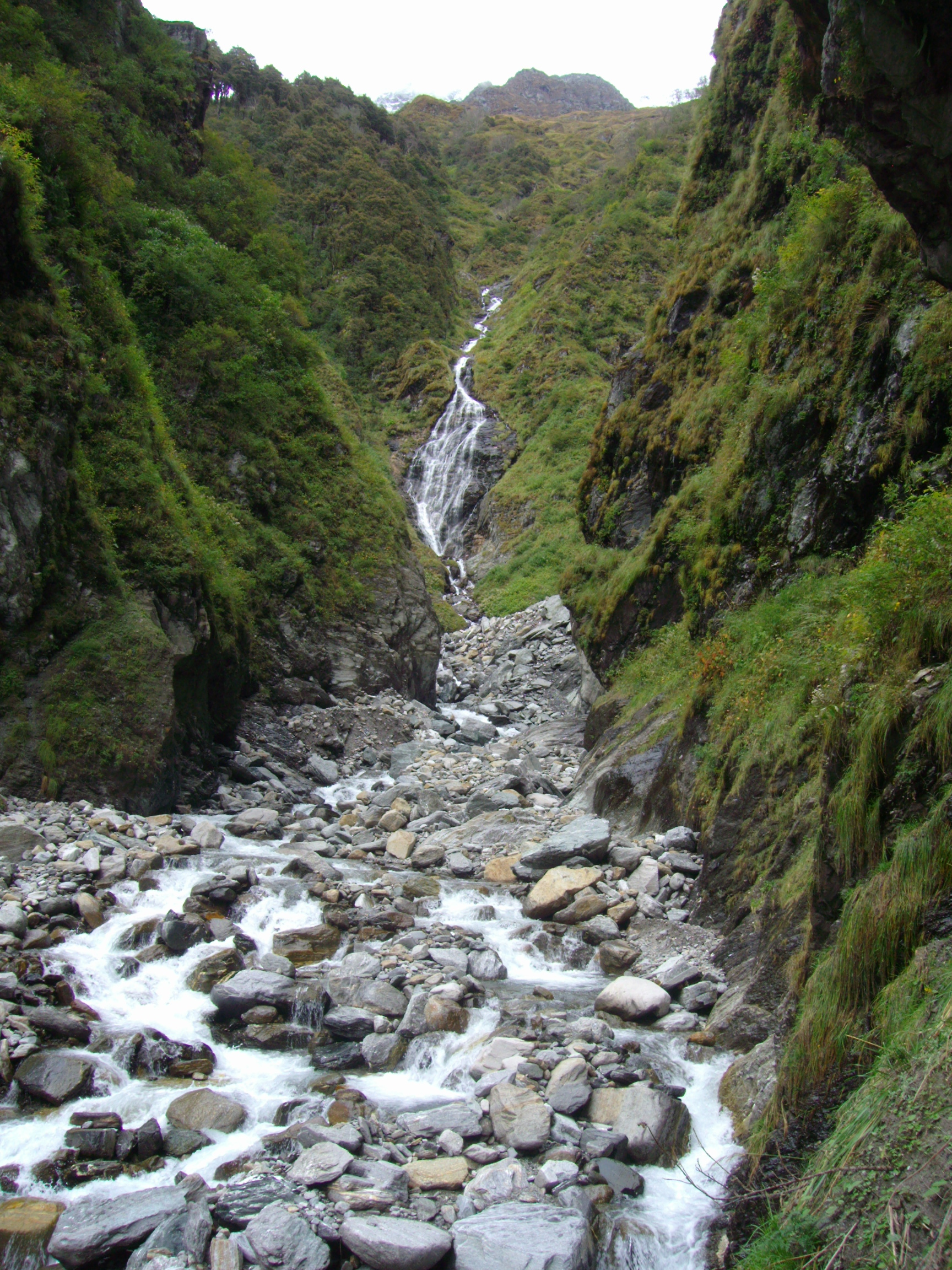
Yamunotri Temple
Uttarkashi, Uttarakhand
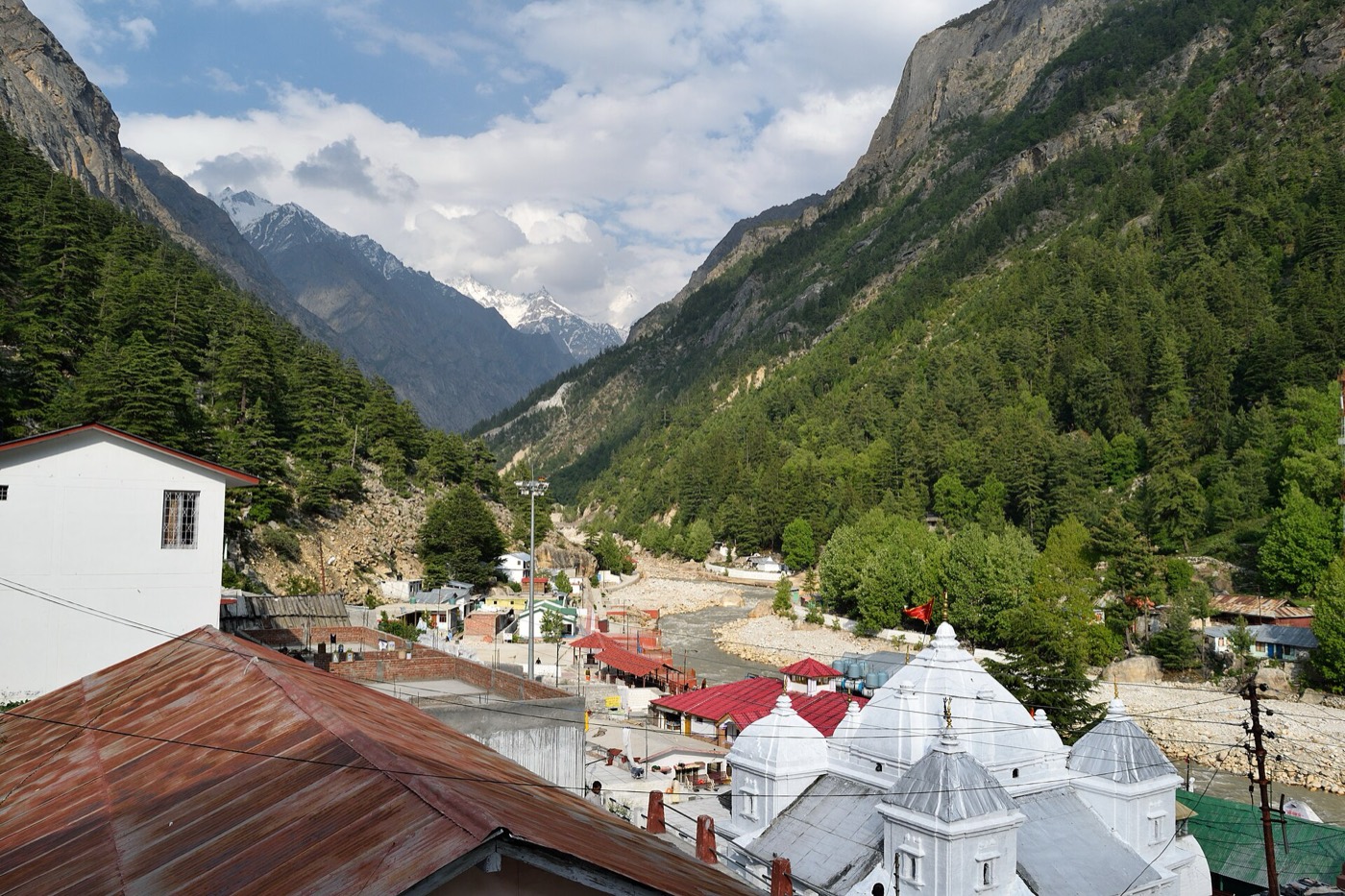
Gangotri Temple
Uttarkashi, Uttarakhand
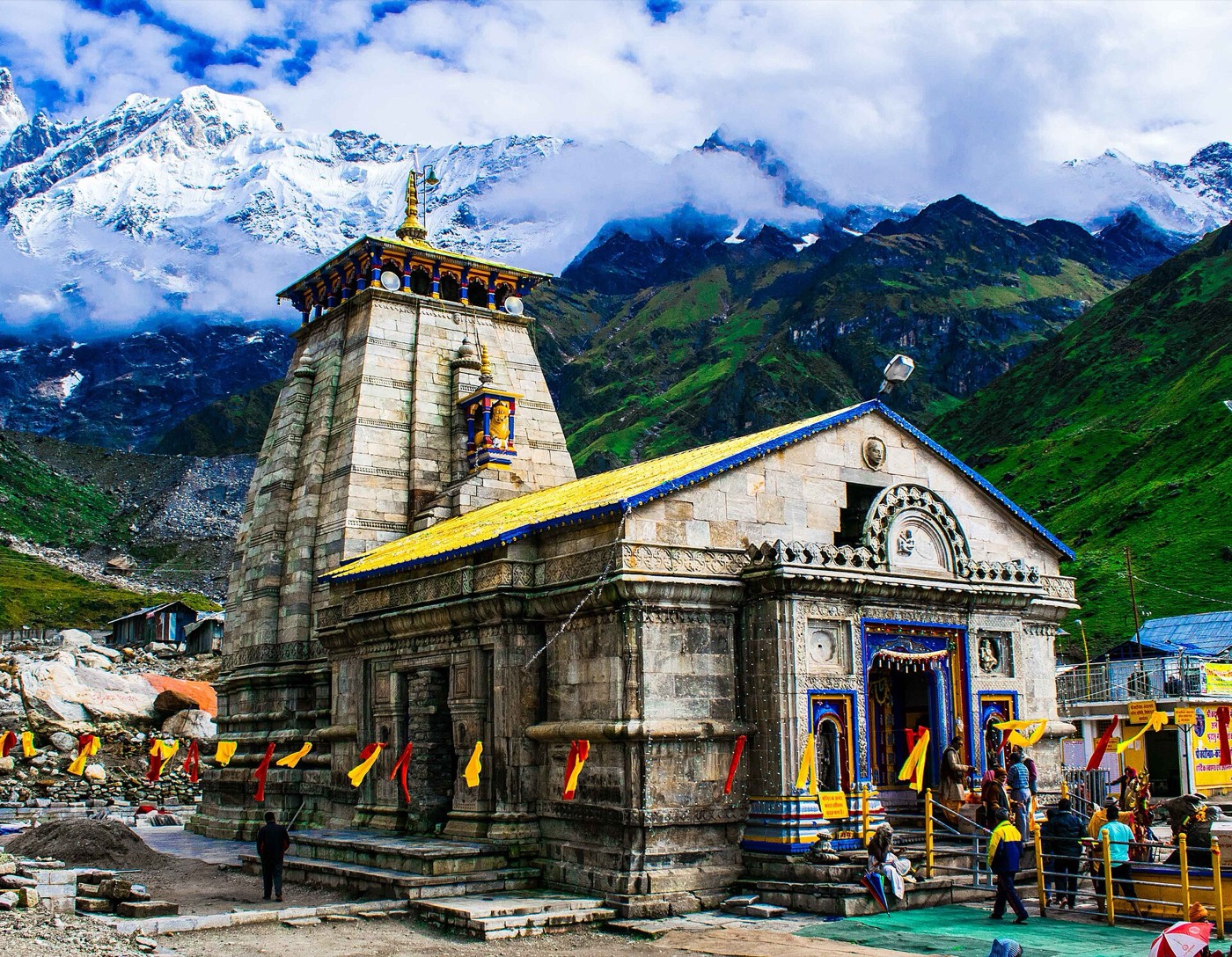
Kedarnath Temple
Rudraprayag, Uttarakhand
Badrinath, the shrine on both lists
Badrinath is the hinge between the two traditions, the northern seat of the all-India Char Dham and the final halt of the Uttarakhand circuit. That double status shapes its crowds: it receives both the families finishing the mountain yatra and the pilgrims collecting the four corners of India across a lifetime.
Practically, it behaves like the other Himalayan shrines. Darshan runs 4:30 AM to 1:00 PM and 4:00 PM to 9:00 PM through the open season, the midday closure is real, and the season itself is only around six months. If your ambition is the all-India four, plan Badrinath the way you would plan a mountain trip, not a temple stop: it is approx 295 km of hill road from the nearest railhead at Rishikesh.
When each of the seven is open
This single table is the reason many yatras succeed or fail. The three lowland dhams forgive poor timing; the four Himalayan shrines do not.
| Temple | Circuit | Open window | Closed / winter arrangement |
|---|---|---|---|
| Badrinath | Both | Late April or early May to around mid-November | Worship shifts to Narsingh Temple, Joshimath |
| Jagannath Puri | All-India | Year round, approx 5:00 AM to 11:00 PM with ritual breaks | No seasonal closure; special schedules around Rath Yatra |
| Rameswaram | All-India | Year round, 5:00 AM to 1:00 PM and 3:00 PM to 9:00 PM | No seasonal closure; firm 1 to 3 PM midday break daily |
| Dwarka | All-India | Year round, 6:30 AM to 1:00 PM and 5:00 PM to 9:30 PM | No seasonal closure; all-night darshan on Janmashtami |
| Yamunotri | Chota | Akshaya Tritiya to Yama Dwitiya (Bhai Dooj) | Idol worshipped at Kharsali village |
| Gangotri | Chota | Akshaya Tritiya to around Diwali | Deity worshipped at Mukhba village |
| Kedarnath | Chota | Late April or early May to around Bhai Dooj | Deity worshipped at Ukhimath |
Reaching the seven: railheads and last legs
The lowland dhams are among the easiest great temples in India to reach, each with a station virtually at the door. The Himalayan four all funnel through the same railheads and then diverge into long hill drives.
| Temple | Nearest railhead | Distance | Last leg |
|---|---|---|---|
| Jagannath Puri | Puri | Approx 3 km | Short rickshaw ride to the Lion Gate |
| Rameswaram | Rameswaram (RMM) | Approx 2 km | Auto or walk; island reached over the Pamban bridge |
| Dwarka | Dwarka | Approx 2 km | Short auto ride; Jamnagar airport approx 130 km |
| Badrinath | Rishikesh | Approx 295 km | Hill drive of roughly 10 to 12 hours via Joshimath |
| Yamunotri | Rishikesh | Approx 210 km to the road-head | Trek of approx 6 km from Janki Chatti; ponies and dolis available |
| Gangotri | Rishikesh | Approx 250 km | Road all the way; Uttarkashi is the staging town approx 100 km before |
| Kedarnath | Rishikesh | Approx 216 km to Gaurikund | Trek of approx 16 km; allow 6 to 8 hours, ponies and palkis available |
How long each circuit takes
The Chota Char Dham is one committed block of time. With the four road-heads spread across Garhwal and two treks in the middle, most pilgrims give it ten to twelve days from Haridwar or Rishikesh, and that assumes the roads behave. The monsoon months of July and August are the riskiest window, with landslides regularly interrupting the Yamunotri and Gangotri roads. May, June, September and October are the working heart of the season.
The all-India Char Dham obeys no single clock. Each corner is its own trip: two or three days around Puri, the same around Rameswaram and Dwarka with their neighbouring temples, and a proper mountain itinerary for Badrinath. Families commonly complete the set over years, and that is not a compromise, it is the tradition. The four corners were always a life's map rather than an itinerary.
Which should you do first
An honest rule of thumb: do the circuit your body will thank you for. The Chota Char Dham rewards you while your knees are willing, because Yamunotri and Kedarnath are real climbs at real altitude and the option of ponies, palkis and, for Kedarnath, seasonal helicopters softens but does not remove the demand. The lowland dhams ask only patience with queues and journeys, and can be done at any age.
If you are drawn to both, a practical sequence many families follow: take the Uttarakhand circuit as one dedicated yatra, which also completes Badrinath, then collect Puri, Rameswaram and Dwarka one region at a time with their surrounding circuits. Whichever you choose, register where required, book the mountain legs early in the season, and treat every opening date as approximate until the temple committees announce it.
Frequently asked questions
Are Char Dham and Chota Char Dham the same thing?
Which Char Dham circuit is harder?
When do the Himalayan Char Dham temples open and close?
Can senior citizens do the Char Dham Yatra?
Why is Badrinath part of both Char Dhams?
How many days does the Chota Char Dham Yatra take?
Compiled from our verified temple guides and public sources including Euttaranchal: Badrinath opening and closing dates · Wikipedia: Chota Char Dham · Shree Jagannatha Puri: Temple timing · Tamil Nadu Tourism: Sri Ramanathaswamy Temple · Rudraprayag District: Kedarnath Yatra. Timings and festival dates shift with the lunar calendar; confirm before you travel.