For most of the year, choosing a temple is a question of taste. In May it becomes a question of altitude. This is the month the high shrines of Uttarakhand come back to life after roughly six months under snow: Kedarnath and Badrinath reopen their doors in the same late April to early May window, and the whole Char Dham circuit becomes possible again for the first time since Diwali.
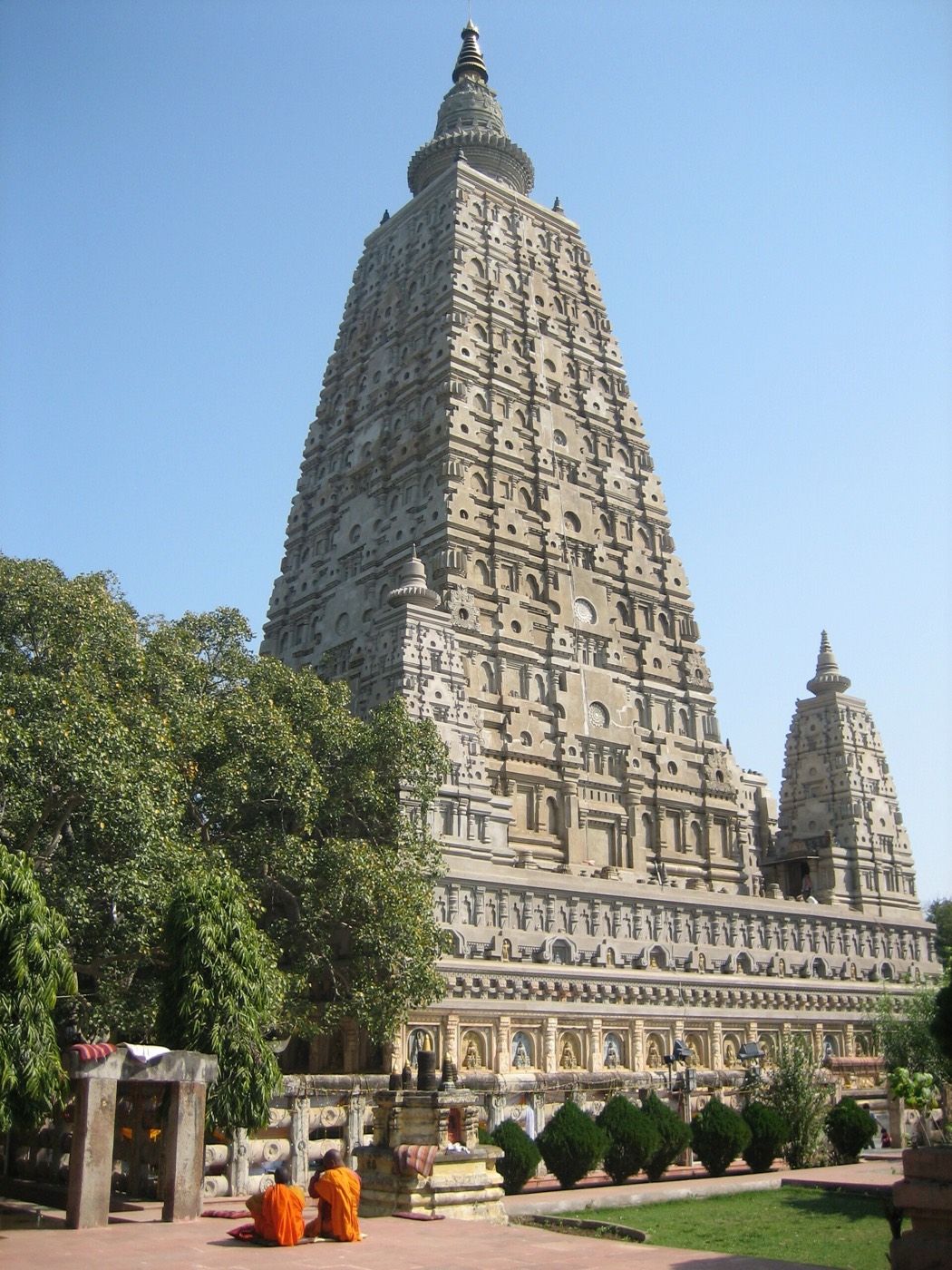
The second anchor of the month sits far to the east. At the Mahabodhi Temple in Bodh Gaya, Buddha Purnima falls on the full moon of Vaishakh, in April or May depending on the lunar calendar. It marks the Buddha's birth, enlightenment and passing on a single day, and it is the biggest date in that temple's year.
This guide lays the season out in tables you can plan from: when each Char Dham shrine opens and closes, how far the nearest railhead and airport really are, which festivals land in May across the country, and a leg by leg route for the classic yatra. Every date tied to the lunar calendar moves each year, and the Uttarakhand temple committees announce exact opening days annually, so treat each window here as a window and confirm before you book.
Why May belongs to the hills
The logic of May is straightforward. Yamunotri and Gangotri both open on Akshaya Tritiya, and Kedarnath and Badrinath follow in the same late April to early May stretch. The weeks just after opening are among the best of the whole season: the trails are fresh, the weather is workable, and the monsoon that arrives around July has not yet begun loosening the hillsides. Badrinath's own sweet spots are May to June and September to October, and Kedarnath's are the weeks just after opening and again in early autumn.
The plains tell the opposite story. Bodh Gaya's classic season runs October to March, and its summers from April to June are very hot. That does not make lowland temples impossible in May, but it changes how you use the day. Morning darshan before the heat, rest through the afternoon, and evening prayers after sunset is the pattern that works, and it is exactly the rhythm the festival calendar further down rewards.
The Char Dham season at a glance
All four shrines run on the same six month rhythm: open around Akshaya Tritiya, closed around Diwali, with the deities spending winter at village seats lower down the valleys. Yamunotri's goddess winters at Kharsali, Gangotri's at Mukhba, Kedarnath's deity moves to Ukhimath, and Badrinath's worship shifts to the Narsingh Temple in Joshimath. Kedarnath's exact opening date for the coming season is traditionally announced at Maha Shivratri, and Badrinath's closing date is declared on Vijayadashami.
The table below is the season in one view. Every date in it is a window rather than a fixed day, because the openings follow the lunar calendar and the temple committees confirm exact dates each year.
| Shrine | Opens | Closes | Altitude | Final approach |
|---|---|---|---|---|
| Yamunotri | Akshaya Tritiya (late April or early May) | Yama Dwitiya (Bhai Dooj), two days after Diwali | Approx 3,235 m | Approx 6 km trek from Janki Chatti |
| Gangotri | Akshaya Tritiya (late April or early May) | Diwali (October or November) | Approx 3,100 m | Road runs to the temple town |
| Kedarnath | Late April or early May | Around Bhai Dooj (October or November) | Approx 3,583 m | Approx 16 km trek from Gaurikund |
| Badrinath | Late April or early May | Around mid November, announced on Vijayadashami | Approx 3,133 m | Motorable road to the temple |
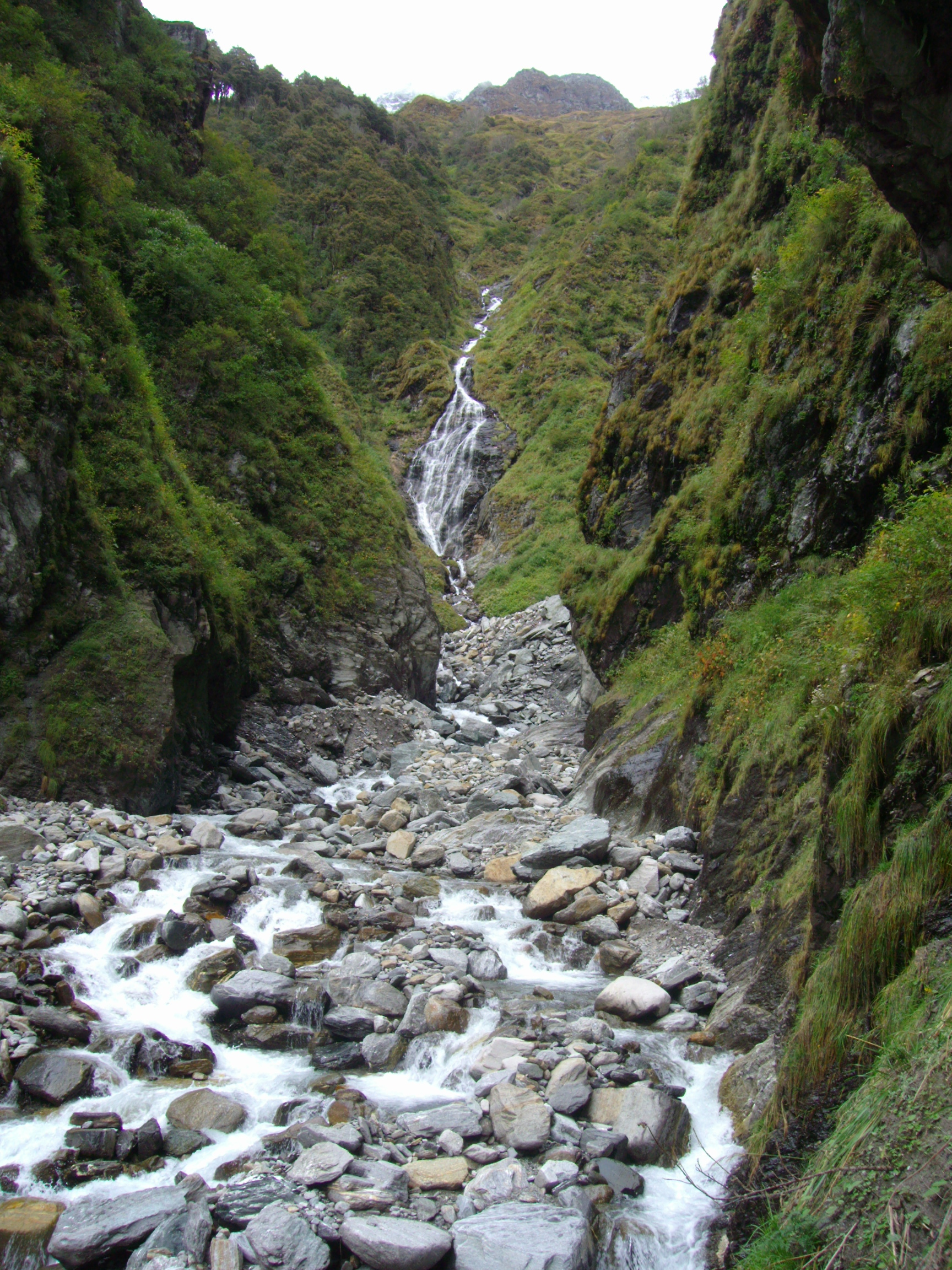
Yamunotri Temple
Uttarkashi, Uttarakhand
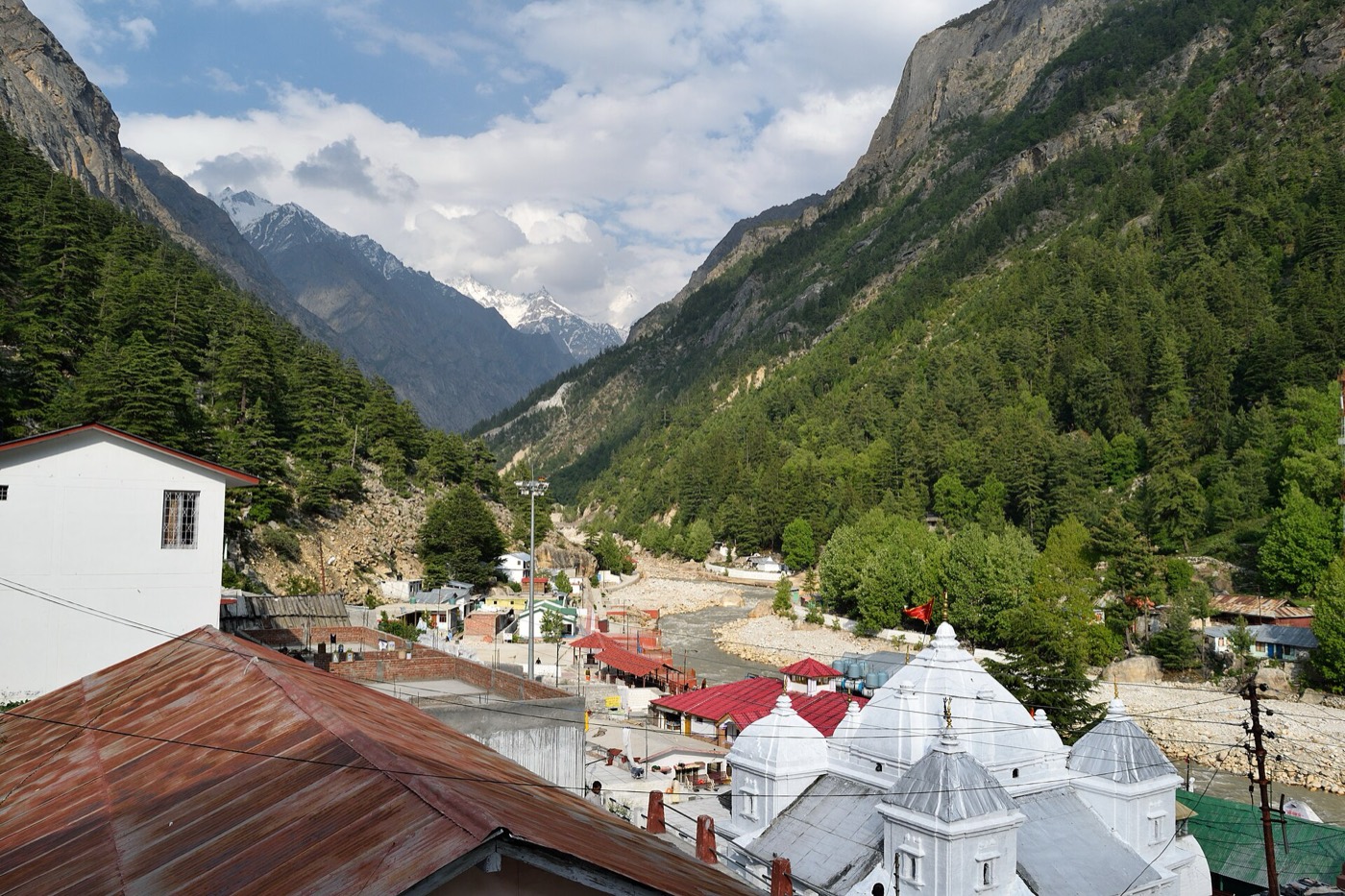
Gangotri Temple
Uttarkashi, Uttarakhand
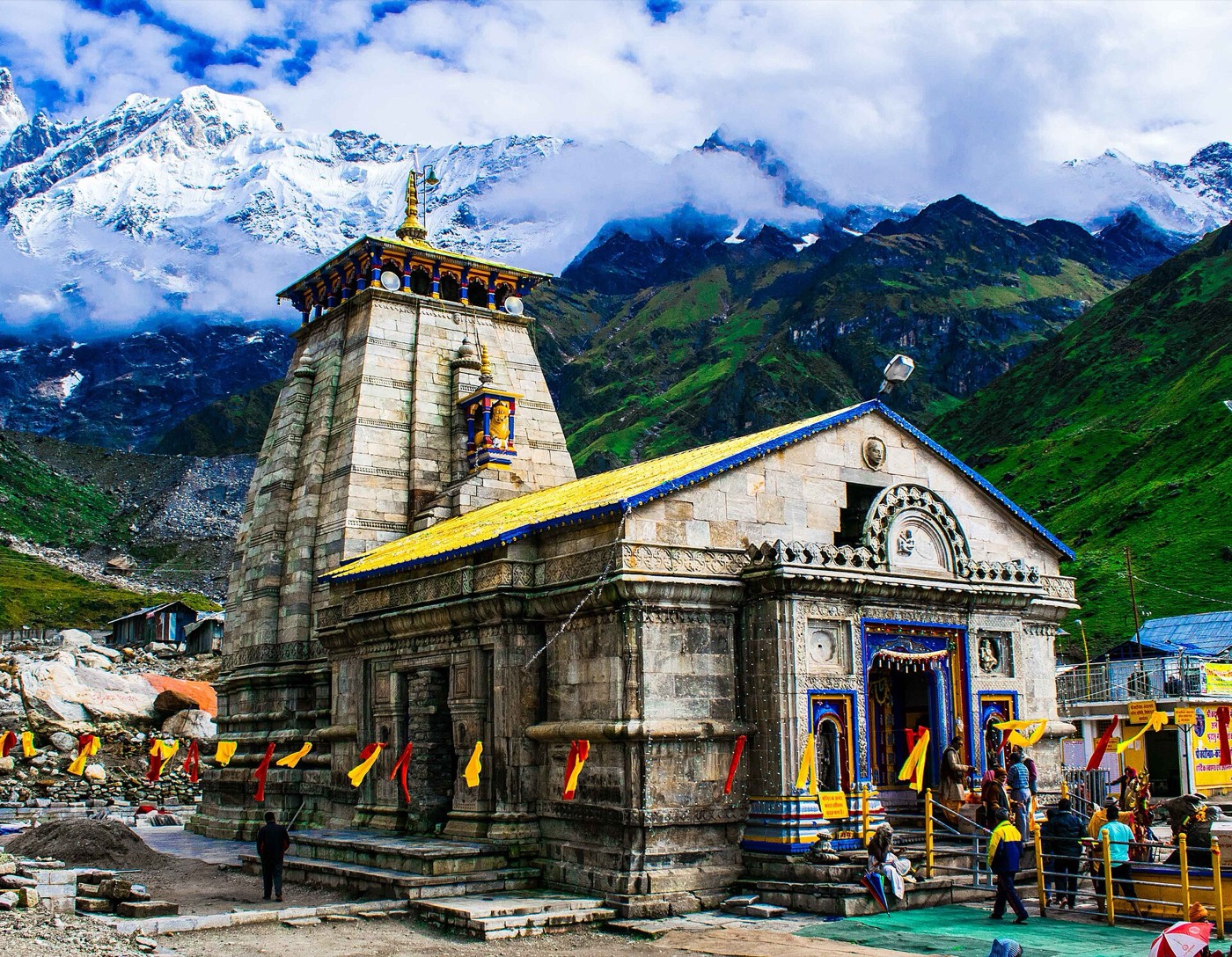
Kedarnath Temple
Rudraprayag, Uttarakhand
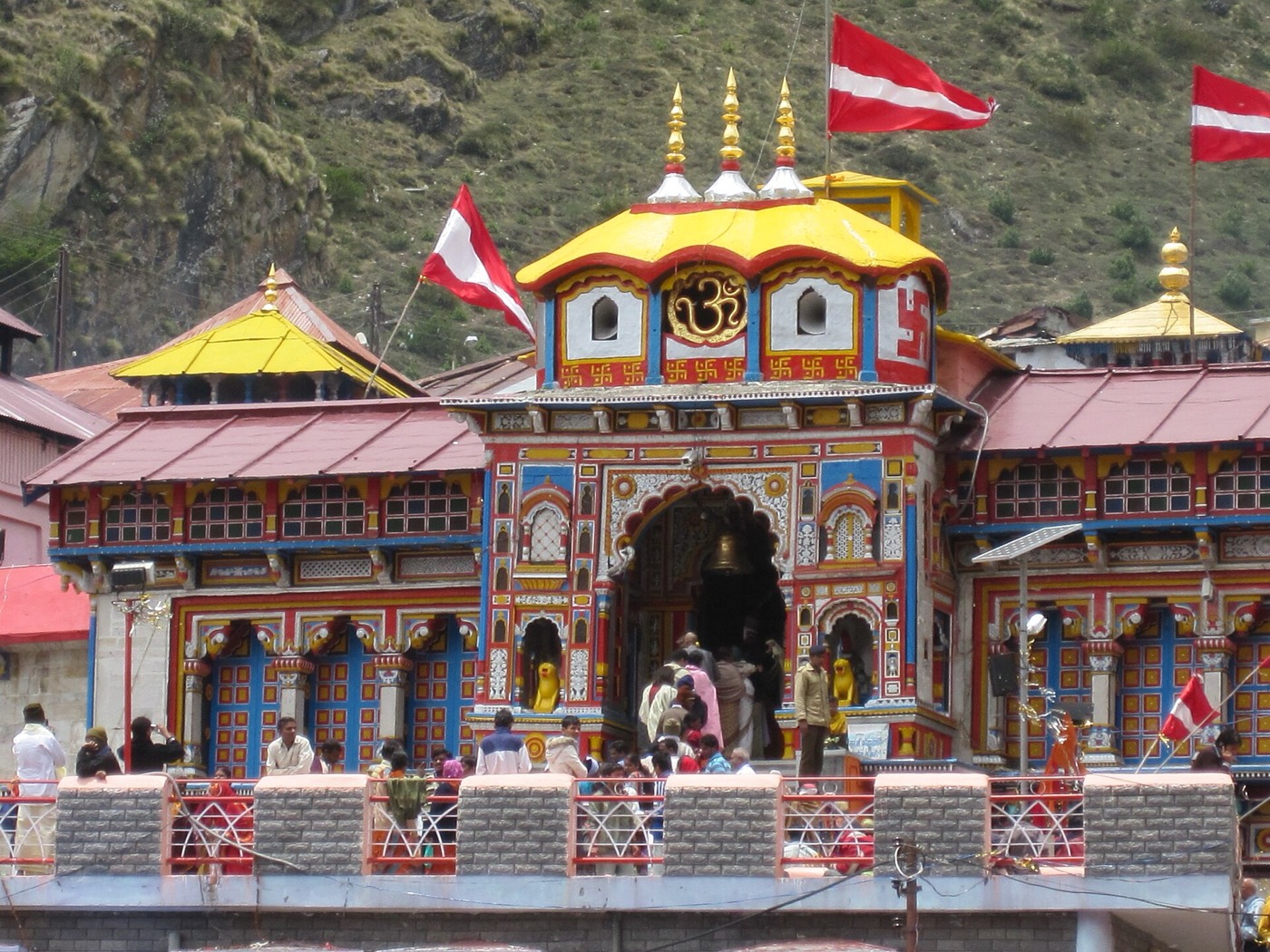
Badrinath Temple (Shri Badrinarayan Dham)
Chamoli, Uttarakhand
How far each temple really is
No railway or airport gets anywhere near the four high shrines. Rishikesh is the standard railhead for the whole circuit and Jolly Grant airport near Dehradun is the nearest airfield, and from either you face long mountain drives: approx 210 km toward the Yamunotri road head, approx 250 km to Gangotri, approx 216 km from Gaurikund for Kedarnath, and approx 295 km to Badrinath, a drive of about 10 to 12 hours.
Bodh Gaya is the opposite case, unusually well connected for a small pilgrimage town. Gaya Junction sits approx 13 km away on the Grand Chord line, with trains from Delhi, Kolkata, Varanasi and Patna, and Gaya International Airport is approx 11 km from the temple.
| Temple | Nearest railhead | Nearest airport | Last leg |
|---|---|---|---|
| Yamunotri | Rishikesh, approx 210 km | Jolly Grant, Dehradun, approx 198 to 210 km | Approx 6 km trek from Janki Chatti, 2.5 to 3 hrs up |
| Gangotri | Rishikesh, approx 250 km | Jolly Grant, approx 230 km | Road to the temple; Uttarkashi approx 100 km before |
| Kedarnath | Rishikesh, approx 216 km | Jolly Grant, approx 238 km | Approx 16 km trek from Gaurikund, 6 to 8 hrs |
| Badrinath | Rishikesh, approx 295 km | Jolly Grant, approx 317 km | Road to the door; Joshimath approx 45 km before |
| Mahabodhi, Bodh Gaya | Gaya Junction, approx 13 km | Gaya International, approx 11 km | Auto or cab, about 25 to 40 minutes |
A Char Dham route for May
The traditional order runs Yamunotri first, then Gangotri, Kedarnath and finally Badrinath. Before anything else, register. The Char Dham e-pass is free, issued at registrationandtouristcare.uk.gov.in, and it is checked en route along with photo ID; at Kedarnath, registration is mandatory.
Two timing rules shape the middle of the trip. At Kedarnath, physical touch of the lingam and ghee abhishek are allowed only before approx 3:00 PM, after which pilgrims can view but not touch, so a morning arrival matters. At Badrinath the midday break is real: the sanctum closes from 1:00 PM to 4:00 PM for bhog and cleaning, and darshan runs 4:30 AM to 1:00 PM and again 4:00 PM to 9:00 PM.
Sponsored pujas at Badrinath are rate carded through the temple committee, from approx INR 151 for the Kapoor Aarti to approx INR 4,300 for the Maha Abhishek, and free general darshan needs no sponsorship. Helicopter services shorten the hardest legs in season: choppers fly to Kedarnath from Phata, Sersi and Guptkashi, and seasonal, weather dependent services also run to Badrinath and into the Gangotri valley.
Two famous names are missing from this route on purpose. We do not yet have verified data for Hemkund Sahib or for the Panch Kedar shrines beyond Kedarnath itself, so they appear here only as a mention rather than a recommendation.
- Leg 1, Yamunotri: base at Barkot or Janki Chatti, start the 6 km climb at dawn, allow 2.5 to 3 hours up and 1.5 to 2 hours down, and cook rice tied in muslin in the boiling Surya Kund as prasad before the descent.
- Leg 2, Gangotri: drive approx 220 to 230 km via Uttarkashi, breaking the journey at Uttarkashi or at Harsil, approx 25 km before the shrine; stay for the small riverside Ganga aarti at dusk, when lamps are floated on the Bhagirathi.
- Leg 3, Kedarnath: drive approx 250 km to Sonprayag, park there, take a shared jeep the last approx 5 km to Gaurikund, then walk the 16 km path, allowing 6 to 8 hours for the climb.
- Leg 4, Badrinath: drive approx 220 km via Rudraprayag; Joshimath, approx 45 km before the temple, is the last town with fuel, ATMs and a wide choice of hotels.
- Stay: GMVN rest houses run through the circuit, from Janki Chatti to the Kedarnath tented colony to Badrinath town; rooms are basic and fill fast in May, so reserve ahead.
Buddha Purnima at Bodh Gaya
Buddha Purnima, also called Vesak or Buddha Jayanti, falls on the Vaishakh full moon in April or May and marks the Buddha's birth, enlightenment and passing on one day. At the Mahabodhi Temple, the spot where the enlightenment itself is held to have happened, it is the single biggest day of the year, with processions, group chanting and lamp offerings, and the town filling with pilgrims from Sri Lanka, Thailand, Myanmar, Tibet, Japan and beyond.
The complex keeps long hours, 5:00 AM to 9:00 PM daily, and the quiet windows sit at the edges of the day. Morning pujan and chanting run approx 5:00 to 6:00 AM and evening chanting approx 6:00 to 9:00 PM, while the peak crowds arrive roughly 8:00 AM to noon and 4:00 to 7:00 PM. In May's heat, that early slot is worth protecting.
Practicalities here are stricter than at most Hindu shrines. Phones and cameras must be deposited at the free counters near the gate, and a paid pass is needed to carry a camera in, approx Rs 200 for a camera and approx Rs 300 for video. Entry itself is free. Timings can be extended and access reorganised around Buddha Purnima, so confirm locally for the festival day itself.
The May festival calendar across India
May's calendar is thicker than the hill openings alone. In Vrindavan, Banke Bihari holds its Charan Darshan on Akshaya Tritiya, the only day of the year the idol's feet are revealed, dressed with sandalwood. In Madurai, the Meenakshi Amman Chithirai festival runs April to May, a 12 day re-enactment of the celestial wedding of Meenakshi and Sundareswarar that draws the temple's largest crowds of the year, with extended hours on peak days. At Lingaraja in Bhubaneswar, the Chandan Yatra spreads over 22 days in April or May, cooling the deities with sandalwood paste during the hottest weeks.
Later in the month the calendar tips toward dates that can fall either side of the May and June boundary: Ganga Dussehra at Gangotri and at Mansa Devi above Haridwar, Shani Jayanti at Shani Shingnapur, and the martyrdom day of Guru Arjan Dev at the Golden Temple, when chhabeel, a sweet cold drink, is served to all against the summer heat.
| Festival | Where | Window | What happens |
|---|---|---|---|
| Akshaya Tritiya openings | Yamunotri and Gangotri | Late April or early May | The Char Dham doors open; idols return from their winter seats in procession |
| Kapat opening | Kedarnath and Badrinath | Late April or early May | First darshan of the season; huge crowds at both shrines |
| Buddha Purnima (Vesak) | Mahabodhi Temple, Bodh Gaya | Vaishakh full moon, April or May | Processions, chanting and lamp offerings on the year's biggest day |
| Charan Darshan (Akshaya Tritiya) | Banke Bihari, Vrindavan | April or May | The only day of the year the idol's feet are revealed, dressed with sandalwood |
| Chithirai Thiruvizha | Meenakshi Amman, Madurai | April to May | 12 day festival of the celestial wedding; the largest crowds of the year |
| Chandan Yatra | Lingaraja, Bhubaneswar | April or May, over 22 days | Deities cooled with sandalwood paste and taken boating on Bindu Sagar |
| Ganga Dussehra | Gangotri; Mansa Devi, Haridwar | May or June | Celebrates the Ganga's descent to earth; major bathing days |
| Shani Jayanti | Shani Shingnapur | Vaishakha Amavasya, May or June | Shani's birthday; grand abhishek and the year's largest gathering |
| Vaikasi Visakam | Palani and Tiruchendur | Tamil month Vaikasi, May to June | Murugan's birth star; special abhishekams and alankarams |
| Martyrdom of Guru Arjan Dev | Golden Temple, Amritsar | May or June | Remembrance of the fifth Guru; chhabeel served to all |
Plains temples in May: the dawn rule
If your May travel keeps you in the lowlands, borrow the discipline the festivals themselves model. Chandan Yatra exists to cool deities through the hottest weeks, and the Golden Temple's chhabeel exists to cool pilgrims, so the month is telling you something. Bodh Gaya's 5:00 AM opening is the template: arrive when the doors open, finish darshan before the crowd builds from about 8:00 AM, and come back for the temple's evening character after sunset instead of fighting the afternoon.
Festival days are the exception to every crowd rule. On Chithirai's peak days, Meenakshi Amman runs extended hours through the day and late into the night, and Buddha Purnima reshapes Bodh Gaya entirely. On those dates you choose between the spectacle and the quiet, because a single visit cannot give you both.
What to carry and what to book
The Char Dham legs of a May trip need genuine cold weather kit. At Kedarnath, temperatures near the temple can fall to single digits or below even in summer, and the pre dawn Maha Abhishek is bitterly cold. Gangotri, at approx 3,100 m, stays cold even in summer with mornings and nights near freezing, and at Yamunotri, at approx 3,235 m, evenings turn freezing even in the warm months. Mountain weather also turns fast, so rain gear is not optional.
Money and connectivity thin out with altitude. Beyond Uttarkashi, ATMs and digital payment are unreliable, and at the Kedarnath base, power and network are patchy, so carry cash for the high legs. Book GMVN accommodation online in advance for May, since rooms across the circuit are basic, limited and quick to fill in the opening weeks.
- Warm woollens, a fleece or jacket and a windcheater, even for daytime in May
- A raincoat or poncho, since showers arrive fast in the high valleys
- Sturdy trekking shoes with good grip for the Yamunotri and Kedarnath paths
- The free Char Dham e-pass and a photo ID, checked en route
- Cash for everything beyond the last big towns
- Modest, fully covering clothing for the shrines, with leather items left outside the sanctum
Frequently asked questions
Which temples open in May in India?
Is May a good time to visit Kedarnath?
When is Buddha Purnima at Bodh Gaya?
Do I need to register for the Char Dham Yatra?
How cold is it at the Char Dham temples in May?
Can I combine Bodh Gaya and the Char Dham in one May trip?
Compiled from our verified temple guides and public sources including Wikipedia: Chota Char Dham · Uttarakhand Tourism (official): Gangotri · Rudraprayag District (Govt of Uttarakhand) - Kedarnath Yatra · Euttaranchal: Badrinath opening/closing dates and how to reach · Gaya District (Govt of Bihar): Mahabodhi Mandir. Timings and festival dates shift with the lunar calendar; confirm before you travel.