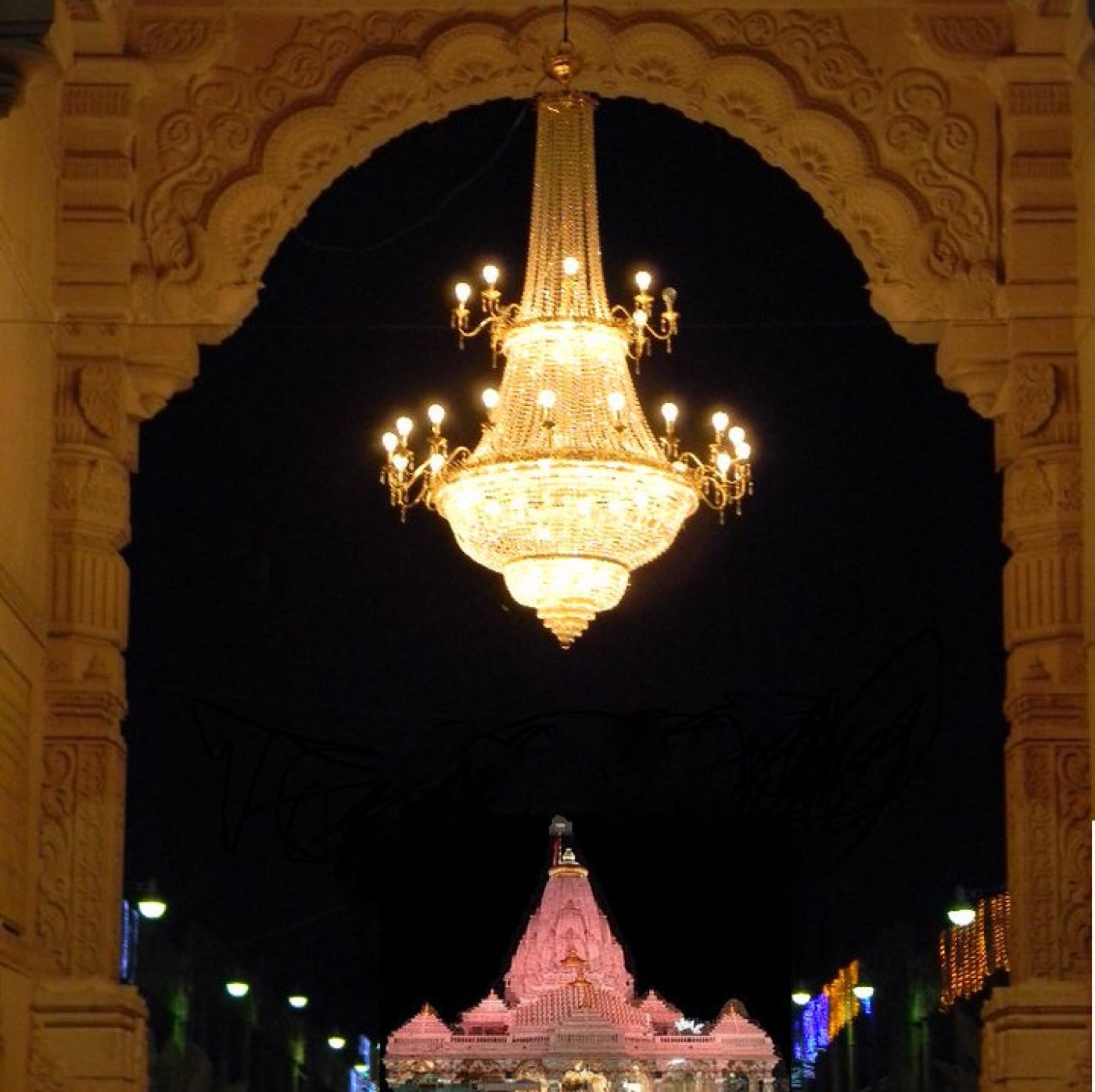
A mela is a different creature from a festival. It has a fairground as well as a sanctum, it runs for days rather than hours, and it draws people who come for the gathering as much as the darshan: traders, folk performers, cattle, families camping in the fields. Gujarat has kept this tradition more completely than almost anywhere else in India.
The calendar clusters around four moments: Mahashivratri in February, Bhadrapada's full moon in August or September, the Navratris, and Kartik Purnima in November. Nearly every great Gujarati temple mela sits at one of those points, which makes the year unusually easy to plan.
Every date and detail below comes from our verified temple guides. All are lunar and move each year, so treat the windows as reliable and confirm specific days locally before travelling.
The Gujarat mela calendar
Six major fairs across our Gujarat temples, in calendar order.
| Fair | Temple | When | What happens |
|---|---|---|---|
| Bhavnath Maha Shivratri Mela | Bhavnath Mahadev, Junagadh | February (Magh, Krishna Chaturdashi) | A five-day fair; naga sadhus from the akharas gather and process on the main night |
| Bhadarvi Poonam Fair | Ambaji, Banaskantha | Full moon of Bhadrapada, approx August to September | Over 1.5 million pilgrims across the Teras, Chaudas and Poonam days; many walk to Ambaji |
| Tarnetar Mela | Trinetreshwar Mahadev, Tarnetar | Bhadarva sud 4 to 6, approx September | Three fair days with near-continuous darshan; the famous folk marriage fair |
| Navratri | Chotila, Pavagadh, Ambaji, Umiya Mata | Chaitra (Mar to Apr) and Sharad (Sep to Oct) | Nine nights; hill shrines stay open round the clock with garba and bhajans |
| Girnar Lili Parikrama | Girnar and Bhavnath Taleti | November, Kartik Sud Agyaras to Poonam | A 36 km circumambulation of Mount Girnar beginning and ending near Bhavnath Taleti |
| Kartik Purnima fairs | Shamlaji, Koteshwar, Bhalka, Bhadreshwar, Somnath | November | Multi-day fairs with stalls, lamps and cultural programmes; hours extend and crowds surge |
Tarnetar: the fair where marriages were made
The Tarnetar Mela at Trinetreshwar Mahadev is the most famous folk fair in Gujarat and the most misunderstood. It runs on Bhadarva sud 4 to 6, three days in roughly September, with near-continuous darshan across them. Its fame rests on an old custom: young men of the region came carrying elaborately embroidered umbrellas, and marriages were arranged at the fair.
What a visitor sees today is a folk festival of extraordinary colour, with the embroidered chhatris, folk dance, costume and a fairground that swallows the village. The temple itself, dedicated to the three-eyed Shiva, sits at the centre of it. Come for the anthropology as much as the darshan, and understand that the surrounding fields become the fair.
Bhavnath: five days of naga sadhus
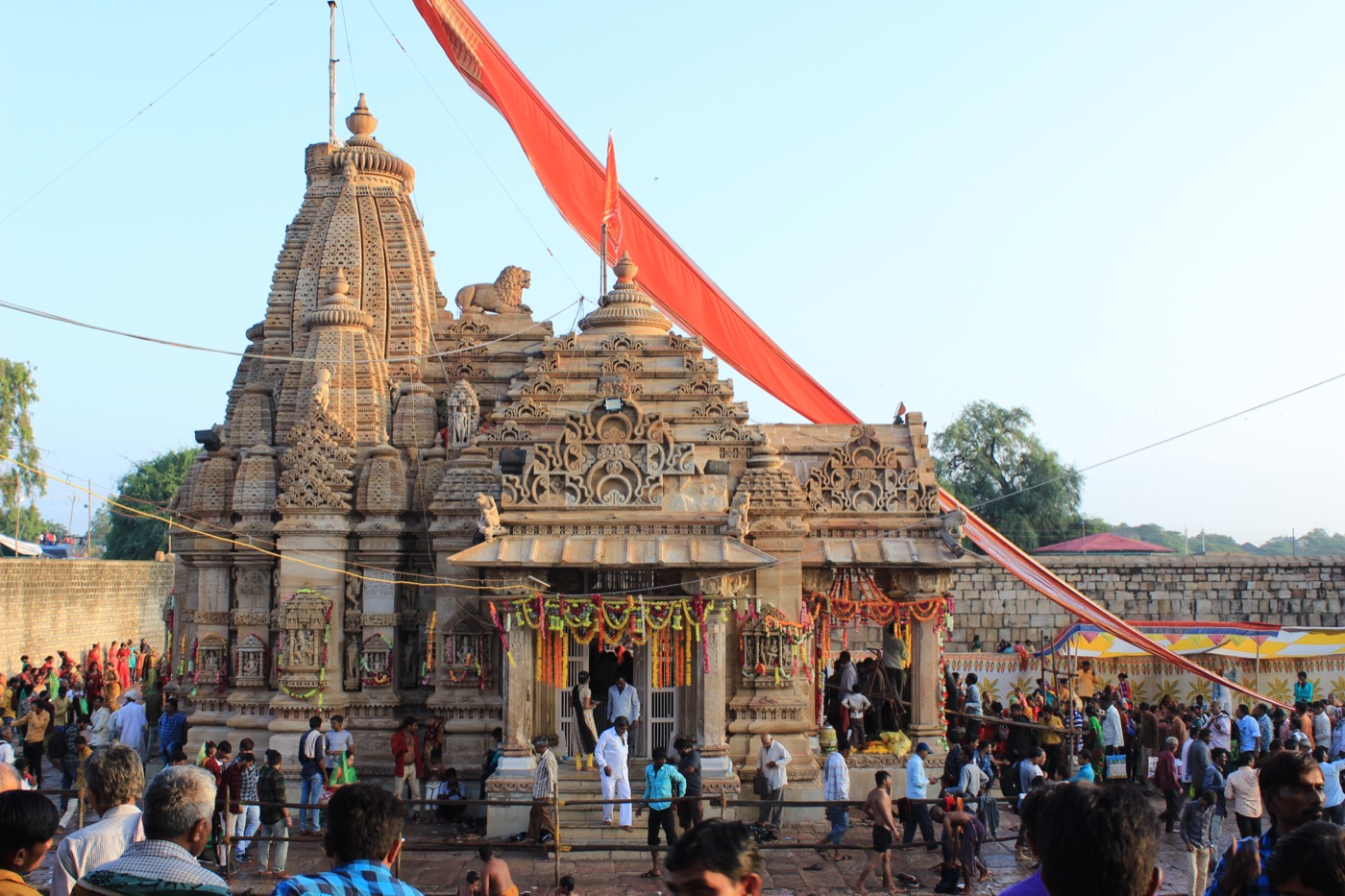
At the foot of Girnar in Junagadh, Bhavnath Mahadev holds Gujarat's signature Shivratri gathering in February, in the month of Magh. It is a five-day fair, and its defining sight is the ash-smeared naga sadhus of the various akharas, who gather and process on the main night. In spirit it is closer to a small Kumbh than to a temple festival.
The location does a great deal of work. Girnar rises directly behind the temple, the taleti ground is built for crowds, and the same base hosts the Lili Parikrama nine months later. Junagadh's accommodation fills for the mela, so book early, and treat the town itself as part of the experience.
Ambaji's Bhadarvi Poonam: Gujarat's largest gathering
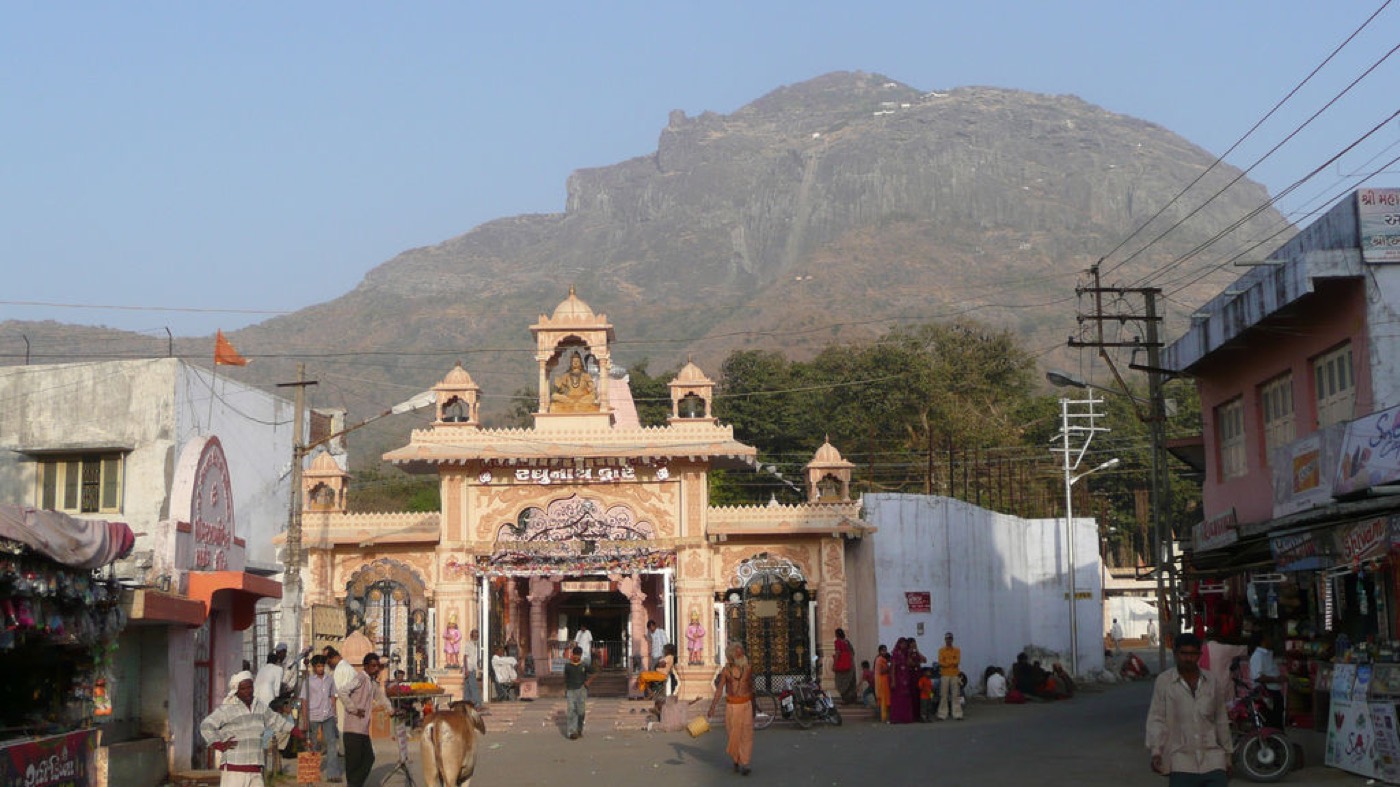
By sheer numbers, the biggest fair in our Gujarat data is the Bhadarvi Poonam Fair at Ambaji, the Shakti Peeth in Banaskantha, held on the full moon of Bhadrapada in approximately August or September. It draws over 1.5 million pilgrims across the Teras, Chaudas and Poonam days, and many of them walk to Ambaji rather than drive.
The walking pilgrimage is the heart of it: roads leading to the temple fill with padyatris and with the service camps that feed and shelter them, an entire temporary economy of devotion. Ambaji's other great windows are Navratri, with garba and heavy footfall, and the monthly Purnima, a smaller repeatable version of the same devotion that regulars time their visits to.
The Girnar Lili Parikrama
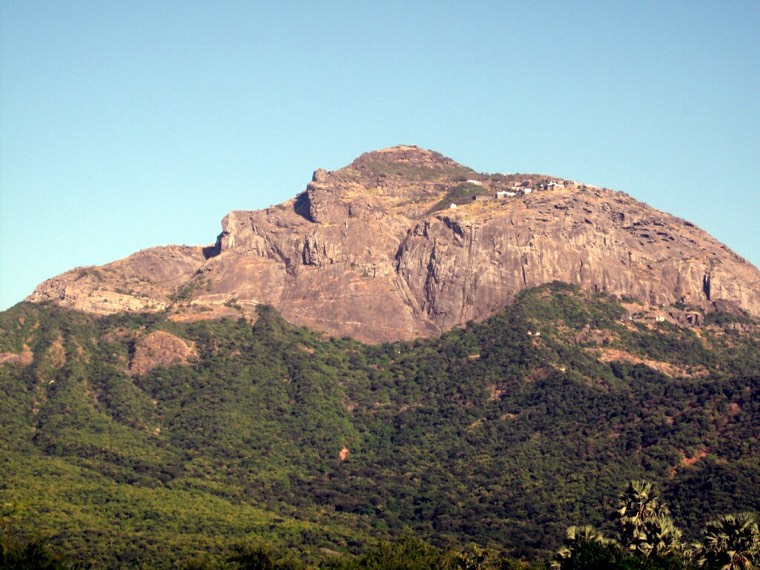
In November, in the window from Kartik Sud Agyaras to Poonam, tens of thousands walk the Lili Parikrama, a 36 km circumambulation of Mount Girnar that begins and ends around Bhavnath Taleti, with pilgrims bathing at Damodar Kund along the way. It is a walking festival rather than a fairground one, moving through forest tracks around the mountain over several days.
Its timing is not accidental. Kartik Purnima marks the end of the monsoon Chaturmas across Gujarat's religious calendar, which is also when Palitana's hill reopens for the Jain pilgrimage season. The same fortnight sees fairs at Shamlaji, Koteshwar, Bhalka and Bhadreshwar, and a multi-day fair on the Somnath temple grounds with diyas, stalls and cultural programmes lighting the seafront.
Girnar Temples (Girnar Parvat)
Junagadh, Gujarat
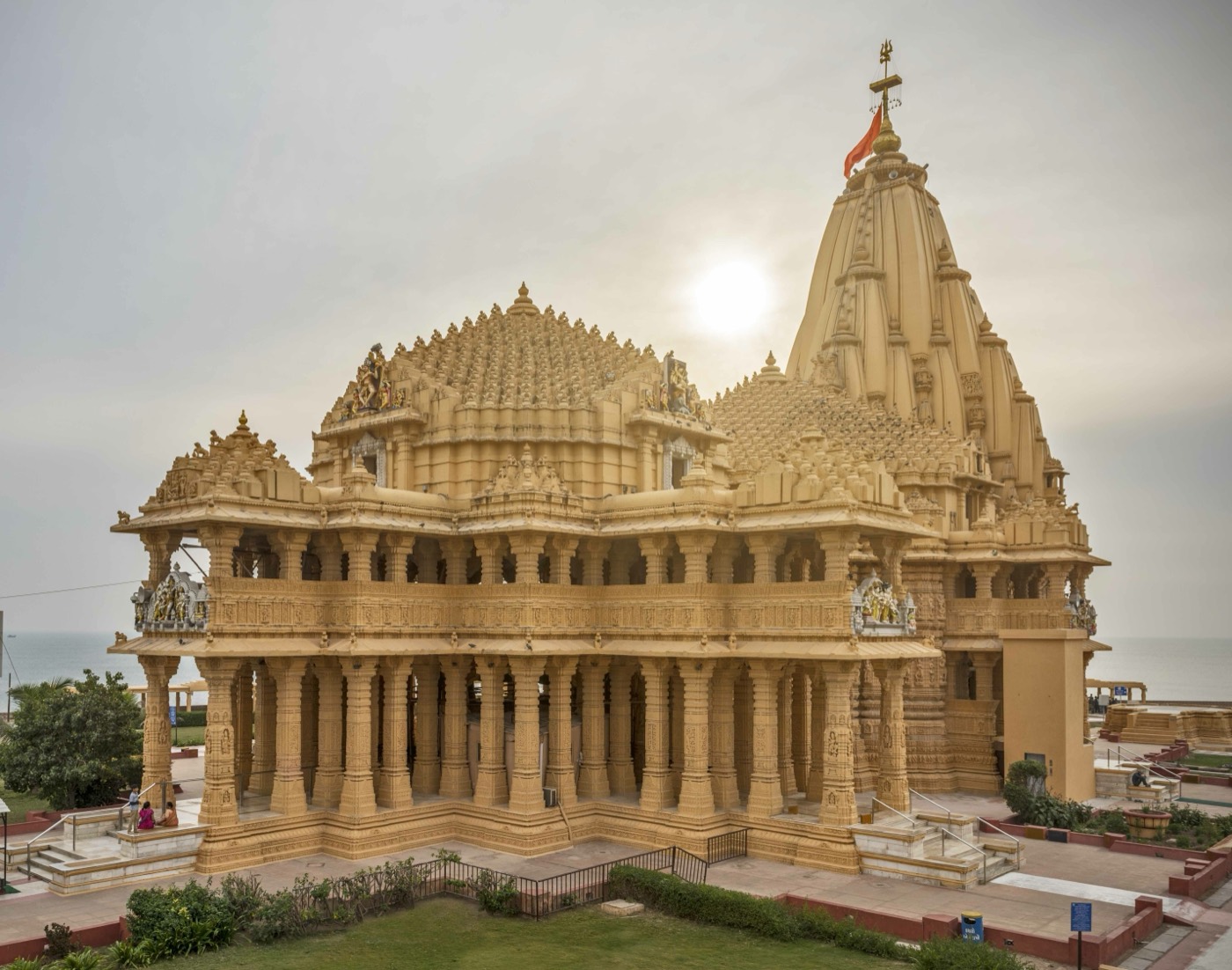
Somnath Temple
Gir Somnath, Gujarat
The full-moon temples
Beyond the great annual fairs, Gujarat keeps a monthly rhythm at several shrines. Dakor is the best example: its guide records Sharad Purnima as a peak, with Poonam and festival days bringing lengthened hours and queues managed in shifts for the huge crowds. Thousands walk to Dakor on foot for the full moon, particularly from the Kheda and Anand belt.
Chotila records Purnima crowds alongside its round-the-clock Navratris, and Ambaji's monthly Purnima carries the same character. For a traveller, this is useful in both directions: full-moon days are the most atmospheric time to visit these temples, and the worst time if you want a short queue.
Planning around the mela calendar
The clean approach is to pick one fair and build the trip around it, rather than hoping to catch several. February gives you Bhavnath and the naga sadhus, with Junagadh as the base and Girnar, Somnath and the Gir belt within easy reach. September gives you Tarnetar and Ambaji's Bhadarvi Poonam, though they fall in different corners of the state. November gives you the richest cluster: the Girnar parikrama, the Kartik fairs at Shamlaji, Koteshwar and Bhalka, Somnath's fair, and Palitana reopening.
Book accommodation weeks ahead in the fair town, or base yourself in a nearby city and travel in for the day. Expect roads near the temple to close to vehicles, expect to walk the final stretch, and carry as little as possible. And accept the trade honestly: at a mela you are attending a gathering, not making a quiet darshan. The quiet darshan is available at every one of these temples on an ordinary weekday, and it is a completely different experience of the same shrine.
A final word on why these fairs still matter. Across much of India the temple mela has thinned into a formality, a few stalls and a loudspeaker. In Gujarat it has kept its old function as the place where a scattered rural society assembles: to trade, to marry, to perform, to argue, and to stand together in front of the deity. That is why Tarnetar still fills its fields and why more than a million people still walk to Ambaji. Attending one is not simply seeing a temple at its busiest; it is seeing what the temple was always for.
Frequently asked questions
When is the Tarnetar fair held?
What is the Bhavnath Mahashivratri mela?
Which is Gujarat's largest temple fair?
What is the Girnar Lili Parikrama?
Why do so many Gujarat fairs fall in November?
Are temple fairs a good time to visit with family?
Compiled from our verified temple guides and public sources including Gujarat Tourism: Ambaji Bhadarvi Poonam Fair · Shree Somnath Trust: FAQ · Wikipedia: Girnar ropeway. Timings and festival dates shift with the lunar calendar; confirm before you travel.