The pairing works because the two shrines ask for different things at different hours. Shirdi's Samadhi Mandir rewards an early start: the mandir opens at approx 4:00 AM, Kakad aarti follows at approx 4:30 AM, and general darshan begins at approx 5:40 AM, so the serious queueing happens before most of Maharashtra has had breakfast. Shani Shingnapur, by contrast, is an open-air platform with no sanctum door, open 4:00 AM to 10:30 PM, and darshan there is a steady file past the stone rather than a long holding pattern. Do the queue-heavy temple first and the flowing one second, and the day arranges itself.
The circuit also extends naturally. Trimbakeshwar, at the foot of Brahmagiri near Nashik, and Grishneshwar, beside the Ellora caves, are both Jyotirlingas within a morning's drive of Shirdi, and each pulls the trip in a different direction. Trimbakeshwar points you west toward Nashik, Grishneshwar points you southeast toward Chhatrapati Sambhajinagar. You can sensibly add one of them on a second day. Adding both in one trip means a long transfer between them, approx 180 to 210 km depending on the source, and that is a decision to make with open eyes.
This guide covers the routing, the timing logic and the days to choose or avoid. It deliberately does not restate each temple's full timings, aarti tables, dress rules and stay options; the linked temple pages carry all of that in detail, and they are the pages to open once your route is fixed.
How the circuit fits together
Shirdi is the hub. It has the airport, the dedicated railway terminus and the widest spread of rooms, so almost every version of this trip starts and sleeps there. Shani Shingnapur is the short spoke: the temple's own data logs the Shirdi road leg at approx 74 km, while the Shirdi page records it as approx 70 km, so treat it as a leg in that range. The Jyotirlingas are the long spokes, where our sources disagree by margins worth knowing before you promise a driver anything.
The table gathers every road leg this site has data for. Where two temple pages differ on the same leg, both figures are shown; budget for the higher one.
| Leg | Road distance | Notes |
|---|---|---|
| Shirdi to Shani Shingnapur | Approx 70 to 74 km | The core leg; our two temple pages differ by a few kilometres |
| Shirdi to Nashik city | Approx 90 km | Roughly 2 to 2.5 hours by car or bus |
| Nashik to Trimbakeshwar | Approx 28 km | Around 45 to 60 minutes by frequent MSRTC bus or shared jeep |
| Shirdi to Trimbakeshwar | Approx 90 to 110 km | Figures differ between our Shirdi and Trimbakeshwar pages |
| Shirdi to Grishneshwar | Approx 110 to 130 km | Figures differ between our Shirdi and Grishneshwar pages |
| Shani Shingnapur to Grishneshwar | Approx 90 km | Useful when exiting the circuit toward Chhatrapati Sambhajinagar |
| Shani Shingnapur to Ahmednagar city | Approx 35 km | State buses and shared jeeps run frequently |
| Trimbakeshwar to Grishneshwar | Approx 180 to 210 km | The two Jyotirlingas are far apart; doing both needs its own day |
The one-day plan: Shirdi and Shani Shingnapur
Start in Shirdi the night before if you can. The choice that shapes the whole morning is whether you attend Kakad aarti. Being inside the sanctum for it needs a paid aarti pass, approximately Rs 600 for Kakad and Rs 400 for each of the other three aartis, booked in advance on online.sai.org.in. Passholders are in place before approx 4:30 AM. Everyone else joins general darshan from approx 5:40 AM, knowing the line slows sharply during the four aartis, when the sanctum is reserved for passholders. Phones and cameras are not allowed inside, so use the lockers and travel light.
Once darshan is done, take the road to Shani Shingnapur, a common day trip in the temple's own data. The timing maths is forgiving: the shrine stays open until 10:30 PM, so even a late start leaves a wide window. The core act there is pouring til oil over the five and a half foot black stone. Oil is sold at stalls outside, the platform is walked barefoot, and the abhishek gets oil on hands and clothing, so wear clothes you do not mind staining.
For the return, you have options. Head back to Shirdi for the night, or exit via Ahmednagar city, approx 35 km away, where state buses and shared jeeps run frequently. If your next stop is the Ellora side, note that Grishneshwar is approx 90 km from Shani Shingnapur, which makes the village a natural midpoint rather than a dead end.
The two-day plan: adding a Jyotirlinga
A second day buys you one of the two Jyotirlingas near this circuit, and the choice is genuinely even. Trimbakeshwar is the ritual heavyweight: the only Jyotirlinga whose linga has three faces, worshipped as Brahma, Vishnu and Shiva together, with the Kushavarta kund nearby marking where the Godavari first surfaces. It is also the country's most sought-after temple for Kaal Sarp, Narayan Nagbali and Tripindi rituals, which run on specific tithis and start very early, so confirm the date with your appointed guruji before locking the itinerary.
The Trimbakeshwar day runs through Nashik: approx 90 km from Shirdi to the city, roughly 2 to 2.5 hours, then approx 28 km on a ghat road to Trimbak town, around 45 to 60 minutes by bus or jeep. The temple opens at approx 5:30 AM and closes at approx 9:00 PM, general darshan is from the sabha mandap, and the sanctum closes briefly during the fixed daily pujas. Day-trippers commonly do it as a morning run from Nashik, which is exactly the right instinct.
The Grishneshwar day points the other way, toward Verul village near the Ellora caves, which sit approx 1.5 km from the temple. This is the twelfth and last of the Jyotirlingas, rebuilt in the 18th century by Ahilyabai Holkar, and the one hard scheduling fact is the midday break: darshan runs approx 5:30 AM to 12 noon and again 4:00 PM to 9:00 PM, so arrive in the morning or resign yourself to an afternoon at the caves, which is hardly a punishment. From Shirdi the leg is approx 110 to 130 km; from Shani Shingnapur it is approx 90 km, which is why some travellers reorder the circuit as Shirdi, then Shingnapur, then a night near Ellora.
A word on completism. The third Maharashtra Jyotirlinga, Bhimashankar, sits in a Sahyadri wildlife sanctuary approx 210 km from Trimbakeshwar and approx 300 km from Grishneshwar. It does not bolt onto this circuit; treat it as its own trip rather than a third add-on.
Darshan timings compared
The four temples keep four different rhythms, and the friction points are not the opening hours but the interruptions: aarti closures at Shirdi, the midday break at Grishneshwar, puja closures at Trimbakeshwar. The comparison below is the planning view; each temple page carries the full aarti table and the seasonal caveats.
Treat every time below as approximate and verify on the day; these are working shrines whose schedules move with sunset, festivals and trust decisions. Shirdi's timings, set by the Shri Saibaba Sansthan Trust, are best checked on online.sai.org.in before travelling.
| Temple | Opens | Closes | Interruptions to plan around |
|---|---|---|---|
| Shirdi Sai Baba | Approx 4:00 AM | Approx 11:15 PM | Sanctum reserved for passholders during the four aartis; general darshan from approx 5:40 AM |
| Shani Shingnapur | 4:00 AM | 10:30 PM | None as such; open platform with aartis at 4:30 AM, 12:00 PM and sunset |
| Trimbakeshwar | Approx 5:30 AM | Approx 9:00 PM | Sanctum closed to the public during fixed daily pujas |
| Grishneshwar | 5:30 AM | 9:30 PM | Midday break: darshan approx 5:30 AM to 12 noon, then 4:00 PM to 9:00 PM |
Choosing your day: Thursdays, Saturdays, Mondays
Each temple on this circuit has a weekday that belongs to it. Thursday is traditionally Sai Baba's day, and Shirdi's crowds swell accordingly. Saturday belongs to Shani: the temple's own data names Saturday and Amavasya as the charged days, daily footfall runs approx 30,000 to 45,000, and on Shani Amavasya, heaviest when the new moon lands on a Saturday, crowds can reach around three lakh. Monday is Shiva's day, and at Trimbakeshwar it brings the heaviest crowds plus a silver-and-gold crown palkhi procession in the afternoon, at approx 4:30 PM.
The advice cuts both ways. For the full charge of a shrine on its own day, go on that day and accept the queues. For calm, thread the needle with a mid-week plan that avoids Thursday at Shirdi, Saturday at Shingnapur and Monday at Trimbakeshwar. Weather-wise, November to February is the comfortable window across all four temples, which matters most at Shani Shingnapur's open, shadeless platform.
Festival dates below follow the lunar calendar and move every year, so they are given as windows, never fixed dates.
| Temple | Weekly peak | Annual peaks and their windows |
|---|---|---|
| Shirdi Sai Baba | Thursday, by tradition | Ram Navami (March or April), Guru Purnima (July), Vijayadashami (September or October); the mandir stays open overnight on these |
| Shani Shingnapur | Saturday | Shani Amavasya (every new moon), Shani Jayanti (May or June) |
| Trimbakeshwar | Monday | Shravan month (July to August), Maha Shivratri (February or March), Simhastha Kumbh once every 12 years |
| Grishneshwar | Mondays in Shravan | Maha Shivratri (February or March), Shravan (July to August), Kartik Purnima (November) |
Getting in and getting around
Shirdi exists largely to receive pilgrims, and its connections show it. Shirdi International Airport at Kakadi is approx 13 to 14 km from the mandir with direct flights from several metros, and prepaid taxis and Sansthan buses cover the transfer. Sainagar Shirdi railway station, approx 3 km out, is a dedicated terminus with Sansthan shuttle buses to the mandir; Kopargaon, approx 15 km away, has more train services. By road, MSRTC and private operators run frequent buses from Nashik, Aurangabad, Pune and Mumbai.
Shani Shingnapur has no station of its own. Rahuri, approx 33 km away, is the nearest railhead, and Ahmednagar Junction, approx 35 km, has more trains; in practice nearly everyone arrives by road from Shirdi or Ahmednagar, where taxis are easy to find. For the extensions, Nashik Road station, approx 39 km from Trimbak, is the main railhead on the Mumbai to Bhusawal line, with a taxi or state bus onward taking about 1 to 1.5 hours. Grishneshwar routes through Chhatrapati Sambhajinagar, whose airport and railway station both sit approx 30 km from the temple, with the transfer taking roughly an hour by road.
One more routing fact: Aurangabad's airport is also the larger fallback for Shirdi itself, approx 140 km away, which allows an open-jaw plan, flying into one end of the circuit and out of the other.
Rules that catch first-timers
Each of these shrines enforces something that regularly surprises people who did not read ahead. None of it is complicated, but two of the rules affect what you pack and what you wear, so they belong in the planning stage rather than the temple doorway. Across all four, the baseline is the same: shoulders and knees covered, footwear off before entry, and leather items left outside with the shoes.
- Shirdi: phones and cameras are not permitted inside the Samadhi Mandir sanctum; deposit electronics and valuables at the lockers, and use the free cloakrooms for footwear.
- Shani Shingnapur: the oil abhishek stains; wear something you can sacrifice, and carry til oil bought at the stalls outside.
- Shani Shingnapur: since 2016, after a Bombay High Court ruling and a temple trust decision, women may enter the core platform on the same terms as men.
- Trimbakeshwar: general darshan is from the sabha mandap; entering the garbhagriha for a hands-on abhishek traditionally requires men to wear a sovala or silk dhoti with no stitched upper garment, and women are traditionally not admitted to the innermost sanctum. This reflects reported temple custom, so verify on site.
- Grishneshwar: men must remove shirt, vest and belt before entering the garbhagriha, and this is strictly enforced.
- Everywhere: expect security screening; the less you carry, the faster you enter.
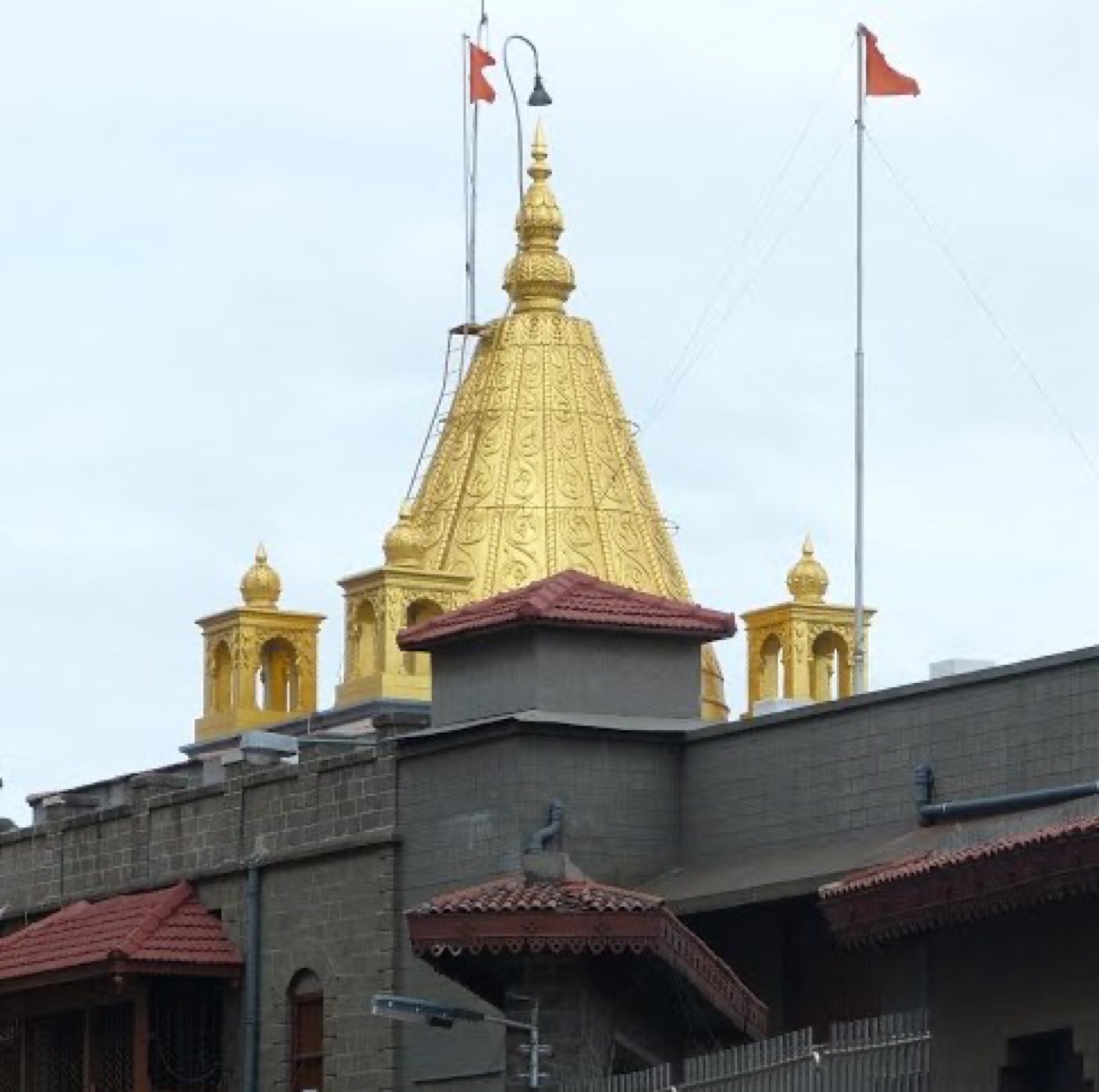
Shirdi Sai Baba Temple (Samadhi Mandir)
Ahmednagar (Ahilyanagar), Maharashtra
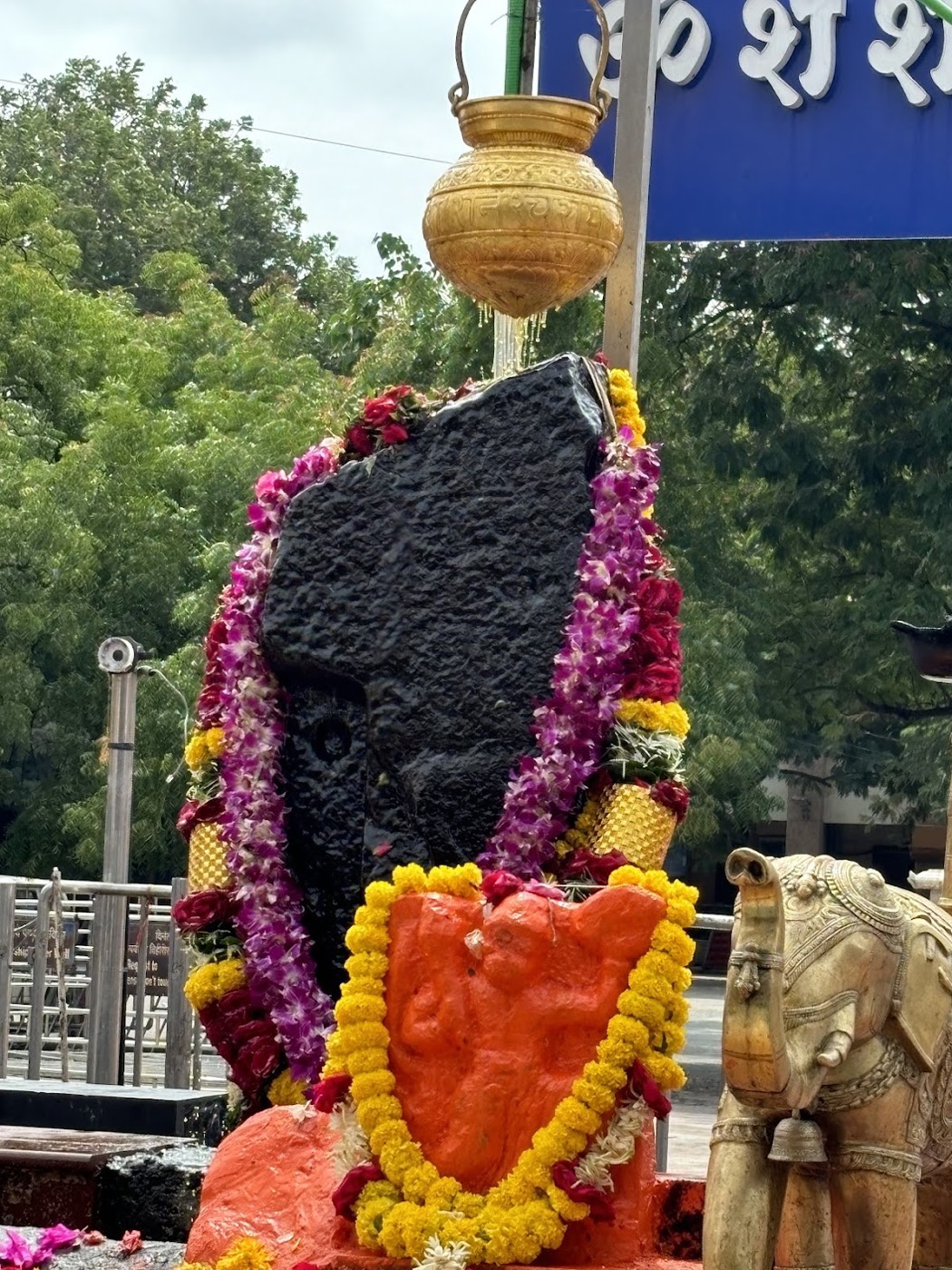
Shani Shingnapur (Shri Shaneshwar Devasthan)
Ahmednagar (Ahilyanagar), Newasa taluka, Maharashtra
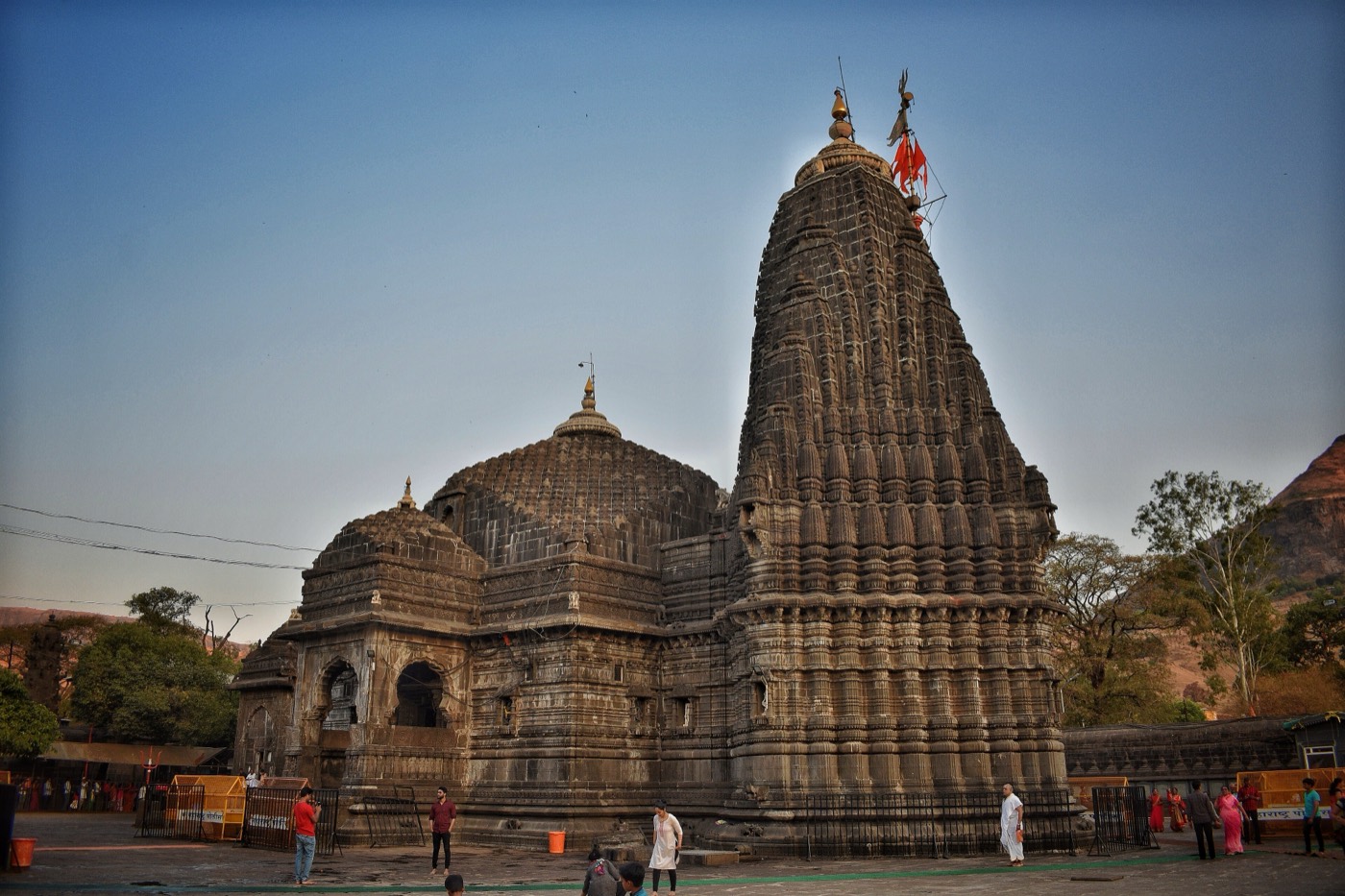
Trimbakeshwar Jyotirlinga Temple
Nashik, Maharashtra

Grishneshwar Jyotirlinga Temple
Chhatrapati Sambhajinagar (Aurangabad), Maharashtra
Where to sleep on this circuit
Shirdi is the obvious base and the easy one. The Shri Saibaba Sansthan Trust runs large, inexpensive devotee blocks, the Bhaktaniwas, Sai Ashram and dharmshalas, close to the mandir and bookable on online.sai.org.in, and a dense ring of private hotels surrounds them at every budget. On ordinary weekdays rooms are easy to find on arrival; on Ram Navami, Guru Purnima and Vijayadashami the trust blocks fill fast, so book well ahead.
Shingnapur village itself has a trust-run bhakta niwas and simple lodges, worth considering only if you want to be at the platform for a Saturday or Amavasya pre-dawn start; most visitors sleep in Shirdi or Ahmednagar instead. On the extensions, Trimbak has the temple trust's Bhaktaniwas accommodation plus lodges run by the puja-guruji families, and it fills quickly on Mondays, in Shravan and around Maha Shivratri, with Nashik city 28 km away as the roomier base. For Grishneshwar, Chhatrapati Sambhajinagar has the widest choice roughly 30 km out, while Verul's dharamshalas suit those targeting the 4:00 AM Mangal aarti at the temple gate.
One honest gap to flag: this circuit brushes past places this site does not yet cover in their own right, including the Ellora caves themselves, Nashik's Panchavati ghats and the Kalaram temple. They are worth your time, but you will need other sources for their details.
Frequently asked questions
How far is Shani Shingnapur from Shirdi?
Can you visit Shirdi and Shani Shingnapur in one day?
Is Saturday a good day to go to Shani Shingnapur?
Are women allowed inside Shani Shingnapur temple?
Which Jyotirlinga is closer to Shirdi, Trimbakeshwar or Grishneshwar?
What are the darshan timings at Shirdi Sai Baba temple?
Compiled from our verified temple guides and public sources including Shri Saibaba Sansthan Trust, Shirdi (official) - FAQ · Shri Shaneshwar Devasthan (official) · Trimbakeshwar Temple - Nashik District, Government of Maharashtra · YatraDham - Grishneshwar timings, dress code, distance. Timings and festival dates shift with the lunar calendar; confirm before you travel.