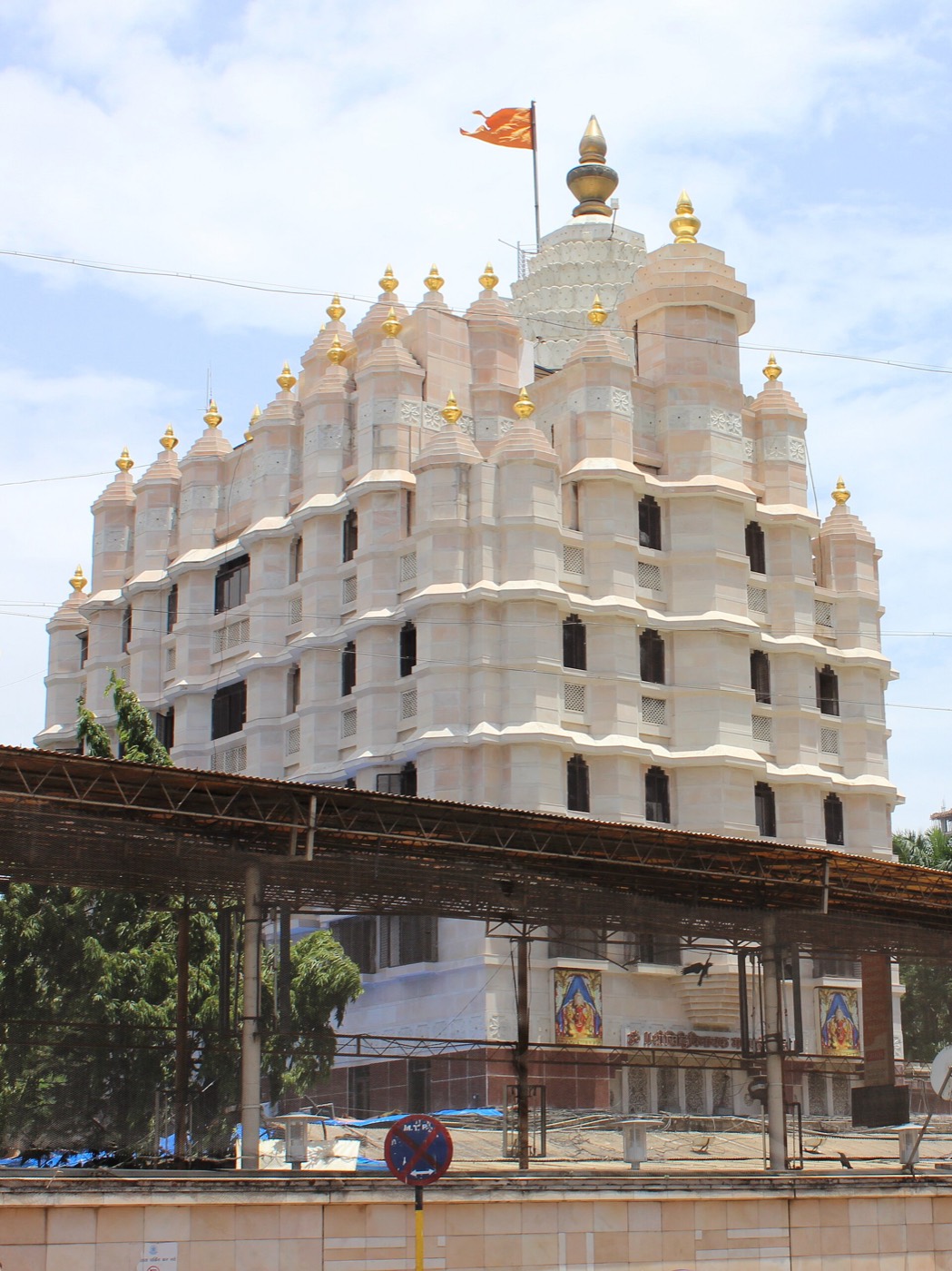
Most darshan planning from Mumbai splits into two very different kinds of trip. The first needs almost no planning at all: Siddhivinayak is a local train, metro ride or short taxi away, and the only real decisions are which day and which aarti. The second kind needs a weekend, because the other big names of Maharashtra sit roughly 165 to 240 km out by road, in separate directions.
Those weekend circles organise themselves neatly. Bhimashankar, the Jyotirlinga set in a Sahyadri wildlife sanctuary, is a ghat trip routed through Pune. Trimbakeshwar, the Jyotirlinga at the source of the Godavari, pairs with Nashik city. Shirdi, the samadhi shrine of Sai Baba, pairs naturally with Shani Shingnapur, the open-air Shani shrine in the famously doorless village, approx 70 to 74 km away by road.
Every distance, timing and fee below comes from the data on our five temple pages, and the hedges travel with the numbers: where our sources disagree, we print the range rather than pretending to precision. Festival dates follow the lunar calendar and move every year, so we give windows, never a specific date.
Siddhivinayak, the city anchor
Siddhivinayak sits in Prabhadevi, wedged between Dadar and Lower Parel, and it is one of the easiest major temples in India to reach by public transport. Dadar station, on both the Western and Central lines, is approx 2.5 km away. Better still, the Siddhivinayak station on Metro Line 3, opened in 2025, puts you approx 200 m from the complex, a walk of about two minutes.
The temple runs long hours, approx 5:30 AM to 9:50 PM from Wednesday to Monday. Tuesday is the day this Ganpati owns, and the schedule stretches accordingly: doors open around 3:15 AM and the day runs until about 12:30 AM into Wednesday, with a queue that can take several hours. General darshan is free, and a fast-track or VIP pass costs approx Rs 200 per head. One quirk worth planning around is the morning Maha-abhishek, roughly 7:30 AM to 1:00 PM, when access to the main sanctum is restricted, so an early start or an afternoon visit works better than mid-morning.
If you want the temple at its most atmospheric rather than its emptiest, the evening Dhoop Aarti around 7:30 PM is the most attended ritual of the day; arrive 30 to 45 minutes early for a standing spot with a clear view. If you simply want a calm darshan, a weekday morning just after opening is the quiet window.
Distances at a glance
The table below puts all five temples on one ruler. Two honesty notes before you read it. First, road distances vary by source and route, so where our temple pages disagree we print the range. Second, our data holds no direct Mumbai to Shani Shingnapur figure, so we give its distance from Shirdi, which is how almost everyone reaches it anyway.
| Temple | Road distance from Mumbai | Nearest railhead |
|---|---|---|
| Siddhivinayak, Prabhadevi | In the city; approx 8 to 10 km from South Mumbai | Dadar, approx 2.5 km; Siddhivinayak metro station approx 200 m |
| Bhimashankar | Approx 200 to 220 km (sources vary) | Pune Junction, approx 111 km from the temple |
| Trimbakeshwar | Approx 165 to 180 km (sources vary) | Nashik Road, approx 39 km from Trimbak |
| Shirdi | Approx 240 km | Sainagar Shirdi, approx 3 km |
| Shani Shingnapur | No direct figure in our data; approx 70 to 74 km from Shirdi | Rahuri, approx 33 km; Ahmednagar, approx 35 km |
The Bhimashankar ghat trip
Bhimashankar is the sixth of the twelve Jyotirlingas and the only one set inside a wildlife sanctuary, home of the shekru, the Indian giant squirrel and Maharashtra's state animal. The shrine stands at approx 3,250 ft in the Sahyadris at the end of a winding ghat road, and every route funnels through Pune, approx 110 to 125 km away. MSRTC buses run direct from Pune in roughly 3.5 to 4 hours, and self-drivers take the road via Rajgurunagar and Manchar. From Mumbai the temple is approx 200 to 220 km depending on route and source. The last stretch is always on foot, up a flight of steps from the car park lined with stalls.
The single most important thing to check before you go is the darshan window. The official schedule runs 5:00 AM to 9:30 PM, but an active restoration of the sabhamandap and steps has repeatedly cut darshan to roughly 7:00 AM to 11:00 AM, and the restriction has changed month to month. Phone ahead before committing to the drive; it is a long way to arrive at a closed gate.
Monsoon deserves its own warning here. From June to September the ghat road turns misty and slippery, and the sensible rule from our data is to drive it in daylight only. The reward is the sanctuary at its greenest, and Shravan, which falls in July to August, brings the year's most charged Mondays. Winter is the comfortable season, and Mahashivratri, in February or March, is the temple's biggest event and its longest queues.
Nashik and Trimbakeshwar
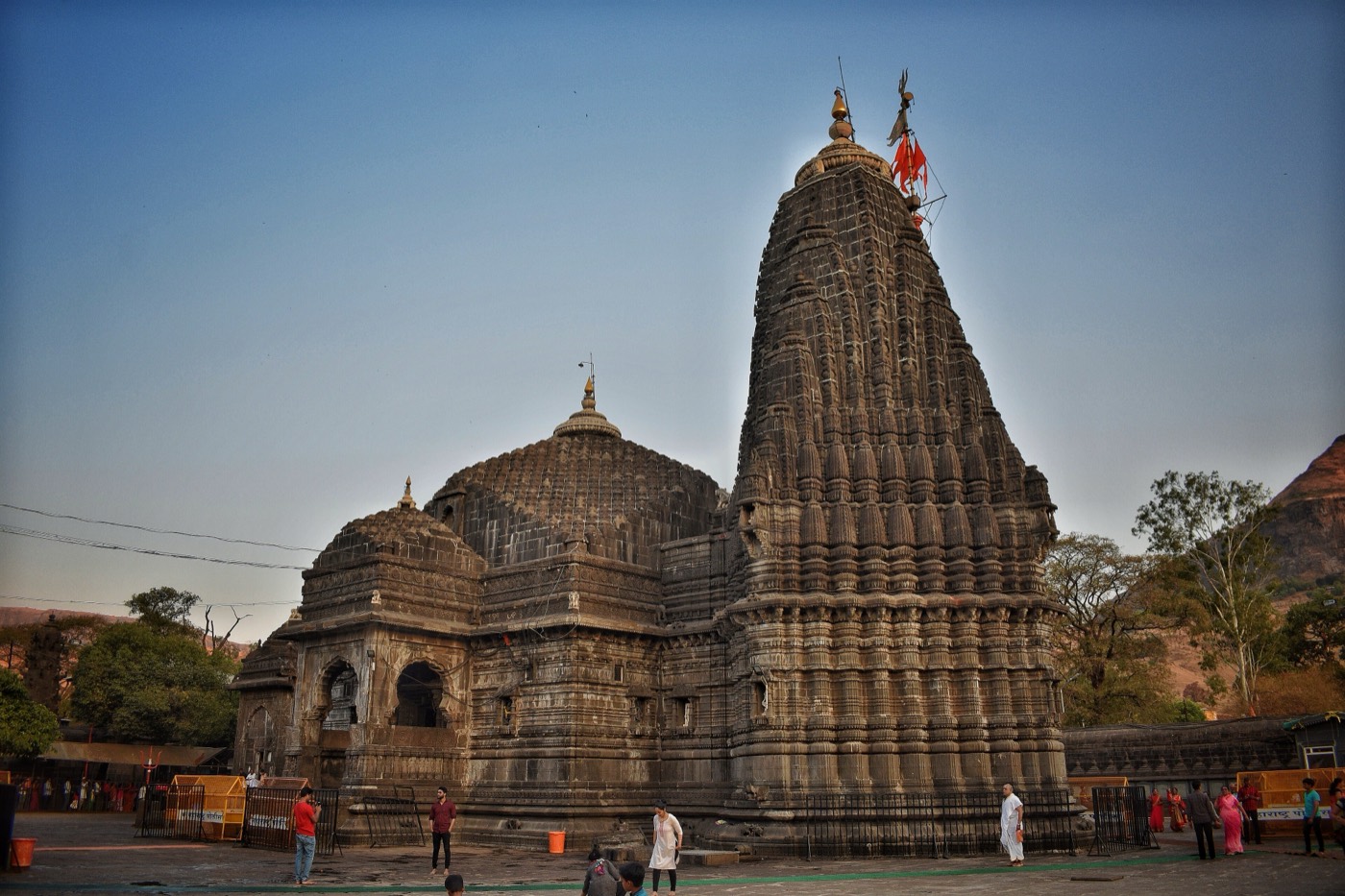
Trimbakeshwar stands at the foot of Brahmagiri hill, approx 28 km west of Nashik, and holds a Jyotirlinga unlike any other: three small natural faces in a hollow, worshipped as Brahma, Vishnu and Shiva together. A short walk away, the Kushavarta kund marks where the Godavari first surfaces. From Mumbai the run is approx 165 to 180 km by road, about 4 to 5 hours. By train, Nashik Road station on the busy Mumbai to Bhusawal line is the railhead, approx 39 km from Trimbak, with buses and taxis covering the last leg in about 1 to 1.5 hours.
Darshan runs approx 5:30 AM to 9:00 PM daily, and Monday is the day to aim for or avoid, depending on taste: crowds are heaviest, but an afternoon palkhi procession, around 4:30 PM on Mondays only, carries the deity's jewelled crown out of the sanctum. Know the customs before you queue. General darshan is from the outer hall; men entering the garbhagriha for a hands-on abhishek are traditionally required to wear a sovala or silk dhoti with no stitched upper garment, and women traditionally take darshan from the outer hall rather than the innermost sanctum. Treat both as reported temple custom and verify on site.
Trimbakeshwar is also the country's most sought-after temple for Kaal Sarp, Narayan Nagbali and Tripindi Shraddha rituals. These run on specific tithis and start very early, so if a puja is the point of the trip, fix the date with your appointed guruji before booking anything else. Nashik city works well as a base, and day-trippers commonly do the temple as a morning run. Shirdi sits approx 90 km away if you want to join two circles into one longer loop.
Shirdi paired with Shani Shingnapur
Shirdi is the long haul of the three circles, approx 240 km from Mumbai, and also the best connected: Sainagar Shirdi station is approx 3 km from the mandir and Shirdi's own airport is approx 13 to 14 km out. The Samadhi Mandir keeps long hours, approx 4:00 AM to 11:15 PM, punctuated by four aartis: Kakad at approx 4:30 AM, Madhyan at noon, Dhoop at sunset and Shej at approx 10:30 PM. General darshan is free, but sitting inside the sanctum during an aarti needs a paid pass, approx Rs 600 for Kakad and approx Rs 400 for the others, booked in advance on online.sai.org.in. The Sansthan Trust also runs large, inexpensive devotee accommodation bookable on the same portal.
Shani Shingnapur is the natural add-on, approx 70 to 74 km from Shirdi by road. The shrine is open air: a black stone about 5.5 ft high on a bare platform, with no roof and no sanctum door, in a village that famously keeps no doors or locks. It opens 4:00 AM to 10:30 PM, and the signature act is not a lamp aarti but the continuous til oil abhishek that devotees pour over the stone. Since 2016, after a Bombay High Court ruling and a temple-trust decision, women are allowed onto the core platform on the same terms as men. Wear clothes you do not mind staining, because the oil gets everywhere.
If you have a third day, Grishneshwar, the twelfth Jyotirlinga beside the Ellora caves, sits approx 110 km from Shirdi and approx 90 km from Shani Shingnapur, which is how many pilgrims stretch this circle into a proper Jyotirlinga run.
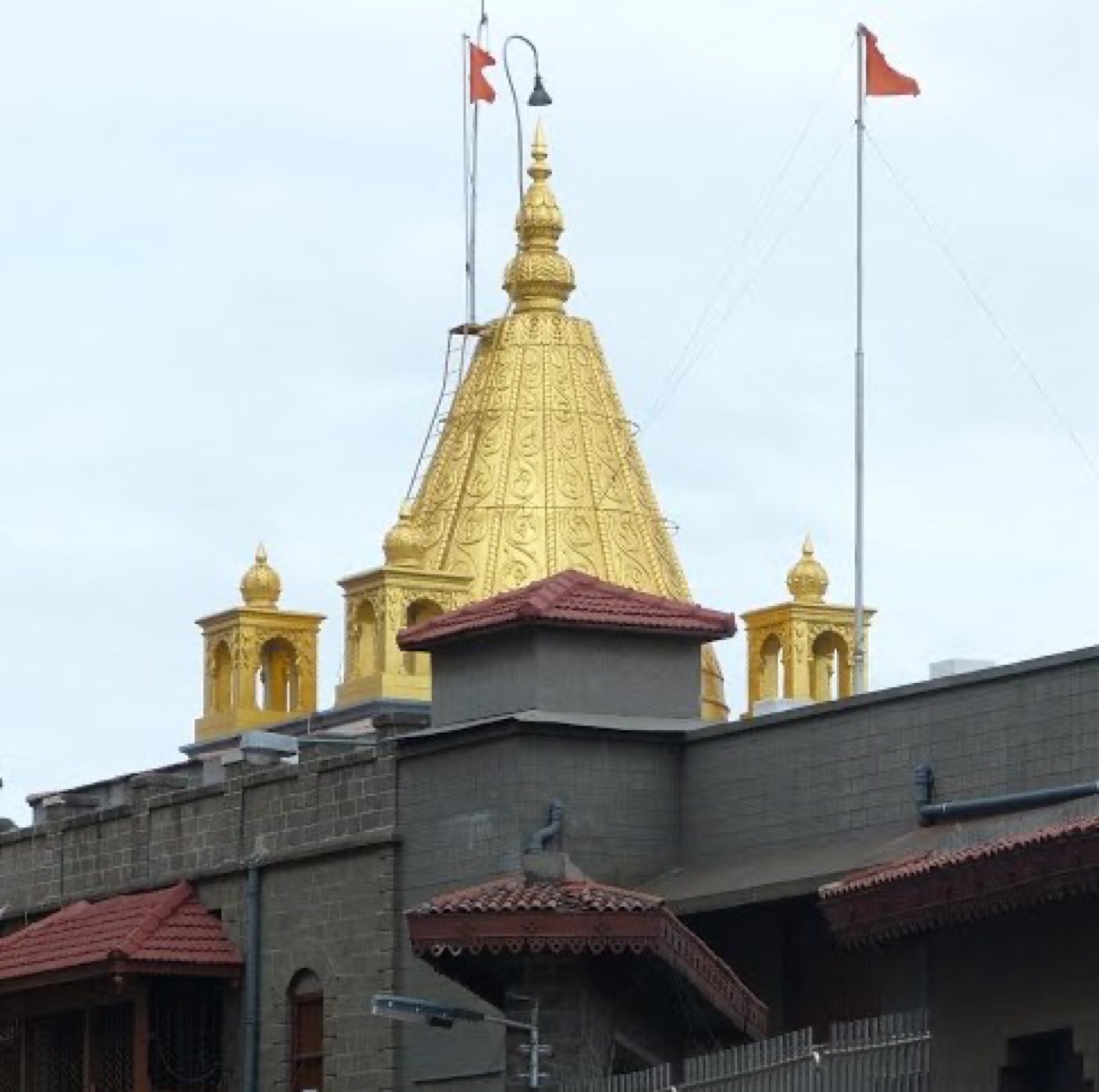
Shirdi Sai Baba Temple (Samadhi Mandir)
Ahmednagar (Ahilyanagar), Maharashtra
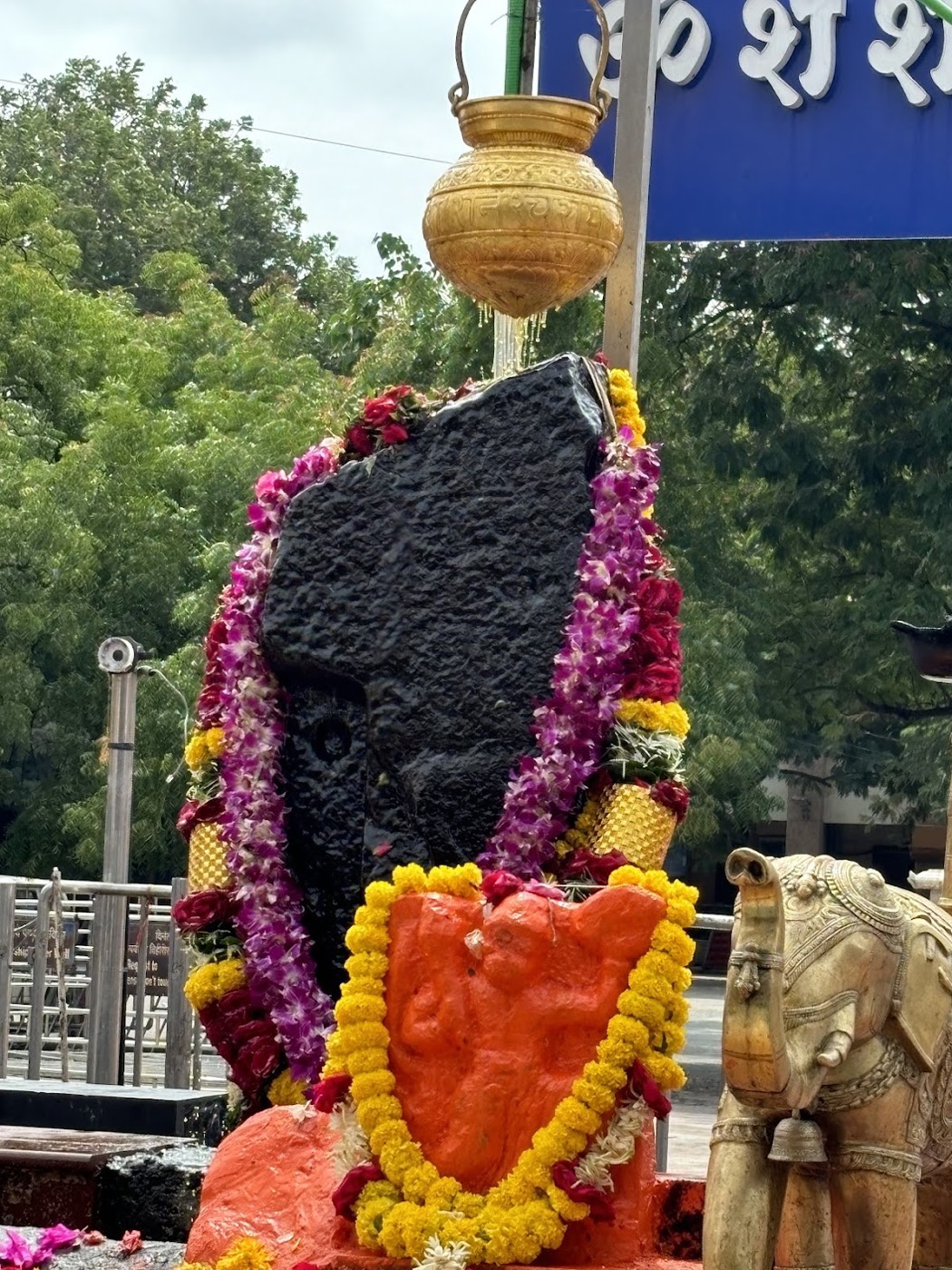
Shani Shingnapur (Shri Shaneshwar Devasthan)
Ahmednagar (Ahilyanagar), Newasa taluka, Maharashtra
When each temple peaks
Every temple in this guide has a different pulse. Siddhivinayak beats on Tuesdays, Bhimashankar and Trimbakeshwar on Mondays, Shani Shingnapur on Saturdays, and Shirdi rises on its three great festivals. All the festival windows below follow the lunar calendar and shift every year, so check the exact dates for your year before booking rooms or trains.
The extremes are worth naming. At Siddhivinayak, Angarki Sankashti Chaturthi, whenever the monthly Chaturthi falls on a Tuesday, is the single biggest single-day rush of the year. At Shani Shingnapur, Shani Amavasya crowds can reach around three lakh, against a normal daily footfall of approx 30,000 to 45,000. And on Shirdi's three principal festivals the Samadhi Mandir stays open through the night, with continuous darshan.
| Temple | Weekly peak | Biggest windows of the year |
|---|---|---|
| Siddhivinayak | Tuesday (opens around 3:15 AM) | Ganesh Chaturthi (Aug or Sep); Angarki Sankashti Chaturthi, whenever Sankashti falls on a Tuesday |
| Bhimashankar | Mondays, heaviest through Shravan (Jul to Aug) | Mahashivratri (Feb or Mar) |
| Trimbakeshwar | Monday, with the crown palkhi around 4:30 PM | Mahashivratri (Feb or Mar); Shravan month (Jul to Aug); Simhastha Kumbh Mela every 12 years |
| Shirdi | No single weekday peak in our data | Ram Navami (Mar or Apr); Guru Purnima (Jul); Vijayadashami (Sep or Oct) |
| Shani Shingnapur | Saturday | Shani Amavasya (new-moon days, especially Saturdays); Shani Jayanti (May or Jun) |
Season notes and what is actually paid
The monsoon, June to September, changes each trip differently. It is the season of caution at Bhimashankar, where the ghat road is misty and slippery, and the season of crowds at Siddhivinayak, since Ganesh Chaturthi lands in August or September while the rains are still on. At Trimbakeshwar the hills turn lush and the Godavari runs full, but the ghat road and steps get slippery. Winter, November to February, is the comfortable window across the board: best for Shirdi's long outdoor queues and for Shani Shingnapur's open, shadeless platform, which bakes in summer.
On money, the pattern across all five temples is the same: darshan itself is free, and payment only enters for queue-jumping, aarti seats or specific rituals. The table below shows where a fee genuinely exists in our data.
| Temple | General darshan | Paid extras |
|---|---|---|
| Siddhivinayak | Free | Fast-track or VIP pass, approx Rs 200 per head |
| Bhimashankar | Free | Paid VIP or fast darshan when offered |
| Trimbakeshwar | Free | Special pujas charged; ritual pricing not covered by our data |
| Shirdi | Free | Aarti passes, approx Rs 600 for Kakad and approx Rs 400 for the others, on online.sai.org.in |
| Shani Shingnapur | Free | Oil abhishek and pujas charged separately |
Rules that repeat across the circuit
A few practical rules recur at every stop, with local variations worth knowing before you queue rather than discovering at the gate.
- Modest dress everywhere: shoulders and knees covered at all five temples.
- Footwear comes off before every shrine; use the deposit counters rather than leaving shoes loose.
- Phones and cameras are restricted in the sanctums at Siddhivinayak, Shirdi and Trimbakeshwar; expect security checks and carry as little as possible.
- Leather items stay outside at Trimbakeshwar and are best left with your footwear at Shani Shingnapur.
- At Bhimashankar, carry minimal belongings on peak days; the queue corridor is narrow and the steps are steep.
- At Shani Shingnapur, til oil is sold at stalls outside, and abhishek clothes will pick up oil stains.
What this guide does not cover
A city guide should also say what it leaves out. Mumbai's own shrine landscape, Mumbadevi, Babulnath and the seafront Mahalakshmi temple among them, is not covered here because our verified data does not yet extend to those pages, and we would rather skip a temple than guess its timings. The same applies to Pune's city temples along the Bhimashankar route. Within Maharashtra's Jyotirlinga trail, this guide covers Bhimashankar and Trimbakeshwar in full and points onward to Grishneshwar; for everything deeper, the five featured pages linked throughout carry the complete timing, aarti, dress and stay detail that this overview deliberately summarises rather than repeats.
Frequently asked questions
How far is Bhimashankar from Mumbai and how do I get there?
Can I visit Shirdi and Shani Shingnapur in one trip from Mumbai?
Which day is Siddhivinayak temple most crowded?
Is Bhimashankar temple open during monsoon?
How do I reach Trimbakeshwar from Mumbai by train?
Are women allowed inside Shani Shingnapur and Trimbakeshwar?
Compiled from our verified temple guides and public sources including Wikipedia: Siddhivinayak Temple, Mumbai · Jyotirlinga Bhimashankar official temple schedule · Trimbakeshwar Shiva Temple - Wikipedia · Shri Saibaba Sansthan Trust, Shirdi (official) - FAQ · Shri Shaneshwar Devasthan (official). Timings and festival dates shift with the lunar calendar; confirm before you travel.