Old Banaras has its own answer to the order of things. Kashi Vishwanath, one of the twelve Jyotirlingas and the axis of the city, is the darshan people cross the country for. But Banarasi tradition holds that Kaal Bhairav, the fierce black-clad form of Shiva enshrined at Vishveshwarganj, is the kotwal of Kashi, its chief of police, and that no pilgrimage to the city is complete without his sanction. The two temples sit approx 2 km apart, which is why locals fold them into a single outing rather than treating them as separate trips.
The third pole is Sankat Mochan, the Hanuman temple founded by the poet-saint Tulsidas on the banks of the Assi river in south Varanasi, near Banaras Hindu University. It sits approx 4 to 6 km from the Godowlia crossing, outside the dense ghat-side lanes, which changes both how you reach it and where it fits in your day. On Tuesdays and Saturdays, Hanuman's days, its queues run for hours and the temple stays open into the night.
This page is the sequencing layer, not the detail layer. The aarti-by-aarti schedules, full dress rules and stay advice live on the individual temple guides linked throughout. Here you get the comparison tables, a workable one-day plan, the case for a second day, the festival windows that swell every queue in the city, and the onward road to Vindhyachal.
The local logic: the guardian and the lord
The pairing of Vishwanath and Kaal Bhairav is the oldest planning advice in the city. Bhairav's temple at Bharonath, Vishveshwarganj, a structure dating to the mid-17th century, holds a silver-faced idol seated on his dog vahana. Pilgrims queue for his darshan and leave with the kala dhaga, a black protective thread tied at the wrist by the temple priests, and it is worth taking from the priests rather than from hawkers in the lane. Whether you go to the guardian before or after the lord matters less than going at all; the tradition simply says the kotwal must be acknowledged.
Vishwanath itself has changed shape for planners since December 2021, when the Kashi Vishwanath Dham corridor opened and linked the sanctum directly to the Ganga at the ghats, so you can bathe in the river and walk up to the temple in one movement. No vehicle reaches either temple's door. For Vishwanath you walk in from the corridor gates near Godowlia through Vishwanath Gali, and for Kaal Bhairav you walk the final narrow lanes from the Maidagin side. Build that last stretch on foot into every estimate you make.
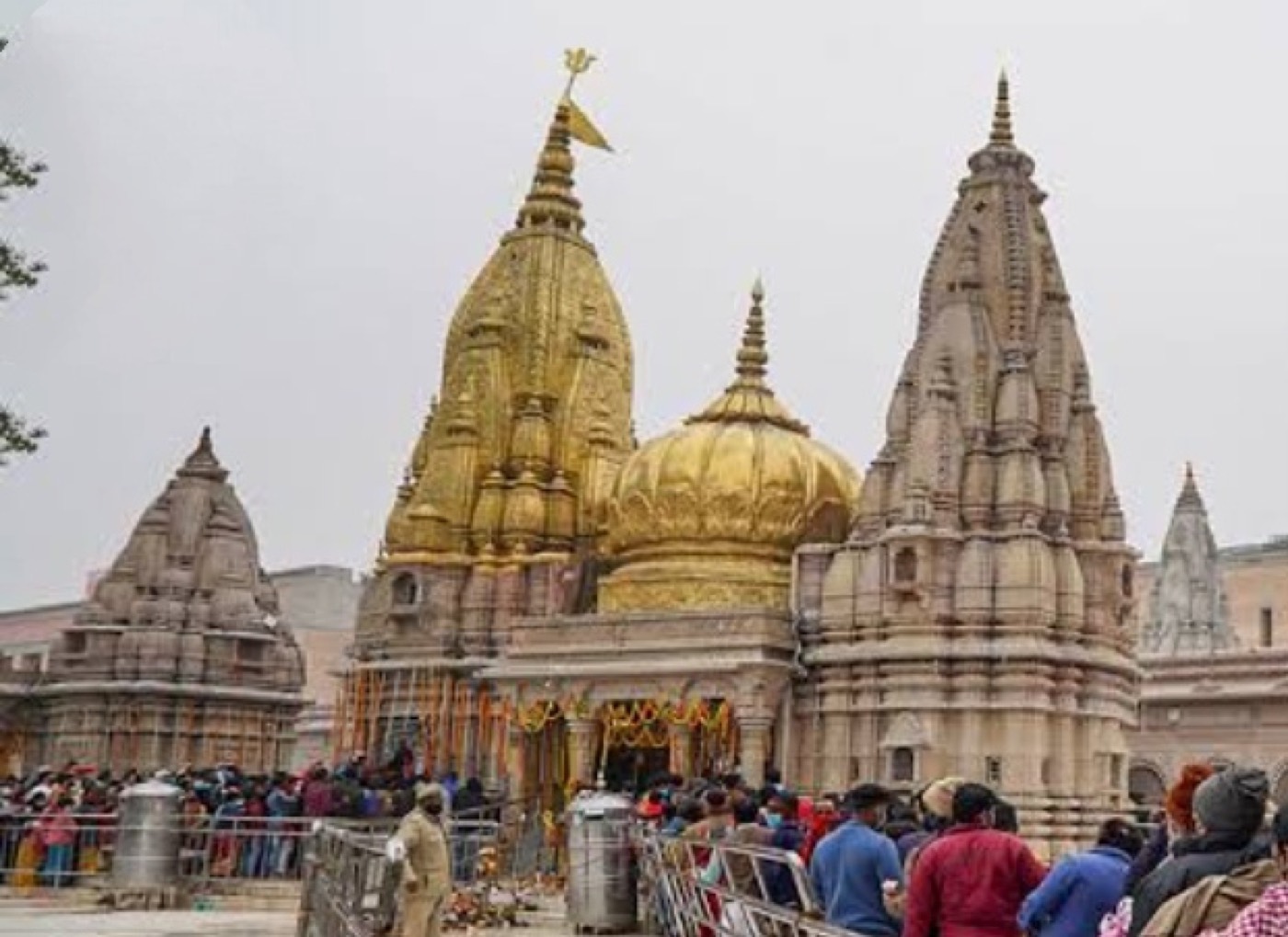
Kashi Vishwanath Temple
Varanasi, Uttar Pradesh
Kaal Bhairav Temple, Varanasi
Varanasi, Uttar Pradesh
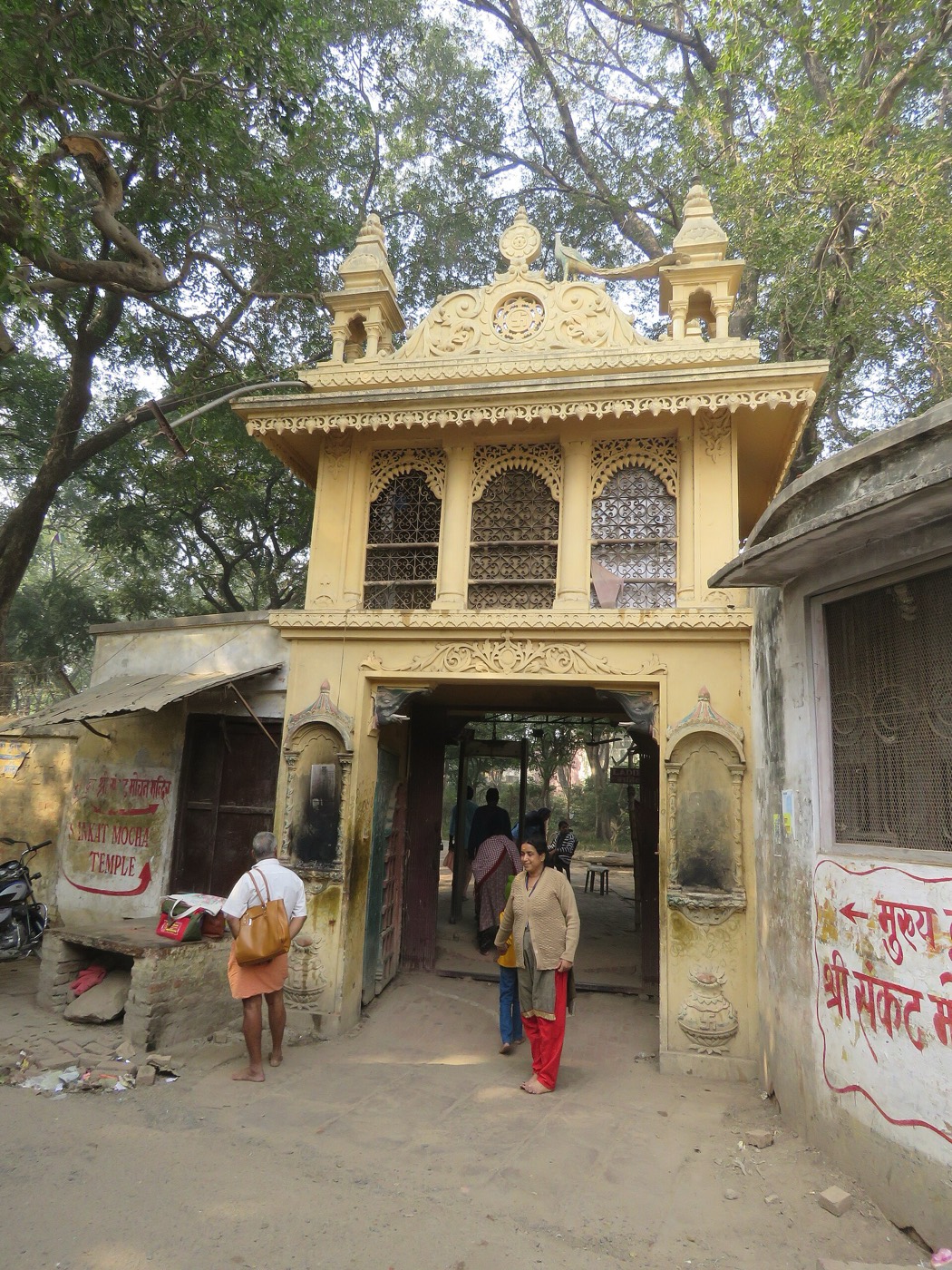
Sankat Mochan Hanuman Temple
Varanasi, Uttar Pradesh
Four temples, four clocks
The single most useful thing to internalise is that the city's temples do not share a midday rhythm. Vishwanath's sanctum pauses only briefly for the midday Bhog Aarti. Sankat Mochan closes for a full three hours from noon. Kaal Bhairav takes the longest break of all, from early afternoon until late afternoon. Plan the middle of your day around food and rest, not temples, and the whole itinerary stops fighting you.
Treat the minutes below as the pattern, not a promise. Kashi Vishwanath's schedule is set by its temple trust and shifts around five daily aartis, so the current day's timing on the official portal, shrikashivishwanath.org, overrides anything printed here. Kaal Bhairav publishes no official timetable and its commonly reported hours drift by roughly 30 to 60 minutes with the season, while Vindhyavasini's hours are indicative rather than published. Confirm locally on the day.
| Temple | Opens | Midday closure | Closes | Heaviest days |
|---|---|---|---|---|
| Kashi Vishwanath | 2:30 AM | Bhog Aarti, roughly 11:15/11:30 AM to 12:00-12:20 PM | 11:00 PM | Shravan (Jul-Aug), Maha Shivratri |
| Sankat Mochan | 4:30 AM | 12 noon to 3 PM | 10:30 PM; around midnight on Tue and Sat | Tuesdays and Saturdays |
| Kaal Bhairav | Approx 5:00 AM | 1:30 PM to 4:30 PM | Approx 9:30 PM | Sundays and Tuesdays |
| Vindhyavasini (Vindhyachal) | Approx 4:00 AM | Brief closures at each aarti and bhog | Late night, approx 11:30 PM | Both Navratris |
A one-day darshan plan
One full day covers all three city temples without running. The frame below assumes you stay in the Godowlia or Dashashwamedh cluster, within a short walk of the corridor gates, which is where most pilgrims base themselves precisely because it makes the pre-dawn start possible.
Two cautions on this plan. Mangala Aarti at Vishwanath is ticketed with limited sanctum capacity, so book it on the official portal well before you travel, or plan around the free general darshan from approx 4:00 AM instead. And the evening slot forces a choice: the Sapt Rishi Aarti inside the temple is ticketed and books out, while the Ganga Aarti at Dashashwamedh Ghat is a public riverfront ceremony that needs no ticket. They are different events at different places, and they are constantly confused with each other.
If the queue threatens to eat the morning, Vishwanath offers a Sugam (VIP) darshan at approx Rs 250 per person. That figure comes from travel sources rather than the official portal, so treat it as indicative and check when you book.
| Time | Where | What happens |
|---|---|---|
| 3:00 AM to 4:00 AM | Kashi Vishwanath | Mangala Aarti, by ticket or advance booking only; skip it and join the general darshan queue if you have no booking |
| From approx 4:00 AM | Kashi Vishwanath | General darshan window opens; the earlier you join, the shorter the queue |
| Late morning | Kaal Bhairav | Approx 2 km from the corridor area; morning darshan runs until 1:30 PM, so arrive with margin |
| 1:30 PM to 3:00 PM | Lunch and rest | Kaal Bhairav is closed 1:30 PM to 4:30 PM and Sankat Mochan from 12 noon to 3 PM, so nothing is lost by pausing |
| From 3:00 PM | Sankat Mochan | Sanctum reopens at 3 PM; the ride from central Varanasi is approx 4 to 6 km |
| 7:00 PM onward | Kashi Vishwanath or Dashashwamedh Ghat | Sapt Rishi Aarti at the temple (ticketed) or the public Ganga Aarti by the river |
Where a second day earns its keep
A second day buys you calm rather than coverage. With the three temples done, you can attend the aartis you had to skip, take the corridor slowly, and see Sankat Mochan as it is meant to be seen. If your dates allow it, put Sankat Mochan on a Tuesday or a Saturday, when the crowd is the point: the temple stays open to around midnight, free Hanuman Chalisa and Sundarkand booklets pass hand to hand, and the courtyard fills with laddoos, marigold and the resident monkeys. If you want the opposite, a weekday morning straight after the 4:30 AM opening is about the quietest darshan in the city.
A second day also lets you split the geography honestly: old city on day one, with Vishwanath, Kaal Bhairav and the ghats, then the south on day two, with Sankat Mochan and Assi Ghat and the evening kept free for the river. Sankat Mochan and Kaal Bhairav sit approx 6 to 7 km apart at opposite ends of the city, so folding both into one afternoon means more time in traffic than in queues.
The classic side trip: Vindhyavasini at Vindhyachal
Vindhyavasini Devi at Vindhyachal, in Mirzapur district, is the traditional onward pilgrimage from Kashi, and it works as a day trip. The temple sits on the Ganga approx 65 km from Varanasi by road via NH-19, with frequent buses and shared taxis on the highway. By rail, the small Vindhyachal station (code BDL) is approx 3 km from the sanctum and many express trains halt there, while Mirzapur Junction, approx 8 km away, is the bigger station with more reliable stops.
The goddess here is worshipped as Adi Shakti in residence, and the full pilgrimage is not one temple but three: the Trikon Parikrama walks you between Vindhyavasini, Kali Khoh and Ashtabhuja on a single loop of the hills. Darshan runs near-continuously from approx 4:00 AM to late night, with brief closures at each aarti and bhog. The one warning that matters is Navratri: during Chaitra Navratri in March-April and Sharad Navratri in September-October the temple moves to near round-the-clock queue darshan, rooms in Vindhyachal fill fast and rates rise. Either embrace that crowd deliberately or avoid those windows. Vindhyavasini stands among the great Shakti shrines of the north, in the company of Vaishno Devi and Kamakhya, and it draws pilgrims accordingly.
Festival windows that reshape every queue
Every festival below follows the Hindu lunar calendar, so it moves each year within its window; check the exact date for your year of travel before locking bookings. When these land, timings extend, queues multiply and rooms across the city fill.
Shravan deserves its own sentence. For that month the whole city recalibrates around Shiva, every Monday brings lakhs of kanwariyas pouring Ganga water on the lingam at Vishwanath, and on peak days the temple often stays open through the night for continuous darshan. It is the most spiritually charged stretch of the Kashi year and the most crowded, and both things are true at once.
| Festival | Window | Where it lands hardest |
|---|---|---|
| Maha Shivratri | Phalguna, February or March | Kashi Vishwanath, with heavy footfall at Kaal Bhairav too |
| Shravan (Sawan) month | July to August; Mondays heaviest | Kashi Vishwanath; Sundays especially busy at Kaal Bhairav |
| Hanuman Jayanti | Chaitra Purnima, usually March or April | Sankat Mochan |
| Sankat Mochan Sangeet Samaroh | April each year | Sankat Mochan courtyard, a classical music festival |
| Kaal Bhairav Ashtami | Margashirsha, November or December | Kaal Bhairav, its biggest day with night-long darshan |
| Annakut | Kartik, October or November, the day after Diwali | Kaal Bhairav, grand food offering and decoration |
| Navratri, Chaitra and Sharad | March-April and September-October | Vindhyavasini at Vindhyachal |
| Dev Deepawali | Kartik Purnima, November | The whole riverfront, paired naturally with Vishwanath darshan |
| Rangbhari Ekadashi | Phalguna, March | Kashi Vishwanath, a distinctly Kashi celebration |
Rules, lockers and getting there
The rule that surprises first-time visitors is the sparsh darshan dress code at Vishwanath: to touch the lingam, men wear dhoti-kurta and women a saree, and without traditional dress you may be allowed darshan only from outside the sanctum. General darshan carries no traditional-only rule, but modest cover of shoulders and legs is expected at all four temples on this page, and footwear stays outside everywhere.
Phones, cameras and electronics are prohibited in the sanctum areas at Vishwanath and Sankat Mochan, and photography is generally not allowed inside Kaal Bhairav's sanctum either. Free lockers operate near the Vishwanath corridor gates and at Sankat Mochan's entrance, so carry as little as possible. Security is taken seriously across the city; Sankat Mochan has had a permanent police post inside since the temple was bombed during evening aarti on 7 March 2006, and bag checks at entry are standard.
Arriving: Varanasi Junction (Cantt) is the main long-distance railhead, approx 4.5 km from Vishwanath and approx 2.5 km from Kaal Bhairav, while Banaras station (formerly Manduadih) is the closer railhead for Sankat Mochan at approx 5 km. Lal Bahadur Shastri International Airport at Babatpur lies approx 25 to 26 km out, and the drive into the old city takes roughly 45 to 90 minutes depending on traffic. Everywhere the pattern repeats: motor transport to an edge point such as Godowlia or Maidagin, then the last stretch on foot.
- Phones and cameras: use the free lockers at Vishwanath and Sankat Mochan rather than arguing at the gate
- Leather belts, wallets and bags: not allowed inside Vishwanath, so leave them at your stay
- Big bags: checks are thorough and small bags move through security faster
- Cigarettes, lighters and tobacco: not permitted at Vishwanath
- At Sankat Mochan: keep prasad, spectacles and bags secure around the resident monkeys, and do not feed them
Frequently asked questions
How many days do you need for temples in Varanasi?
Which temple should you visit first in Varanasi?
What is the dress code for Kashi Vishwanath temple?
What time is Mangala Aarti at Kashi Vishwanath?
How do you reach Vindhyavasini temple from Varanasi?
Is Kashi Vishwanath one of the twelve Jyotirlingas?
Compiled from our verified temple guides and public sources including Shri Kashi Vishwanath official portal - Rituals · Wikipedia - Kashi Vishwanath Temple · Wikipedia: Sankat Mochan Hanuman Temple · Wikipedia: Kaal Bhairav Mandir, Varanasi · Wikipedia: Vindhyachal. Timings and festival dates shift with the lunar calendar; confirm before you travel.