Almost everything that matters in March follows the lunar calendar, so this is a month of windows rather than dates. Holi falls on Phalguna Purnima, which lands in February or March depending on the year. Mahashivratri sits a fortnight earlier in the same lunar month, so in some years it belongs to February and in others to early March. By the end of the month, Chaitra festivals begin arriving in a March to April window.
Five temples anchor this guide: Banke Bihari and its famous flower Holi, Prem Mandir for calmer Vrindavan evenings, Khatu Shyam Ji and its pre-Holi Lakkhi Mela, Kashi Vishwanath for a festival that belongs to Varanasi alone, and Govind Dev Ji in Jaipur, where Braj-style colour celebrations reach Rajasthan.
One honest note before the detail. March is the last month of the comfortable October to March weather window across the plains, pleasant in the first half and warming steadily after that. It is also, in most years, the most crowded stretch of the spring at the temples in this guide. Neither fact should put you off, but both should shape how you plan the days.
How the lunar calendar shapes March
Nothing on the March temple calendar sits on a fixed date. The month straddles the lunar month of Phalguna and the start of Chaitra, and the big festivals move with them. Holi falls on Phalguna Purnima, in February or March. Mahashivratri comes earlier in the same lunar month, so it reaches March only in some years. Khatu's Phalgun Lakkhi Mela ends about 8 to 9 days before Holi. Chaitra Navratri, Ram Navami and Hanuman Jayanti all sit in a March to April window, so their opening days can land in late March.
The practical consequence is simple. Before you book trains for a March pilgrimage, check where Holi and Mahashivratri land in the year you are travelling. A plan built for a quiet mid-March weekend can collide with the biggest festival crowd of the year if the lunar calendar has shifted a week against you. Every festival in this guide is therefore given as a window, not a date, and the windows come from the temple pages on this site.
Holi in Braj: the headline event
Braj is the spiritual home of Holi, and the wider Vrindavan, Mathura and Barsana belt celebrates for days rather than a single morning. The centrepiece is the Phoolon wali Holi at Banke Bihari, Vrindavan's famous flower Holi, where priests shower devotees with petals and coloured water from the jagmohan while Bihariji is placed in a silver enclosure for closer darshan. It is one of the temple's peak festivals, and the whole town knows it.
Go in with clear eyes about the crowds. Banke Bihari sits deep in old Vrindavan's lanes, vehicles stop several hundred metres away, and darshan happens in a small, low hall where the crush is part of the experience. The sensible rules are blunt ones: keep children close, hold bags and valuables tight because pickpocketing in the packed galiyara is a real risk, and do not push toward or climb the steps of the jagmohan for a closer view, since crowd-safety rules restrict this after past overcrowding incidents. The dress code is enforced, and shorts, torn jeans and similar clothing are turned away.
Prem Mandir offers the gentler half of a Vrindavan Holi day. The white-marble complex on the edge of town keeps the same hours year round, 8:30 AM to 12:00 noon and 4:30 PM to 8:30 PM, and through 31 March its musical fountain show runs on the winter slot of 7:00 to 7:30 PM, so reach the lawns by around 6:45 PM for a clear spot. Book rooms well ahead for Holi week, because the whole Braj region sells out. Mathura, approx 12 km away, is the usual fallback when Vrindavan is full.
The Holi circuit has famous members this site does not yet cover in detail, including Barsana and Nandgaon of the Lathmar Holi traditions and the temples of Mathura town itself, so treat this guide as the Vrindavan half of the story. Gujarat has its own great Phalguna gathering at Dakor Ranchhodrai, where the Fuldol Poonam full moon coincides with Holi and lakhs of devotees, many walking as padayatris from Ahmedabad and across Gujarat, converge on the town.
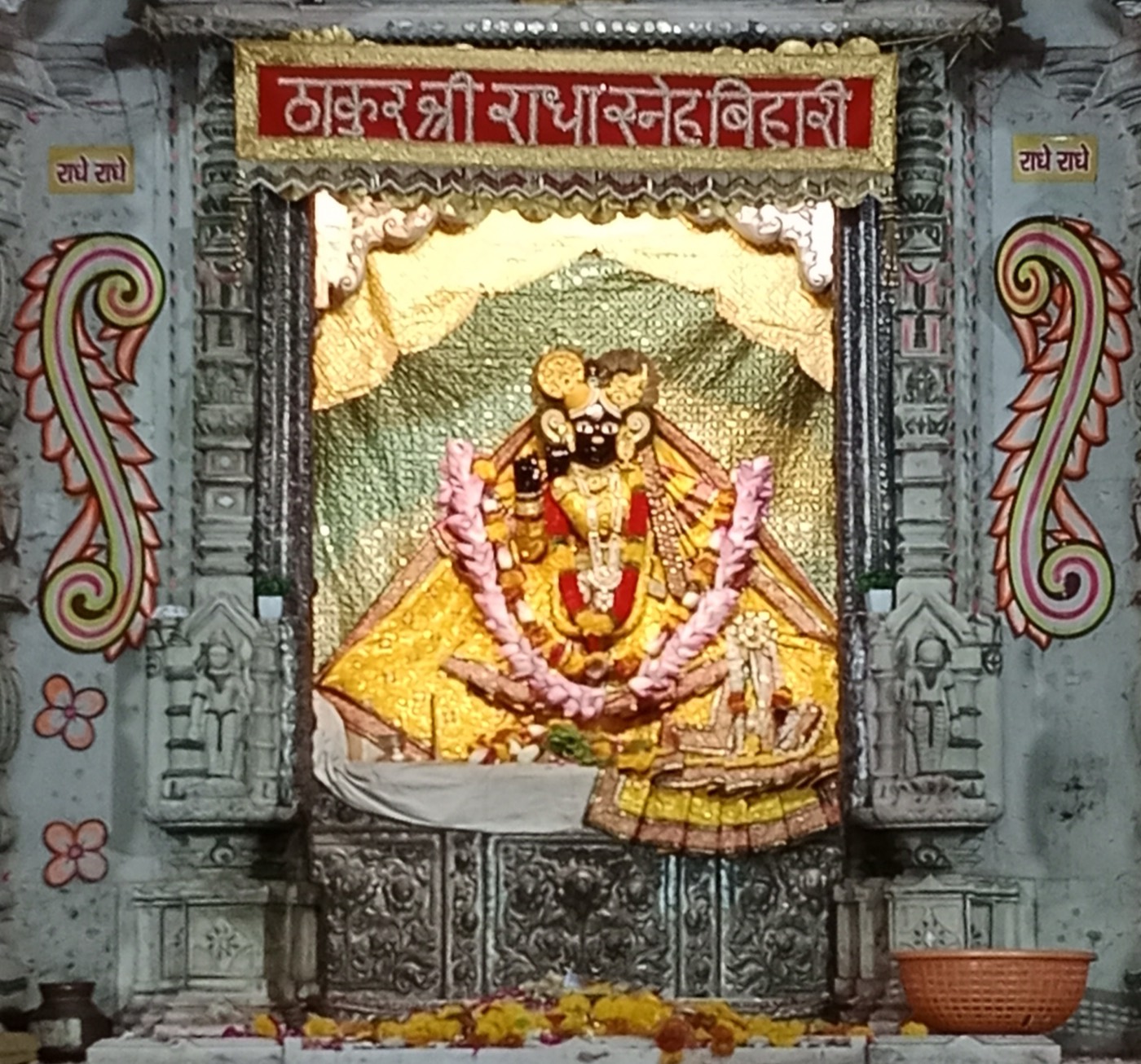
Shri Banke Bihari Temple, Vrindavan
Mathura, Uttar Pradesh
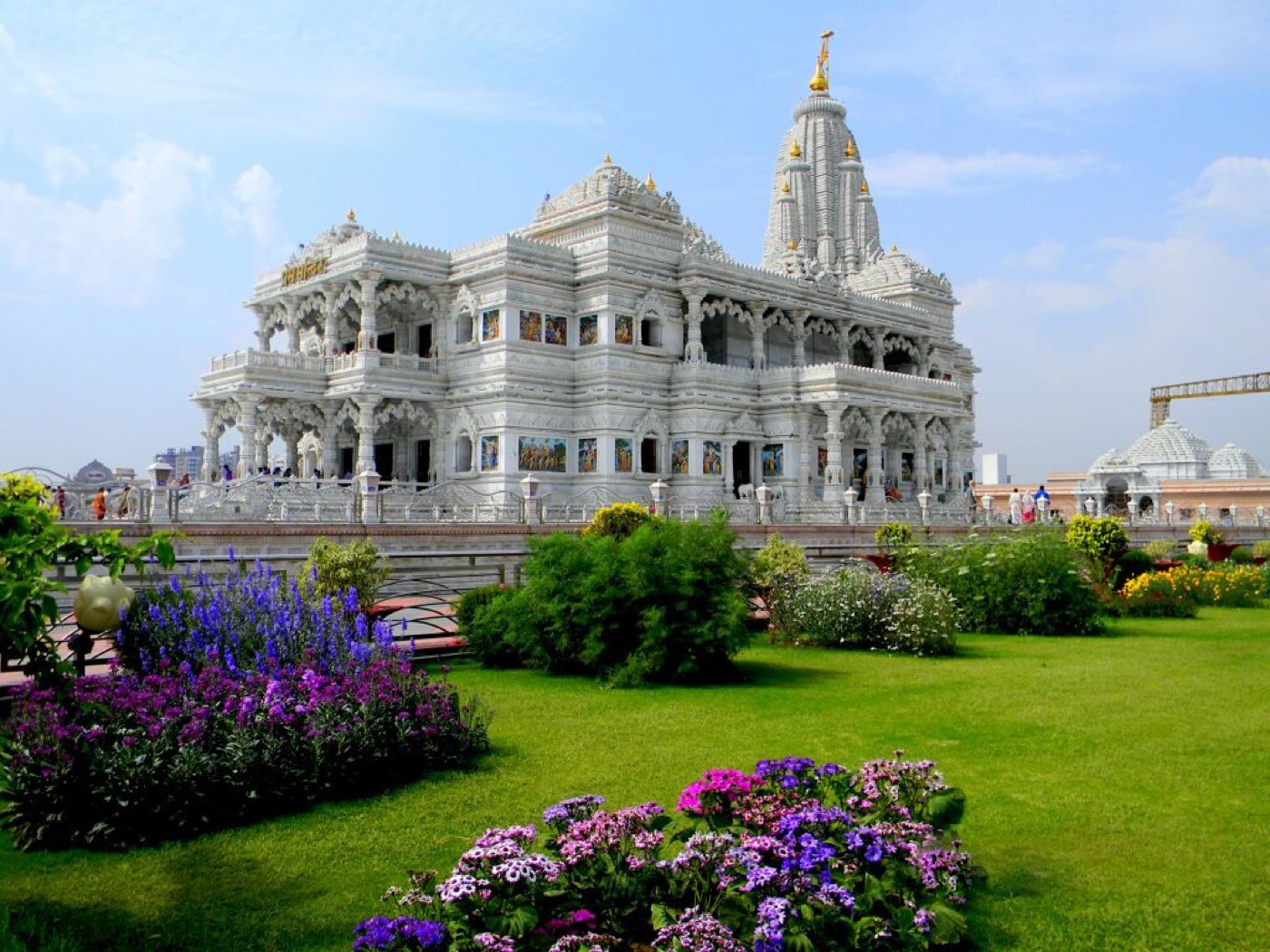
Prem Mandir, Vrindavan
Mathura, Uttar Pradesh
The Phalgun Lakkhi Mela at Khatu
In Rajasthan, the fortnight before Holi belongs to Khatu. The shrine honours Barbarika, the Mahabharata warrior who gave away his head before a single arrow flew, and Phalguna Shukla Ekadashi, the day his head is believed to have become immortal, is the climax of the temple's biggest fair. The Phalgun Lakkhi Mela runs for roughly 12 days in the February to March window, from around Pratipada to Dwadashi, ending about 8 to 9 days before Holi, and lakhs of pilgrims walk in carrying triangular Nishan flags for Shyam Baba.
Plan the logistics with respect. During the mela, vehicles are stopped well outside town and pilgrims walk the final stretch, so add hours to any journey and expect diversions. Rooms in Khatu fill months ahead, and many pilgrims sleep in tented camps and community shelters, so either book very early or arrive and leave the same day. The day-trip arithmetic works: Jaipur is approx 80 km away, about 2 hours by road, and Ringas Junction, the nearest railhead at approx 17 km, has jeeps and taxis waiting outside the station.
On the summer schedule, which begins around March, the temple opens at 4:30 AM with darshan from 5:00 AM to 12:30 PM and again from 4:00 PM to 10:00 PM, and on Ekadashi and festival days the midday break is often waived for near-continuous darshan. General darshan is free. Several sources report a paid priority slot of approx Rs 100, while others say the committee sells no VIP tickets, so treat the paid tier as uncertain and plan on the free queue. If you have a spare day, Salasar Balaji, approx 100 km away, pairs naturally with Khatu on the same Shekhawati circuit.
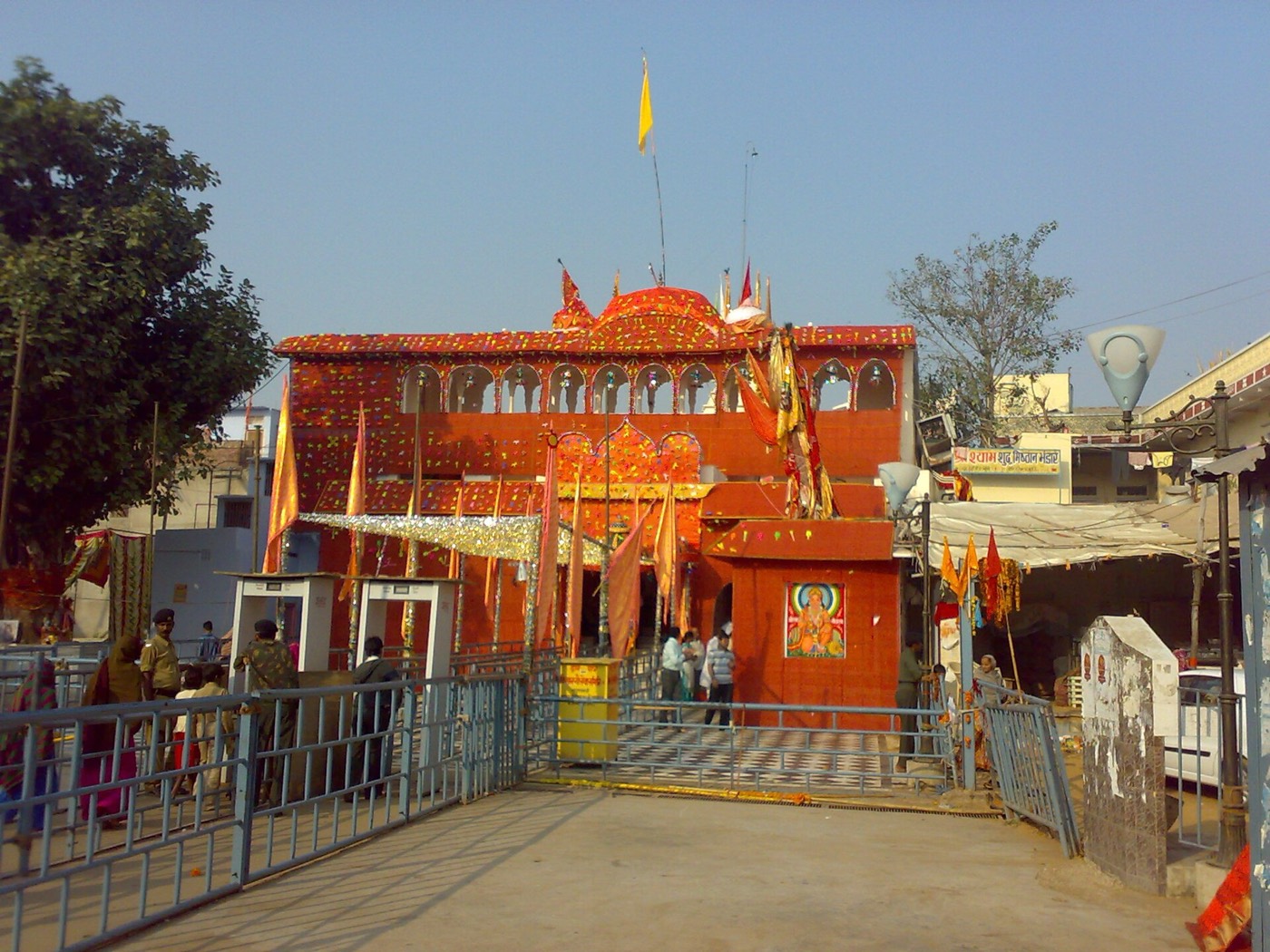
Varanasi, Rangbhari Ekadashi and the Shiva map
March gives Varanasi one festival that belongs to it alone. Rangbhari Ekadashi, in Phalguna, marks Shiva bringing Parvati home to Kashi, with the deity's palanquin procession and a gulaal celebration that is distinctly Kashi's own. It sits in the same lunar stretch as Holi, so a Braj and Kashi trip can be threaded through one fortnight if the year's calendar cooperates.
The temple itself runs long days, opening at 2:30 AM and closing at 11:00 PM, with the sanctum pausing periodically for the five daily aartis, including a short midday break for the Bhog Aarti. General darshan is free, and the Sugam paid darshan is reported at approx Rs 250 per person. Since December 2021 the Kashi Vishwanath Dham corridor has linked the temple to the Ganga, so pilgrims can bathe at the ghats and walk up to the sanctum. For sparsh darshan of the lingam, traditional dress is expected, men in dhoti-kurta and women in saree, while western clothes are permitted for general darshan. Tradition holds that darshan of Kaal Bhairav, approx 2 km away, completes a Kashi pilgrimage.
If Mahashivratri lands in early March in your year, the Shiva map widens well beyond Kashi. Somnath keeps its sanctum open through the night, Mahakaleshwar in Ujjain runs darshan nearly around the clock with queues stretching through the night, and the Bhavnath Mahashivratri Mela at the foot of Girnar holds a five-day fair famous for the midnight procession of Naga ascetics. Every one of these is a peak-crowd event, worth attending for the charge in the air and worth avoiding if what you want is quiet darshan.
The March festival table
The table below gathers festivals from this site's temple pages whose windows touch March. Because every one of them follows the lunar calendar, the same festival can fall in late February one year and mid-March the next, so read the windows as possibilities to check against the current year's panchang, not as fixed appointments.
Two patterns stand out. The first half of the month is dominated by Phalguna events, Holi and everything tied to Mahashivratri in the years it falls late. The back half begins tipping into Chaitra, with Navratri at the Shakti shrines and then Ram Navami and Hanuman Jayanti arriving in the March to April window.
| Temple | Festival | Window | Peak day |
|---|---|---|---|
| Banke Bihari, Vrindavan | Holi (Phoolon wali Holi) | February or March (Phalguna Purnima) | Yes |
| Prem Mandir, Vrindavan | Holi across the Braj belt | March (Phalguna) | No |
| Khatu Shyam Ji | Phalgun Lakkhi Mela | February to March, ending about 8 to 9 days before Holi | Yes |
| Kashi Vishwanath, Varanasi | Rangbhari Ekadashi | Phalguna, March | No |
| Kashi Vishwanath, Varanasi | Maha Shivratri | Phalguna, February or March | Yes |
| Govind Dev Ji, Jaipur | Holi and Phalgun festivities | March (Phalguna) | No |
| Dakor Ranchhodrai | Falgun (Fuldol) Poonam | February to March, coincides with Holi | Yes |
| Somnath | Mahashivratri | February or March | Yes |
| Girnar (Bhavnath Taleti) | Bhavnath Mahashivratri Mela | February to March | Yes |
| Mahakaleshwar, Ujjain | Mahashivratri | February to March (Phalguna) | Yes |
| Ram Mandir, Ayodhya | Ram Navami | March to April (Chaitra Shukla Navami) | Yes |
| Vaishno Devi | Chaitra Navratri | March to April | Yes |
| Salasar Balaji | Chaitra Purnima Mela (Hanuman Jayanti fair) | March to April (Chaitra full moon) | Yes |
Timings and midday closures in March
March is a seasonal hinge for temple timetables in the north. Banke Bihari switches from winter to summer hours around mid-March, moving its morning opening from 8:45 AM to 7:45 AM and its evening session from 4:30 to 8:30 PM up to 5:30 to 9:30 PM, and the exact switch tracks the temple's own calendar rather than a fixed date. Khatu Shyam's summer schedule also begins around March. Prem Mandir and Kashi Vishwanath keep effectively the same hours year round, and Govind Dev Ji runs its seven jhankis with only slight seasonal drift.
The near-universal rule is the midday closure. Every temple in this table except Kashi Vishwanath shuts for several hours in the early afternoon while the deity rests, so a day that tries to fit two temples works best as one morning session and one evening session rather than a continuous run. Treat the times below as approximate, and confirm locally on festival days, when schedules are revised outright.
| Temple | Morning | Midday | Evening |
|---|---|---|---|
| Banke Bihari (early March, winter hours) | 8:45 AM to 1:00 PM | Closed for deity rest | 4:30 to 8:30 PM |
| Banke Bihari (from approx mid-March, summer hours) | 7:45 AM to 12:00 PM | Closed for deity rest | 5:30 to 9:30 PM |
| Prem Mandir | 8:30 AM to 12:00 noon | Closed 12:00 noon to 4:30 PM | 4:30 to 8:30 PM |
| Khatu Shyam (summer schedule, approx March onward) | Opens 4:30 AM; darshan 5:00 AM to 12:30 PM | Break approx 12:30 to 4:00 PM | 4:00 to 10:00 PM |
| Kashi Vishwanath | Opens 2:30 AM; general darshan approx 4:00 to 11:00 AM | Short ritual break for Bhog Aarti around midday | Darshan resumes after aartis; closes 11:00 PM |
| Govind Dev Ji | Jhankis from approx 5:00 AM; Rajbhog ends approx 11:45 AM | Closed approx 11:45 AM to 5:00 PM | Jhankis approx 5:00 to 8:15 PM |
A Braj-centred March itinerary
This is the shape of an unhurried March week built around Vrindavan, with an optional Rajasthan leg. It assumes you arrive by train at Mathura Junction, the best-connected railhead at approx 12 km from Vrindavan, and use e-rickshaws for the final lanes, since no car reaches the Banke Bihari lane itself.
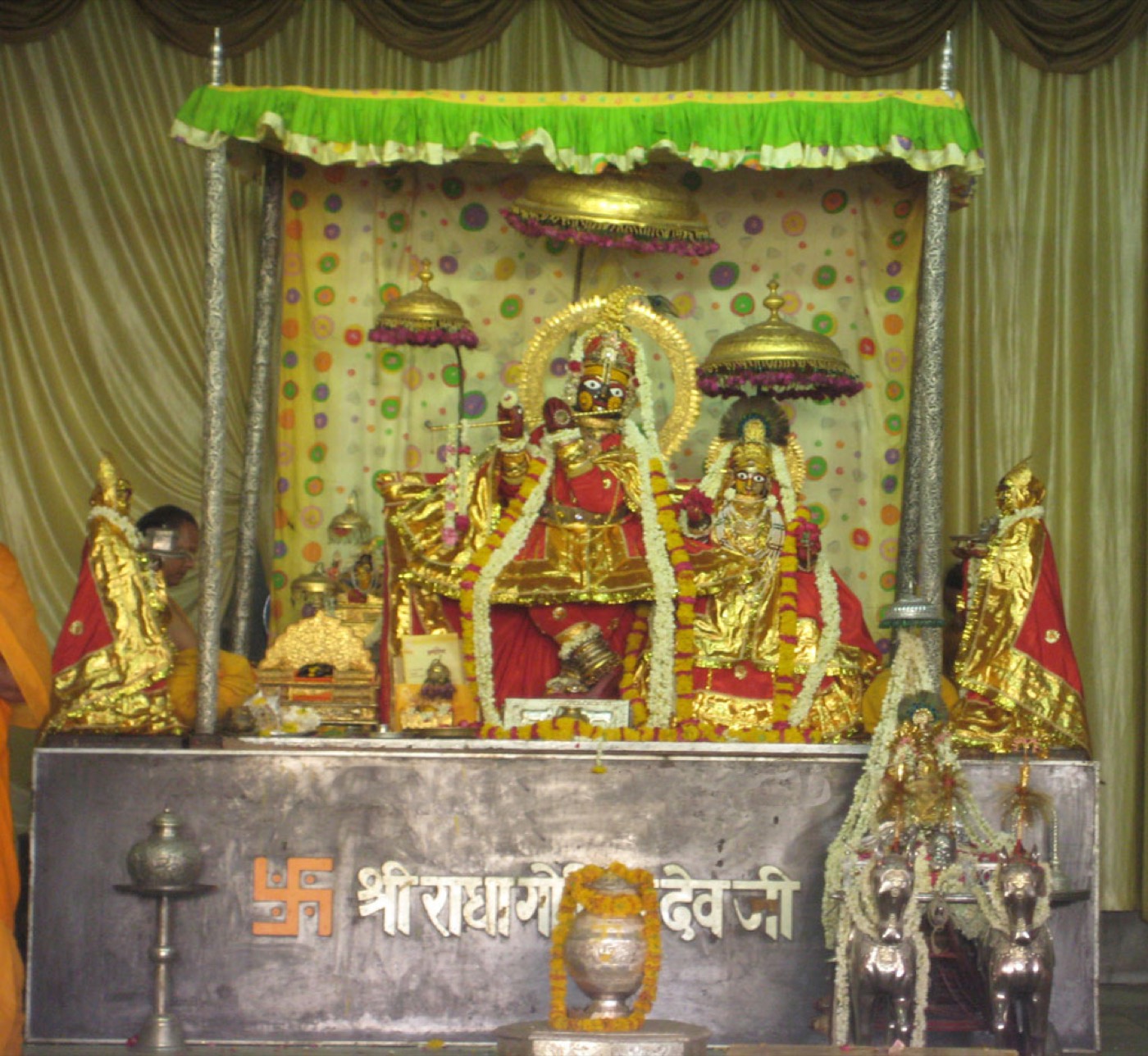
The Jaipur leg earns its place because Govind Dev Ji is Braj by lineage. The idol was carried from Vrindavan to keep it safe from Mughal iconoclasm, and the temple celebrates Braj-style colour and flower festivities for Holi in March. Entry is free, and the temple opens only for its seven timed jhankis with the curtain drawn between them, so plan around the jhanki clock rather than a continuous window.
On the weather, March asks for the same rhythm the temples already keep. The comfortable October to March window is in its final month, pleasant early on and increasingly warm by the end, so build days around morning and evening sessions with rest at midday and the heat mostly stays out of your way.
- Day 1: Arrive at Mathura Junction and settle into old Vrindavan if you want to walk to darshan at opening, or along the Chhatikara road if you need parking. Spend the evening at Prem Mandir and stay for the fountain show, 7:00 to 7:30 PM through 31 March.
- Day 2: Banke Bihari at opening, 8:45 AM on winter hours or 7:45 AM once summer hours begin around mid-March. Rest through the midday closure, then return for the evening session.
- Day 3: The Holi window, or a slow old-town day. If your dates hit the festival, expect the heaviest crowds of the trip, keep valuables minimal and follow the crowd rules.
- Day 4, optional: Travel to Jaipur, approx 210 km, for Govind Dev Ji's seven-jhanki rhythm. The Sandhya aarti, approx 5:45 to 6:45 PM, is the busy evening darshan.
- Day 5, optional: Day trip from Jaipur to Khatu, approx 80 km and about 2 hours each way, timed to the morning darshan window.
Frequently asked questions
Is March a good time to visit Vrindavan?
When is the Khatu Shyam Phalgun Mela held?
Does Holi always fall in March?
Is Kashi Vishwanath temple open in March?
What is the dress code at Banke Bihari temple?
Which temples celebrate Chaitra Navratri in late March?
Compiled from our verified temple guides and public sources including Banke Bihari Temple, Wikipedia · Official Prem Mandir / JKP site (timings and fountain show) · Wikipedia: Phalguna Mela · Shri Kashi Vishwanath official portal - Rituals · Rajasthan Tourism: Khatu Shyam Ji Mandir. Timings and festival dates shift with the lunar calendar; confirm before you travel.