The question is rarely whether there is a temple worth the drive from Delhi. It is which one fits the weekend you actually have. A free afternoon inside the city is a different trip from a two-day run into Rajasthan, and the deciding factor is almost never the kilometre count. It is the opening rhythm: four of the five temples in this guide close for a long midday rest, and the fifth takes every Monday off.
The five, by direction: Swaminarayan Akshardham on the east bank of the Yamuna inside Delhi, Banke Bihari and Prem Mandir in Vrindavan approx 150 km to the south, Mansa Devi on its hilltop above Haridwar to the north, and Khatu Shyam Ji in Rajasthan's Sikar district to the west, reached through Jaipur or the Ringas railhead.
Everything factual below, timings, distances, fares and festival windows, comes from our per-temple research, hedges included. Where a figure is approximate we say approx, and where our data is silent, for instance the exact road distance from Delhi to Khatu, we say that too rather than inventing a number. Festival dates follow the lunar calendar and move every year, so we give windows, never a specific date.
Start inside the city: Akshardham
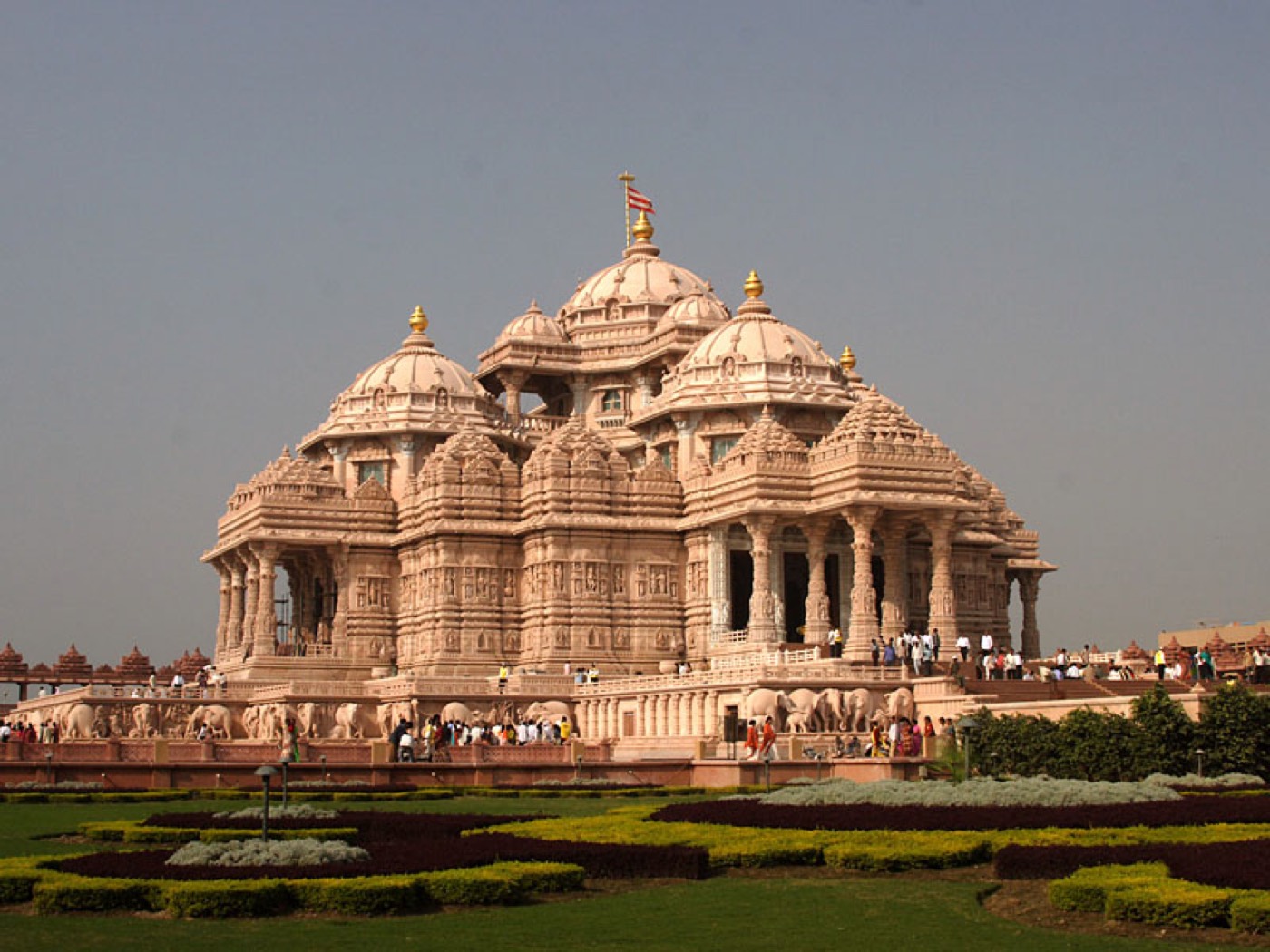
If you have only an afternoon, stay inside Delhi. Akshardham at Noida Mor is the largest comprehensive Hindu temple complex in the world by Guinness reckoning (2007), hand-carved from pink Rajasthani sandstone and Italian Carrara marble with no structural steel, and consecrated on 6 November 2005 after roughly five years of work by some 11,000 artisans and volunteers. Entry to the mandir and gardens is free; the exhibitions and the after-dark Sahaj Anand water show are ticketed.
Three rules shape the visit. It is closed every Monday. Phones, cameras and all electronics stay at the free cloakroom, since photography is banned inside. And the dress code is enforced: shoulders and knees covered, with free sarongs lent at the gate if your clothing falls short. The complex runs Tuesday to Sunday, 9:30 AM to 6:30 PM, but the exhibition ticket counter shuts around 5:30 PM, roughly an hour before closing, so arrive by mid-afternoon if you want the boat ride and the giant-screen film before the water show, which starts after sunset, approx 7:15 PM in summer and earlier in winter.
Getting there is the easiest part. Akshardham station on the Blue Line sits approx 350 m from the entry plaza, a five-minute walk, while a cab from Connaught Place covers the approx 10 to 12 km in 20 to 40 minutes depending on traffic.
The three weekend radii
Beyond the city, the trips sort into three directions. South to Vrindavan is the short one: approx 150 km and roughly 3 to 4 hours via the Yamuna Expressway, workable as a very long day trip and comfortable with one night. North to Haridwar is approx 210 km from Akshardham on Delhi's eastern edge and deserves a full weekend, though the train makes it the easiest trip to do without a car. West into Rajasthan, Khatu is the one radius our data measures from Jaipur rather than Delhi: approx 80 km and about 2 hours from that city, with Ringas Junction as the railhead approx 17 km from the temple.
| Destination | Temples | Road note | Nearest railhead |
|---|---|---|---|
| East Delhi (in the city) | Swaminarayan Akshardham | approx 10 to 12 km from Connaught Place, 20 to 40 minutes by cab | Akshardham Metro (Blue Line), approx 350 m walk |
| Vrindavan, Uttar Pradesh | Banke Bihari and Prem Mandir | approx 150 km from Delhi, roughly 3 to 4 hours via the Yamuna Expressway | Mathura Junction, approx 12 km from both temples |
| Haridwar, Uttarakhand | Mansa Devi | approx 210 km from Akshardham in Delhi | Haridwar Junction, approx 3 km from the temple |
| Khatu, Rajasthan | Khatu Shyam Ji | approx 80 km from Jaipur, about 2 hours; our data has no direct Delhi road figure | Ringas Junction, approx 17 km, on the Jaipur-Sikar line |
Vrindavan: two temples, one full day
Vrindavan rewards a plan built around its two very different shrines. Banke Bihari, deep in the old town's lanes, gives darshan in short bursts: priests draw a curtain across the shrine every minute or two and pull it back, because the temple treats Bihariji as a living child who tires easily. There is no daily pre-dawn Mangala aarti here at all; it happens once a year, on Janmashtami. The temple runs two sessions around a long midday closure, approx 7:45 AM to 12:00 PM and 5:30 to 9:30 PM in summer, shifting to approx 8:45 AM to 1:00 PM and 4:30 to 8:30 PM in winter, and the seasonal switch follows the temple's own calendar rather than fixed dates.
Prem Mandir, opened on 17 February 2012 and built of white Italian marble across approx 55 acres of garden, is the modern counterpart: free to enter, open 8:30 AM to 12:00 noon and 4:30 to 8:30 PM year-round, with a musical light-and-water fountain show every evening, 7:00 to 7:30 PM from October to March and 7:30 to 8:00 PM from April to September. Reach the lawns about half an hour before the show for a clear spot.
The two work as one full day. Take darshan at Banke Bihari right at opening, when the crush is lightest, accept that both temples shut through the middle of the day, and spend the evening at Prem Mandir for aarti and the fountain. Our sources place the two between approx 2.5 and 5 km apart depending on the route measured; either way it is an e-rickshaw ride. No vehicle reaches Banke Bihari's lane, so the last few hundred metres are always on foot, and the dress code there is enforced: shoulders and knees covered, no shorts or torn jeans. One quiet trick from the data: Monday mornings are the calmest at Banke Bihari, and Monday is exactly the day Akshardham is closed.
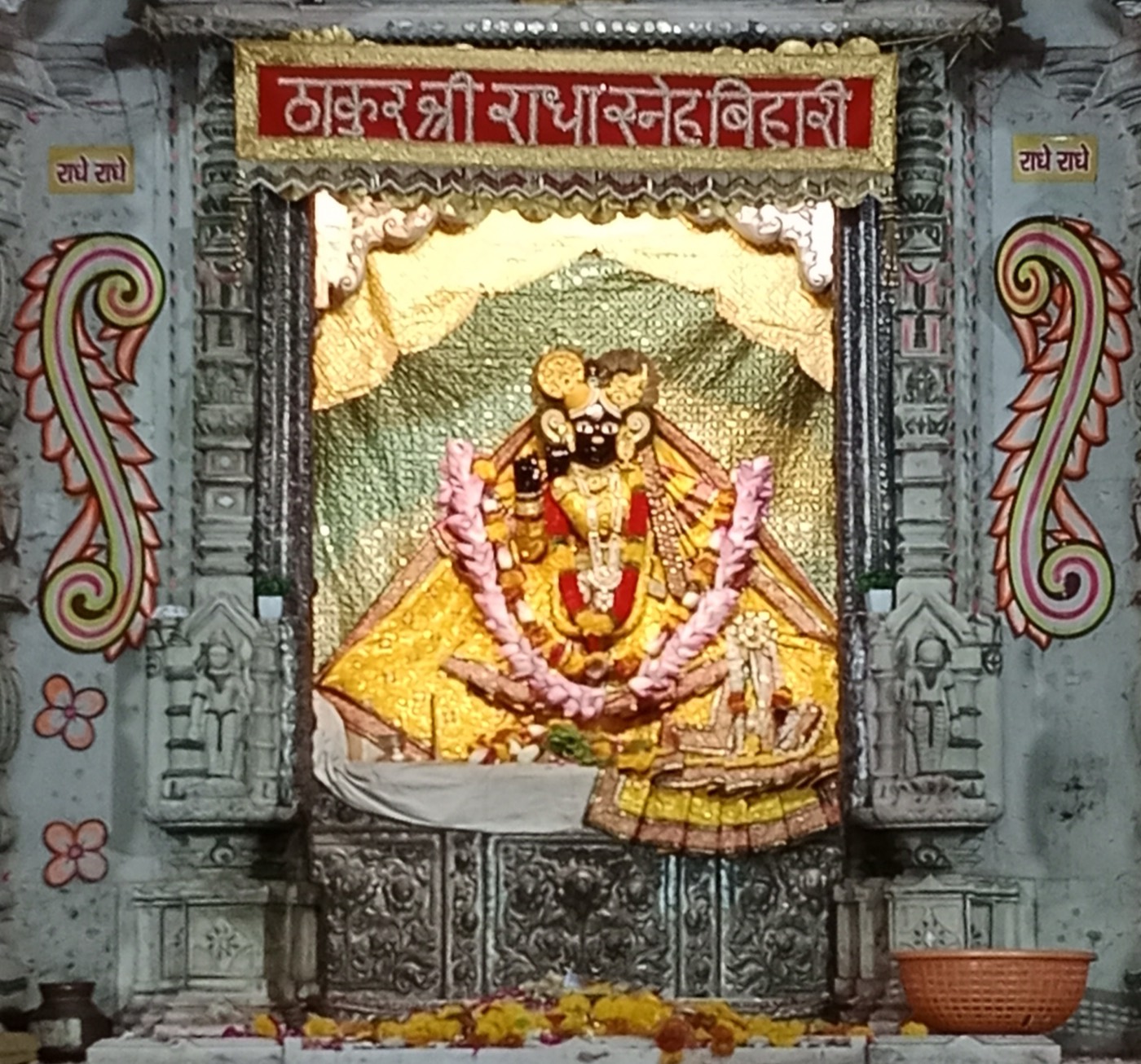
Shri Banke Bihari Temple, Vrindavan
Mathura, Uttar Pradesh
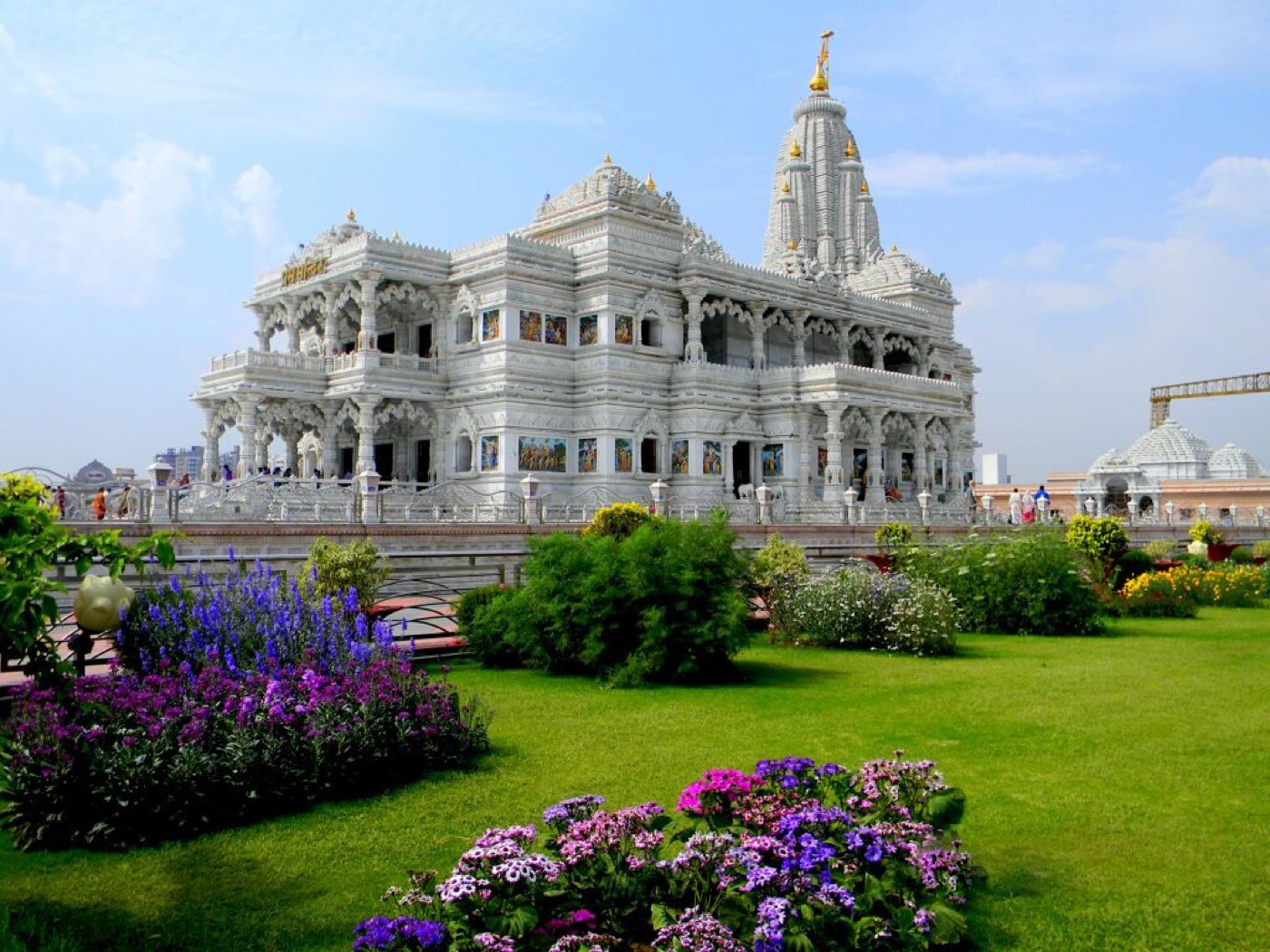
Prem Mandir, Vrindavan
Mathura, Uttar Pradesh
Khatu Shyam: the Rajasthan weekend
Khatu is a small town off the Jaipur-Sikar highway, and its shrine holds the head of Barbarika, the Mahabharata warrior who gave away his head before a single arrow flew and was blessed by Krishna to be worshipped in his own name until the end of Kaliyuga. Devotees call him Shyam Baba and Haare Ka Sahara, the refuge of the defeated, and many carry a triangular Nishan flag to dedicate at the temple.
The temple committee sets the hours seasonally, and every clock time is approx. Summer runs about 4:30 AM to 10:00 PM with darshan paused approx 12:30 to 4:00 PM; winter runs about 5:30 AM to 9:00 PM with the pause approx 1:00 to 5:00 PM. General darshan is free. Several sources report a paid priority slot of approx Rs 100, while others insist the committee sells no VIP tickets, so treat any paid tier as uncertain and check on arrival.
Reaching Khatu means the Jaipur-Sikar corridor. Ringas Junction is the railhead, approx 17 km away, with jeeps and taxis waiting outside the station; Jaipur and its airport are approx 80 km, about 2 hours by road; Sikar town is approx 45 km. Crowds follow a fortnightly and weekly pulse: every Shukla Ekadashi is a mini-festival, and Fridays and Saturdays bring the weekly rush. During the Phalgun Lakkhi Mela vehicles are stopped well outside town, pilgrims walk the final stretch, and rooms fill months ahead.
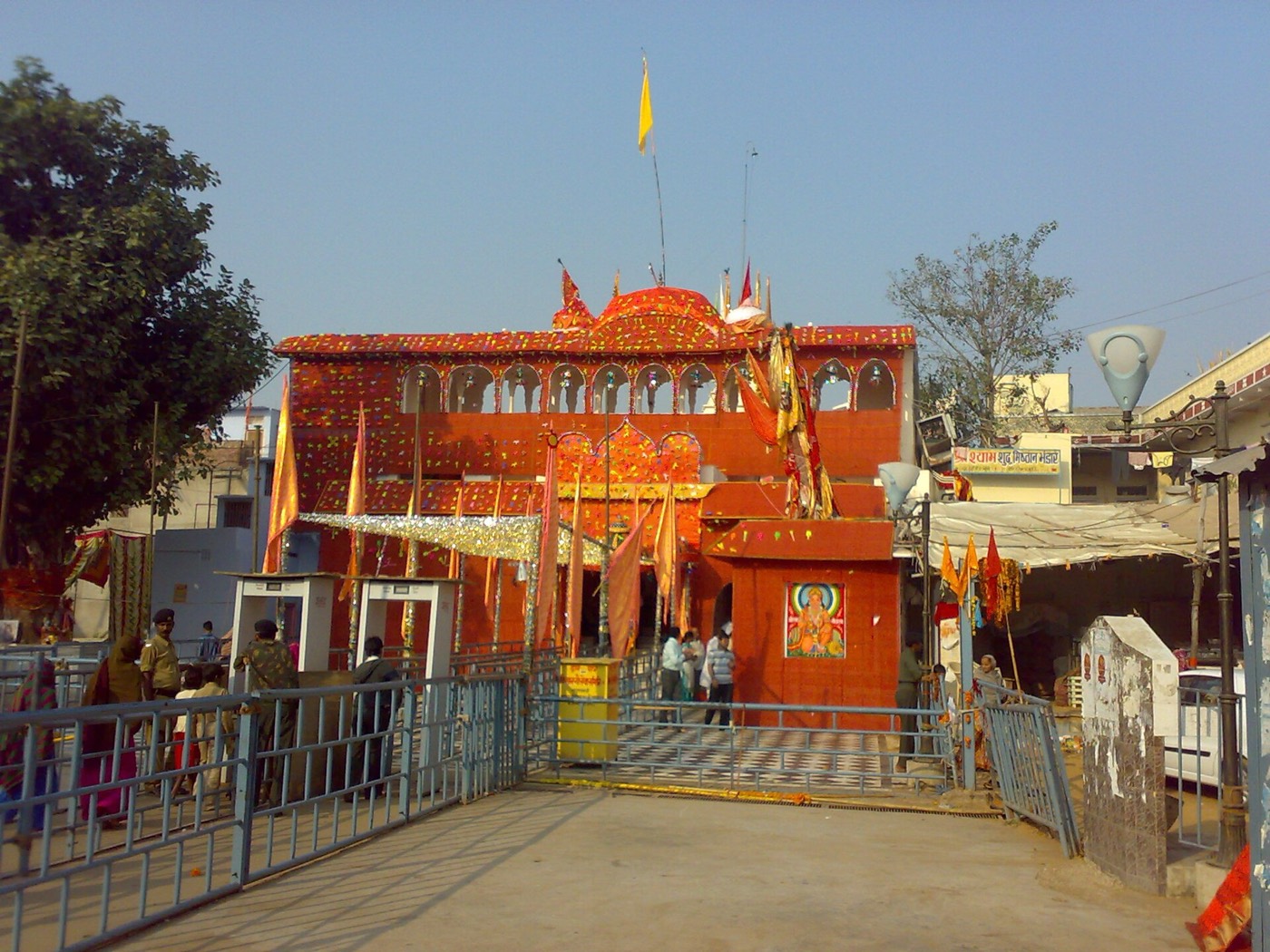
Haridwar: the ropeway hill of Mansa Devi
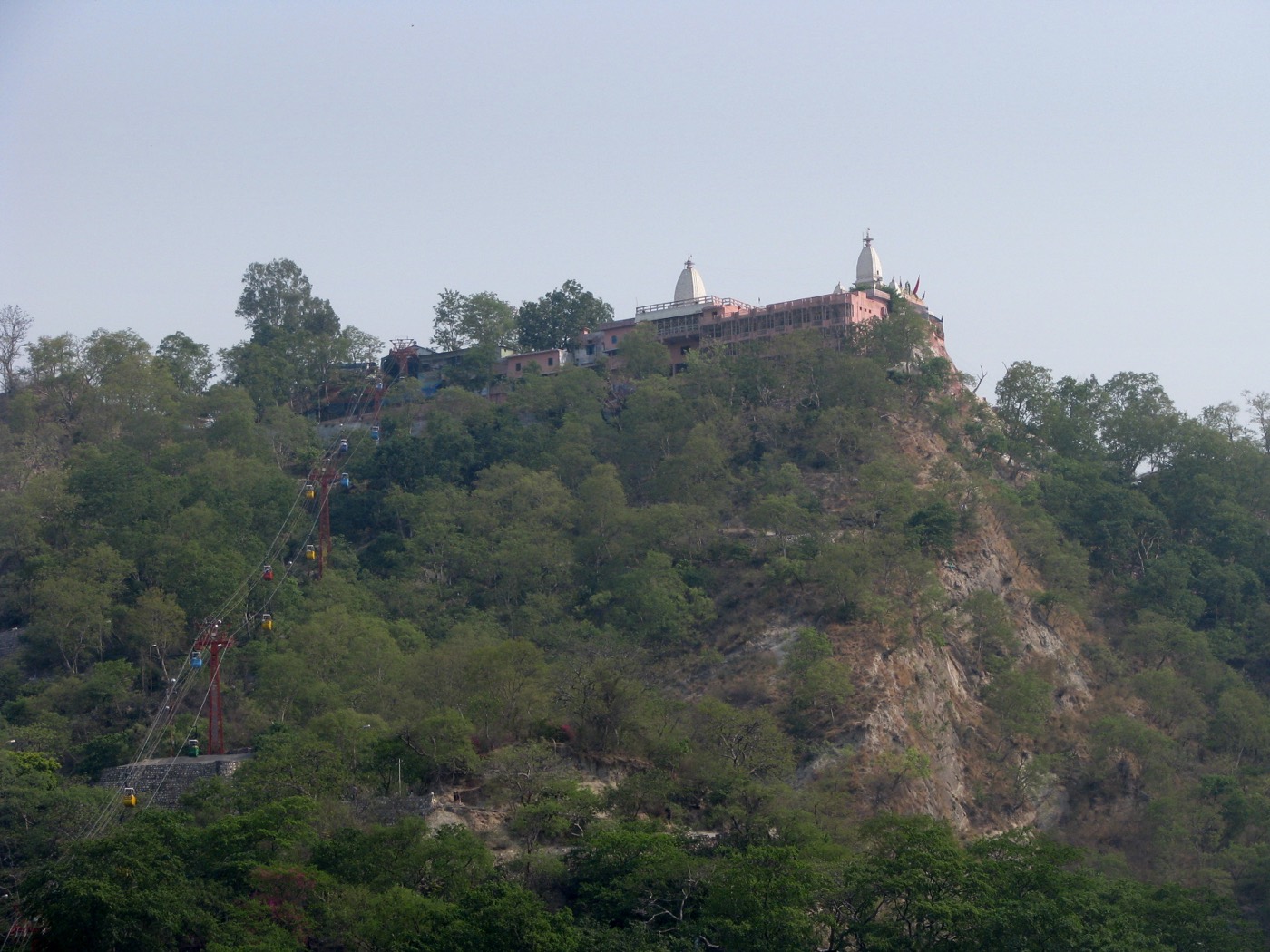
Mansa Devi stands on Bilwa Parvat above Har Ki Pauri, and the journey up is half the visit. The Udan Khatola cable car covers the approx 800 m ride in about five minutes, at approx Rs 163 one-way or Rs 240 return, while the alternative is a roughly 3 km uphill walk on a paved path. She is the wish-granting goddess of Haridwar's Siddh Peeth circuit, and the signature act here is personal rather than ceremonial: tie a red mauli thread on the wish tree, then return one day to untie it once the wish is granted.
Watch the clock gap. The temple opens approx 5:00 AM to 9:00 PM in summer and 6:00 AM to 8:00 PM in winter, with a midday break, but the ropeway runs only approx 5:00 AM to 6:00 PM, so a late-evening darshan usually means walking down. Haridwar Junction is approx 3 km away with frequent trains from Delhi, which makes this the easiest of the three out-of-town trips to manage without a car. Across the Ganga on Neel Parvat sits her paired Siddh Peeth, Chandi Devi, approx 6 km away with its own ropeway; we do not yet cover it, but pilgrims traditionally do the two together.
Opening rhythms compared
Set the five side by side and the planning logic writes itself. Akshardham is the only one that stays open straight through the day, and the only one that takes a full weekday off. Every other temple here rests at midday, which means a rushed noon arrival anywhere outside Delhi buys you a locked door and a wait of several hours.
| Temple | Opens | Midday | Closes | Watch-out |
|---|---|---|---|---|
| Akshardham, Delhi | 9:30 AM (Tue-Sun) | No break, open through the day | 6:30 PM | Closed every Monday; exhibition tickets shut approx 5:30 PM |
| Banke Bihari, Vrindavan | 7:45 AM summer / 8:45 AM winter | Closed between the two sessions | 9:30 PM summer / 8:30 PM winter | No daily dawn aarti; Monday mornings calmest |
| Prem Mandir, Vrindavan | 8:30 AM | Closed 12:00 noon to 4:30 PM | 8:30 PM | Fountain show from 7:00 PM winter / 7:30 PM summer |
| Khatu Shyam Ji, Khatu | approx 4:30 AM summer / 5:30 AM winter | approx 12:30 to 4:00 PM summer / 1:00 to 5:00 PM winter | approx 10:00 PM summer / 9:00 PM winter | Ekadashi and Friday-Saturday rush; hours extend on festivals |
| Mansa Devi, Haridwar | approx 5:00 AM summer / 6:00 AM winter | approx 12:00 to 2:00 PM summer / 1:00 to 2:00 PM winter | approx 9:00 PM summer / 8:00 PM winter | Ropeway runs only approx 5:00 AM to 6:00 PM |
Festival windows to chase or avoid
All of these dates ride the lunar calendar, so the same festival can land weeks apart in different years. Treat the windows below as the planning unit and confirm the exact date for your year before booking anything.
Two are worth singling out. Janmashtami at Banke Bihari is the one night of the year the temple performs Mangala aarti, with darshan running through the night, and it is the most charged night in Vrindavan. The Phalgun Lakkhi Mela at Khatu, roughly 12 days ending about 8 to 9 days before Holi, turns the whole town into a walking pilgrimage. Both are experiences to chase if crowds are the point, and windows to avoid if a quiet darshan is.
| Festival | Window (lunar, moves yearly) | Where it peaks |
|---|---|---|
| Janmashtami | August or September (Bhadrapada) | Banke Bihari: the year's only Mangala aarti, darshan through the night; heavy at Prem Mandir too |
| Phalgun Lakkhi Mela | February or March, roughly 12 days ending 8 to 9 days before Holi | Khatu Shyam Ji: lakhs of pilgrims walk in with Nishan flags |
| Holi (Phoolon wali Holi) | February or March (Phalguna) | Vrindavan: flower Holi at Banke Bihari, with Braj celebrating for days |
| Akshaya Tritiya | April or May (Vaishakha) | Banke Bihari: the only day of the year the deity's feet are shown |
| Navratri, Chaitra and Sharad | March to April, and September to October | Mansa Devi: the busiest darshan windows of the year |
| Diwali and Annakut | October or November (Kartik), Annakut the day after Diwali | Akshardham: the complex is lit and hundreds of vegetarian dishes are offered |
Stretching the trip, and what we leave out
Each radius extends naturally if you have an extra day. From Khatu, Salasar Balaji, the bearded Hanuman shrine of Shekhawati, is approx 100 km away and traditionally paired on the same circuit, while Govind Dev Ji sits in Jaipur's City Palace complex, approx 80 km, when you route through the capital. From Haridwar, Rishikesh is approx 25 km up the road, and the Char Dham legs to Kedarnath at approx 240 km and Badrinath at approx 320 km are a different scale of journey altogether, not a weekend add-on.
We are equally clear about what this page does not cover. Haridwar's Chandi Devi and Maya Devi, the other two of its Siddh Peeth trio, do not yet have pages here. Neither do Nidhivan and the wider Braj circuit around Vrindavan, nor Mathura's own shrines. And Ram Mandir in Ayodhya, approx 400 km from Vrindavan, belongs to a longer Uttar Pradesh itinerary rather than a Delhi weekend. Where we lack verified data, we would rather name the gap than fill it with guesses.
Frequently asked questions
Is Akshardham Delhi closed on Monday?
How far is Vrindavan from Delhi and how long does the drive take?
Can I visit Banke Bihari and Prem Mandir on the same day?
What time is the light and fountain show at Prem Mandir?
Which railway station is nearest to Khatu Shyam Ji?
How much does the Mansa Devi ropeway cost and when does it run?
Compiled from our verified temple guides and public sources including Swaminarayan Akshardham (Delhi) - Wikipedia · Banke Bihari Temple, Wikipedia · Official Prem Mandir / JKP site (timings and fountain show) · Rajasthan Tourism: Khatu Shyam Ji Mandir · Haridwar District (Govt of Uttarakhand) tourist page. Timings and festival dates shift with the lunar calendar; confirm before you travel.