
Darshan timings at Salasar Balaji
| Season | Opens | Darshan | Closes | Status |
|---|---|---|---|---|
| All year (typical day) | approx 5:00 AM | Morning through night with short aarti/bhog pauses | approx 10:00 PM | Open |
| Chaitra and Ashwin melas (full-moon fairs) | Effectively 24 hours | Continuous queue darshan during the fair days | Round the clock | Open |
Read the full Timings & Darshan Hours →
How to reach Salasar Balaji
Salasar sits in the sandy Shekhawati belt on the old Jaipur-Bikaner road, roughly midway between Sikar and Sujangarh. There is no station or airport in the village itself, so pilgrims arrive by road from a nearby railhead or from Jaipur. Bus and shared-jeep connectivity is heavy because of the constant pilgrim flow.
| Mode | Point | Distance | Notes |
|---|---|---|---|
| Train | Sujangarh railway station | approx 24-30 km | Nearest convenient railhead; Sikar Junction (approx 55-60 km) and Ratangarh are larger alternatives with more trains. Taxis and buses wait outside. |
| Air | Jaipur International Airport | approx 170-180 km | Main airport for the region; hire a taxi or take a bus onward. Kishangarh (Ajmer) airport is another option (approx 150 km, limited flights). |
| Road from Sikar | Sikar city | approx 55-60 km | Frequent buses and taxis; the common approach from the Jaipur side. |
| Road from Jaipur | Jaipur | approx 170 km | Roughly 3.5 to 4 hours by car via Sikar; direct pilgrim buses run daily. |
| Road from Bikaner | Bikaner | approx 170 km | Approach from the desert side via Sujangarh. |
Puja & aarti schedule
- Mangla aarti (first darshan of the day, idol awakened and adorned)approx 5:00-6:00 AM
- Bhog / rajbhog aarti with food offering; brief curtain pauseMidday (approx)
- Sandhya aarti as lamps are lit before the deityEvening (approx after sunset)
- Shayan aarti before the idol is put to rest and doors closeNight (approx before closing)
Read the full Aarti & Puja Schedule →
Dress code & temple rules
Wear modest, respectful clothing; shoulders and knees covered is expected at the sanctum.
Footwear must be removed before entering; use the free shoe-stands outside the temple.
Leather items are best left outside or in the vehicle as a mark of respect.
Cameras and phones are typically restricted at the inner sanctum; follow the posted no-photography instruction near the idol.
Carry the red pennant (dhwaja) or coconut and prasad from the market stalls if you wish to make the traditional offering.
Expect long, tightly packed queues on Tuesdays, Saturdays and fair days; keep valuables secure and children close.
Read the full Dress Code & Temple Rules →
Best time to visit & festivals
October to March is the comfortable window, when Shekhawati's desert climate is cool and the two great full-moon fairs bracket the season. Summers (April to June) are very hot and dusty. Tuesdays and Saturdays, sacred to Hanuman, see the biggest weekly crowds year round.
| Festival | When | Significance |
|---|---|---|
| Chaitra Purnima Mela (Hanuman Jayanti fair) | March-April (Chaitra full moon) | One of the two mega fairs; huge crowds walk in on foot carrying red flags to celebrate Hanuman's birth. Among Salasar's peak gatherings. Peak |
| Ashwin Purnima Mela | September-October (Ashwin full moon) | The second great annual fair; lakhs of pilgrims converge, dharamshalas fill up and the town runs near round the clock. Peak |
| Bhadrapada / Shravan observances | July-September (monsoon months) | Marks the season of the idol's discovery on a Shravan Navami Tuesday; devotional footfall rises around these lunar days. |
| Weekly Tuesday and Saturday darshan | Every week, year round | Hanuman's own days; the busiest non-fair days, with special aartis and heavier queues. |
Read the full Best Time to Visit & Festivals →
Nearby temples & tirths
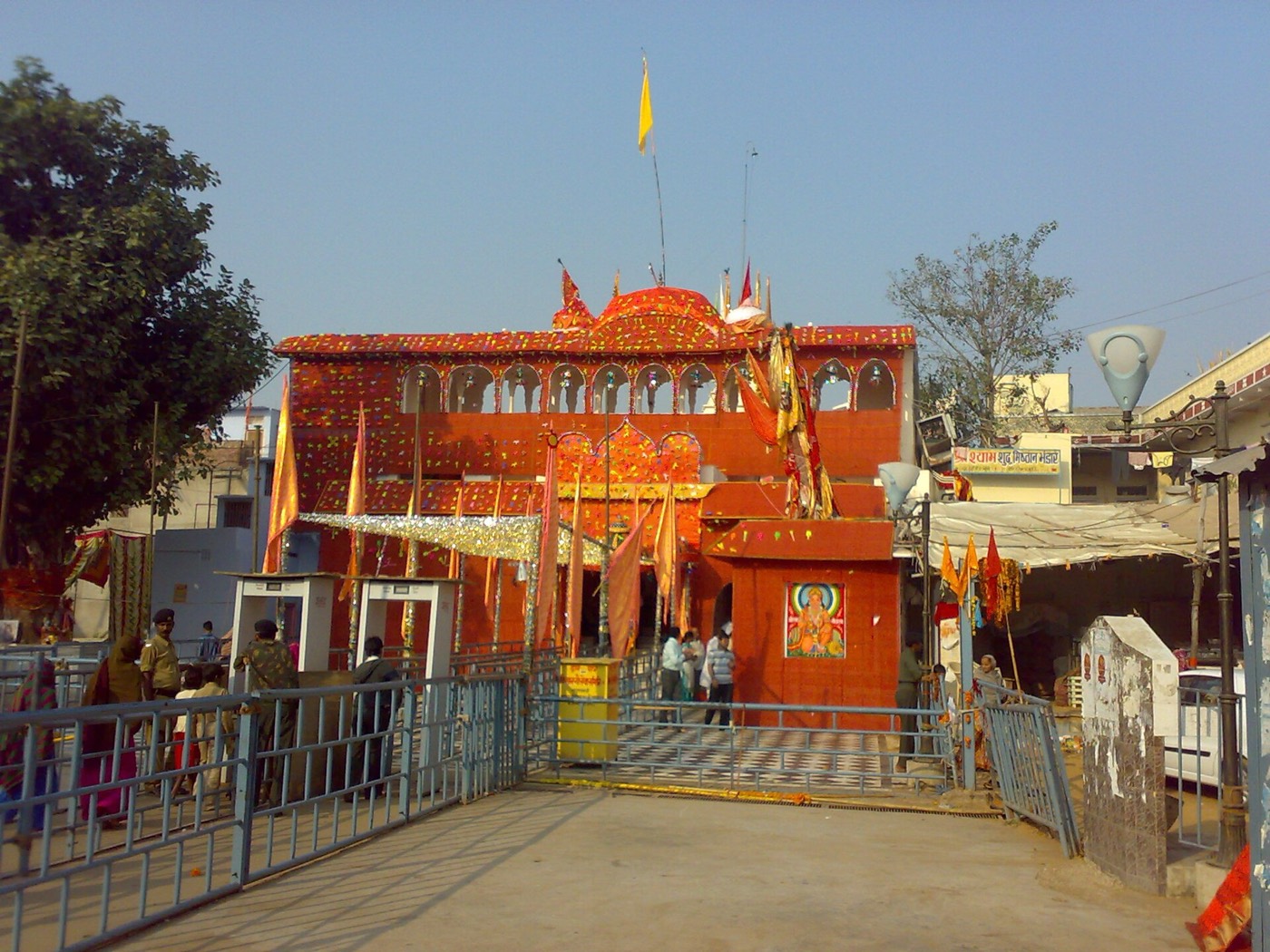
Khatu Shyam Ji
The famous Barbarik-Shyam shrine of Sikar district, paired with Salasar on almost every Shekhawati pilgrim circuit.

Karni Mata Temple, Deshnoke
The extraordinary rat temple near Bikaner, an easy add-on on the desert-side road.
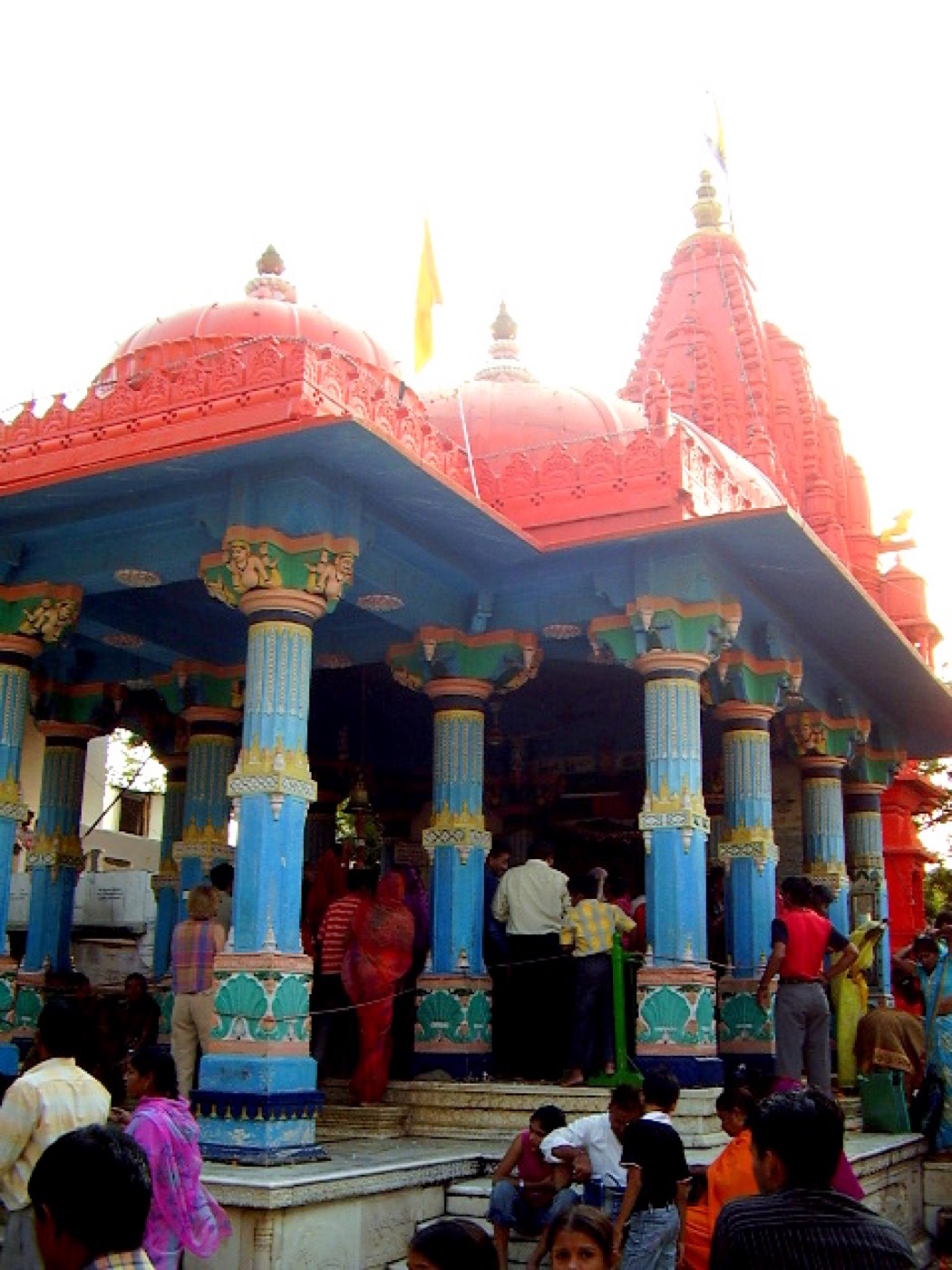
Brahma Temple, Pushkar
One of the few Brahma temples in the world, beside the holy Pushkar lake.
Read the full Nearby Temples & Tirths →
Where to stay
Salasar is built for pilgrims, so beds are plentiful and cheap. Numerous dharamshalas and trust-run guest houses cluster around the temple, many offering basic free or donation-based rooms for devotees; budget and mid-range hotels and lodges line the approach roads and market. Rooms get very tight during the Chaitra and Ashwin fairs, so book ahead for those weeks. Larger hotel choices are also available in Sujangarh and Sikar for those wanting more comfort within a short drive.
Frequently asked questions
Salasar Balaji temple timings today
Nearest railway station to Salasar Balaji
Is Salasar Balaji open during the Chaitra and Ashwin fairs
Why does Salasar Balaji Hanuman have a beard
How far is Salasar Balaji from Jaipur and how to reach
Compiled from public sources including Wikipedia: Salasar Balaji · Wikimedia Commons: File:Salasar balaji 01.jpg. Timings and seasonal closures change; confirm with the temple trust before travelling.