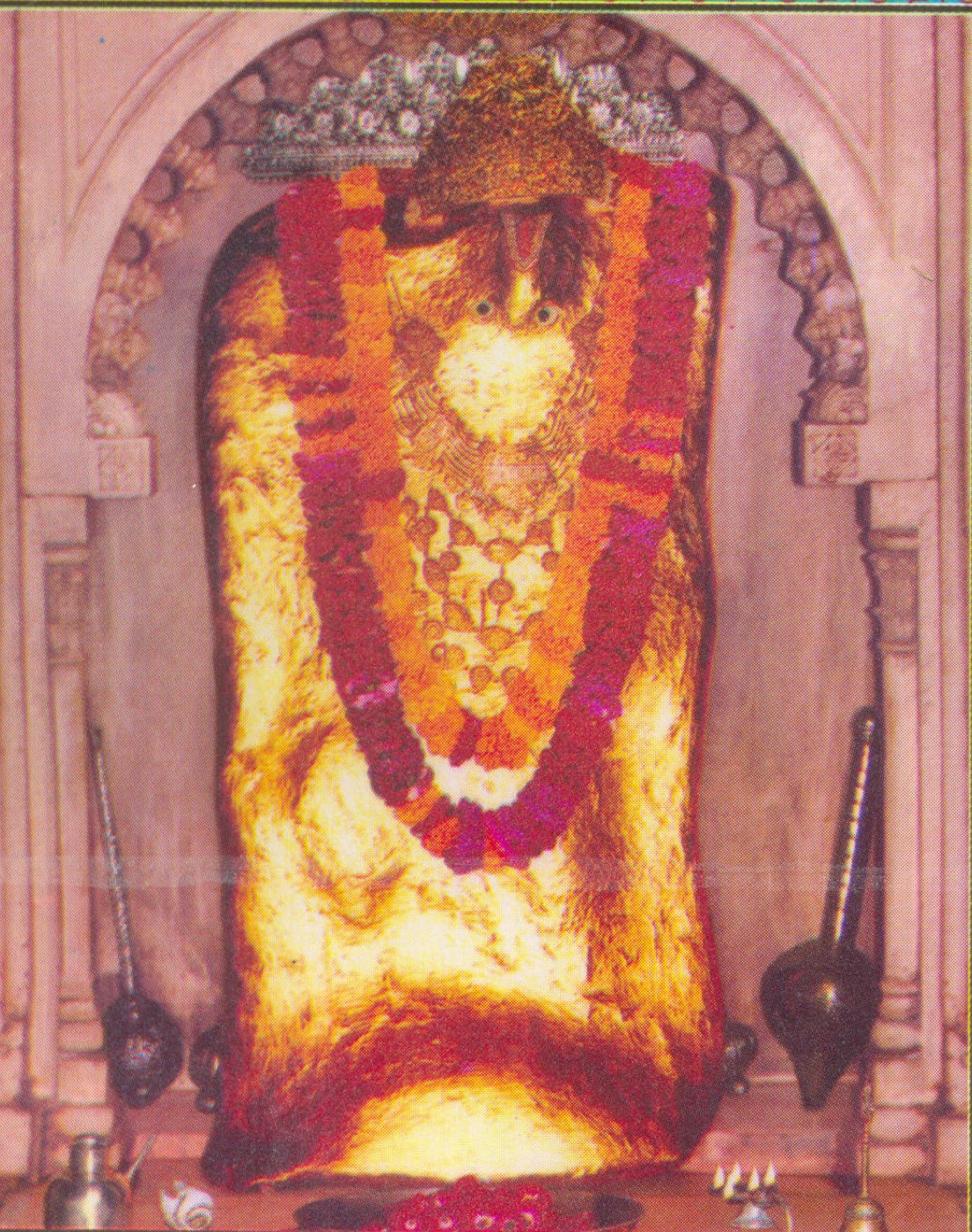
Darshan timings at Mehandipur Balaji
| Season | Opens | Darshan | Closes | Status |
|---|---|---|---|---|
| All year (weekdays) | Approx 6:00 AM | Full-day darshan with heaviest crowds around the two aarti windows | Approx 10:00 PM | Open |
| Tuesdays and Saturdays | Approx 5:30 AM | Extended hours and dense queues; these are the ritual-heavy days for the sankatwale | Approx 10:00 PM | Open |
| Hanuman Jayanti and fair days | Pre-dawn | Continuous darshan through mela crowds | Late night | Open |
Read the full Timings & Darshan Hours →
How to reach Mehandipur Balaji Temple
Mehandipur lies off the Jaipur-Agra corridor in eastern Rajasthan, near Todabhim, straddling the Dausa and Karauli district line. Most pilgrims arrive by road from Jaipur, Dausa or Bharatpur; there is no station in the village itself, so the last leg is always by bus, taxi or shared jeep from the highway drop point.
| Mode | Point | Distance | Notes |
|---|---|---|---|
| Train | Bandikui Junction | Approx 40 to 42 km | The most commonly cited nearest railhead; take a taxi or bus onward. Dausa station (approx 50 km) and Gangapur City (approx 60 km) are alternatives. |
| Air | Jaipur International Airport (Sanganer) | Approx 110 km | Nearest airport with good connectivity; hire a cab or take a Jaipur-side bus toward Mahwa/Mehandipur. |
| Road | From Jaipur | Approx 100 to 110 km | Roughly 2.5 to 3 hours via the Jaipur-Agra route; regular RSRTC and private buses run to Mehandipur. |
| Road | From Delhi | Approx 230 to 240 km | Via NH-21/NH-11 through Mahwa; a long day trip, most people break the journey. |
Puja & aarti schedule
- Morning aarti (mangla). The sanctum draws its first dense crowd; the sankatwale gather for the day's rituals.Approx 6:00 AM
- Arzi offering. Devotees present their petition (arzi) with the prescribed prasad, part of which is offered and part disposed of for the spirits, never carried home.Daytime
- Evening aarti (sandhya). The second peak of the day, with the most intense atmosphere around the exorcism rituals.Approx 6:30 PM
Read the full Aarti & Puja Schedule →
Dress code & temple rules
Wear modest, covering clothing; this is an austere, intense pilgrimage site, not a sightseeing temple.
Do not carry sweets, perfume or strongly fragrant items into the temple; they are believed to attract negative forces.
Buy only as much prasad as you will offer or consume on the spot. Never carry temple prasad home.
Do not accept, eat or share food or prasad with anyone else at Mehandipur.
After darshan, leave and head straight home without looking back or stopping to eat, per local ritual custom.
Respect the sankatwale and any dramatic reactions during rituals; do not gawk, film or mock. Photography inside the sanctum is restricted.
Those who feel sensitive or are pregnant, unwell or with young children should be prepared for a charged, sometimes disturbing atmosphere.
Read the full Dress Code & Temple Rules →
Best time to visit & festivals
Winter is by far the most comfortable window, and the weekly and festival rhythm matters as much as the season here. Tuesdays and Saturdays are the ritually charged days and draw the biggest crowds; a weekday visit is calmer if you want a quieter darshan.
| Festival | When | Significance |
|---|---|---|
| Hanuman Jayanti | Chaitra Purnima (March or April) | The temple's principal festival and biggest fair, with pre-dawn to late-night darshan and huge pilgrim numbers. Peak |
| Hanuman Jayanti (autumn observance) | Ashwin/Kartik (October) | A second observance of Hanuman's day marked in parts of the region, drawing large fair crowds. |
| Weekly ritual days | Every Tuesday and Saturday | The days most associated with Balaji and with the exorcism rituals; expect dense queues and intense scenes. Peak |
Read the full Best Time to Visit & Festivals →
Nearby temples & tirths

Salasar Balaji
The other great Rajasthan Hanuman shrine, often paired with Mehandipur on a Balaji circuit.
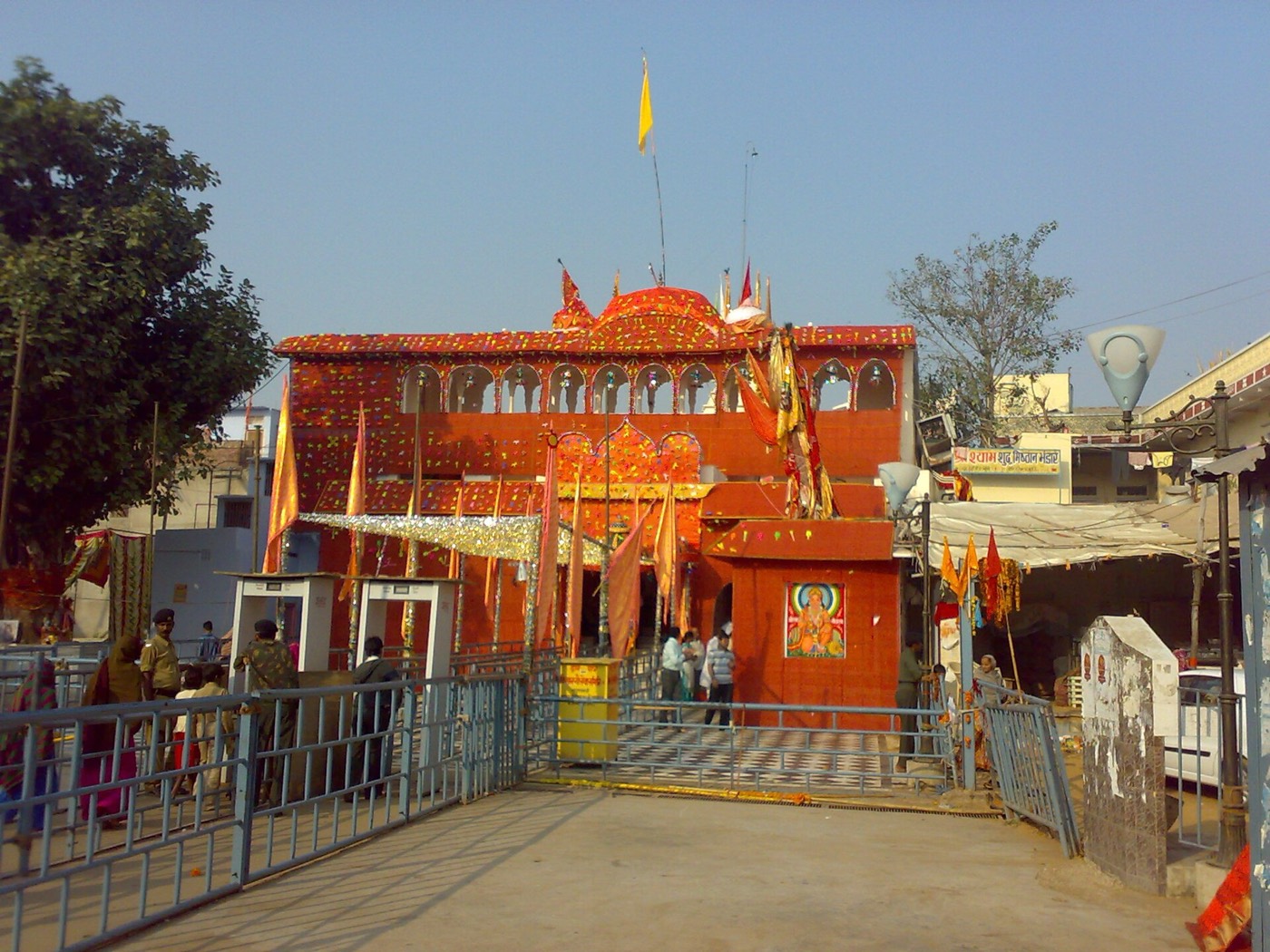
Khatu Shyam Ji
Hugely popular Krishna-as-Shyam temple in Sikar, a common add-on for Rajasthan pilgrims.
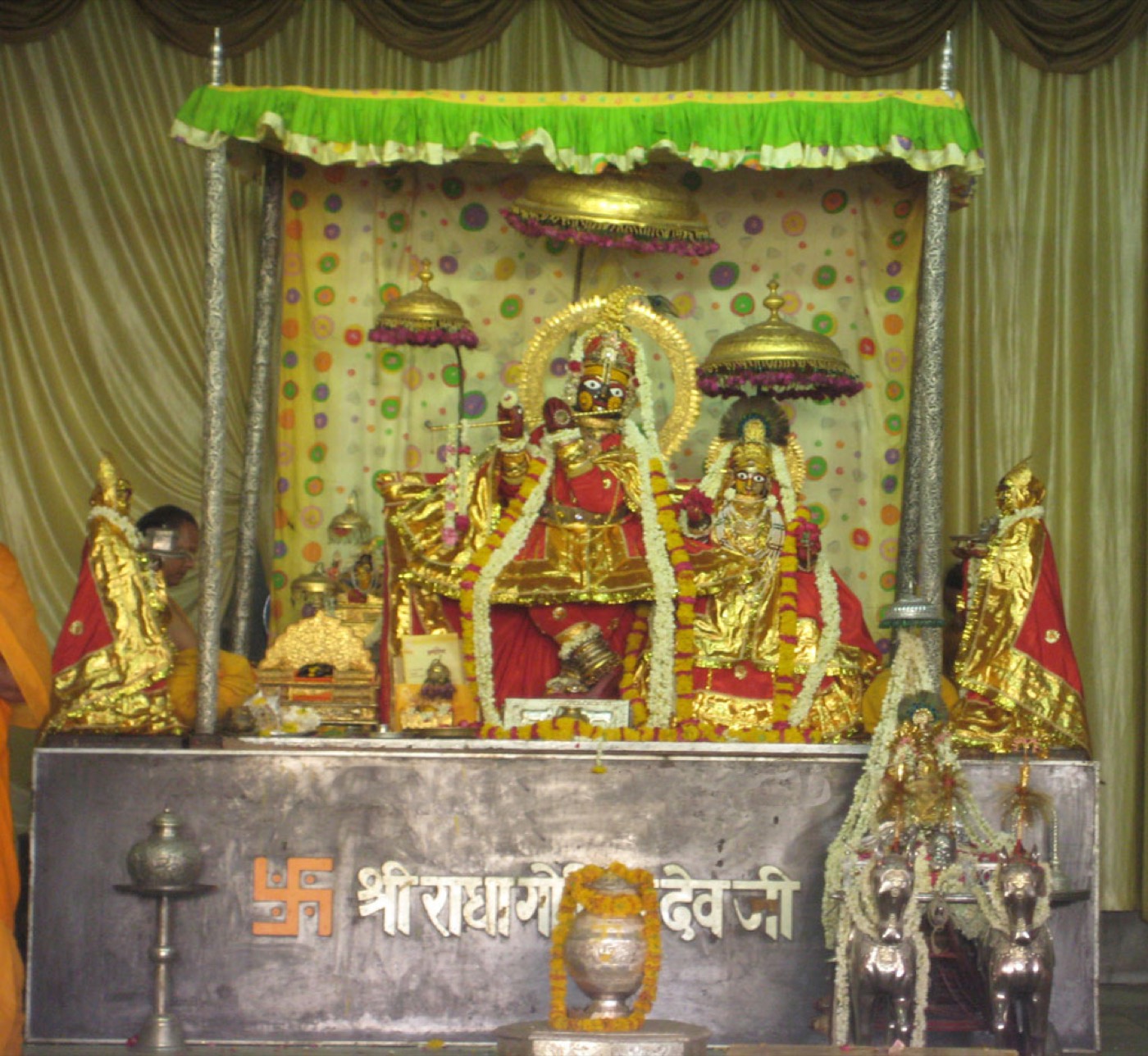
Govind Dev Ji, Jaipur
Jaipur's beloved Krishna temple inside the City Palace complex, easy on the way back.
Read the full Nearby Temples & Tirths →
Where to stay
Mehandipur town exists largely to serve the temple, so it is thick with dharamshalas, budget lodges and guesthouses, several run by or affiliated with the temple trust. Many families of the sankatwale stay for extended periods during treatment, so long-stay rooms are common and inexpensive. Facilities are basic; for better hotels, look to Dausa (approx 50 km) or Jaipur (approx 110 km). Booking ahead is wise on Tuesdays, Saturdays and around Hanuman Jayanti.
Frequently asked questions
Mehandipur Balaji temple timings today
nearest railway station to Mehandipur Balaji
why do people go to Mehandipur Balaji for exorcism
can you bring prasad home from Mehandipur Balaji
is Mehandipur Balaji open in winter
Compiled from public sources including Wikipedia: Mehandipur Balaji Temple · Wikimedia Commons: Mehandipur Balaji idol image · Dharmwani travel guide: Mehandipur Balaji Temple. Timings and seasonal closures change; confirm with the temple trust before travelling.