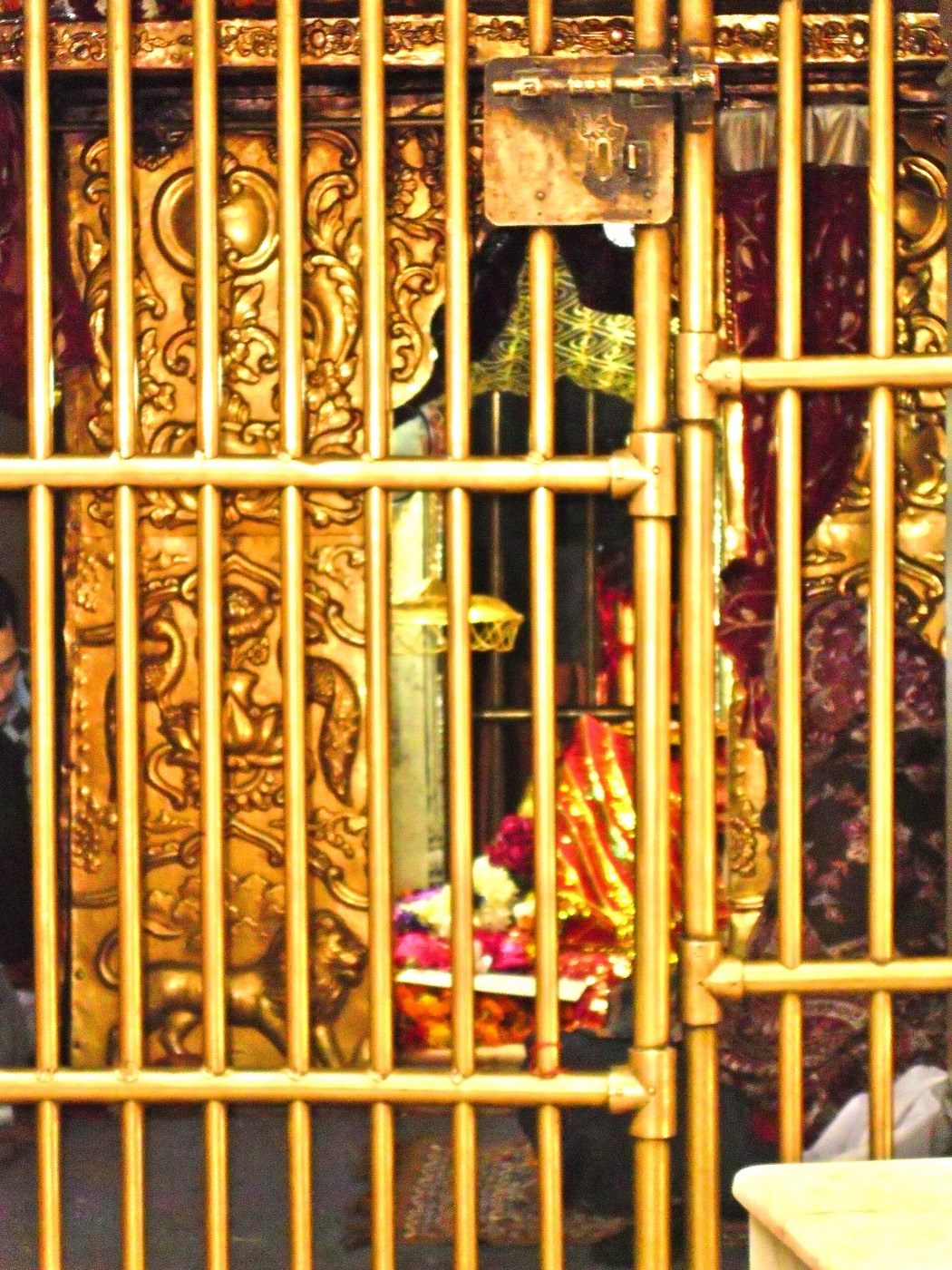
Darshan timings at Chintpurni
| Season | Opens | Darshan | Closes | Status |
|---|---|---|---|---|
| Summer (approx April to September) | approx 4:00 AM | Continuous queue darshan of the pindi through the day | approx 11:00 PM | Open |
| Winter (approx October to March) | approx 5:00 AM | Continuous queue darshan, shorter daylight hours | approx 10:00 PM | Open |
| Midday ritual break | around midday | Sanctum may briefly close for bhog, cleaning and the goddess's shringar | short break | Open |
| Navratri and Shravan Ashtami fair | extended | Hours extend and queues are managed in phases; expect very long waits | extended | Open |
Read the full Timings & Darshan Hours →
How to reach Chintpurni Temple (Chhinnamastika Shakti Peeth)
Chintpurni sits in the Shivalik foothills of Una district, off the Hoshiarpur to Dharamshala road about 3 km west of Bharwain. There is no railhead or airport in the village itself, so nearly everyone arrives by road on the last stretch, whether by bus, shared taxi or private car.
| Mode | Point | Distance | Notes |
|---|---|---|---|
| Train | Amb Andaura railway station (also cited as Chintpurni Marg), on the Nangal Dam to Daulatpur Chowk line | approx 20 km | The nearest station, a narrow-gauge line branch; useful for reaching the area but with limited services. For mainline trains, Una Himachal (approx 45 km) and Hoshiarpur in Punjab are the larger broad-gauge railheads, from where taxis and buses run up to Chintpurni. |
| Air | Kangra (Gaggal) Airport near Dharamshala | approx 80 km | The closest airport, with limited flights. Chandigarh and Amritsar airports (both roughly 160 to 175 km) offer far wider connectivity and are common entry points, followed by a road transfer. |
| Road | From Una town via Bharwain | approx 40 km | Well connected by HRTC and private buses. Hoshiarpur in Punjab is around 40 km on the other side, and the shrine lies on the main Hoshiarpur-Dharamshala highway, so many combine it with the wider Kangra Devi circuit. |
Puja & aarti schedule
- Morning aarti and the opening worship of the goddess after the sanctum is made readyearly morning (around 5:00 AM)
- Bhog offering and shringar, when the pindi is bathed, adorned and offered food (brief sanctum closure possible)midday
- Evening aarti (sandhya aarti) with lamps, bells and collective darshanevening (around 7:00 to 8:00 PM)
Read the full Aarti & Puja Schedule →
Dress code & temple rules
Dress modestly and traditionally, with shoulders and legs covered; this is a living Shakti Peeth and revealing or beachwear-style clothing is out of place in the darshan line.
Remove footwear before entering the temple; shoe stands and cloakrooms are available along the approach bazaar.
Photography and mobile phones are generally not allowed inside the sanctum where the veiled pindi is kept; deposit phones and cameras at the counters when asked.
Leather items (belts, wallets, bags) are best left outside the sanctum, in keeping with standard shrine practice.
The goddess is offered a red chunni, coconut, red bangles and sweets; buy offerings from the licensed shops on the approach rather than carrying loose items into the sanctum.
Keep queue discipline and follow the barricades and volunteers, particularly during Navratri and the Shravan Ashtami mela when the crowd is managed in phases.
Read the full Dress Code & Temple Rules →
Best time to visit & festivals
Chintpurni draws pilgrims all year, but the experience swings sharply between a quiet foothill morning and the crush of a mela. The pleasant months are roughly March to June and September to November; the monsoon (July to August) coincides with the biggest fair and also with landslide-prone hill roads. If you want a calm darshan, come on an ordinary weekday morning; if you want the full devotional electricity, come for a fair and plan for long queues.
| Festival | When | Significance |
|---|---|---|
| Shravan (Sawan) Ashtami Mela | Shravan month, around July to August | The single largest gathering at Chintpurni, a multi-day fair on the ashtami of the monsoon month drawing enormous crowds from Himachal, Punjab and beyond; the whole approach becomes one continuous pilgrim stream. Peak |
| Chaitra Navratri | March to April | Nine nights of goddess worship with heavy footfall and extended darshan hours; one of the three great Navratri windows observed here. |
| Ashwin (Sharad) Navratri | September to October | The autumn Navratri, another major devotional peak with special pujas and long queues at the sanctum. |
| Shravan Navratri | July to August | The monsoon Navratri, observed strongly in the Shakta tradition and overlapping the shrine's busiest fair season. |
Read the full Best Time to Visit & Festivals →
Nearby temples & tirths
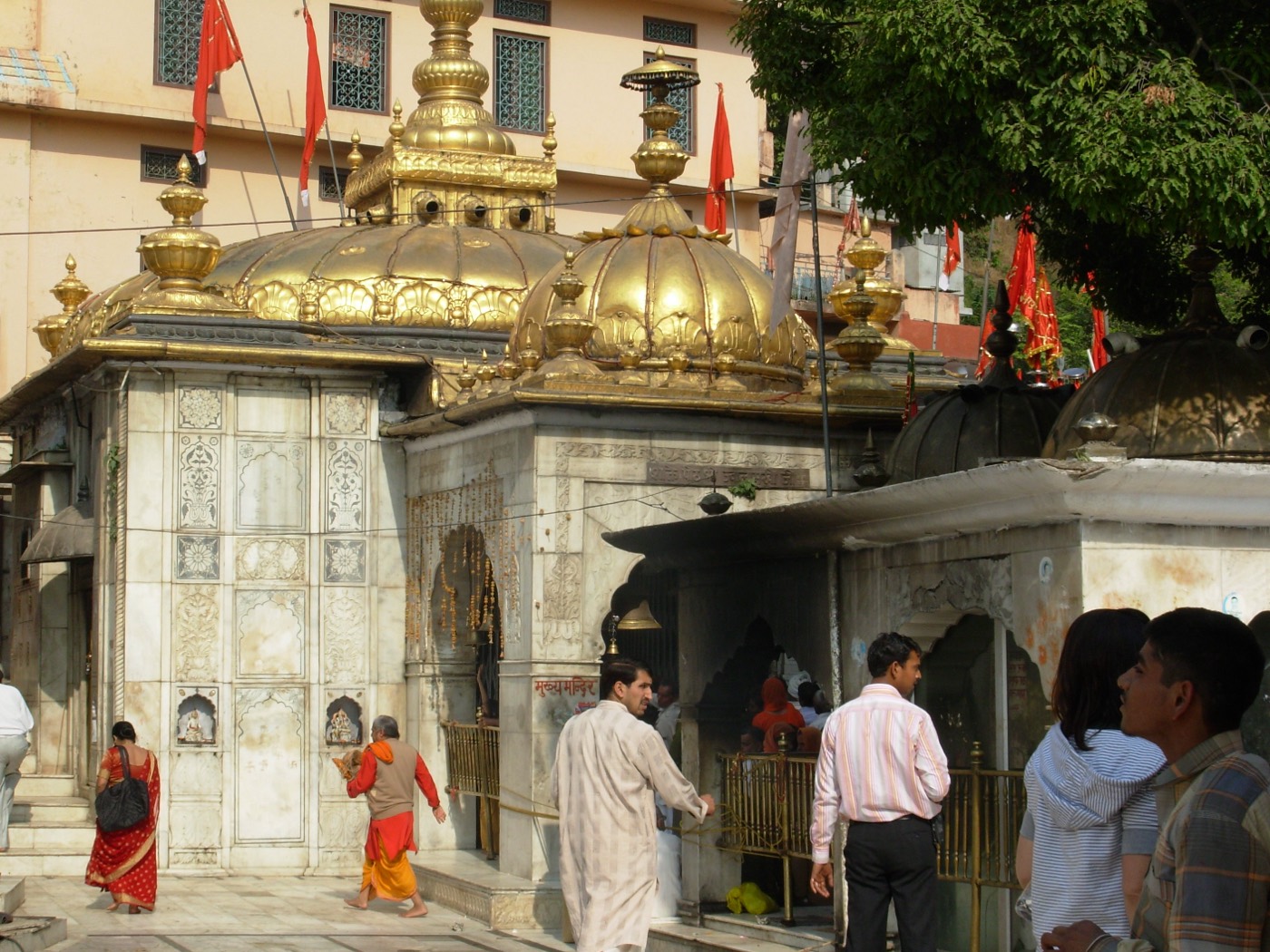
Jwala Ji (Jwalamukhi)
The Shakti Peeth of the eternal natural flames, where the goddess is worshipped as fire with no idol; the classic next stop on the Himachal Devi circuit.

Naina Devi
The hilltop Shakti Peeth above the Gobind Sagar lake near Anandpur Sahib, often paired with Chintpurni on a wider Devi darshan loop.
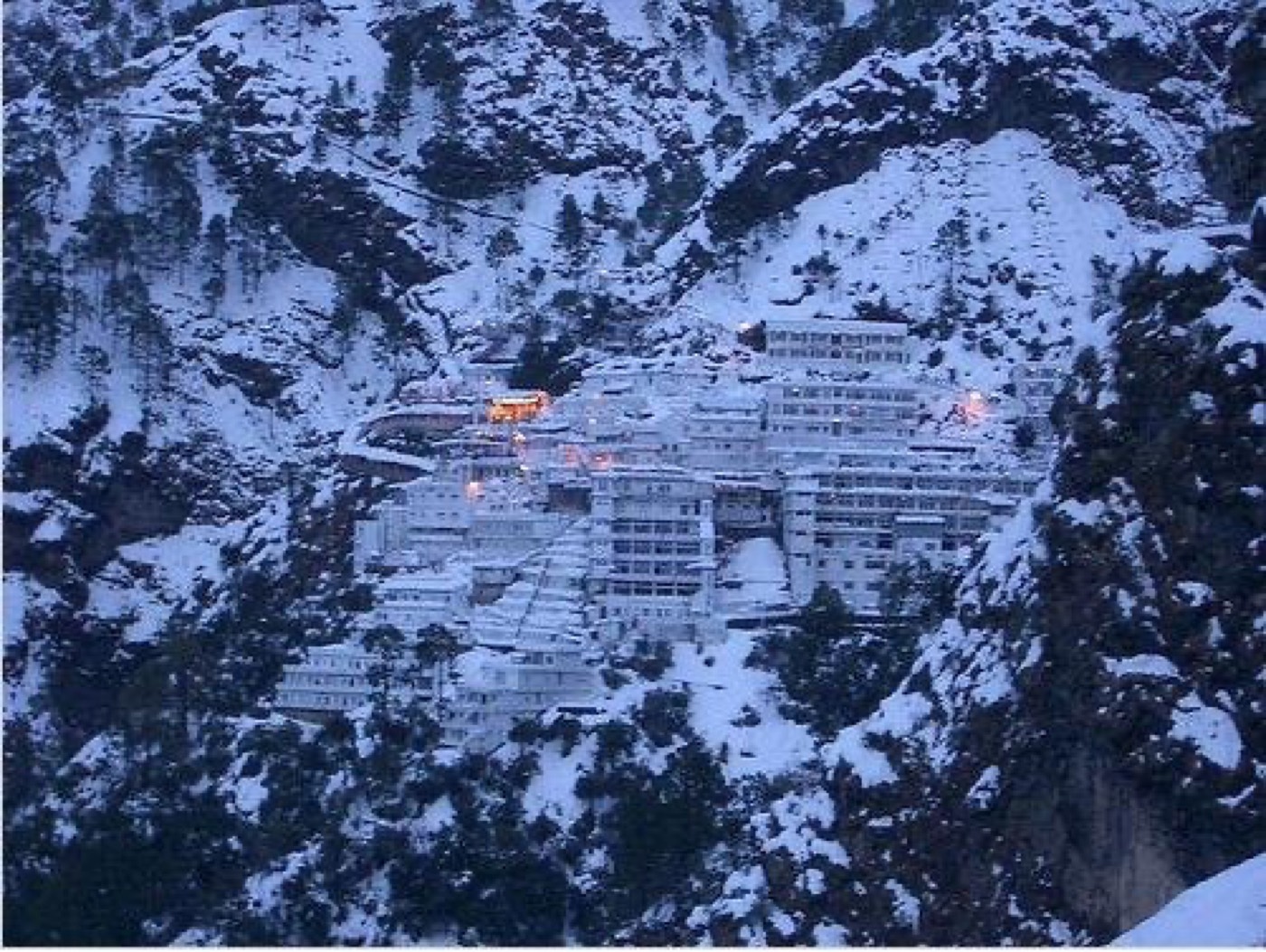
Vaishno Devi
The great cave shrine in the Trikuta hills of Jammu, the most famous goddess pilgrimage in the north and a common extension for devotees on a longer Devi yatra.
Read the full Nearby Temples & Tirths →
Where to stay
Chintpurni village and the approach road are geared entirely for pilgrims, so beds are plentiful and mostly budget to mid-range. The core options are private guesthouses, lodges and dharamshalas clustered within walking distance of the temple, plus a temple-trust rest house and HPTDC accommodation in the wider area. Rooms are basic and functional rather than luxurious, and rates rise steeply during Navratri and the Shravan Ashtami mela, when advance booking becomes essential and unbooked visitors may end up in dormitory-style arrangements. For a wider choice of proper hotels, Una (about 40 km) and Hoshiarpur in Punjab (about 40 km) are the nearest larger bases, and many travellers on the Kangra Devi circuit stay at Jwalamukhi or Kangra instead. Verify current tariffs directly at booking, as pilgrim-town rates move with the season.
Frequently asked questions
Chintpurni temple timings today
Nearest railway station to Chintpurni temple
Is Chintpurni temple open during Navratri
Which airport is nearest to Chintpurni
What is the deity form at Chintpurni Shakti Peeth
Compiled from public sources including Wikipedia - Chintpurni · Wikipedia - Chintpurni Marg railway station · Wikipedia - Kangra Airport (Gaggal) · Wikimedia Commons - Chintpurni.jpg image page. Timings and seasonal closures change; confirm with the temple trust before travelling.