The Devi shrines of lower Himachal have been walked and driven as one yatra for generations, and the map explains why. Naina Devi crowns a hill above the Gobind Sagar reservoir on the Punjab border, approx 100 to 110 km from Chandigarh airport. Chintpurni sits on a wooded ridge in Una district, approx 90 to 110 km from Naina Devi by road. Jwala Ji burns in the Kangra valley approx 30 to 35 km beyond Chintpurni. Each temple's own records name the other two among its natural next stops, which is as clear a sign as any that pilgrims treat them as one journey.
Each stop is a Shakti Peetha with a distinct character. At Naina Devi the old telling says the right eye of the goddess Sati fell to earth, and the last stretch is climbed on concrete steps or covered by ropeway. At Chintpurni the goddess is Chhinnamastika, worshipped not as a carved figure but as a rounded stone, a pindi, kept veiled inside the sanctum. At Jwala Ji there is no image at all. Seven to nine natural flames rise from the rock, never lit and never extinguished by human hand, revered as the tongue of Sati.
This guide covers the loop as a whole: the road legs and their approximate distances, a two to three day order that works in either direction, darshan hours side by side, where to sleep, and an honest account of what Navratri does to the queues. Every figure is approximate and drawn from the sources listed at the end. Hill temple timings move with the season, so confirm locally on the day.
Why these three shrines travel together
All three shrines belong to the Shakta tradition, which worships the divine as the Mother Goddess, and all three are counted among the Shakti Peethas, the places where parts of Sati's body are said to have fallen. That shared story is what binds the circuit. A pilgrim who has bowed before the eye of the goddess at Naina Devi tends to feel the journey unfinished until she has also stood before the tongue of flame at Jwala Ji and the veiled pindi at Chintpurni.
The circuit also works on plain logistics. The three temples sit in three neighbouring districts, Bilaspur, Una and Kangra, and each keeps long single-stretch darshan hours, pausing only briefly for bhog and ritual dressing rather than closing for a long midday break. None of the three charges an entry fee for ordinary darshan, though Chintpurni may offer separate special darshan passes and the Naina Devi ropeway is ticketed on its own.

Shri Naina Devi Ji Temple
Bilaspur, Himachal Pradesh
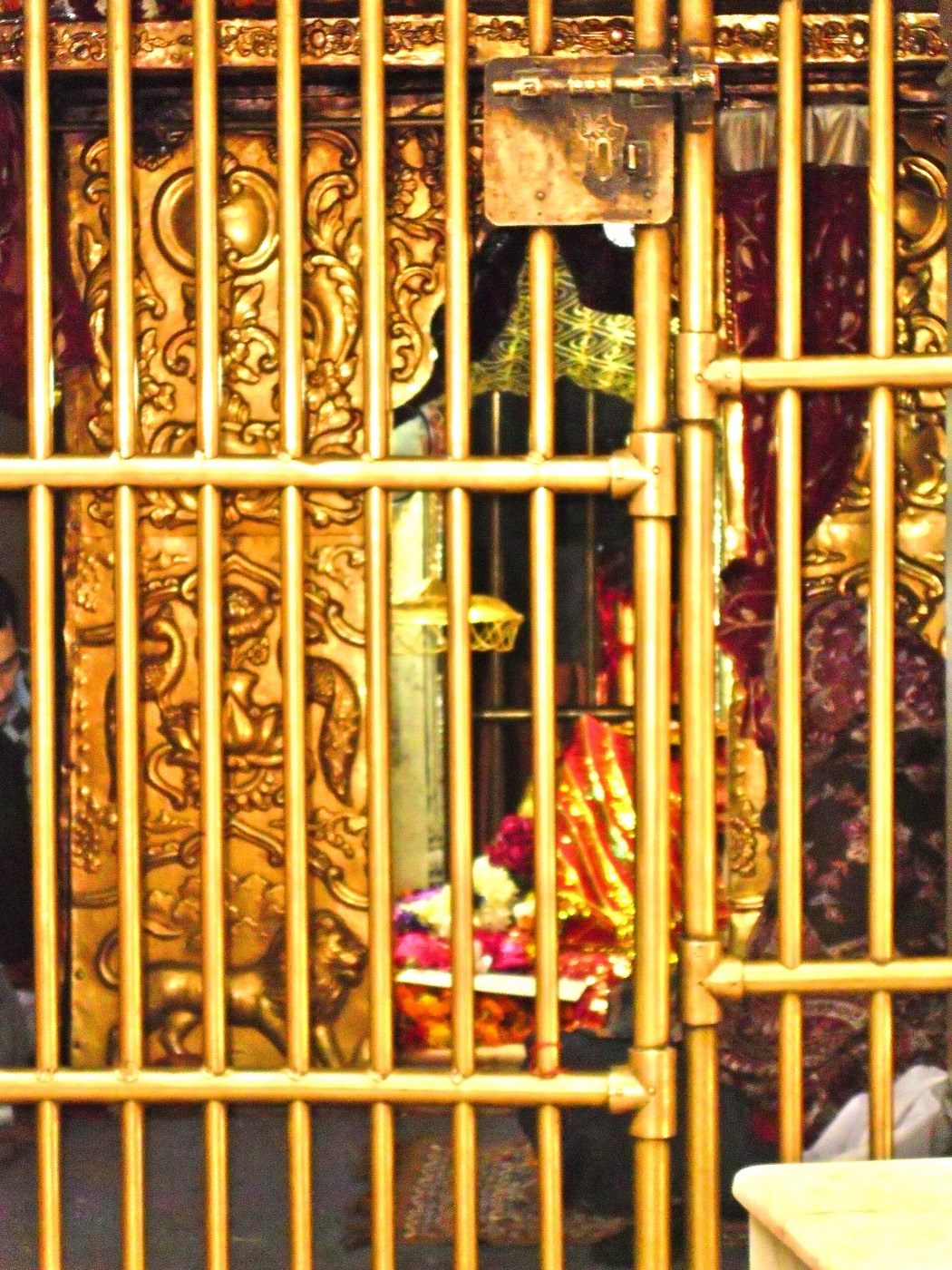
Chintpurni Temple (Chhinnamastika Shakti Peeth)
Una, Himachal Pradesh
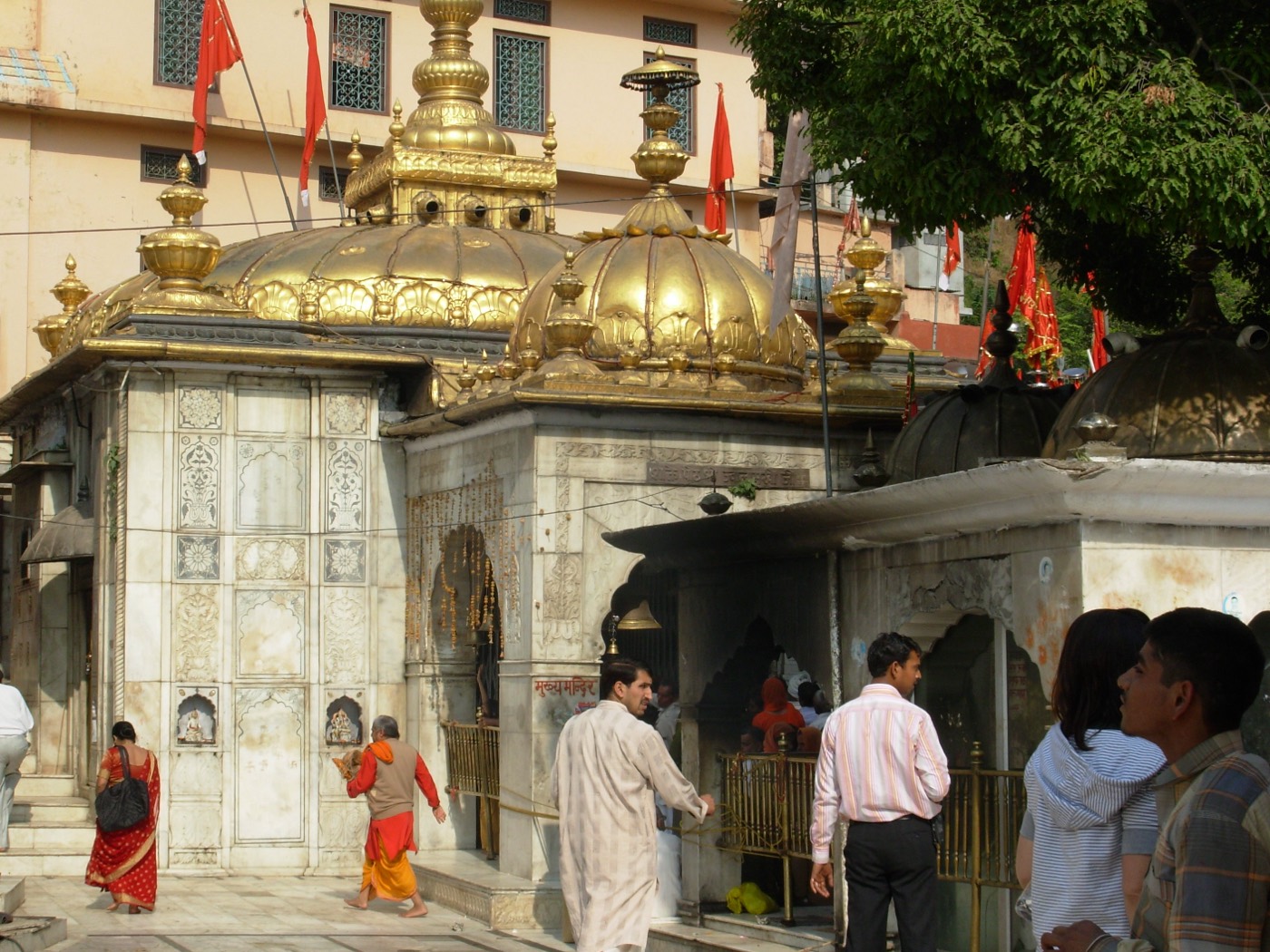
Jwala Ji (Jwalamukhi Devi Temple)
Kangra, Himachal Pradesh
The route: distances and road legs
The classic direction starts from Chandigarh, the region's biggest airport and railhead. From there the road runs via Kiratpur to the Naina Devi hilltop, approx 100 to 110 km. The longest inter-temple leg follows, Naina Devi to Chintpurni at approx 90 to 110 km, and the shortest comes last, Chintpurni to Jwala Ji at approx 30 to 35 km. The return from Jwala Ji to Chandigarh is roughly 200 km, which is why most people give the loop a comfortable third day.
Travellers coming from the Punjab side can just as easily start at Chintpurni, which lies about 40 km from both Una and Hoshiarpur on the Hoshiarpur to Dharamshala road, and run the loop in reverse. Distances that look short on paper take longer here: these are hill roads, and buses and shared taxis climb genuine hairpins on the final stretch up to Naina Devi town.
| Leg | Distance | Notes |
|---|---|---|
| Chandigarh airport to Naina Devi | approx 100 to 110 km | Via Kiratpur; buses and taxis climb the hairpins to the base town |
| Naina Devi to Chintpurni | approx 90 to 110 km | The longest inter-temple leg of the loop |
| Chintpurni to Jwala Ji | approx 30 to 35 km | The shortest leg; both shrines fit in one day |
| Jwala Ji to Kangra town | approx 30 km | For those extending into the Kangra valley shrines |
| Jwala Ji back to Chandigarh | roughly 200 km | The usual return; Amritsar airport is a similar distance away |
| Una to Chintpurni | approx 40 km | The Punjab-side entry point for a reverse loop |
The three shrines at a glance
Seen side by side, the three keep similar rhythms: open before dawn, darshan through the day with brief ritual pauses, doors closing at night. Chintpurni keeps the longest summer stretch and Jwala Ji trims its winter hours the most. All three sit approx 20 to 25 km from a railway station, though only small or narrow-gauge lines serve them directly; the useful mainline railheads are Chandigarh for Naina Devi, Pathankot for Jwala Ji at approx 120 km, and Una Himachal for Chintpurni at approx 45 km.
| Temple | District | Worshipped as | Darshan hours | Nearest station |
|---|---|---|---|---|
| Naina Devi | Bilaspur | Sati's right eye; hilltop shrine reached by steps or ropeway | approx 5:00 AM to 10:00 PM daily, longer in Navratri | Anandpur Sahib, approx 20 to 25 km |
| Jwala Ji | Kangra | Natural eternal flames, no idol; the tongue of Sati | approx 5:00 AM to 10:00 PM in summer; approx 6:00 AM to 9:00 PM in winter | Jwalamukhi Road (Ranital), approx 20 km |
| Chintpurni | Una | Chhinnamastika as a veiled pindi, no idol | approx 4:00 AM to 11:00 PM in summer; approx 5:00 AM to 10:00 PM in winter | Amb Andaura / Chintpurni Marg, approx 20 km |
A two to three day plan that works
Day one: reach Naina Devi. From Chandigarh the drive via Kiratpur is approx 100 to 110 km, and from the base town you finish on the stepped path or the ropeway. Arrive by afternoon and there is time for an unhurried evening darshan; the sandhya aarti falls at approx 7:00 to 8:00 PM. Sleep in the base town, where the temple trust runs sarais, or drop back to Anandpur Sahib, approx 20 to 30 km away.
Day two: the long leg. Drive the approx 90 to 110 km to Chintpurni and take darshan of the pindi. The temple opens earliest of the three, at approx 4:00 AM in summer, so an early start beats the queue. Then continue approx 30 to 35 km to Jwala Ji for the evening. Jwala Ji is served by five aartis a day in the traditional Shakti Peetha manner, and many pilgrims time their visit for the sandhya aarti at approx sunset, when lamps are offered to the natural fire.
Day three: return or extend. The straight run back to Chandigarh is roughly 200 km. Those with more time push approx 30 km further to Kangra town or approx 56 km to Dharamshala, and treat the wider Kangra valley Devi shrines as a day trip from there.
Two days is possible if you take darshan at Naina Devi on the morning of day one and sleep at Chintpurni or Jwalamukhi town that night, but it leaves no slack for festival queues or a slow hill road. Three days is the honest recommendation.
Navratri and the melas: an honest crowd warning
The three shrines share one festival calendar, which means the crowds surge everywhere at once. The two big Navratris, in approx March to April and approx September to October, bring extended hours, phased queue management and very long waits at all three temples. The Shravan Ashtami window in approx July to August is bigger still at two of the three: it is Naina Devi's signature fair and the single largest gathering of the year at Chintpurni, and a traditional fair is held at Jwala Ji in the same weeks. All of these follow the lunar calendar, so the exact dates move each year.
Treat the warning seriously. The 2008 stampede at Naina Devi happened during the Shravan Ashtami mela, and the authorities have managed the queue tightly ever since. If you come during a mela, expect barricades, darshan run in controlled phases and waits measured in hours, keep children close on the Naina Devi steps, and book rooms well ahead; Chintpurni's rates rise steeply in fair season and unbooked visitors can end up in dormitory-style arrangements. The timing carries a second catch: the Shravan fair season sits inside the monsoon, which is also when the hill roads around Chintpurni are prone to landslides.
| Window | When it falls | What it means on the ground |
|---|---|---|
| Chaitra Navratri | approx March to April | Spring nine nights; heavy footfall and extended darshan hours at all three shrines |
| Shravan Ashtami mela | Shravan month, approx July to August | Naina Devi's signature fair and Chintpurni's largest gathering; a traditional fair at Jwala Ji too |
| Sharad (Ashwin) Navratri | approx September to October | Autumn Navratri leading to Dussehra; another peak with special pujas and long queues |
| Makar Sankranti | January | Special worship of the flames at Jwala Ji; cold but quiet weeks on the rest of the loop |
Where to stay along the loop
Every stop is a pilgrim town first, so beds are plentiful and mostly budget to mid-range. At Naina Devi the temple trust runs sarais and dharamshalas in the base town, small hotels cluster near the bus stand, and there are more rooms in Anandpur Sahib and Kiratpur Sahib, roughly 20 to 30 km away, plus hotels by Gobind Sagar in Bilaspur town. Jwalamukhi town has budget hotels, dharamshalas and pilgrim guesthouses within walking distance of the temple, with an HPTDC-run hotel as the mid-range option. Chintpurni's approach is lined with guesthouses, lodges and dharamshalas, alongside a temple-trust rest house.
For more comfort, base yourself in the bigger towns and treat the shrines as day visits: Anandpur Sahib or Chandigarh serve the Naina Devi end, while Kangra, approx 30 km from Jwala Ji, and Dharamshala, approx 56 km, serve the Kangra end. Rooms across the circuit are functional rather than luxurious, everything fills fast in Navratri and the Shravan fair, and pilgrim-town tariffs move with the season, so book ahead for festival travel and verify rates at booking.
Dress, offerings and sanctum rules
The three shrines share the etiquette of any living Shakti Peetha, with a few local touches worth knowing. Head covering is asked of visitors before the flames at Jwala Ji, especially during aarti. The offerings differ slightly by shrine: misri, rabri, seasonal fruit, coconut and a red chunri are traditional at Jwala Ji, while a red chunni, coconut, red bangles and sweets are the classic bhent at Chintpurni, and coconut, chunni and prasad are sold at the stalls lining the Naina Devi steps. Buy offerings from the licensed shops on each approach rather than carrying loose items into the sanctum.
- Dress modestly with shoulders and legs covered at all three shrines.
- Remove footwear before the sanctum; shoe stands and cloakrooms sit along each approach.
- Leave leather items such as belts, wallets and bags outside the sanctum area.
- Photography and mobile phones are restricted inside all three sanctums; follow posted signs and staff instructions.
- Wear sturdy shoes for the Naina Devi steps and carry warm layers in winter, as the hilltop is windy.
- Keep silence and queue discipline near the open flame pits at Jwala Ji, which are hot, and along mela barricades everywhere.
The wider Himachal Devi set and where to extend
The full Himachal Devi set is wider than this loop. Kangra's Brajeshwari Devi and Chamunda Devi are commonly clubbed with Jwala Ji by pilgrims staying in Kangra or Dharamshala. This guide does not cover those two in detail, so we name them here without pretending to know their timings, and simply note that a Kangra extension bolts naturally onto day three.
Two bigger extensions tempt many circuit pilgrims. Vaishno Devi, the great cave shrine of the Mother Goddess in the Trikuta hills of Jammu, lies approx 200 km or more from Jwala Ji via Pathankot and approx 210 km from Chintpurni, and is the crowning stop of many longer Devi yatras in the north. In the other direction, Mansa Devi in Haridwar is approx 200 km from Naina Devi, another hilltop goddess reached by ropeway, echoing Naina Devi's own pairing of a stepped climb with a cable car.
Frequently asked questions
How many days do you need for the Naina Devi, Chintpurni and Jwala Ji circuit?
What is the distance between Chintpurni and Jwala Ji?
Should I start the Himachal Devi circuit from Chandigarh or Una?
Is there a ropeway at Naina Devi temple?
Are Naina Devi, Jwala Ji and Chintpurni open in winter?
Why is there no idol at Jwala Ji temple?
Compiled from our verified temple guides and public sources including Wikipedia: Naina Devi (temple) · Wikipedia: Jwala Ji (goddess and shrine) · Wikipedia - Chintpurni · Wikipedia: 2008 Naina Devi temple stampede. Timings and festival dates shift with the lunar calendar; confirm before you travel.