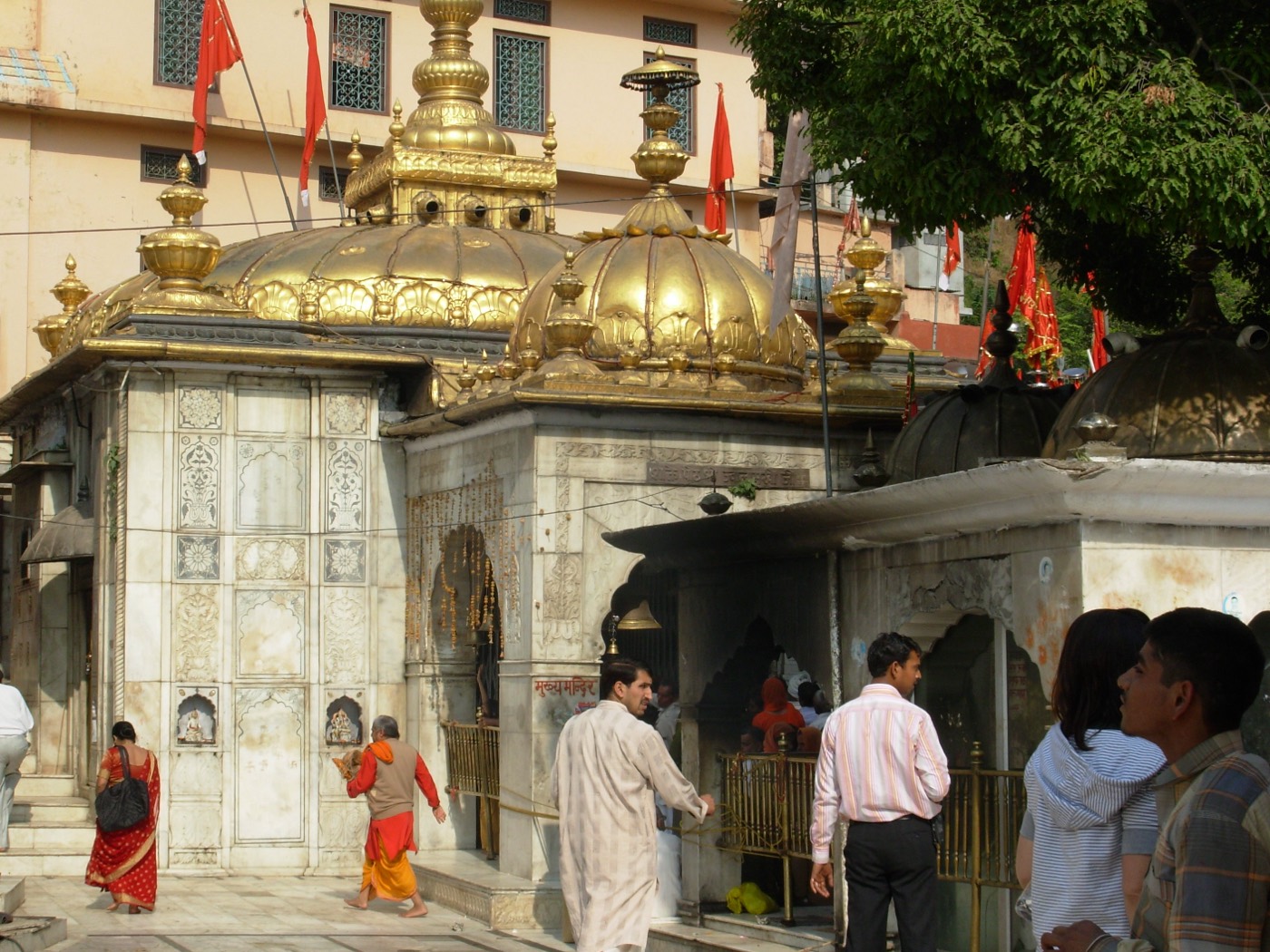
Jwala Ji (Jwalamukhi)
The Shakti Peeth of the eternal natural flames, where the goddess is worshipped as fire with no idol; the classic next stop on the Himachal Devi circuit.

Naina Devi
The hilltop Shakti Peeth above the Gobind Sagar lake near Anandpur Sahib, often paired with Chintpurni on a wider Devi darshan loop.
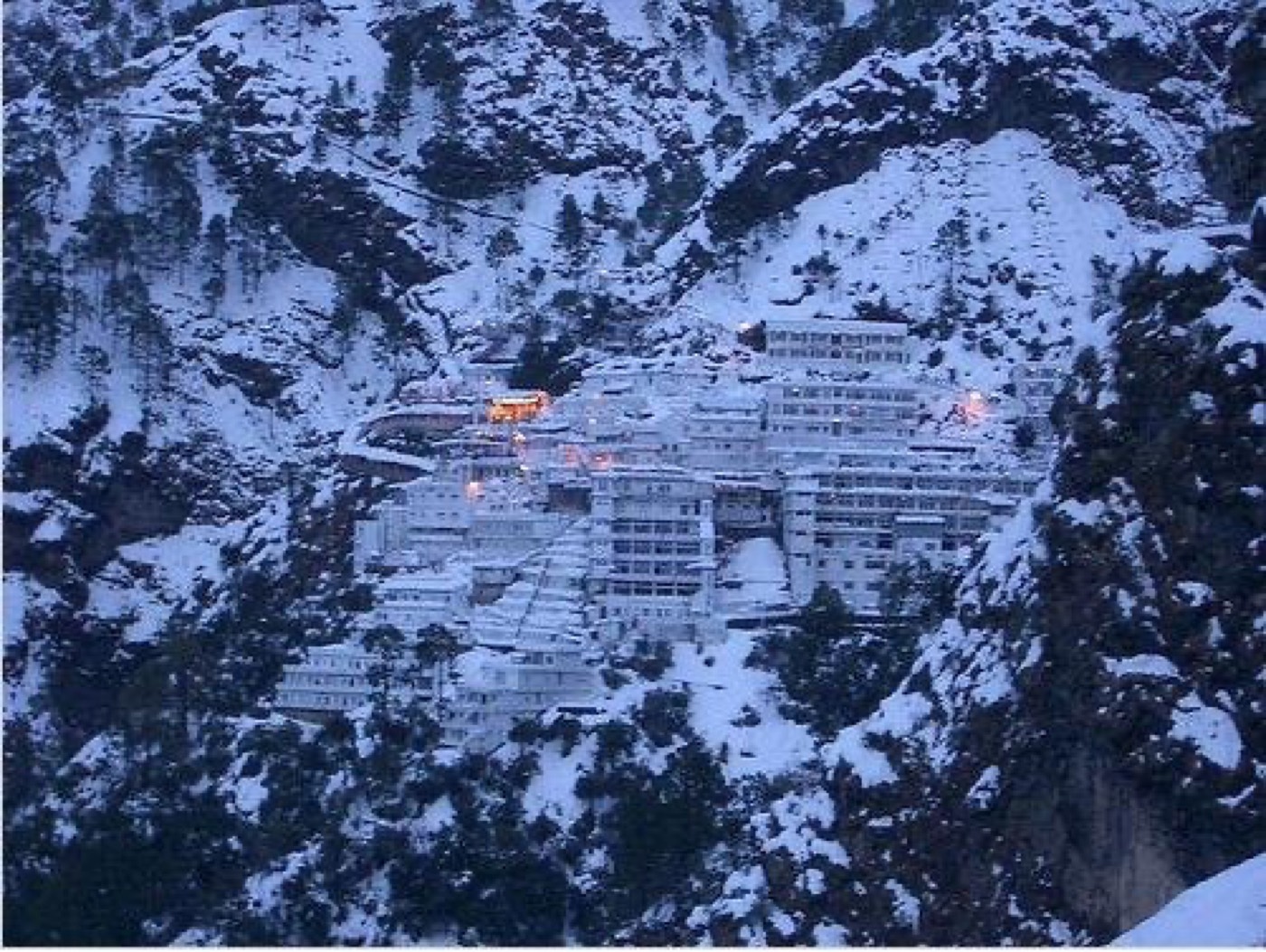
Vaishno Devi
The great cave shrine in the Trikuta hills of Jammu, the most famous goddess pilgrimage in the north and a common extension for devotees on a longer Devi yatra.
Chintpurni is rarely visited alone. It is one node in Himachal's famous circuit of goddess shrines, and the natural first pairing is Jwala Ji at Jwalamukhi, roughly 30 to 35 km away, where the Devi is worshipped as eternal natural flames rising from the rock, again with no idol. Doing Chintpurni and Jwala Ji together is the classic two-shrine day for pilgrims in this belt.
A little further along the same devotional map is Naina Devi, about 90 to 100 km off, a hilltop Shakti Peeth overlooking the Gobind Sagar reservoir near Anandpur Sahib, which many combine with Chintpurni on a wider loop that can also take in Chamunda Devi and the Brajeshwari temple at Kangra. These shrines share the same Shakta spirit and are strung along broadly the same highway corridor.
For those on a longer pilgrimage, Chintpurni often serves as a stop en route to or from Vaishno Devi in Jammu, roughly 210 km away, the greatest goddess cave shrine of the north. Choosing which to combine usually comes down to how many days you have: Jwala Ji is an easy add-on, Naina Devi a comfortable extension, and Vaishno Devi a full separate leg of the yatra.
← Back to the full Chintpurni darshan guideCompiled from public sources including Wikipedia - Chintpurni · Wikipedia - Chintpurni Marg railway station · Wikipedia - Kangra Airport (Gaggal) · Wikimedia Commons - Chintpurni.jpg image page. Timings and seasonal closures change; confirm with the temple trust before travelling.