Tirupati Balaji, on the Tirumala hill at approx 850 metres, is the most visited place of worship on earth, drawing 50,000 to 100,000 pilgrims on an ordinary day. Srikalahasti, on the banks of the Swarnamukhi, holds the Vayu linga, the air element among the five Pancha Bhuta Sthalams, and is the country's busiest address for Rahu-Ketu and Kala Sarpa Dosha pujas. One is Vishnu on a hill, the other is Shiva by a river, and they are close enough that skipping the second feels like a missed opportunity rather than a sensible edit.
The planning problem is simpler than it looks. Tirumala consumes an unpredictable amount of time: the free Sarva Darshan wait swings from approx 2 to 3 hours on a quiet day to 12 hours or more at peak. Srikalahasti is predictable, open 6:00 am to 9:00 pm with its Rahu-Ketu puja running 6:00 am to 6:00 pm. So the whole trip reduces to protecting one flexible block for the hill and one fixed morning for the river temple.
Everything numeric in this guide is approximate by design. TTD revises the Tirumala schedule frequently, Srikalahasti's seva slots shift with the ritual calendar, and distances vary a few kilometres between sources. Treat the tables below as planning ranges, then confirm same-day timings on the official portals before you travel.
Why these two temples belong in one trip
The two shrines answer different needs, which is exactly why this pairing has become the standard Andhra circuit. Tirumala is a Vishnu hill temple run on the Vaikhanasa Agama with six daily worship cycles, and a queue culture built to move enormous numbers of people through a single sanctum. Srikalahasti, approx 36 km away, is a Shaiva temple whose white linga is the Vayu linga. Pilgrims call it Dakshina Kailasam, the Kailash of the South, and the lamp inside the sanctum is said to flicker though no draught reaches it.
The pairing also covers two different kinds of intent. Tirumala is a darshan of vow and surrender: the tonsure at Kalyanakatta, the hundi offering, the GI-tagged Srivari Laddu prasadam. Srikalahasti is a temple of remedy, the busiest address in the country for Rahu-Ketu and Kala Sarpa Dosha nivarana pujas, and the one major temple in India that stays open through solar and lunar eclipses. One trip covers the vow and the remedy, with Tirupati city working as the base for both.
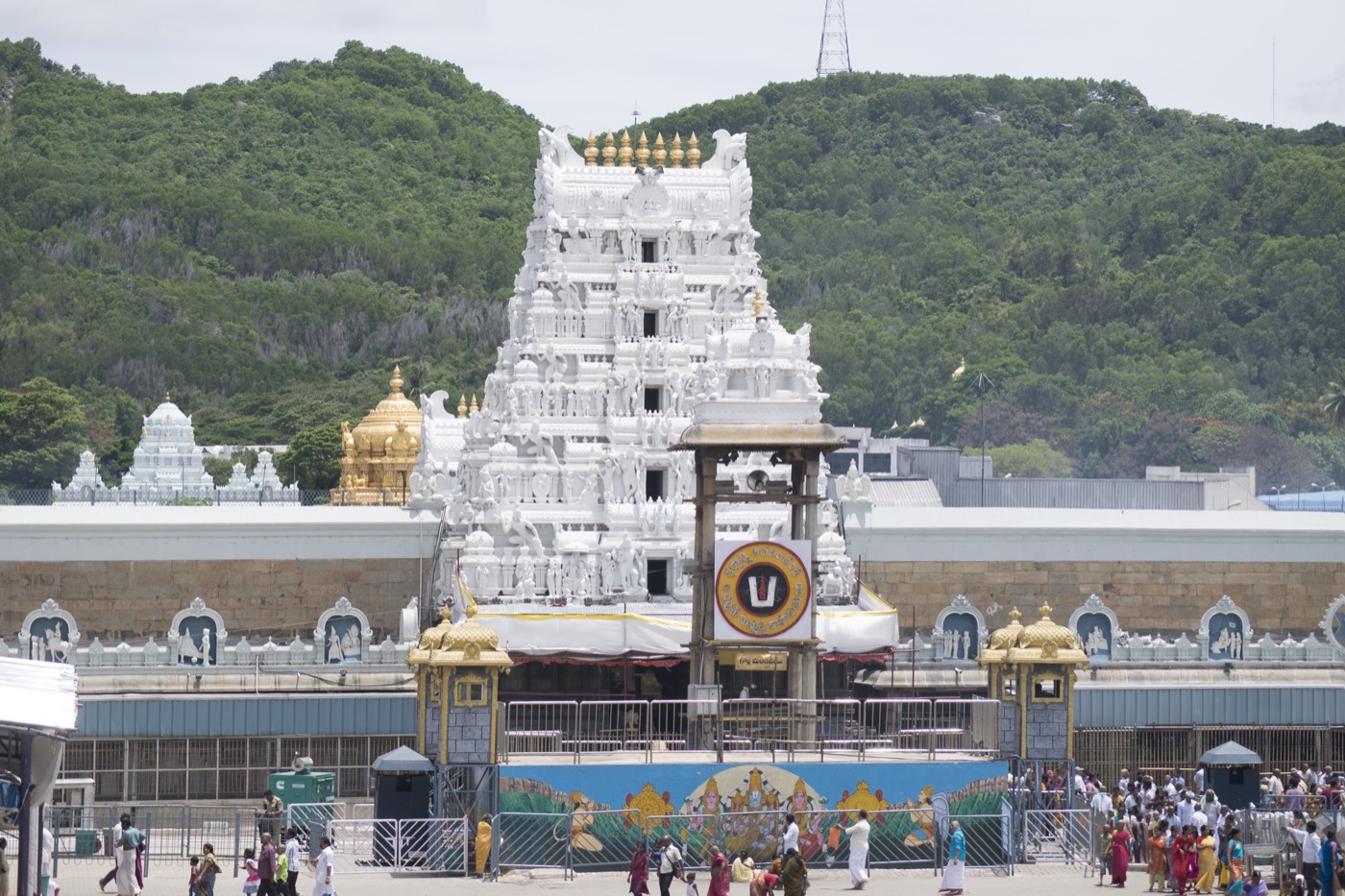
Tirupati Balaji Temple (Sri Venkateswara Swamy, Tirumala)
Tirupati, Andhra Pradesh
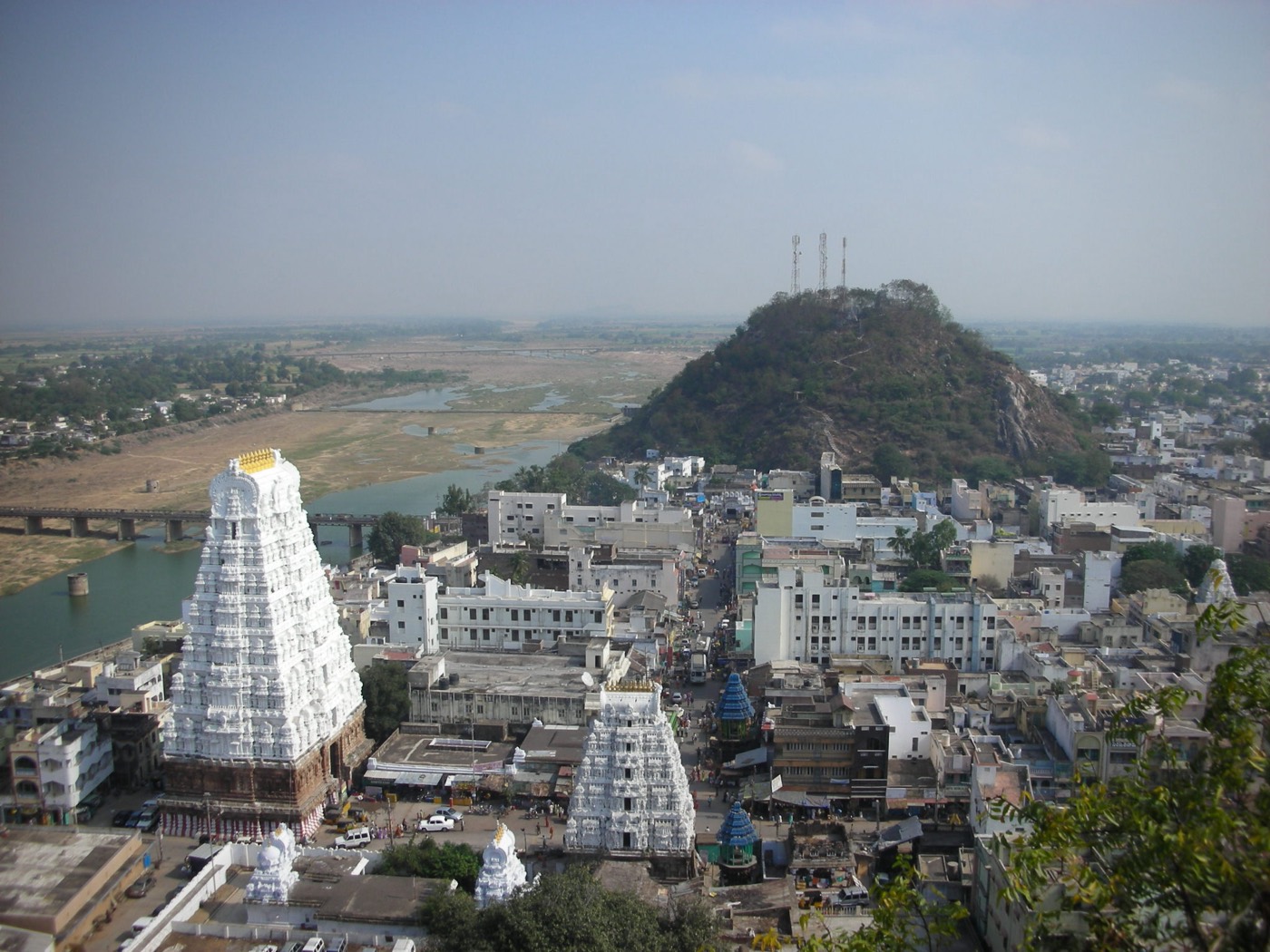
Srikalahasti Temple (Srikalahasteeswara)
Tirupati, Andhra Pradesh
The darshan clocks, side by side
The most useful planning fact is the asymmetry between the two clocks. Tirumala runs almost round the clock, opening at approx 2:30 AM with the Suprabhatam and closing at approx 1:00 AM the next day, with no long midday shutdown. What varies wildly is the waiting time, from approx 2 to 3 hours on a quiet day to 12 hours or more on peak weekends and festival days. Srikalahasti keeps steady hours, 6:00 am to 9:00 pm, stretching to about 9:30 pm on weekends and festival days, and its defining ritual runs in batches from 6:00 am to 6:00 pm.
If you extend to the bigger circuit, two more clocks matter. Kanaka Durga in Vijayawada takes an afternoon alankaram break of approx 4:00 to 6:15 PM while the goddess is redressed, and Srisailam observes a hard midday closure from 1:00 PM to 6:00 PM. Neither behaves like Tirumala, so an afternoon arrival that would be fine on the hill can leave you waiting at a shut sanctum elsewhere. All four schedules shift on festival days, so treat every time here as approximate.
| Temple | Opens | Closes | Free darshan | Paid option |
|---|---|---|---|---|
| Tirupati Balaji, Tirumala | approx 2:30 AM (Suprabhatam) | approx 1:00 AM next day | Sarva Darshan most of the day; waits approx 2 to 3 hrs quiet, 12 hrs or more at peak | Special Entry Darshan approx Rs 300 on the TTD portal |
| Srikalahasti | 6:00 am | 9:00 pm, about 9:30 pm weekends and festivals | General darshan free through the day | Sevas and Rahu-Ketu puja about Rs 300 to Rs 2500 |
| Kanaka Durga, Vijayawada | approx 3:00 AM (Suprabhatam) | approx 9:00 PM | Sarva darshanam from approx 4:00 AM; alankaram break approx 4:00 to 6:15 PM | Special darshan and sevas ticketed |
| Mallikarjuna, Srisailam | approx 4:30 AM (Suprabhatam) | 9:00 PM, up to 10:00 PM on busy days | Free line darshan; midday break 1:00 PM to 6:00 PM | Seegra and Sparsha darshan by ticket, pre-booked |
Which temple first, and why
Do Tirumala first. The reasoning is entirely about predictability: the Tirumala queue is the one variable you cannot control, so give it your most flexible block, the first full day, and let Srikalahasti take the fixed morning that follows. If the Sarva Darshan line moves in 2 to 3 hours you bank an afternoon; if it stretches toward the 12-hour end you have lost nothing but a rest evening. Booking the Special Entry Darshan at approx Rs 300 on the TTD portal narrows the swing considerably.
Two wrinkles refine the order. On Wednesdays and Fridays the free Sarva Darshan often begins only around 9 AM because more Arjitha sevas run in the morning, so those days start slower on the hill. And pilgrims walking up as a vow should remember the Alipiri footpath is approx 9 km with around 3,550 steps, while the Srivari Mettu path is shorter at approx 2.1 km; walkers get Divya Darshan, a faster queue for foot pilgrims, plus free luggage transport.
Chennai arrivals sometimes reverse the order. Srikalahasti sits approx 110 to 130 km from Chennai, about 3 hours via Tiruttani, against approx 140 to 150 km to Tirupati, so a morning start from Chennai can take the Rahu-Ketu puja first and climb the hill the next day. Both sequences work; the Tirumala-first version simply protects you better against a bad queue day.
Trains, flights and the roads between
Tirupati city is the hinge of the whole circuit. Its railway station, Tirupati Main (TPTY), is well connected to Chennai, Bengaluru and Hyderabad, and sits approx 26 km below the temple by ghat road. Frequent APSRTC ghat buses climb from the Central bus stand, with two separate ghat roads handling up and down traffic, and private cars need a vehicle permit and pass a checkpost.
The airport at Renigunta is the quiet convenience of this trip: it is actually closer to Srikalahasti, approx 25 km, than to Tirumala, approx 40 km. Srikalahasti also has its own small station, Sri Kalahasti (KHT), approx 3 km from the temple on the Gudur-Katpadi line, though Renigunta Junction, approx 30 km away, carries far more express connections.
| From | To | Distance | Notes |
|---|---|---|---|
| Tirupati Main station (TPTY) | Tirumala temple | approx 26 km ghat road | Frequent APSRTC ghat buses from the Central bus stand |
| Tirupati city | Srikalahasti | approx 36 km | 45 to 60 minute drive; buses and shared taxis run often |
| Tirupati Airport, Renigunta | Tirumala | approx 40 km | approx 15 km to Tirupati city first |
| Tirupati Airport, Renigunta | Srikalahasti | approx 25 km | Taxis reach the temple in under an hour |
| Sri Kalahasti station (KHT) | Srikalahasti temple | approx 3 km | Renigunta Junction, approx 30 km, has more expresses |
| Chennai | Tirupati | approx 140 to 150 km | About 3 to 4 hours by road; Bengaluru is roughly 250 km |
| Chennai | Srikalahasti | approx 110 to 130 km | About 3 hours via Tiruttani |
| Tirupati | Kanaka Durga, Vijayawada | approx 380 km | Extension leg north along the Krishna |
| Srikalahasti | Mallikarjuna, Srisailam | approx 350 km | Deeper Shaiva extension into the Nallamala hills |
The two-day plan
Here is the plan the timings themselves suggest. It assumes you reach Tirupati the previous evening or early on day one, and it deliberately keeps day two light, because the Rahu-Ketu puja involves queueing for a batch slot, the puja itself, and the regular Shiva darshan afterwards.
On where to sleep, Tirumala itself is where most pilgrims stay before an early darshan. TTD runs free dormitories, choultries and guest houses with rates roughly from around Rs 100 upward, bookable on the TTD portal, and serves free meals through the Nitya Annadanam scheme. Rooms sell out weeks ahead during Brahmotsavam and Vaikunta Ekadasi. Tirupati city below the hill has the full range of private hotels near the station and bus stand, and Srikalahasti town has simple APTDC and Devasthanam guest houses, though most people day-trip from Tirupati.
| When | What you do | The timing logic |
|---|---|---|
| Day 1, early morning | Reach Tirupati, climb to Tirumala by ghat bus or car, approx 22 to 26 km | Ghat buses run frequently; cars need a permit for the ghat road |
| Day 1, morning to afternoon | Tirumala darshan, free Sarva Darshan or Special Entry at approx Rs 300 | Waits run approx 2 to 3 hours on quiet days, far longer at peak; on Wed and Fri the free line often starts around 9 AM |
| Day 1, evening | Stay at Tirumala (TTD rooms from around Rs 100) or descend to a Tirupati city hotel | An early night sets up the fixed Srikalahasti morning |
| Day 2, early morning | Drive to Srikalahasti, approx 36 km, 45 to 60 minutes | Temple opens at 6:00 am; puja batches start from 6:00 am |
| Day 2, morning | Rahu-Ketu puja at the mandapam, then Shiva darshan inside | Puja runs 6:00 am to 6:00 pm; tickets about Rs 300 to Rs 2500 |
| Day 2, afternoon | Return to Tirupati, approx 36 km, or continue to Chennai, approx 110 to 130 km | Chennai is about 3 hours from Srikalahasti via Tiruttani |
Getting the Rahu-Ketu puja right
The Rahu-Ketu and Kala Sarpa Dosha nivarana puja is the reason many pilgrims add Srikalahasti at all, so it deserves its own logistics. The puja runs from 6:00 am to 6:00 pm daily, performed in batches at the mandapam, with tickets from about Rs 300 to Rs 2500 depending on the seva class. It is considered best performed during Rahu Kalam, and Sundays and Tuesdays, the days linked to the two shadow planets, are both the preferred and the most crowded choices. The prices are indicative and change, so verify current rates at the counter.
Eclipse days are the temple's most distinctive occasions. Srikalahasti remains open for worship when almost every other temple in the country closes, which makes grahan days especially significant for these pujas. A few practical points from the temple's own conventions are worth knowing before you queue.
- All puja material is supplied at the ticket counter, so you do not need to buy anything from the touts pushing lotus and cloth outside.
- After the mandapam puja you carry the silver Rahu-Ketu idols inside and drop them in the hundi, after Shiva darshan.
- The Rahu-Ketu puja is not performed on Shivaratri.
- Pilgrims traditionally bathe that morning; sleeping on the floor the night before is observed by some but is optional, not mandatory.
- Photography is restricted inside the inner sanctum, and footwear and leather items stay outside.
Stretching the trip: Vijayawada and Srisailam
With two more days you can turn the pairing into a proper Andhra circuit. Kanaka Durga at Vijayawada, approx 380 km from both Tirupati and Srikalahasti, is the self-manifested Durga shrine on Indrakeeladri hill above the Krishna river, in a city called Dakshina Varanasi, the Kashi of the south. The temple sits inside the city, approx 4 km from Vijayawada Junction, one of the busiest railway junctions in India, which makes it the easiest of the extensions to reach by train.
Srisailam is the deeper commitment. Mallikarjuna is one of the very few shrines that is a Jyotirlinga and a Maha Shakti Peeth at the same place, high in the Nallamala hills at approx 470 m, and there is no railhead in town; the nearest station, Markapur Road, is approx 85 km away. The ghat road runs through a tiger reserve and typically restricts night movement, so plan to arrive in daylight. Between Vijayawada and Srisailam our source figures range from approx 230 to 300 km, so treat that leg as a long half-day drive either way.
Southbound, Kamakshi Amman at Kanchipuram, approx 105 km from Srikalahasti, extends the trip toward Chennai and continues the Pancha Bhuta thread, since Kanchipuram holds the Earth-element sthalam to Srikalahasti's air. Shaiva pilgrims on a longer Jyotirlinga circuit sometimes carry on toward Rameshwaram at India's southern tip, though that is a separate journey rather than an add-on.
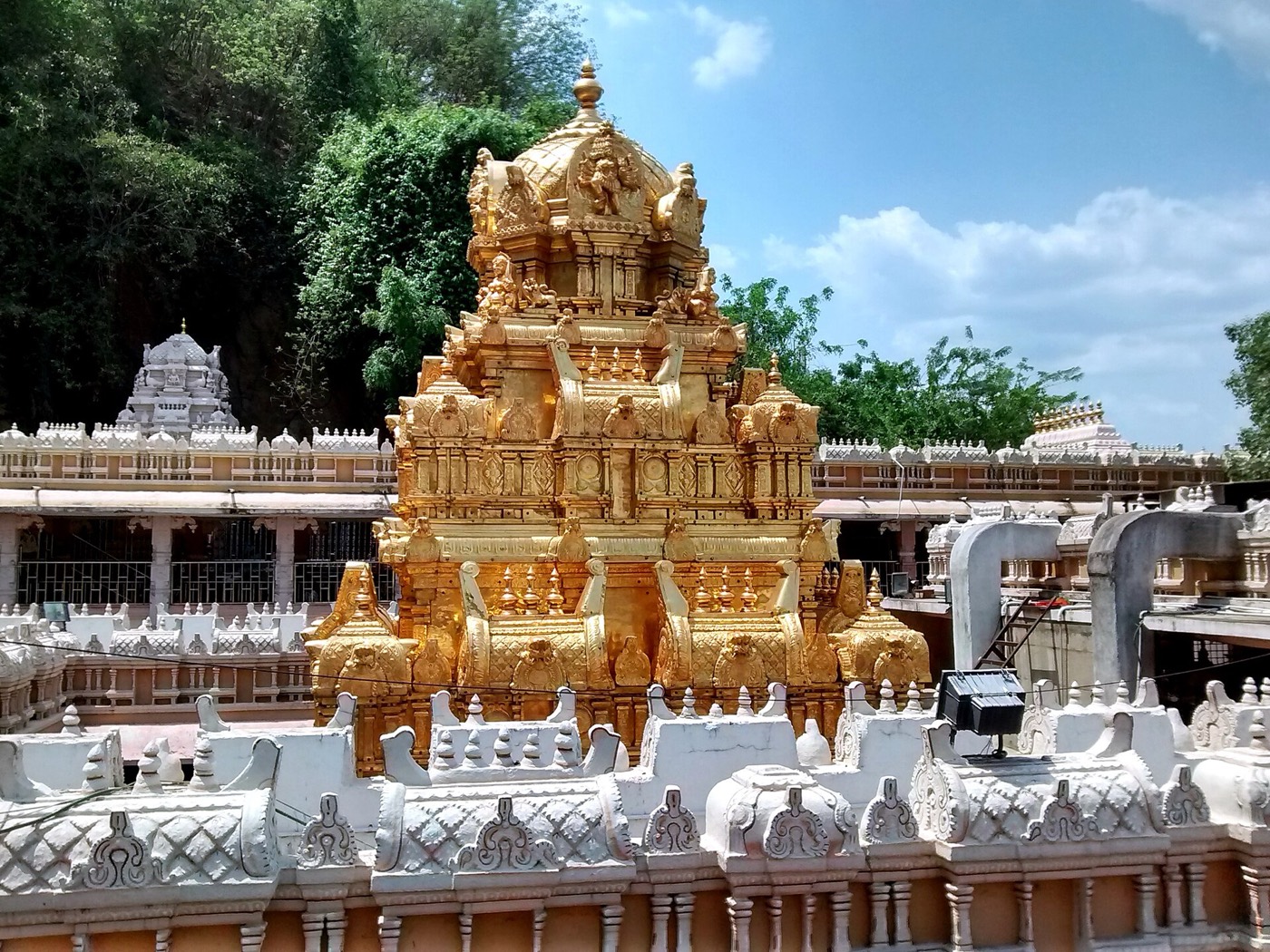
Kanaka Durga Temple, Vijayawada
NTR district (formerly Krishna), Andhra Pradesh
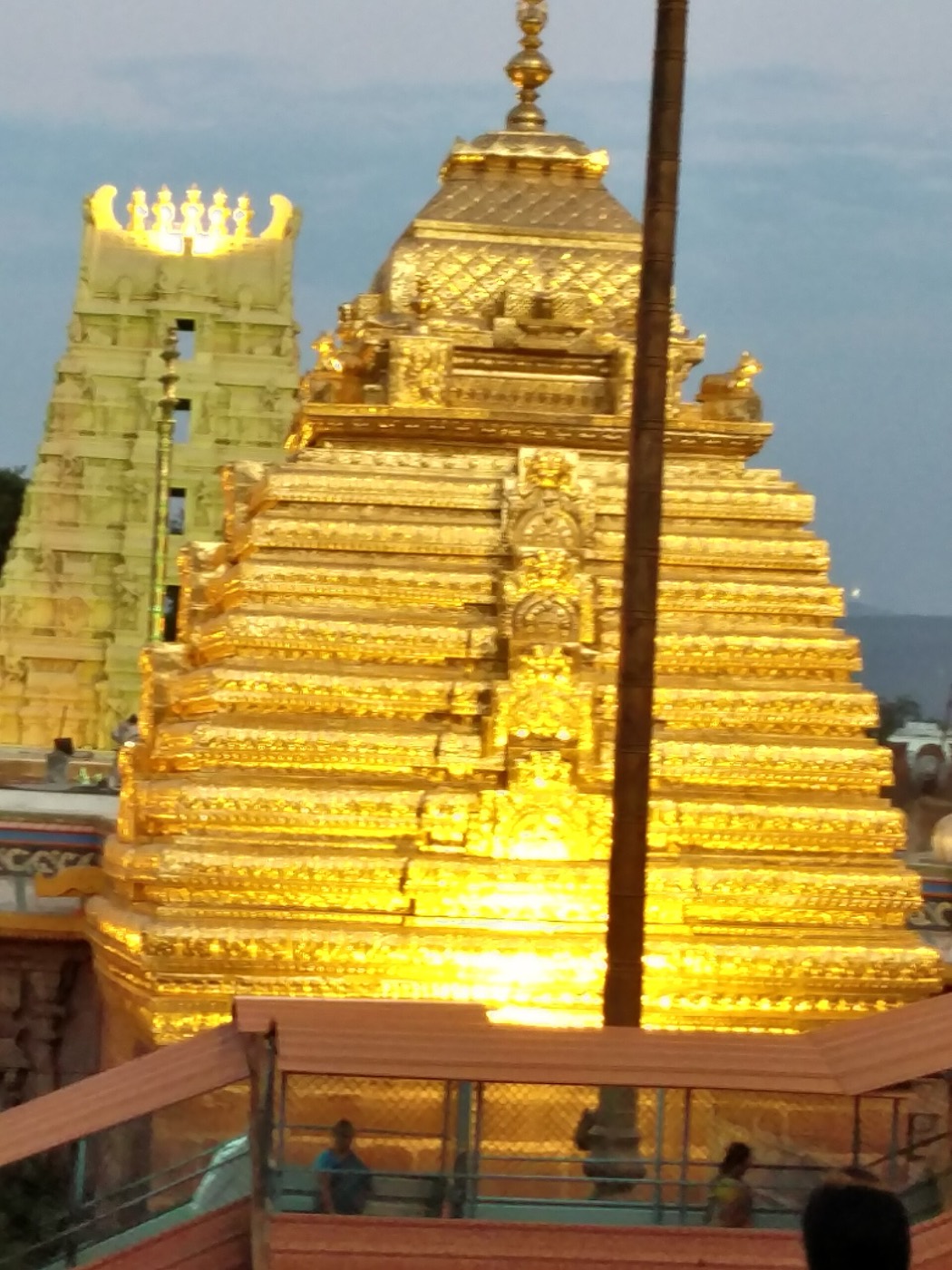
Mallikarjuna Jyotirlinga, Srisailam
Nandyal, Andhra Pradesh
When to go
October to February is the comfortable window across the whole circuit; the same cooler months recur in the data for all four temples, with Srisailam pleasant into March. It is also festival season, which cuts both ways. At Tirumala the annual Brahmotsavam runs nine days in September, with the Garuda Seva night the single most crowded darshan of the year, and Vaikunta Ekadasi falls in the December to January window, when devotees pass through the Vaikunta Dwaram, the northern gateway. Rathasapthami, in February, compresses seven vahana processions into a single day.
On the Shaiva side, Maha Shivaratri falls in February or March and is the peak at both Srikalahasti, where the Brahmotsavam runs roughly 13 days, and Srisailam. Karthika Masam, in November to December, brings heavy Monday crowds to the Shiva temples, while Dasara, September to October, is Vijayawada's ten-day peak, with the goddess decorated in ten different alankarams. All of these follow the lunar calendar and move every year, so plan around the window, not a date.
If a calm darshan matters more than spectacle, the quiet formula from the data is consistent: pick a weekday outside the festival windows and school holidays, and start as early as each temple's clock allows.
Frequently asked questions
How far is Srikalahasti from Tirupati?
Can I visit Tirupati and Srikalahasti in one day?
Which temple should I visit first, Tirupati or Srikalahasti?
What is the cost of Rahu Ketu puja at Srikalahasti?
Is Srikalahasti temple open during a solar eclipse?
Is there a dress code for Tirupati darshan?
Compiled from our verified temple guides and public sources including Tirumala Tirupati Devasthanams (TTD) official portal · Wikipedia: Srikalahasteeswara temple · Kanaka Durga Temple, Wikipedia · Srisaila Devasthanam (official) - The Temple. Timings and festival dates shift with the lunar calendar; confirm before you travel.