The route runs north to south through the Tamil heartland. Chennai and Kanchipuram come first, then Trichy and the river island of Srirangam, on to Thanjavur, Madurai as the hinge of the whole trail, a day with one of Murugan's six abodes at Palani or Tiruchendur, and finally the crossing to Rameswaram. In one week you stand before two great goddess shrines, what is often called the largest functioning Hindu temple complex in the world, a Chola monument that has been in continuous worship for about a thousand years, and a Jyotirlinga that is also a Char Dham.
Rail does most of the heavy lifting. Every overnight base sits within a short hop of a station: Meenakshi Amman is approx 1 to 2 km from Madurai Junction, the Big Temple approx 2 km from Thanjavur Junction, Kamakshi Amman approx 2 km from Kanchipuram station, and Ramanathaswamy roughly 2 km from Rameswaram station, which takes direct trains from Chennai, Madurai, Coimbatore, Trichy, Thanjavur and Bengaluru.
Two legs are genuinely long, and it is better to know that before you book anything. Reaching Trichy from the Kanchipuram side is a five to six hour run if you go by road from Chennai, approx 320 to 325 km, and the final approach to Rameswaram is approx 173 km from Madurai even before you count the Pamban crossing. The other legs are far shorter.
How the seven days fit together
The skeleton below assumes you land in Chennai and move the same day, and it deliberately leans on the closure rhythm: travel through the shut afternoons, arrive for the evening windows, and keep the early mornings for the sanctums. Distances are approximate road figures drawn from each temple's own reach data, and delta traffic can stretch them.
Day two is the honest weak point. We do not carry a verified figure for the Kanchipuram to Trichy leg itself; what the data does give is the Chennai to Trichy road run at approx 320 to 325 km, roughly 5 to 6 hours, with Kanchipuram approx 72 km south-west of Chennai. However you route it, treat day two as a travel day and aim to reach Trichy by evening, so that Srirangam gets the full next morning.
| Day | Night base | Main darshan | Travel leg (approx) |
|---|---|---|---|
| Day 1 | Kanchipuram | Kamakshi Amman in the 4:00 PM to 8:30 PM window | Chennai to Kanchipuram, approx 72 km, roughly 1.5 to 2 hours by road |
| Day 2 | Trichy | Travel day; evening arrival | To Trichy; the Chennai to Trichy road run is approx 320 to 325 km, roughly 5 to 6 hours |
| Day 3 | Thanjavur | Srirangam in the morning, the Big Temple after 4:00 PM | Trichy to Thanjavur, approx 56 km, about 1 to 1.5 hours |
| Day 4 | Madurai | Meenakshi Amman evening darshan and the Palli Arai at approx 9:15 PM | Thanjavur to Madurai, approx 190 km |
| Day 5 | Palani or Tiruchendur | Morning darshan at Meenakshi, then the chosen Murugan shrine by evening | Madurai to Palani approx 122 km, or Madurai to Tiruchendur approx 150 km |
| Day 6 | Rameswaram | Ramanathaswamy in the 3:00 PM to 9:00 PM window | From Palani via Madurai (approx 122 km plus approx 173 km), or Tiruchendur to Rameswaram approx 210 km |
| Day 7 | Departure | Spatika lingam darshan roughly 5:00 to 6:00 AM, then the 22 wells | Rameswaram runs direct trains to Chennai, Madurai, Trichy, Thanjavur, Coimbatore and Bengaluru |
The midday closure rhythm
The most useful thing to internalise on this trail is that the big temples shut their sanctums for the afternoon. Madurai closes from 12:30 PM to 4:00 PM, Srirangam from approx 1:00 PM to 3:15 PM, Rameswaram keeps a firm 1 to 3 PM break, and Kamakshi Amman and the Big Temple both follow the 12:30 PM to 4:00 PM pattern. Arrive at two in the afternoon and you will be looking at a closed door.
The rhythm gives every day a natural shape: darshan in the early morning, travel or rest through the heat, darshan again in the evening. Thanjavur softens the rule, since only the sanctum closes while the great courtyard, the Nandi mandapam and the monument grounds stay open and walkable through the break, so heritage time there does not have to wait for 4:00 PM.
The two Murugan temples are the exception. Palani runs approx 5:30 AM to 9:00 PM with only a brief closing for the noon abhishekam, and Tiruchendur is open approx 5:00 AM to 9:00 PM with a natural lull rather than a shutdown between the midday deeparadhanai and the evening pooja. On the Murugan day, in other words, the afternoon is not lost. Exact minutes drift on festival days at every one of these temples, so confirm locally the day before.
| Temple | Morning window | Midday | Evening window |
|---|---|---|---|
| Kamakshi Amman, Kanchipuram | 6:00 AM to 12:30 PM | Closed 12:30 PM to 4:00 PM | 4:00 PM to 8:30 PM |
| Ranganathaswamy, Srirangam | Approx 6:00 AM to 1:00 PM | Closed approx 1:00 PM to 3:15 PM | Approx 3:15 PM to 9:00 PM |
| Brihadeeswarar, Thanjavur | 6:00 AM to 12:30 PM | Sanctum closed 12:30 PM to 4:00 PM; grounds stay open | 4:00 PM to 8:30 PM |
| Meenakshi Amman, Madurai | 5:00 AM to 12:30 PM | Closed 12:30 PM to 4:00 PM | 4:00 PM to 10:00 PM |
| Dhandayuthapani, Palani | Opens approx 5:30 AM | No long closure; brief noon closing for abhishekam | Runs to approx 9:00 PM |
| Subramaniya Swamy, Tiruchendur | Opens approx 5:00 AM | No full closure; a natural midday lull | Runs to approx 9:00 PM |
| Ramanathaswamy, Rameswaram | 5:00 AM to 1:00 PM | Closed 1:00 PM to 3:00 PM, firm | 3:00 PM to 9:00 PM |
Days one to four, Kanchipuram to Madurai
Kamakshi Amman is the one major goddess temple in a city otherwise divided between its Shiva and Vishnu shrines, and it opens gently: the temple elephant offers worship at approx 5:00 AM before the doors open at 6:00 AM. The temple sits in the town centre, approx 1 km from the bus stand, so an evening darshan on arrival day is realistic if you leave Chennai by early afternoon.
Srirangam deserves a full half-day. Seven concentric enclosures cover roughly 156 acres, with 21 gopurams including the 73 m rajagopuram, and the long walk in from the outer gate is part of the experience. General darshan is free, and a quick-darshan ticket at approx Rs 250 shortens the queue. Note that only selected trains halt at Srirangam's own station, approx 3 km away, so most arrivals come through Tiruchirappalli Junction, approx 9 km from the temple.
The Big Temple at Thanjavur is the trail's monument day. Finished around 1010 CE under Rajaraja Chola I and still a working shrine, it holds a 63.4 m vimana, a monolithic Nandi of approx 25 tonnes and a UNESCO listing, and darshan is free with no ticket. Trichy to Thanjavur is approx 56 km, about 1 to 1.5 hours, the easiest hop of the week.
Madurai is the emotional centre of the trail. Fourteen gopurams and approx 33,000 sculptures crowd the Meenakshi complex, the tallest tower reaching approx 52 m, and the day ends with the Palli Arai ritual at approx 9:15 PM to 10:00 PM, when the utsava idol of Sundareswarar is carried in procession to Meenakshi's chamber. Leave phones, cameras and bags at the cloak counters near the gates, since none of them are allowed inside.
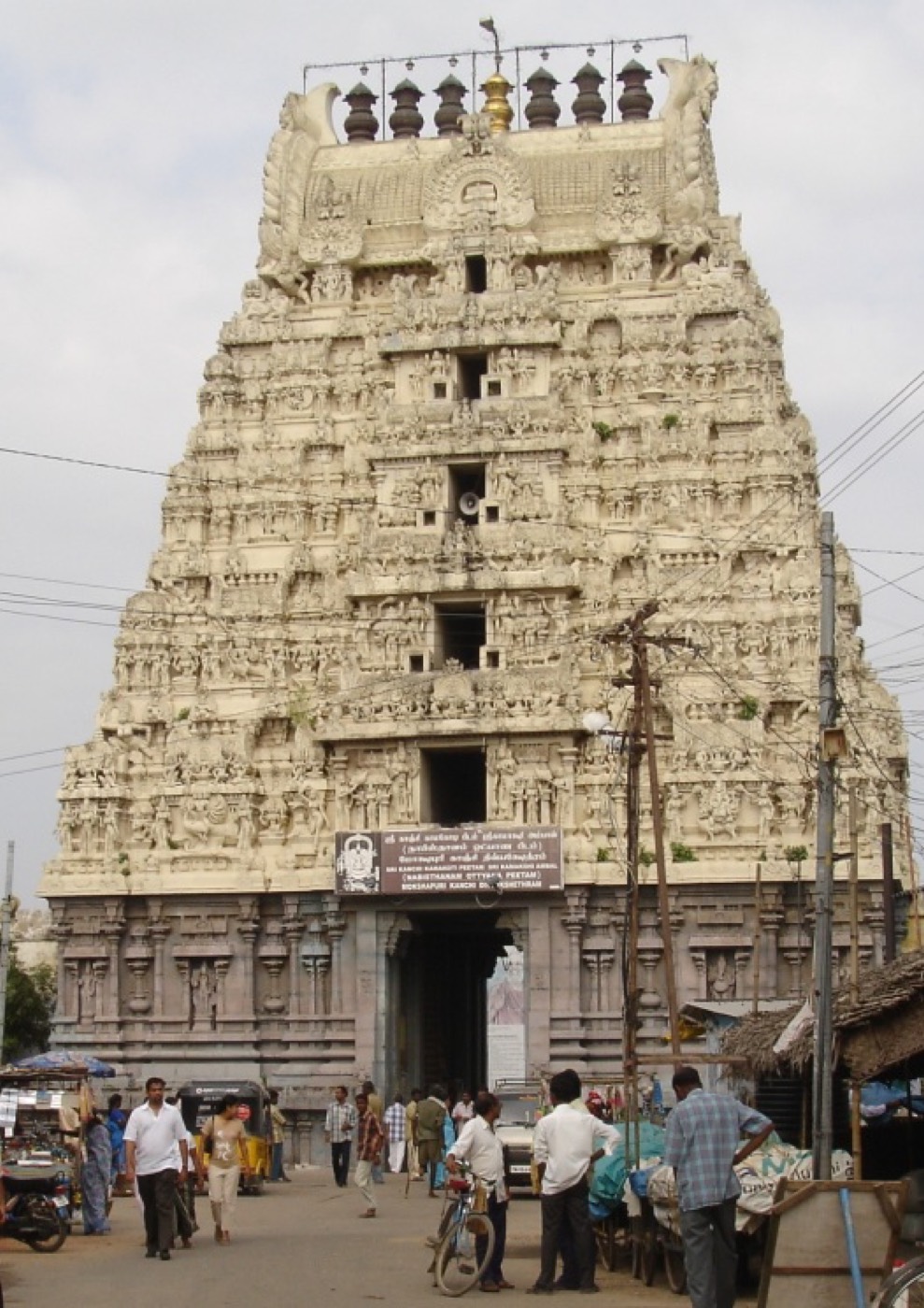
Kamakshi Amman Temple, Kanchipuram
Kanchipuram, Tamil Nadu
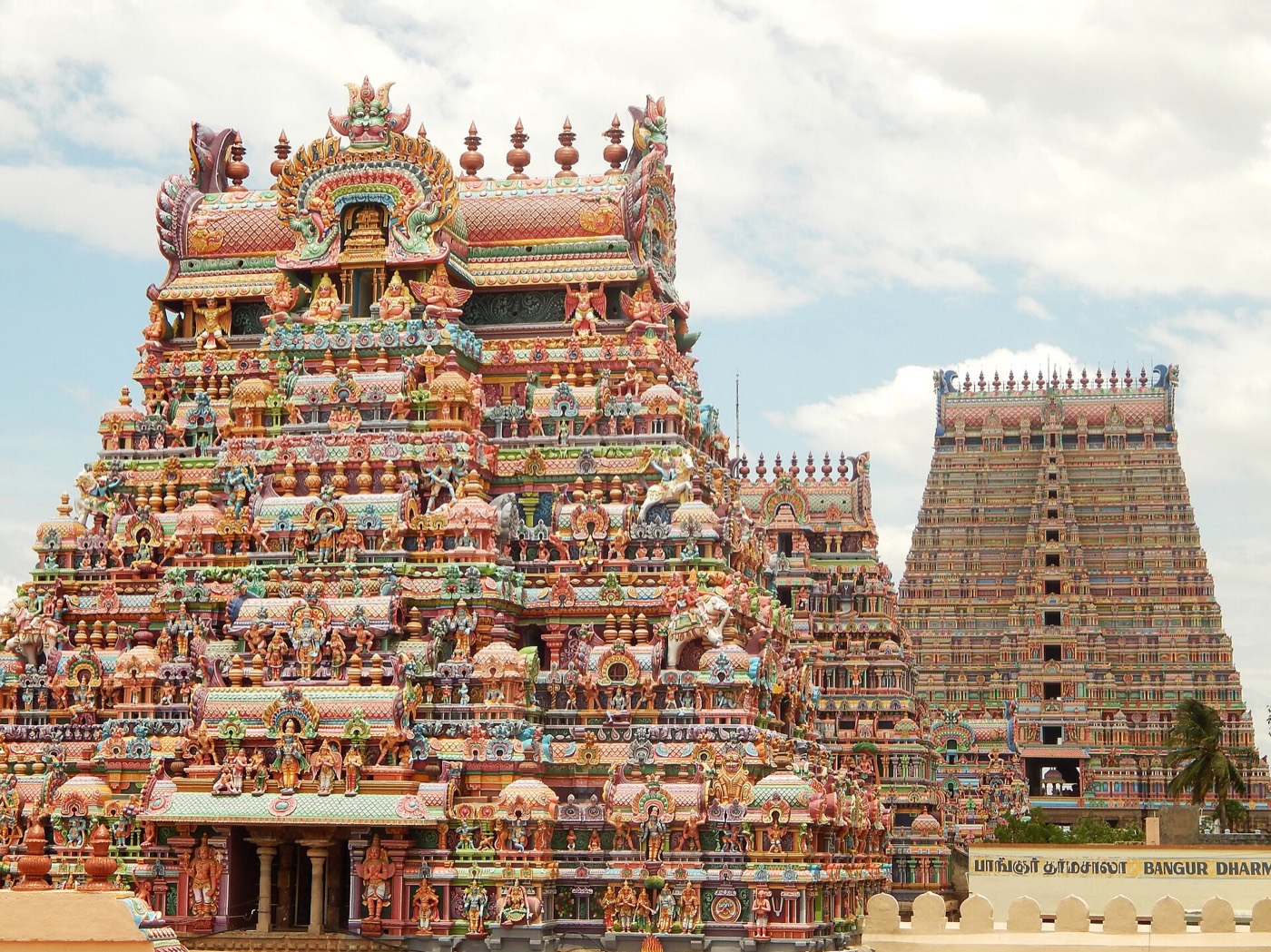
Sri Ranganathaswamy Temple, Srirangam
Tiruchirappalli, Tamil Nadu
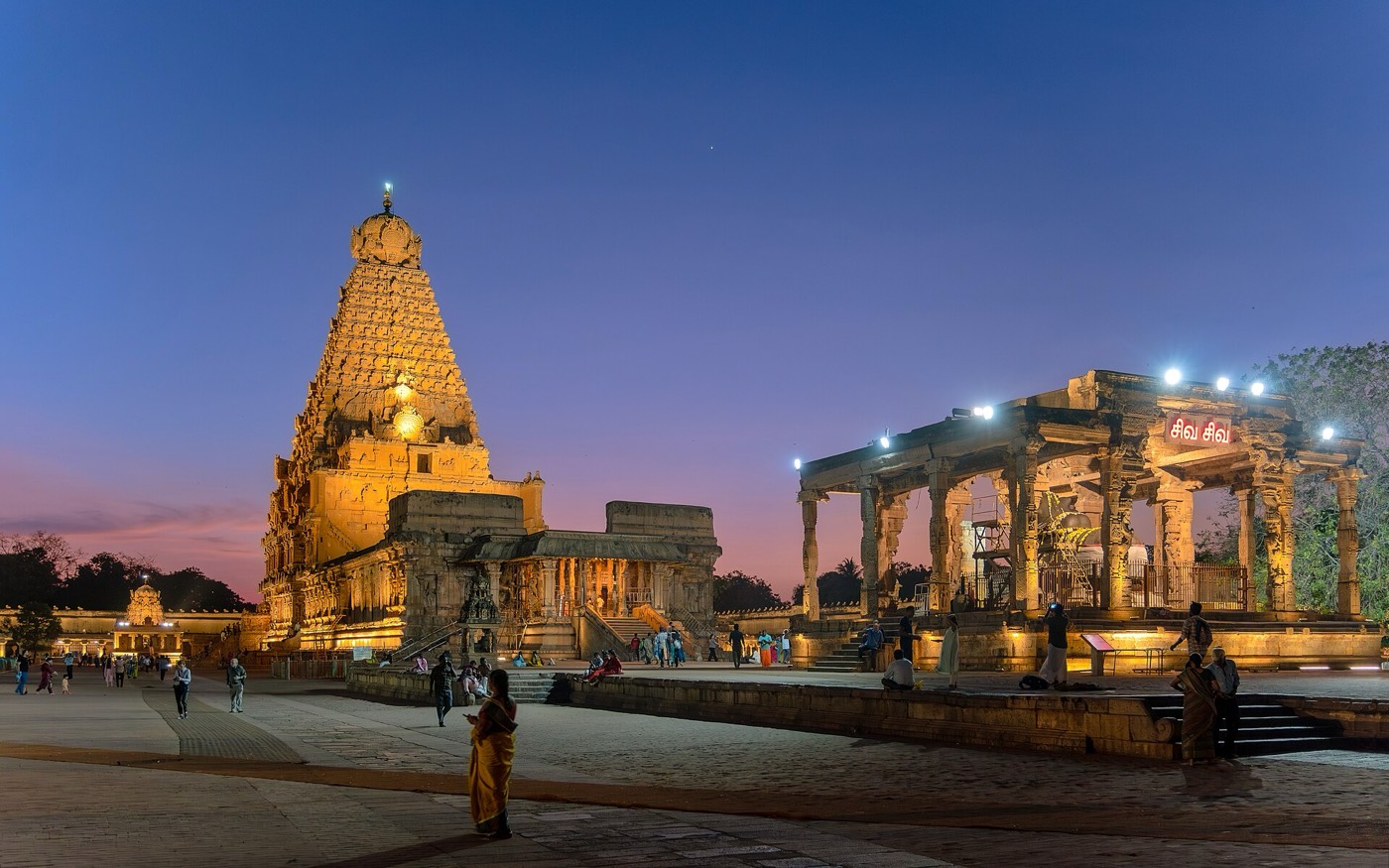
Brihadeeswarar Temple (Thanjai Periya Kovil)
Thanjavur, Tamil Nadu
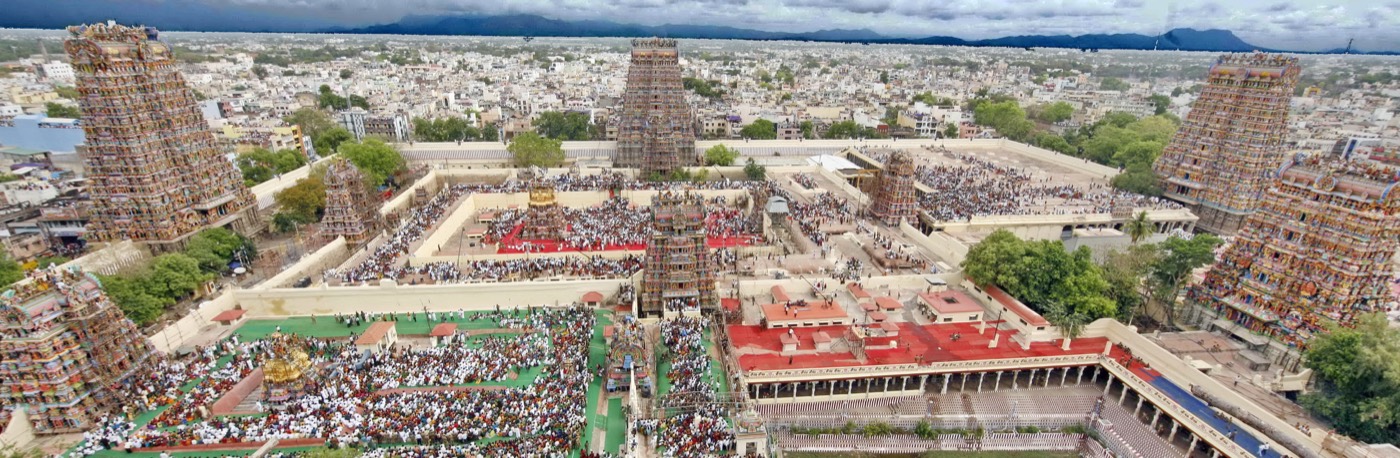
Meenakshi Amman Temple
Madurai, Tamil Nadu
Day five: Palani or Tiruchendur
Day five is a fork, and both prongs belong to Murugan. Palani, approx 122 km from Madurai, is the hill shrine of Dhandayuthapani, where the idol is an amalgam of nine medicinal minerals attributed to Siddhar Bogar and the prasadam is the GI-tagged panchamirtham. You reach the sanctum by a barefoot climb up the stone steps, by the winch cars, or by the ropeway, which has carried approx 1,500 people per hour since its 2018 upgrade.
Tiruchendur, approx 150 km from Madurai, is the opposite temperament: the only one of Murugan's six abodes at sea level, standing on the Gulf of Mannar shore, where many pilgrims bathe at the Nazhi Kinaru well and in the sea before darshan. Its station is approx 1.5 to 2 km from the temple, and the town keeps Devasthanam cottages and lodges within walking distance of the sanctum.
The practical tiebreaker is the next morning. From Tiruchendur the run to Rameswaram is approx 210 km. From Palani you first return approx 122 km to Madurai and then cover the approx 173 km to the island, so the Palani option costs more road on day six. Choose Palani for the climb and the hill rituals, Tiruchendur for the sea and the more direct onward leg, and if neither tempts you, a rest day in Madurai is a perfectly sound use of day five.

Arulmigu Dhandayuthapani Swamy Temple, Palani
Dindigul, Tamil Nadu
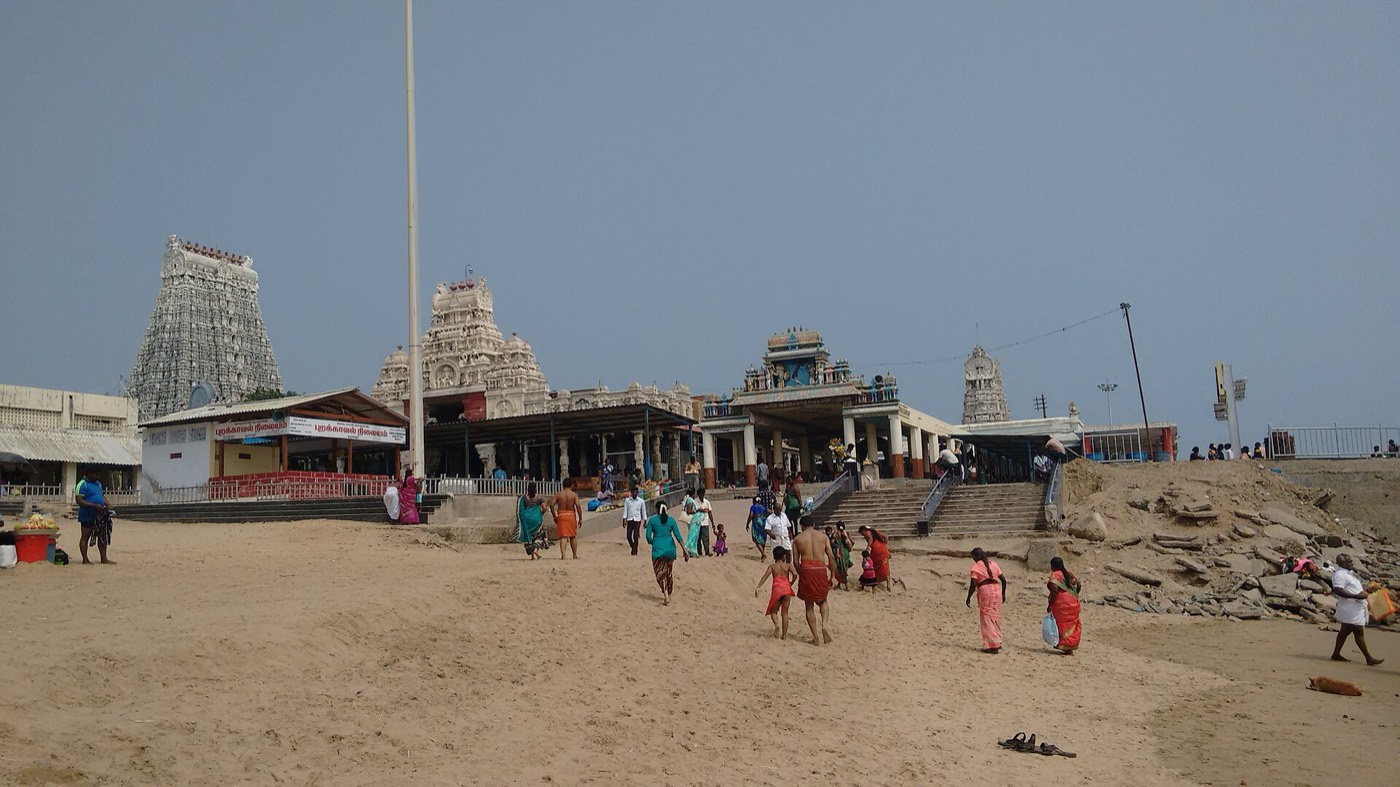
Tiruchendur Murugan Temple (Arulmigu Subramaniya Swamy Devasthanam)
Thoothukudi (Tuticorin), Tamil Nadu
Finishing at Rameswaram
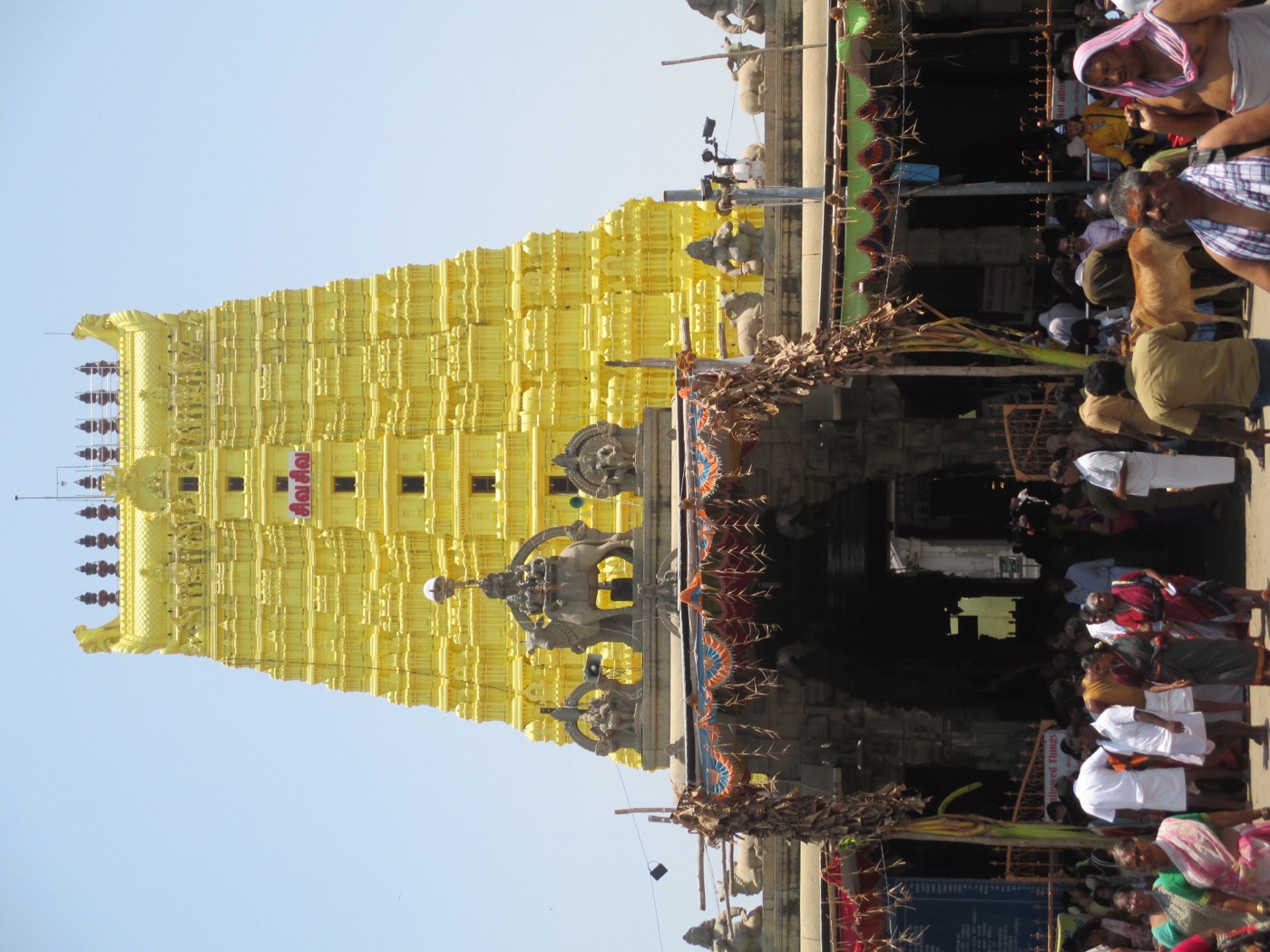
Rameswaram rewards an overnight stay rather than a rushed darshan. Arrive on day six in time for the evening window, 3:00 PM to 9:00 PM, then rise before dawn on day seven: the crystal Spatika lingam darshan runs roughly 5:00 to 6:00 AM only, and it is one of the two most sought moments of the temple's day alongside the closing Palliarai puja.
The full pilgrim sequence is bath first, darshan second. Most pilgrims bathe in the sea at Agni Theertham, then at the 22 sacred wells inside the temple, where the bath costs approx Rs 25, and only then, in dry clothes, stand before the main lingam. A special-queue ticket at approx Rs 200 exists for the darshan itself. Carry a towel and a full change of clothes, because wet clothes will keep you out of the sanctum.
Getting home is straightforward. Rameswaram station, roughly 2 km from the temple, runs direct trains to Chennai, Madurai, Coimbatore, Trichy, Thanjavur and Bengaluru. If you would rather not end on a long train ride, Madurai and its airport are approx 173 km and approx 174 km away by road, roughly 3 to 3.5 hours, with flights to Chennai, Bengaluru, Mumbai, Hyderabad and Delhi.
Dress and what the gates expect
Dress rules on this trail are consistent enough to pack for once: modest and traditional at every stop, with the strictest enforcement at Madurai and Rameswaram. The list below is the short version for packing; each temple's own page carries its full set of rules.
- Men: full trousers, dhoti or veshti with a shirt; at Rameswaram many wear a veshti with an angavastram for the core rituals.
- Women: saree, salwar kameez, half-saree or a long skirt with a top.
- Shorts, sleeveless tops and short skirts draw objection at the gates and are often not allowed for main darshan at Rameswaram.
- Footwear is deposited outside everywhere; Madurai does not permit even socks in its inner areas, while at Thanjavur socks help on the hot granite courtyard.
- Phones, cameras and bags are barred inside Meenakshi at Madurai; photography is restricted in the sanctums at every other stop, so follow the posted signs.
- Non-Hindus are generally welcome in the outer enclosures at Madurai and Srirangam but not past the marked point near the innermost sanctums.
When to go, and the festival windows
October to March is the comfortable season across the trail, and November to February is the stretch that every one of the seven temples includes in its own stated best window. Summer is harsh here, particularly on Thanjavur's open granite courtyard and Palani's stone steps, and the northeast monsoon can bring heavy rain around Rameswaram between roughly October and December.
Every major festival on this route follows the lunar calendar, so the honest way to plan is by window, not by date. The table gives the recurring windows; confirm the exact days locally for the year you travel, and book rooms well ahead if your dates touch any of them, because whole towns fill up.
| Festival | Temple | Window | What to expect |
|---|---|---|---|
| Vaikunta Ekadasi | Srirangam | December to January (Margazhi) | The Paramapada Vasal gate opens for the only time in the year; around a million visitors across a roughly 20-day observance |
| Thaipusam | Palani | January to February (Thai full moon) | Kavadi processions; the single biggest crowd of Palani's year |
| Maasi Mahotsavam | Kanchipuram | Mid-February to mid-March (Masi) | Chariot procession and float festival on the temple tank |
| Maha Shivaratri | Rameswaram and Thanjavur | February or March (Masi) | Night-long worship; about ten days of observance at Rameswaram |
| Chithirai Thiruvizha | Madurai | April to May (Chithirai) | The 12-day celestial wedding festival, the largest crowds of Madurai's year |
| Skanda Sashti | Tiruchendur | October to November (Aippasi) | Six-day observance ending in Soorasamharam; darshan queues of 3 to 4 hours are common on festival days |
What this route leaves out
A seven-day arc cannot hold everything, and this one knowingly passes by some famous names. Chidambaram's Nataraja temple, the dense temple cluster around Kumbakonam, and Tiruvannamalai's Arunachaleswarar all belong on any longer Tamil Nadu circuit, but this guide does not carry verified planning data for them, so they appear here only as an honest signpost for a second trip.
If you want to extend rather than trim, the cleanest addition sits at the start. From Kanchipuram, Tirupati is approx 75 km and Srikalahasti approx 110 km, both natural onward legs into Andhra Pradesh before you turn south. Adding them stretches the seven days to nine or ten, but the rail spine of the route stays exactly the same.
Frequently asked questions
How many days do you need for a Tamil Nadu temple tour?
Can you visit Meenakshi Temple and Rameswaram on the same trip?
Why are temples in Tamil Nadu closed in the afternoon?
What is the dress code for temples in Tamil Nadu?
Which is better to visit, Palani or Tiruchendur?
What is the best month for the Tamil Nadu temple trail?
Compiled from our verified temple guides and public sources including Wikipedia: Meenakshi Temple · Tamil Nadu Tourism, Sri Ramanathaswamy Temple · UNESCO World Heritage: Great Living Chola Temples · Wikipedia: Ranganathaswamy Temple, Srirangam · Tiruchendur Sri Subrahmanya Swami Devasthanam, Puja Timings. Timings and festival dates shift with the lunar calendar; confirm before you travel.