The Hindu month of Chaitra usually straddles March and April, and it is stacked: Ram Navami for Rama's birth, Chaitra Purnima for Hanuman Jayanti, and the nine nights of Chaitra Navratri for the Goddess. Because these are lunar dates, some years they land wholly in March and others push deep into April, so the first thing an April planner should do is check the panchang for the year of travel. This guide gives windows, not dates, and tells you what each festival actually asks of a visitor.
April also holds a cluster of fixed solar new-year days around the middle of the month. Baisakhi falls on 13 or 14 April at the Golden Temple, marking the founding of the Khalsa in 1699, while Kerala's Vishu and Bengal's Poila Boishakh bring dawn darshan and new-year blessings at their own shrines. At the very end of the month the Himalayan temples begin to reopen after winter, which quietly makes late April one of the most interesting moments in the pilgrimage calendar.
The honest caveat is the weather. The comfortable October to March season is over, and the temple pages this guide draws on describe April on the plains bluntly: harsh and dusty in Ayodhya, very hot in the Shekhawati desert around Salasar. None of that makes an April pilgrimage a bad idea. It changes how you plan one, which is why every recommendation below comes with its early morning window, its night option, or its hill alternative.
What April actually offers
Three devotional threads run through the month. The first is Rama's: Ram Navami, on the ninth day of bright Chaitra, is the headline festival of the new Ram Mandir in Ayodhya and one of the busiest darshan days in India. The second is Hanuman's: Hanuman Jayanti on Chaitra Purnima turns the Balaji shrines of Rajasthan, Gujarat and Varanasi into fairs. The third belongs to the Goddess: Chaitra Navratri, the quieter spring twin of the autumn festival, fills the Devi temples for nine nights.
A fourth thread matters if your dates sit late in the month. The Char Dham shrines of Uttarakhand stay closed through winter and reopen in the window from late April to early May, each with a procession returning the deity from its winter seat. Opening days are among the most auspicious darshans of the year and among the most crowded, so they deserve deliberate planning rather than a lucky stumble.
Ram Navami in Ayodhya
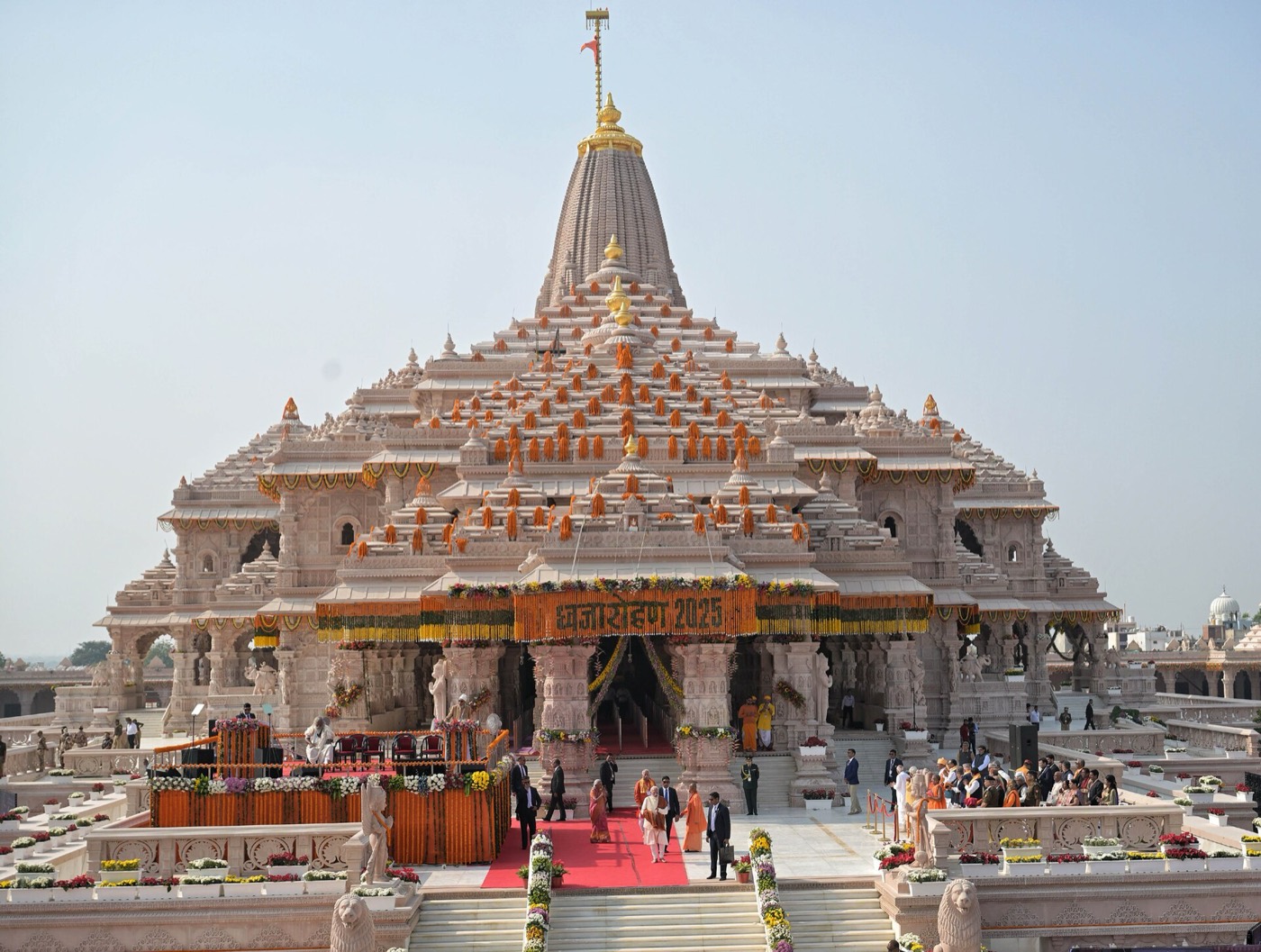
The Ram Mandir was consecrated in January 2024 and has been the busiest new pilgrimage in India since. Ram Navami is its biggest day by a distance. The temple's engineered Surya Tilak places a beam of sunlight on Ram Lalla's forehead at around noon for a few minutes, and the queues around that day are the heaviest of the year. If you want the festival, accept the crowd as part of it. If you mainly want the temple, come well clear of the tithi and take a weekday morning instead.
The practical shape of a visit is simple. General darshan is free and runs in two windows, approx 7:00 AM to 11:30 AM and approx 2:00 PM to 7:00 PM, and the morning hours are the calmest for a free darshan. The aartis are a separate matter: Mangala, Shringar and Sandhya aartis need a free pass booked in advance, numbers per aarti are capped, and you carry the same photo ID you booked with. Phones, cameras, smartwatches, large bags and food do not go inside; use the lockers near the entry and travel light through the strict security.
Arrival is easier than Ayodhya's old reputation suggests. Ayodhya Dham Junction sits approx 2 km from the mandir, the new Maharishi Valmiki International Airport approx 10 km, and Lucknow is approx 135 km by road, roughly 2.5 to 3 hours. The Saryu ghats are a short ride away and hold the evening life of the town.
Hanuman Jayanti at the Balaji shrines
Hanuman Jayanti falls on Chaitra Purnima, the full moon that closes the month, in March or April depending on the year. Three temples featured in this guide treat it as their single biggest day. At Salasar Balaji in Rajasthan's Churu district it is one of the two mega fairs of the year, with huge crowds walking in on foot carrying red pennant flags to the rare bearded, moustached Hanuman, at a shrine that tradition dates to around 1754. The temple runs near round the clock on fair days.
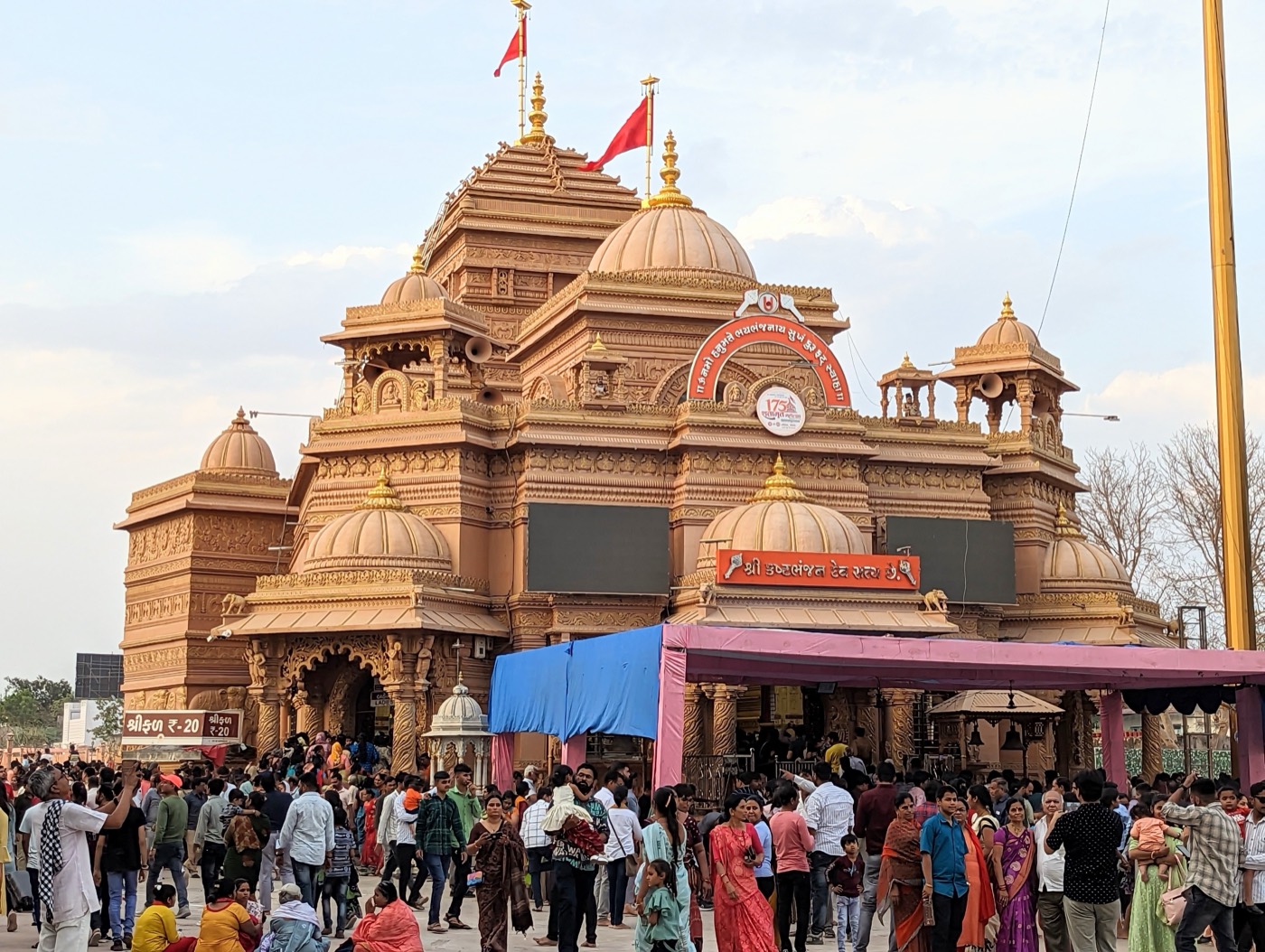
At Salangpur in Gujarat, the Kashtabhanjan Dev temple of the Swaminarayan Vadtal Gadi marks the day with a Mangala Aarti and Maha Abhishek that begin far earlier than usual, around 4 to 6 AM, followed by processions, a 108 Deep Aarti and continuous Hanuman Chalisa recitation. The 54 ft Hanuman statue that has marked the approach since 2023 is visible up to 7 km across the plain. The temple's famous utara ritual needs prior booking and is not a walk-in.
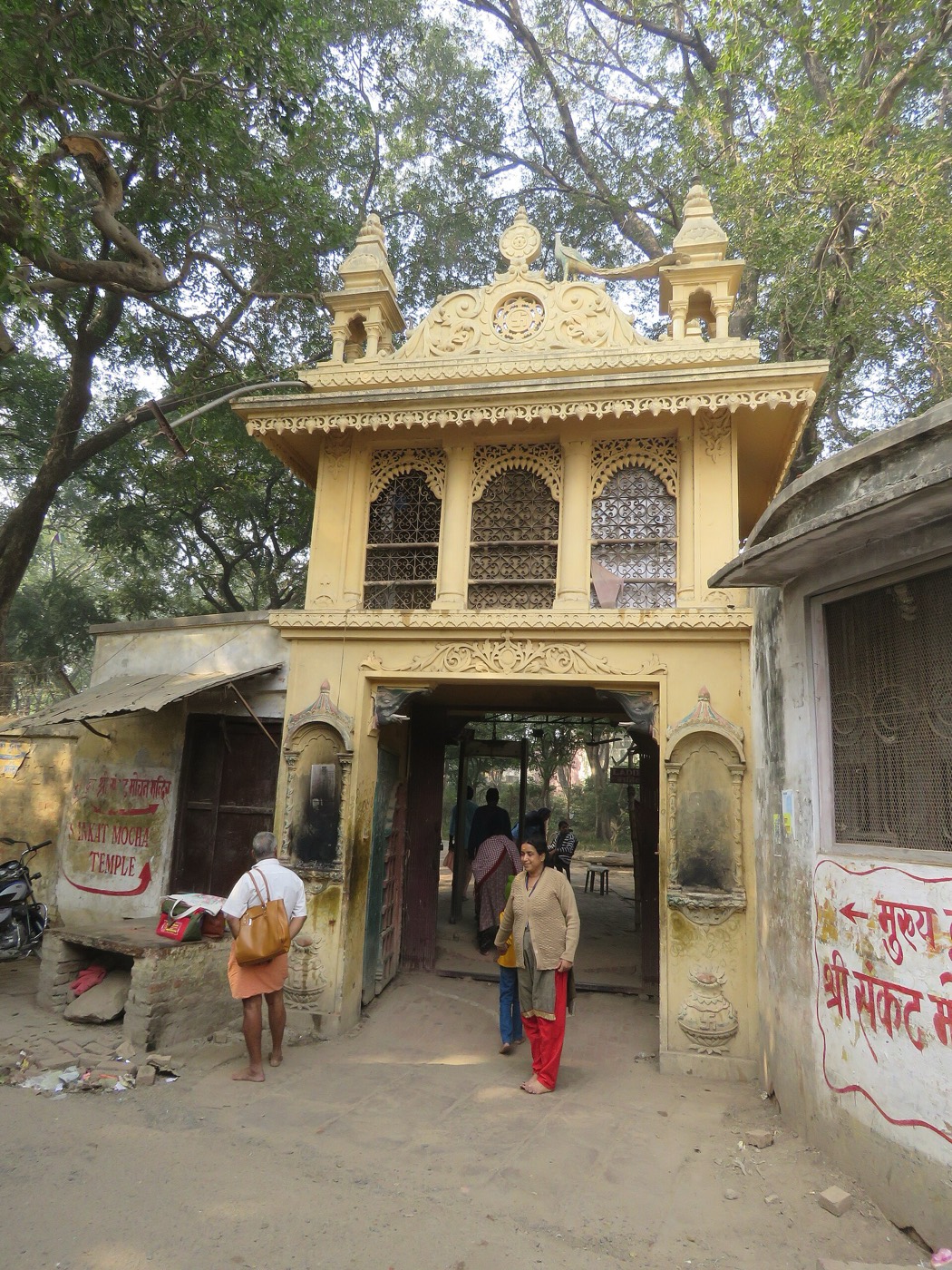
At Sankat Mochan in Varanasi, founded by the poet-saint Tulsidas, Hanuman Jayanti is the single biggest day of the year, and April brings a second reason to come: the Sankat Mochan Sangeet Samaroh, a multi-day classical music and dance festival held every April in the temple courtyard. Mehandipur Balaji in Rajasthan also treats Hanuman Jayanti as its principal festival and biggest fair, with darshan running from before dawn to late at night.
The three featured shrines differ more than their shared deity suggests, and the differences decide which one suits your trip.
| Temple | State | Daily darshan | Nearest railhead | Known for |
|---|---|---|---|---|
| Salasar Balaji | Rajasthan | Approx 5:00 AM to 10:00 PM, near round the clock on fair days | Sujangarh, approx 24 to 30 km | Bearded Hanuman idol; Chaitra Purnima mela; bajra churma prasad |
| Salangpur Kashtabhanjan Dev | Gujarat | 6:00 AM to 9:00 PM, midday break approx 12 to 3 PM | Botad Junction, approx 12 km | 54 ft statue; utara ritual on booking; free meals at the Bhojanalaya |
| Sankat Mochan, Varanasi | Uttar Pradesh | 4:30 AM to 10:30 PM, closed 12 noon to 3 PM; till around midnight Tue and Sat | Banaras station, approx 5 km | Founded by Tulsidas; April classical music festival |

Salasar Balaji
Churu, Rajasthan
Salangpur Kashtabhanjan Dev Hanuman Temple
Botad, Gujarat
Sankat Mochan Hanuman Temple
Varanasi, Uttar Pradesh
Chaitra Navratri and the Vaishno Devi climb
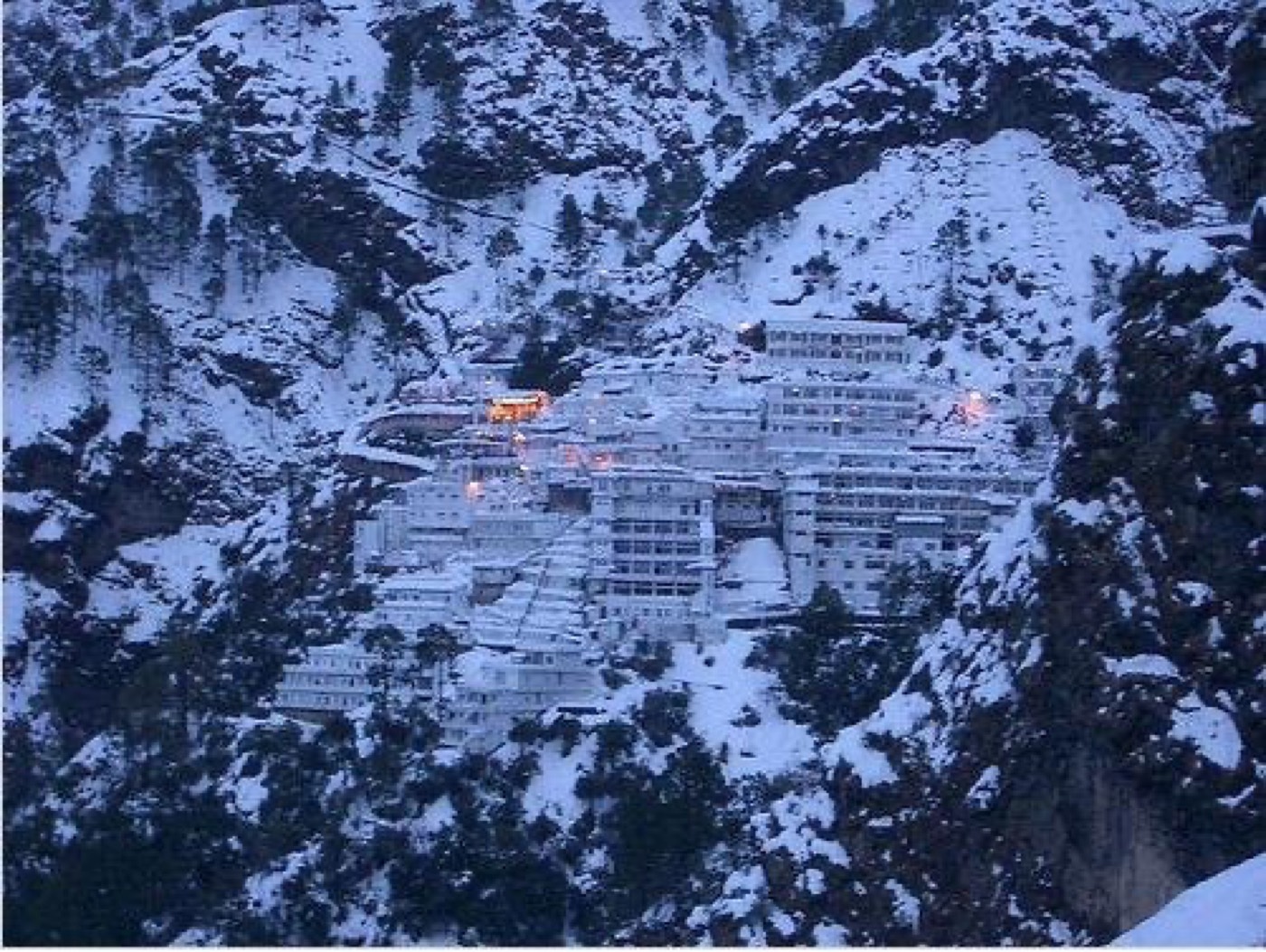
Chaitra Navratri, the spring nine nights of the Goddess, falls in the March to April window and fills Devi shrines from the Himalayan foothills to Bengal. At Vaishno Devi it is one of the two spiritual peaks of the year: Katra fills with pilgrims, the town is lit up, and the Shrine Board runs special arrangements. The nine nights are spiritually charged and very crowded, and you should decide in advance which of those two facts matters more to you.
The mechanics of the shrine favour April more than most temples on this list. The holy cave above Katra effectively stays open around the clock, with darshan paused only for the two daily aarti windows of roughly an hour and a half to two hours each. The climb from Katra to the Bhawan is approx 13 km on a paved path, and many pilgrims deliberately walk it through the cooler night, which sidesteps the day's heat entirely. Ponies and palkis are hired at Banganga, and a helicopter runs to Sanjichhat for those who want to skip most of the climb.
Two rules are non-negotiable. The free Yatra Parchi registration slip, issued online or at the Katra counters with an RFID tag, is checked at every checkpoint, and without it you are not allowed past Banganga. Polythene and single-use plastic are banned in Katra and on the track, so carry cloth bags and a refillable bottle. Outside the Navratri nights, April sits before the summer holiday crowds, which makes it a reasonable moment for the climb by the standards of the busy season.
The April festival calendar
The table below gathers the major festivals across this site's temples that can fall in April. Most follow the lunar calendar and slide between March and April, or April and May, from one year to the next, so treat every window here as a window and confirm the exact tithi for your travel year. The mid-April solar days, Baisakhi, Vishu and Poila Boishakh, are the only near-fixed dates in the set.
Two patterns are worth noticing. Chaitra carries the birth festivals: Rama, Hanuman, Mahavir and Swaminarayan anniversaries all cluster in it. And the end of April opens the cooling festivals of the hot season, when the deities at Puri and Bhubaneswar are soothed with sandalwood paste and boat rides on the temple tanks. If your dates are late in the month, the Akshaya Tritiya cluster is the one to watch.
| Festival | Where | When it falls | What happens |
|---|---|---|---|
| Ram Navami | Ram Mandir, Ayodhya; also Shirdi and many others | Chaitra Shukla Navami, March to April | Surya Tilak on Ram Lalla at around noon; the year's heaviest queues |
| Hanuman Jayanti | Salasar, Salangpur, Sankat Mochan, Mehandipur Balaji | Chaitra Purnima, March or April | Melas and processions; the biggest day at each of these shrines |
| Chaitra Navratri | Vaishno Devi and Devi shrines across India | March to April | Nine nights of the Goddess; Katra fills with pilgrims |
| Baisakhi | Golden Temple, Amritsar | 13 or 14 April | Marks the founding of the Khalsa in 1699; huge crowds and processions |
| Vishu | Guruvayur, Kerala | Medam month, April | Dawn Vishukani darshan to begin the Malayalam new year |
| Poila Boishakh | Kalighat, Kolkata | Mid-April | Bengali new year darshan and blessings for the year ahead |
| Mahavir Jayanti | Ranakpur, Dilwara and Palitana tirths | Chaitra, March or April | Birth of Bhagwan Mahavir; special pujas and heavy Jain pilgrim footfall |
| Chithirai Thiruvizha | Meenakshi Amman, Madurai | Chithirai month, April to May | 12 day festival of the celestial wedding; the year's largest crowds |
| Panguni Uthiram | Palani and Srirangam | Panguni month, March or April | Float and processional worship; joint darshan of the divine couple at Srirangam |
| Chandan Yatra | Jagannath Temple, Puri | From Akshaya Tritiya, April or May | 42 day sandalwood cooling festival; chariot construction begins |
| Charan Darshan, Akshaya Tritiya | Banke Bihari, Vrindavan | Vaishakha Shukla Tritiya, April or May | The only day Bihariji's feet are revealed, dressed with sandalwood |
| Buddha Purnima | Mahabodhi Temple, Bodh Gaya | Vaishakh full moon, April or May | The biggest day at Bodh Gaya, with processions and lamp offerings |
| Karni Mata Fair | Karni Mata, Deshnoke | Chaitra Shukla Ekam to Dashmi, March to April | The larger of the two annual fairs at the famous rat temple |
| Virupaksha Rathotsava | Virupaksha Temple, Hampi | March or April, local calendar | The chariot festival; the temple car is pulled down Hampi bazaar |
The heat, honestly, and what reopens
There is no dressing this up. The temple pages behind this guide describe Ayodhya's summer, April to June, as harsh and dusty, the Shekhawati desert around Salasar as very hot and dusty in the same months, and Varanasi's worst heat as arriving in May and June. The October to March comfort window is closed. The workarounds are real, though: Sankat Mochan opens at 4:30 AM, Salangpur's Mangala Aarti is at 5:30 AM, the Ram Mandir's calmer morning window starts at approx 7:00 AM, and Vaishno Devi can be climbed at night.
The other April story sits at altitude. Badrinath stays closed from approx mid-November to late April, with worship shifted to the Narsingh Temple at Joshimath, and its doors reopen in the late April to early May window. Kedarnath follows the same rhythm, its deity returning from Ukhimath for a first darshan of the season that draws huge crowds. Gangotri reopens around Akshaya Tritiya in late April, the idol returning from Mukhba village in a ceremonial doli procession, and Yamunotri opens in late April or early May, the goddess brought up in procession from Kharsali.
The opening dates are announced each year and tied to the almanac, so a late April trip built around them needs flexible margins. What you get in exchange is the first darshan of the season, among the most auspicious days in these shrines' calendars, in mountain air while the plains bake.
One April itinerary: Ayodhya to Varanasi
If you can only make one April trip, the Uttar Pradesh corridor stacks the most devotional weight per kilometre. It pairs the Ram Mandir at its Ram Navami peak with Varanasi, where Sankat Mochan and Kashi Vishwanath, the Jyotirlinga at the heart of the city, sit approx 5 to 6 km apart. The road from Ayodhya to Varanasi is approx 200 km, so the whole circuit fits the five-day shape below without rushing.
Ram Navami itself needs a decision. Staying in Ayodhya for the festival means the year's heaviest queues and booking accommodation well ahead, since the town fills completely; the trust and the district administration list vetted accommodation online, and trust-linked dharamshalas offer simple rooms from roughly Rs 500 to Rs 2000 a night. Skipping the peak by a few days keeps the same temples with far more room to breathe.
- Day 1: fly into Lucknow or direct to Ayodhya's Maharishi Valmiki airport, approx 10 km from the mandir. Lucknow to Ayodhya is approx 135 km by road, roughly 2.5 to 3 hours via Barabanki.
- Day 2: Ram Mandir general darshan in the morning window, approx 7:00 AM to 11:30 AM, the calmest time for a free darshan. Evening at the Saryu ghats, a short ride away.
- Day 3: pre-booked aarti if you secured a pass, then the road or rail leg to Varanasi, approx 200 km.
- Day 4: Sankat Mochan from its 4:30 AM opening, before the heat; Kashi Vishwanath later in the day. On Tuesdays and Saturdays Sankat Mochan stays open into the night.
- Day 5: a spare day for the Sangeet Samaroh if the festival dates align, or the drive to the Vindhyavasini Devi shrine at Vindhyachal, approx 65 km from Varanasi.
Passes, lockers and the rules that catch people out
The commonest April mistake is arriving with a daypack. At the Ram Mandir, phones, cameras, earphones, smartwatches, remote keys, large bags and food are all barred from the complex, and a small pouch clears the strict security far faster than a backpack. Sankat Mochan bars phones and cameras from the sanctum area too, with a free locker facility at the gate. At Salasar, leather items are best left outside as a mark of respect, and photography near the idol follows the posted no-photography instruction.
Book the paperwork before the darshan. The Ram Mandir's aarti passes and Vaishno Devi's Yatra Parchi are both free and both essential for what they cover, one capped in numbers and the other checked at every checkpoint. Salangpur's utara vidhi needs prior booking through the temple's official site or counter. None of these can be sorted at the last minute on a festival day.
Finally, eat where the temples feed you and dress the way the shrines ask. Salangpur's Bhojanalaya serves free sattvic meals to devotees, and the plains shrines share the same guidance in spirit: modest, traditional dress with shoulders and knees covered, footwear left at the stands outside. Vaishno Devi enforces no formal dress code, only modest clothing suited to a long climb, with warm layers for the Bhawan, which stays cool at night even in summer.
| Temple | Nearest railhead | Nearest airport | Road note |
|---|---|---|---|
| Ram Mandir, Ayodhya | Ayodhya Dham Junction, approx 2 km | Maharishi Valmiki International, approx 10 km | Lucknow is approx 135 km, roughly 2.5 to 3 hours |
| Sankat Mochan, Varanasi | Banaras station approx 5 km; Varanasi Junction approx 7 km | Lal Bahadur Shastri, approx 26 km | Approx 4 to 6 km from central Varanasi |
| Salasar Balaji | Sujangarh, approx 24 to 30 km | Jaipur, approx 170 to 180 km | From Jaipur roughly 3.5 to 4 hours via Sikar |
| Vaishno Devi | Shri Mata Vaishno Devi Katra, in Katra town | Jammu, approx 48 to 50 km | Then the approx 13 km climb from Katra to the Bhawan |
| Salangpur | Botad Junction, approx 12 km | Bhavnagar, approx 82 km | From Ahmedabad approx 153 to 160 km, about 3 to 3.5 hours |
Frequently asked questions
Which temple is best to visit in April in India?
When is Hanuman Jayanti and where is it celebrated on the largest scale?
Is April a good time to visit Vaishno Devi?
Are Badrinath and Kedarnath open in April?
What is the Surya Tilak at the Ram Mandir on Ram Navami?
Is April too hot for temple visits in India?
Compiled from our verified temple guides and public sources including Shri Ram Janmbhoomi Teerth Kshetra (official trust, how to reach) · Shri Mata Vaishno Devi Shrine Board (official) · Wikipedia: Sankat Mochan Hanuman Temple · Wikipedia: Salasar Balaji · Botad District (Government of Gujarat) - Salangpur Hanumanji Temple. Timings and festival dates shift with the lunar calendar; confirm before you travel.