These are three very different kinds of visit. Jagannath Temple in Puri is a living temple where darshan comes in windows between an elaborate cycle of rituals, phones stay outside, and the sanctum is open to Hindus only. Konark Sun Temple is a protected monument with no presiding idol and no aarti at all: you buy a ticket, walk the carved wheels, and read the stone. Lingaraja in Bhubaneswar sits between the two, a living Shiva temple, also closed to non-Hindus inside but viewable by everyone from a platform built in Lord Curzon's time.
Geographically the triangle is kind to travellers. Puri and Konark are linked by the Marine Drive coastal road, approx 35 km and about an hour apart. Bhubaneswar, the state capital, holds the airport and the bigger railway junction and sits approx 60 km from Puri by a well-paved highway. Konark to Bhubaneswar is approx 65 km. Nothing here demands an overnight bus or a mountain road; the whole loop is ordinary taxi and bus territory.
One honest caveat before the detail. The living temples run on ritual time, not clock time: Jagannath's day is set by its sevaks and can drift by the better part of an hour, and Lingaraja follows sequenced offerings rather than fixed slots. Every timing in this guide is therefore approximate, and the sensible habit is to confirm the day's schedule locally before building anything tight around it.
Why these three sites make one trip
Puri anchors the circuit spiritually. Jagannath is the eastern seat of the Char Dham, paired with Badrinath, Dwarka and Rameswaram, so for many pilgrims this single darshan carries the weight of a life goal. The deities are unusual too: Jagannath, Balabhadra and Subhadra are carved in neem wood rather than stone and renewed on a sacred cycle, and once a year they leave the sanctum to ride giant chariots down the Grand Road in the Rath Yatra, the festival that gave English the word juggernaut.
Konark shows what the same temple-building civilisation did when it aimed at the sun. Built around 1250 CE by King Narasimhadeva I of the Eastern Ganga dynasty, it was conceived as the colossal war chariot of Surya, hauled by seven horses on 24 carved wheels, and it has been on the UNESCO World Heritage list since 1984. The main tower fell long ago and the sanctum stands empty, which is exactly why it belongs in the middle of this trip: it is the contemplative, walk-and-look day between two crowded living shrines.
Bhubaneswar closes the loop. Lingaraja is the crown of the temple city's Old Town, a Kalinga-style tower rising about 55 metres over the sacred Bindu Sagar tank. Its uncarved svayambhu linga is revered as Harihara, half Shiva and half Vishnu, so priests offer it both bilva leaves and tulsi, a quiet theological bridge between the Shaiva Old Town and Vaishnava Puri that makes the triangle feel like one story rather than three stops.
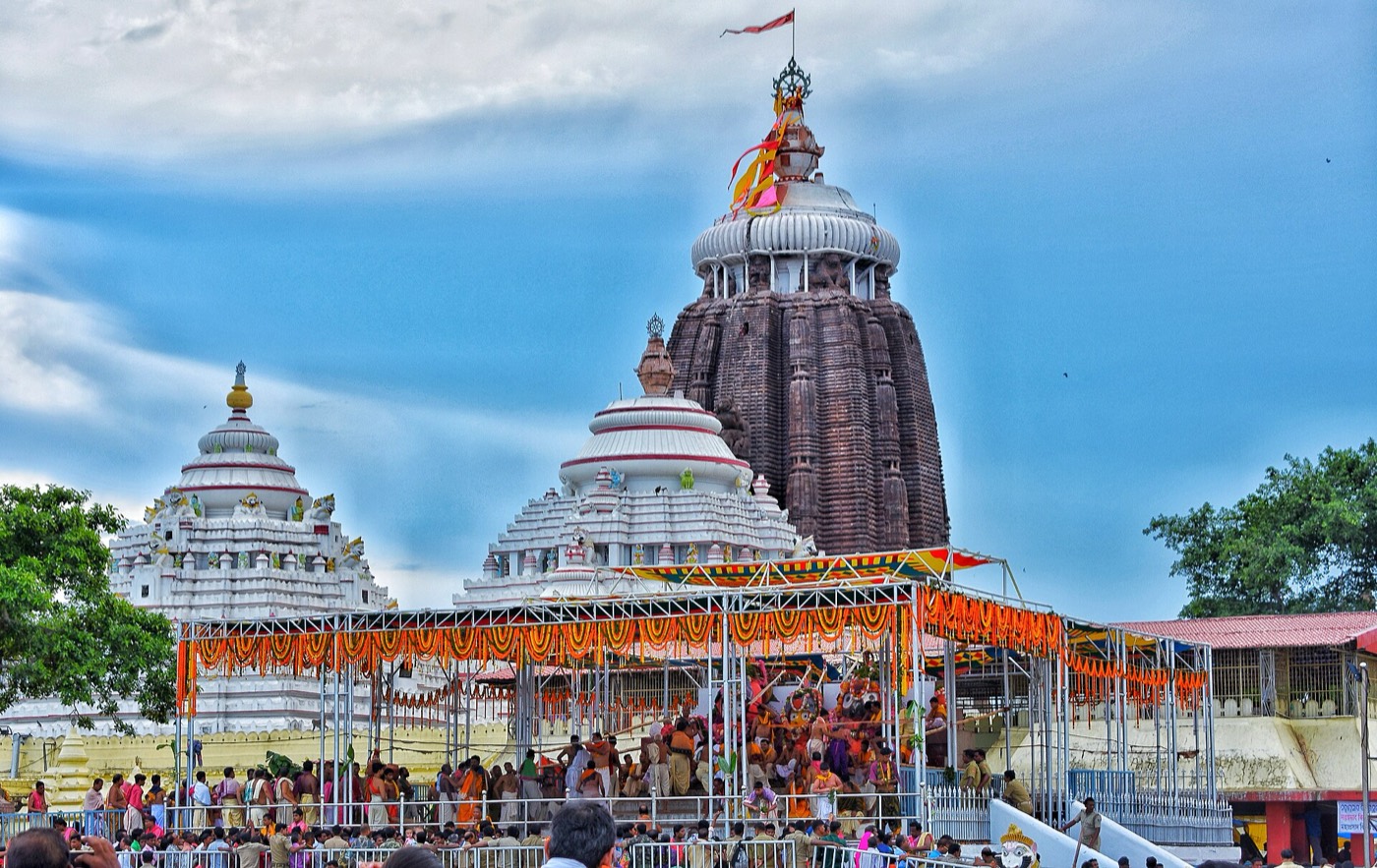
Jagannath Temple, Puri
Puri, Odisha
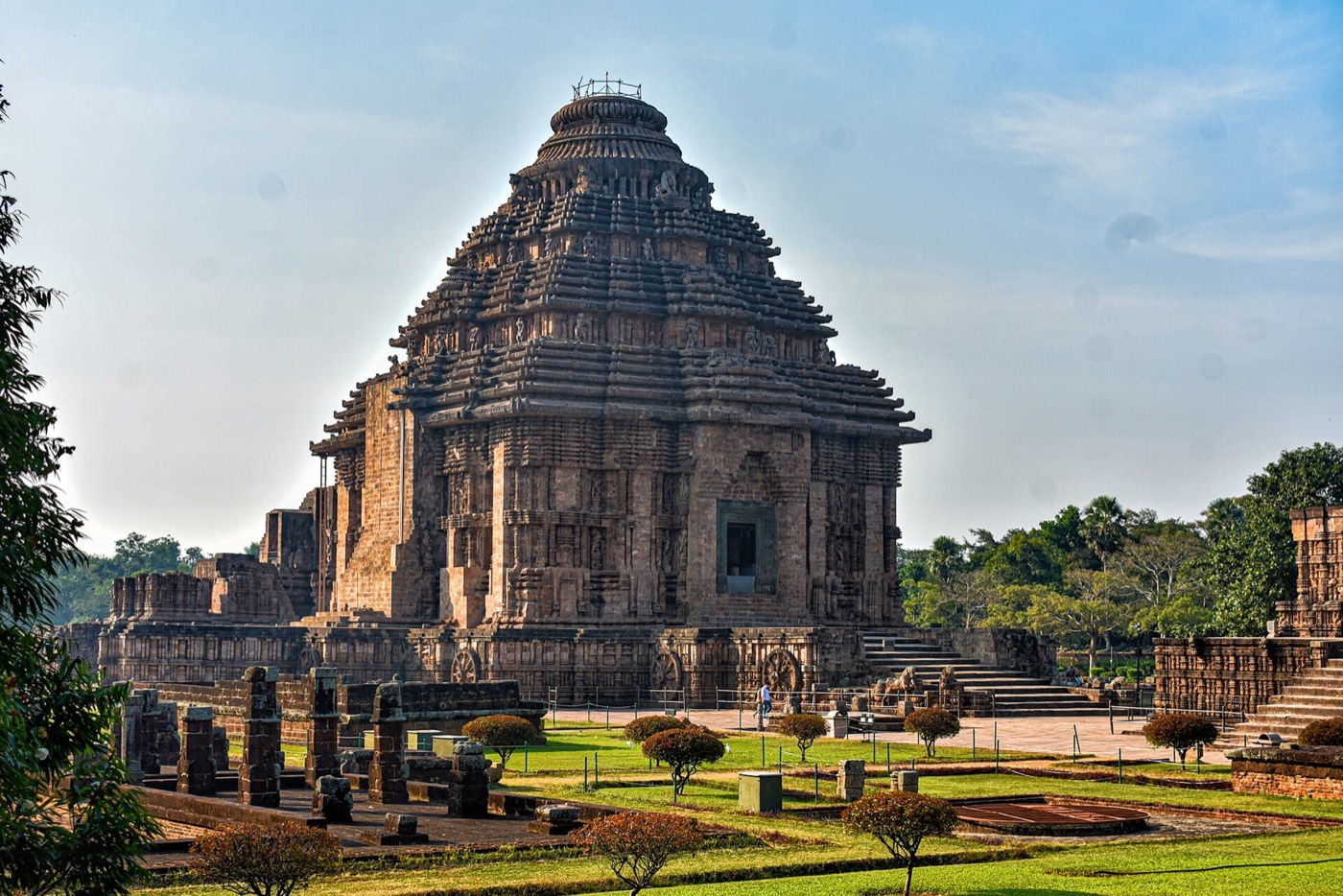
Konark Sun Temple
Puri, Odisha

Lingaraja Temple, Bhubaneswar
Khordha, Odisha
Distances and travel times
Every leg of the triangle is short by Indian pilgrimage standards. Bhubaneswar's Biju Patnaik International Airport is the only airport for all three sites; Puri has no airport but a major broad-gauge railhead with direct trains from Kolkata, Delhi and Chennai. Frequent buses, shared autos and taxis cover every leg, and the Puri to Konark stretch along the Bay of Bengal is the most scenic drive of the trip.
Two route notes. From the airport, taxis reach Puri in about 1.5 hours via NH316, while the older road through Pipili passes the appliqué craft villages if you would rather trade time for colour. Within Bhubaneswar, the Old Town lanes near Lingaraja are narrow, so park and walk in, or arrive by auto or e-rickshaw rather than a large car.
| Leg | Distance | Typical time |
|---|---|---|
| Puri to Konark via Marine Drive | Approx 35 km | About 1 hour |
| Bhubaneswar city to Puri | Approx 60 km | About 1 hour 20 minutes |
| Bhubaneswar airport to Puri | Approx 60 km | About 1.5 hours via NH316 |
| Konark to Bhubaneswar | Approx 65 km | Roughly 1.5 to 2 hours |
| Puri railway station to Jagannath Temple | Approx 3 km | Minutes by auto or cycle-rickshaw |
| Bhubaneswar station to Lingaraja Temple | Approx 4 km | 15 to 20 minutes by auto or cab |
| Bhubaneswar airport to Lingaraja Temple | Approx 5 km | A short ride across the city |
A two to three day sequence that follows the light
The one fixed point in your plan should be Konark at sunrise. The monument faces east, and first light on the chariot facade and wheels between 6:00 AM and approx 8:30 AM is the best viewing of the day, before the shadeless grounds heat up. Everything else can flex around that morning.
On a three day plan, spend day one reaching Puri via Bhubaneswar and settling in near the temple; the evening Sandhya Dhupa and aarti fall at approx 7:00 to 8:00 PM if you arrive with energy. Otherwise sleep early, because Mangala Aarti comes at approx 5:00 AM and public darshan opens from about 6:30 to 7:00 AM, the calmest window you will get. Day two is Konark: leave Puri at dawn along Marine Drive, walk the monument in low light, and consider a licensed ASI guide from the gate to read the iconography. Back in Puri, eat Mahaprasad at Ananda Bazaar, note the closure that follows Madhyanha Dhupa at approx 1:00 PM, and take the afternoon darshan window of roughly 2:00 PM to 5:00 PM. Day three is the transfer to Bhubaneswar and Lingaraja, timed around the Bhanda Dhupa interval near 12:30 PM, with the station approx 4 km and the airport approx 5 km away for an easy exit.
With only two days, fold Konark into the transfer. Take darshan at Jagannath on the first morning, drive to Konark at dawn on day two, then continue to Bhubaneswar, roughly 1.5 to 2 hours on. Lingaraja stays open to approx 9:00 PM, so an afternoon or early evening visit works well. It is a fuller day than it sounds, but every leg is short and the sequence never doubles back.
Entry rules, fees and what to leave behind
The rules differ sharply across the three sites, and knowing them in advance saves real frustration at the gates. Jagannath is the strictest: the sanctum is open to Hindus only, and phones, cameras, all photography and leather goods such as belts, wallets and bags are prohibited inside. Footwear stays at cloakrooms outside the Singhadwara, the Lion Gate on Grand Road, and the temple discourages jeans, shorts, skirts and overtly Western wear. Non-Hindu visitors are not shut out entirely: the rooftop of the nearby Raghunandan Library gives a full view of the temple.
Lingaraja runs on similar lines. Entry inside the compound is restricted to Hindus, photography is not allowed within it, and leather items and in practice phones are expected to stay outside. The Curzon-era viewing platform outside the north boundary wall is the answer for everyone else. At both living temples, be prepared for insistent pandas seeking donations; you are not obliged to pay fixed amounts for darshan, and any charge for a guided puja should be agreed before you accept it.
Konark flips the logic. As an ASI monument it is open to all, the dress code is relaxed, and photography is generally allowed, though tripods, drones and commercial shoots need prior ASI permission. What it asks of you instead is practical: the grounds are open, sun-exposed stone, so carry water, wear a hat and do not climb on or touch the fragile 13th-century carvings.
| Site | Open (approx) | Entry fee | Who may enter | Photography |
|---|---|---|---|---|
| Jagannath Temple, Puri | Approx 5:00 AM to 11:00 PM, with ritual-break closures | Free | Hindus only inside; others view from the Raghunandan Library rooftop | Prohibited; phones and cameras stay outside |
| Konark Sun Temple | 6:00 AM to 8:00 PM, all days | Approx Rs 40 (Indians), approx Rs 600 (foreigners) | Open to everyone as an ASI monument | Generally allowed; tripods and drones need ASI permission |
| Lingaraja Temple, Bhubaneswar | Approx 5:00 AM to 9:00 PM daily | Free | Hindus only inside; others use the Curzon-era platform | Not allowed inside the compound |
Festival seasons across the triangle
The triangle has two personalities by season. From October to February the coast is at its most comfortable, and this is the window for a calm, unhurried circuit. The other personality is festival season, headlined by Puri's Rath Yatra, falling on Ashadha Shukla Dwitiya in the June to July period, when the deities ride three towering chariots down the Grand Road to the Gundicha Temple and the town swells with lakhs of pilgrims. It is a great spectacle and a great crowd; rooms sell out and rates spike sharply, so book weeks ahead or come in another season.
There is a trap inside that season worth flagging plainly. After Snana Yatra, the ceremonial bathing of the deities with 108 pots of water on Jyeshtha Purnima, the deities withdraw into the Anavasara seclusion and are not shown at all for a fortnight. A traveller who arrives in that gap expecting darshan will not get it, and timings shift heavily through the wider festival period, so this is the one stretch of the year when local confirmation is not optional.
The other two sites peak in winter, which suits a cool-season trip. Konark hosts its open-air classical dance festival against the floodlit temple in December, alongside the sand art festival on Chandrabhaga beach, and its holiest day is Magha Saptami in February, when thousands take a dawn sun-worship bath at Chandrabhaga. Lingaraja's biggest day is Mahashivaratri, in February or March, when the Mahadipa lamp is carried to the top of the deul at night and darshan runs round the clock with very long queues. All of these move with the lunar calendar, so treat months as windows and check the current year's dates before you commit.
| Festival | Site | When | What happens |
|---|---|---|---|
| Rath Yatra | Jagannath, Puri | Ashadha Shukla Dwitiya, in the June to July period | The deities ride chariots down Grand Road to the Gundicha Temple; the year's peak crowd |
| Snana Yatra and Anavasara | Jagannath, Puri | Jyeshtha Purnima, shortly before Rath Yatra | Ceremonial bathing with 108 pots, then a fortnight of seclusion with no darshan |
| Chandan Yatra | Jagannath, Puri | Begins on Akshaya Tritiya, runs 42 days | Sandalwood rituals, evening boat rides on Narendra Tank, chariot construction begins |
| Konark Dance Festival | Konark | December | Five days of Odissi and other classical forms against the floodlit temple |
| Magha Saptami / Chandrabhaga Mela | Konark | February, in the month of Magha | Dawn sun-worship bathing at Chandrabhaga beach with a large mela |
| Mahashivaratri | Lingaraja, Bhubaneswar | February or March, in Phalguna | Fasting, night vigil and the Mahadipa carried to the top of the deul |
| Ashokastami / Rukuna Rath Yatra | Lingaraja, Bhubaneswar | March or April, in Chaitra | Lingaraja rides out by chariot to the Rameshwar temple for a few days |
| Kartik Purnima | Lingaraja, Bhubaneswar | November | Full-moon bathing and worship drawing crowds to the Old Town and Bindu Sagar |
Where to base yourself
Puri is the natural base and has the widest choice by far, a full pilgrimage and beach town with lodging at every budget. Dharamshalas, maths and simple pilgrim lodges cluster near the Singhadwara for those who want to walk to Mangala Aarti in the dark, while the beachfront belt along Chakra Tirtha Road and Marine Drive holds the mid-range hotels and a few resorts. Around Rath Yatra nothing stays available for long.
Konark town is worth one night if sunrise at the monument matters to you. It has only a handful of hotels and guesthouses plus the state-run OTDC Panthanivas near the temple, but staying there removes the early drive, and Chandrabhaga beach, 3 km away, has a few quieter coastal resorts. Bhubaneswar suits travellers flying in and out or wanting business-grade hotels, which line the Master Canteen, Kalpana and Jaydev Vihar areas near the station and airport, with budget lodges around the Old Town and Bindu Sagar for early darshan at Lingaraja.
Extending the journey
The triangle sits inside a wider eastern-India pilgrimage geography, though the next steps are proper journeys rather than day trips. Shaiva devotees often continue from Bhubaneswar toward Baidyanath Dham at Deoghar, one of the twelve Jyotirlingas, approx 480 km away in Jharkhand and approx 550 km from Puri, so treat it as its own leg with its own overnight planning. Travellers routing home through Kolkata sometimes add Dakshineswar Kali Temple on the Hooghly, approx 500 km from Konark, as the closing darshan of an eastern circuit.
Two smaller notes. If the idea of a temple built as the sun's chariot stays with you, the sun temple at Modhera in Gujarat makes a natural future trip. And Bhubaneswar's Old Town holds many more medieval shrines beyond Lingaraja, clustered around the Bindu Sagar in the sacred zone the tradition calls Ekamra Kshetra; this guide does not cover them individually, but an unhurried morning walking that quarter rewards anyone with an eye for carved stone.
Frequently asked questions
How many days are enough for Puri, Konark and Bhubaneswar?
Can non-Hindus enter the Jagannath Temple in Puri?
How far is Konark from Puri and Bhubaneswar?
Is Konark Sun Temple still an active place of worship?
What is the best time to visit the Odisha golden triangle?
Which airport do you fly into for Puri and Konark?
Compiled from our verified temple guides and public sources including Puri District Administration, Odisha Government - Shree Jagannath Temple · Shree Jagannatha Puri - Temple Timing · UNESCO World Heritage List (Sun Temple, Konarak) · Wikipedia: Lingaraja temple. Timings and festival dates shift with the lunar calendar; confirm before you travel.